Venezuela Wage Crisis Deepens Despite Growth
The Venezuela wage crisis is intensifying despite government claims of economic recovery, with workers earning less than one US dollar over three months as inflation continues to erode purchasing power across the country.
Growth Without Impact: Economic Gains Fail to Reach Citizens
More than 100 days after Delcy Rodríguez assumed office as Venezuela’s acting president, officials have pointed to economic growth as evidence of recovery. Rodríguez stated that the country’s gross domestic product (GDP) is expanding by nearly 9%, with 20 consecutive quarters of growth.
She also highlighted:
- Increased foreign investment interest
- Oil production reaching 1.1 million barrels per day
- Easing of US sanctions on financial institutions
However, these indicators have not translated into improved living conditions for ordinary citizens.
According to reporting by many Venezuelans say their daily reality remains unchanged, despite official projections of economic improvement.
The $0.27 Wage Reality
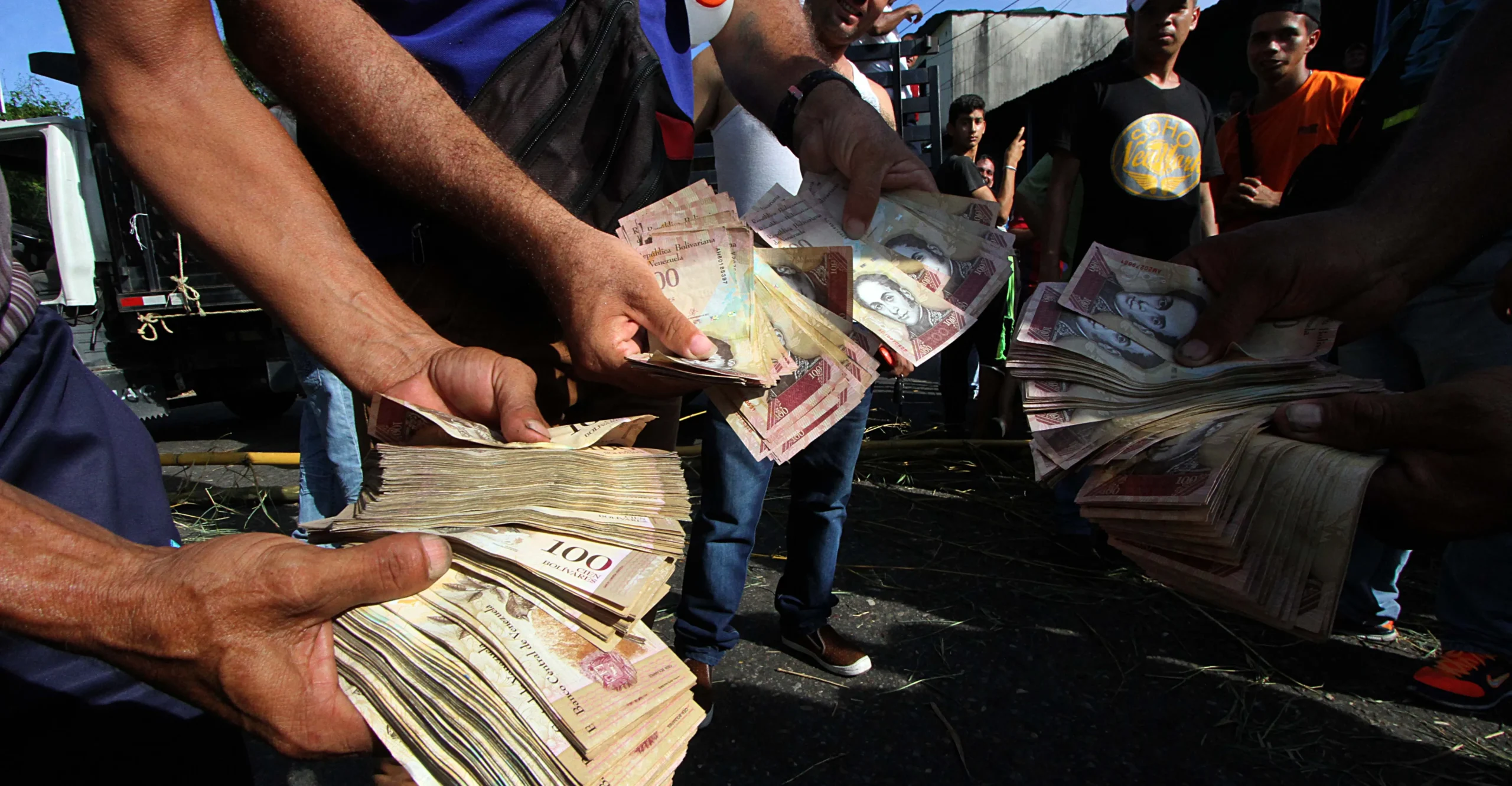
At the heart of the Venezuela wage crisis lies a stark statistic: the monthly minimum wage stands at 130 bolívares — approximately $0.27.
This means:
- Three months of wages amount to less than $1
- Basic necessities remain out of reach for most citizens
Angel García, a retired construction technician and former public servant, has become a symbol of this hardship. He protests publicly, holding a large bone to illustrate that even such a basic item requires significant financial effort.
“I often have to choose between eating and taking the bus,” he said, describing the economic strain faced by many Venezuelans.
For pensioners and low-income earners, the situation is particularly difficult. A 71-year-old man interviewed described a daily struggle to buy food and afford medication, noting that “the shelves may be full, but the money isn’t enough.”
Inflation Still the Core Problem
Despite growth projections, inflation remains the dominant economic force shaping daily life.
Key indicators include:
- Annual inflation rate of 650% as of March (Central Bank data)
- Rapid depreciation of the bolívar
- Rising prices for fuel, food, and essential goods
Economist José Guerra stated that economic recovery cannot be expected within 100 days, emphasising that stabilising inflation and the exchange rate must be the priority.
“Economic growth takes longer; it involves making investments and hiring,” Guerra explained, adding that tangible improvements may not be felt until late 2026.
Credit Economy: Survival Through Borrowing
Due to strict reserve requirements, many Venezuelans rely on alternative financial systems to access traditional banking services.
A growing trend is the use of:
- App-based credit systems
- Instalment payment platforms
- Merchant-linked microcredit
These systems allow consumers to:
- Purchase clothing and appliances
- Pay for groceries and food
- Spread payments over time
While these tools provide short-term relief, they also reflect deeper structural issues within Venezuela’s financial system.
Businesses Adapting or Collapsing
The economic landscape reveals sharp contrasts between sectors.
Declining Sectors:
- Bodegones (import-based speciality stores) are shutting down
- Retail spaces remain empty in many commercial areas
A business owner cited declining consumer purchasing power as the main reason for closing operations, stating: “It’s no longer a viable business.”
Emerging Sectors:
- Car dealerships are expanding
- Dollar-denominated credit options are increasing
However, these opportunities remain accessible only to a small segment of the population, highlighting widening economic inequality.
Daily Life in Crisis: Consumption Without Purchasing Power
Scenes from Caracas illustrate the contradiction at the centre of the Venezuela wage crisis.
In shopping malls:
- Stores appear fully stocked
- Foot traffic is high
- Purchases remain minimal
Consumers browse, compare prices, and often leave without buying.
Even in food courts, many rely on credit apps to afford basic meals, underscoring the disconnect between availability and affordability.
Food prices further illustrate the crisis:
- A kilogram of meat costs between $7 and $10
- Protein has become unaffordable for many households
Reform Promises and Policy Shifts
The government has introduced several policy measures aimed at stabilising the economy, including:
- Reform of Hydrocarbons and Mining laws
- Efforts to attract foreign investment
- Renewed engagement with the International Monetary Fund (IMF) and World Bank
Rodríguez has pledged a “responsible” wage increase by May 1, suggesting that improvements may follow as economic stability strengthens.
However, economists caution that:
- Structural reforms take time
- Wage increases alone may not offset inflation
- Long-term stability depends on sustained policy consistency
Global Context: Lessons for Inflation-Stricken Economies
Venezuela’s experience reflects broader challenges faced by inflation-hit economies worldwide.
Key parallels include:
- Currency instability is eroding wages
- Growth metrics failing to reflect lived realities
- Rising reliance on informal financial systems
For countries across Africa, including Nigeria, the situation offers a cautionary example of how inflation can undermine economic recovery narratives.
Recent discussions, including DSG Herald’s coverage of US pressure on African countries over Venezuelan deportees, highlight the global ripple effects of Venezuela’s crisis.
What Happens Next?
While some indicators suggest progress, the Venezuela wage crisis underscores a critical question:
Why are Venezuelans still struggling despite economic growth?
The answer lies in the gap between macroeconomic indicators and microeconomic realities.
For meaningful change to occur:
- Inflation must be controlled
- Currency stability must improve
- Wages must align with living costs
Economists suggest that:
- Short-term relief may come from wage adjustments
- Long-term recovery depends on structural reforms
- Political stability remains a key factor
For now, many Venezuelans remain in a state of economic uncertainty, waiting for promised improvements to materialise.
Related Coverage:
- US Push on Venezuelan Deportees to Africa
Explores the broader geopolitical implications of Venezuela’s crisis and migration pressures. - Middle East Conflict and Global Economic Impact
Examines how global instability affects economies already struggling with inflation. - Global Security Disruptions and Economic Strain
Provides insight into how geopolitical tensions influence economic recovery efforts worldwide.
About the Author