Niger Media Crackdown Deepens After French Outlet Ban
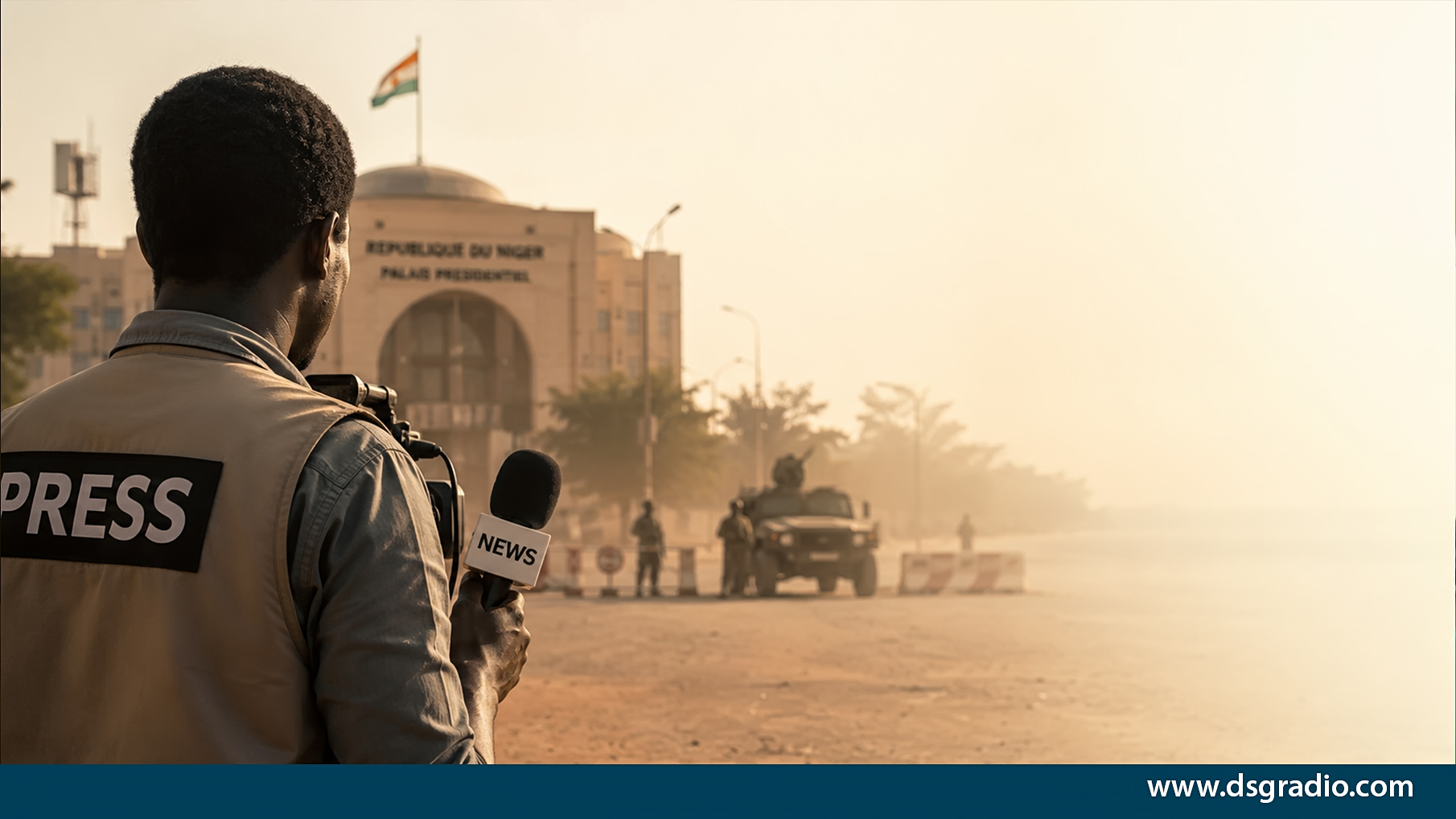
Niger’s military-led government has escalated its restrictions on foreign media, suspending nine French news organisations in a move that has triggered criticism from international press freedom advocates and renewed debate over shrinking civic space across the Sahel region.
The decision, announced by Niger’s National Communication Observatory (ONC), affects several globally recognised media institutions, including France 24, Radio France Internationale (RFI), Agence France-Presse (AFP), TV5 Monde, TF1 Info, Jeune Afrique, Mediapart, France Afrique Media, and LSI Africa.
Authorities said the suspension was imposed because of the “repeated dissemination of content likely to seriously jeopardise public order, national unity, social cohesion, and the stability of the institutions of the Republic.”
The restrictions took immediate effect and extended across satellite broadcasts, cable distribution, websites, digital platforms, and mobile applications.
The move has intensified concerns over what observers describe as an expanding Niger media crackdown under the country’s military administration, which seized power in July 2023 after overthrowing President Mohamed Bazoum.
Why Niger Suspended French Media
Nigerien authorities argue that the affected media organisations published content capable of undermining national stability during a politically sensitive period.
The ONC announced the suspension through a televised statement on Friday, though officials did not publicly identify specific reports or broadcasts that allegedly violated national regulations.
International watchdog Reporters Without Borders (RSF) condemned the decision, describing it as part of a broader effort by military-led governments in the Sahel to suppress independent journalism.
According to RSF, the action reflects a “coordinated strategy” targeting press freedom across the Alliance of Sahel States (AES), which includes Niger, Mali, and Burkina Faso.
The watchdog called for the immediate reversal of the suspension.
As reported by Al Jazeera, the restrictions form part of a broader pattern of tightening media controls since the military takeover.
Analysts say the decision also reflects growing distrust between Niger’s military rulers and Western institutions, particularly French organisations.
Growing Anti-France Sentiment in the Sahel
The latest French media suspension comes amid deteriorating relations between Niger and France, its former colonial ruler.
Since taking power, Niger’s military government has steadily distanced itself from Paris, accusing France of interference and neo-colonial influence in regional affairs.
In late 2023, Niger demanded the withdrawal of French troops stationed in the country as part of anti-terrorism operations in the Sahel. The departure marked a major geopolitical shift in West Africa, where French military influence has significantly declined in recent years.
Military governments in Niger, Mali, and Burkina Faso have increasingly promoted narratives centred on sovereignty, self-determination, and resistance to Western influence.
The three countries later formed the Alliance of Sahel States, strengthening security and political cooperation outside traditional Western alliances.
Observers believe the media restrictions align with broader anti-France policies adopted across the region.
French broadcasters have previously faced suspensions in both Mali and Burkina Faso, where authorities accused foreign media outlets of biased reporting and misinformation.
At the same time, the Sahel governments have expanded diplomatic and security ties with Russia, further reshaping the region’s geopolitical landscape.
Press Freedom Concerns in Niger
Press freedom advocates say the Niger media crackdown extends beyond foreign organisations and increasingly affects local journalists.
Several Nigerien reporters have reportedly been detained, prosecuted, or intimidated under laws related to national security and public order.
In 2024, Niger strengthened legislation criminalising the digital dissemination of information considered capable of disturbing public order.
Human rights organisations warned that the legal changes could be used to silence dissent and discourage investigative journalism.
The United Nations said in November that at least 13 journalists had been arrested in Niger and called for their release.
Local media groups also reported that some journalists remained detained over allegations including “undermining national defence” and “conspiracy against the authority of the state.”
Two Nigerien journalists — Gazali Abdou, a correspondent for Deutsche Welle, and regional newspaper editor Hassane Zada — were recently released after spending months in detention.
Media analysts say such developments reflect a wider deterioration in freedom of expression within Niger.
According to the latest RSF World Press Freedom Index, Niger dropped 37 places and now ranks 120th out of 180 countries.
Amnesty International and other advocacy groups have repeatedly expressed concern about what they describe as a decline in civic freedoms under military rule.
Sahel Military Governments Tighten Media Control
Niger’s actions mirror broader trends across the Sahel, where military governments have adopted stricter approaches toward media regulation and political dissent.
Mali and Burkina Faso have also suspended foreign broadcasters and introduced tighter information controls since military leaders assumed power.
Observers say the regional trend highlights growing tensions between security-focused governments and independent journalism.
Military authorities across the Sahel argue that misinformation, extremist propaganda, and foreign influence campaigns threaten national stability.
Critics, however, warn that broad restrictions on media risk weakening democratic accountability and limiting public access to independent information.
The BBC was suspended in Niger in December 2024, adding to a growing list of international media organisations restricted by authorities.
According to AFP reports cited by international observers, Niger also suspended nearly 3,000 local and foreign NGOs in 2025 over allegations of transparency and security violations.
Details surrounding some of those allegations remain unclear.
Political analysts say the convergence of media restrictions, crackdowns on civil society, and anti-Western rhetoric reflects an emerging governance model among Sahel juntas.
Impact on Journalists and Democracy
The ongoing Niger media crackdown has raised concerns about the future of journalism and democratic participation in West Africa.
Press freedom advocates argue that restrictions on independent reporting could limit public scrutiny of government actions and reduce access to verified information during periods of political uncertainty.
Some experts also warn that media suppression may encourage the spread of misinformation through unregulated online channels.
The situation has implications beyond Niger, particularly as neighbouring countries confront similar political transitions and security crises.
For Nigeria and other West African democracies, developments in Niger remain strategically significant because of shared borders, regional trade routes, migration patterns, and security cooperation.
Nigeria has closely monitored political developments in Niger since the 2023 coup, particularly through ECOWAS diplomatic engagements and regional security discussions.
The evolving situation also raises broader questions about governance, sovereignty, and information control in a rapidly changing geopolitical environment.
Observers say the coming months may determine whether the Sahel region moves toward greater media openness or deeper information restrictions under military-led administrations.
For now, international watchdogs continue to urge Niger’s authorities to reverse the suspensions and uphold commitments to freedom of expression.
Readers can also explore DSG HERALD’s previous coverage on Niger’s junta leader being sworn in as president amid political upheaval for additional context on the country’s political transition.
Recommended Coverage
- Niger Junta Releases 50 Detainees Amid Reconciliation Push
The development highlights ongoing political restructuring efforts by Niger’s military government following the 2023 coup. - Nigeria Launches E-Visa System to Boost Travel Access
The story explores how regional mobility and diplomatic engagement are evolving across West Africa. - Women-Led Businesses in Nigeria Receive $61m AfDB Support
The report examines economic development initiatives shaping Africa’s broader governance and investment climate.
About the Author