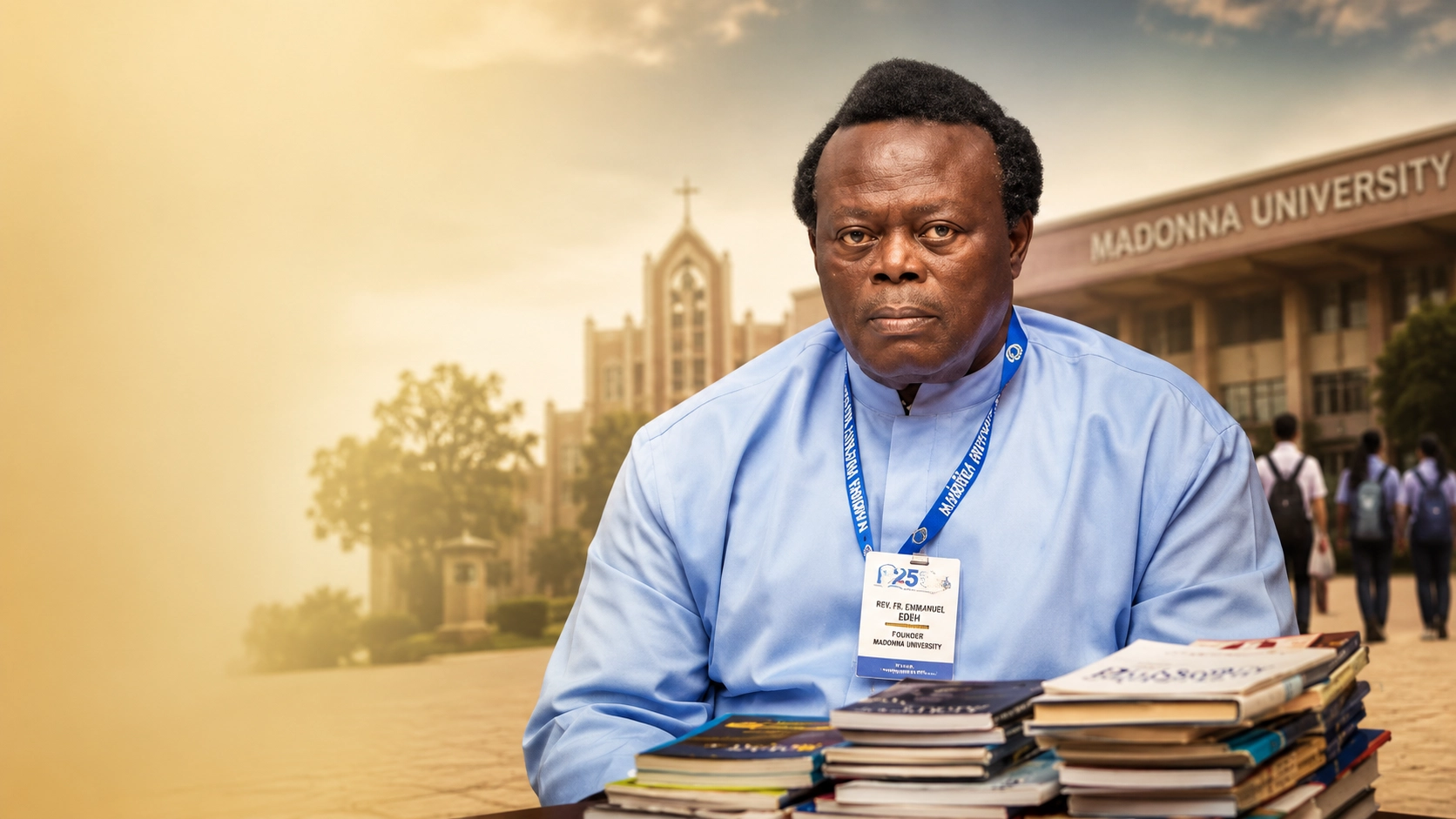
Rev Fr Emmanuel Edeh’s 50 Years of Impact
For five decades, generations of Nigerians have encountered Rev. Fr. Emmanuel Edeh in remarkably different ways — as a Catholic priest, educator, philosopher, founder, mentor, humanitarian, and spiritual leader whose influence stretches far beyond the walls of the church.
From the crowded prayer grounds in Elele to university campuses filled with thousands of students, the story of Rev. Fr. Emmanuel Edeh is not simply about a priest marking 50 years of ordination. It is the story of a man whose work has shaped education, faith, charity, and social transformation in Nigeria for half a century.
As he celebrates his golden jubilee in the priesthood, many Nigerians see the occasion not merely as a religious milestone but as a moment to reflect on the scale of influence one individual has had across generations through institutions, humanitarian outreach, and spiritual leadership.
The celebration has drawn admiration from Catholic faithful, former students, education stakeholders, clergy, humanitarian workers, and beneficiaries of programs linked to his ministries and institutions.
At the heart of the celebration lies a deeper national conversation: how Rev. Fr. Emmanuel Edeh helped redefine what priesthood could mean in modern Nigeria.
A Celebration of Faith, Sacrifice and Service
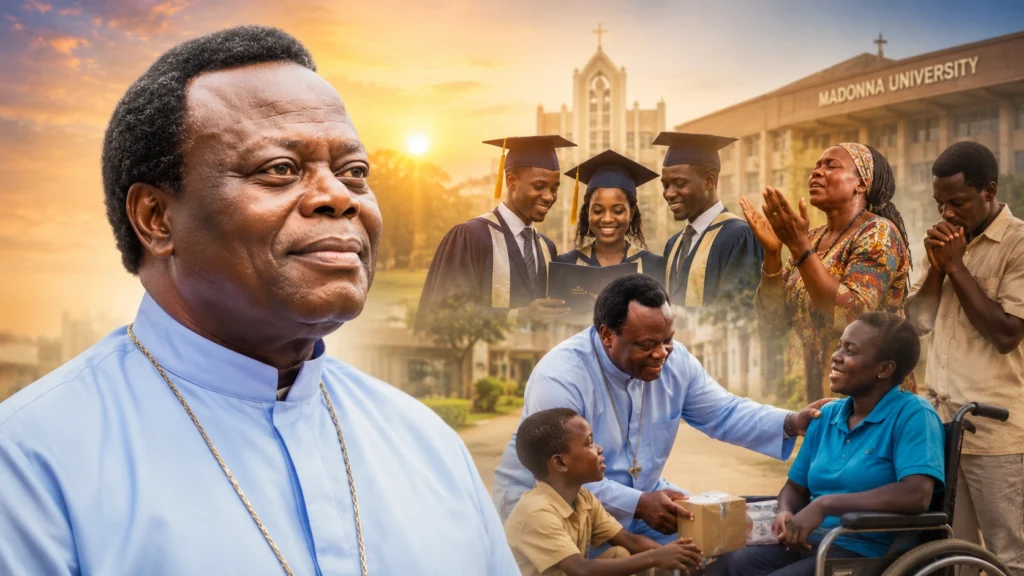
The golden jubilee marks 50 years since Rev. Fr. Emmanuel Edeh was ordained into the Catholic priesthood in 1976. Over those decades, his ministry evolved from traditional pastoral work into a broad mission touching education, healthcare, humanitarian support, youth development, and spiritual revival.
Church leaders and supporters describe the anniversary as more than a ceremonial event. For many, it represents a celebration of endurance, discipline, faith, and institution-building.
Across Nigeria, Catholic communities continue to regard Fr. Edeh as one of the country’s most influential religious figures, particularly because of his combination of spirituality and social intervention.
The significance of the milestone becomes clearer when viewed against Nigeria’s broader social realities. Over the last five decades, the country has faced military rule, economic crises, youth unemployment, educational instability, insecurity, and deep social inequalities.
Within that environment, Rev. Fr. Emmanuel Edeh built institutions that many supporters argue provided alternatives, opportunities, and hope for thousands of families.
His influence has spread through:
- Universities
- Technical institutions
- Religious ministries
- Healthcare outreach
- Humanitarian programs
- Youth empowerment initiatives
- Scholarship opportunities
The jubilee, therefore, serves not only as a personal celebration but also as a reflection on legacy.
The Man Behind the Institutions
Born on May 20, 1947, in Enugu State, Rev. Fr. Emmanuel Edeh grew up during a period that would eventually shape his worldview and philosophy of service.
He later became a member of the Congregation of the Holy Spirit, commonly known as the Spiritans (CSSp), a Catholic missionary congregation known for educational and humanitarian work.
Over time, Fr. Edeh developed a reputation as both a philosopher and social reform advocate. His philosophy of “Mma-di,” often associated with human dignity, compassion, and charity, became central to his worldview and institutional vision.
Observers say his experiences during Nigeria’s post-civil-war years strongly influenced his focus on rebuilding lives through education and faith.
Unlike many religious leaders whose influence remained confined to churches and seminaries, Fr. Edeh gradually expanded his mission into areas traditionally handled by governments and private institutions.
Supporters frequently describe him as:
- Disciplined
- Visionary
- Deeply spiritual
- Institution-focused
- Socially driven
Critics, however, have sometimes viewed his administrative style as strict and uncompromising, especially within educational institutions.
Yet even critics often acknowledge the scale of the institutions and initiatives he built.
Rev Fr Emmanuel Edeh and the Rise of Catholic Private Education
Perhaps one of the most defining aspects of Rev. Fr. Emmanuel Edeh’s legacy is his role in private education in Nigeria.
At a time when many Nigerian universities struggled with prolonged strikes, infrastructural decay, overcrowding, and declining standards, Fr. Edeh emerged as one of the major pioneers of private university education in the country.
His most widely known institution, Madonna University, became Nigeria’s first Catholic university and one of the earliest private universities in the country.
The establishment of Madonna University represented a major shift in Nigerian education.
For supporters, the institution symbolised:
- Discipline
- Moral instruction
- Academic consistency
- Uninterrupted learning calendars
- Faith-based education
Over the years, the university expanded its campuses and academic programs, producing graduates in:
- Medicine
- Law
- Engineering
- Nursing
- Pharmacy
- Social sciences
- Management sciences
The institution also became known for healthcare-related training, particularly in nursing and medical sciences.
Thousands of graduates from Madonna University have gone on to work across Nigeria and internationally.
Beyond Madonna University, Rev. Fr. Emmanuel Edeh also established:
- Caritas University
- OSISATECH Polytechnic
- Several schools and training institutions
These institutions collectively contributed to employment creation, academic development, and youth empowerment.
Supporters argue that his investments in education helped reduce pressure on Nigeria’s public education system while creating opportunities for students who might otherwise lack access to quality higher education.
The educational impact of these institutions stretches beyond classrooms.
Entire local economies around school communities benefited through:
- Housing
- Transport
- Commerce
- Healthcare services
- Construction projects
- Employment opportunities
In many ways, Fr. Edeh’s educational legacy became part of Nigeria’s broader private education revolution.
The Spiritual Movement in Elele
While many Nigerians know Rev. Fr. Emmanuel Edeh through his universities, others know him primarily through spirituality and healing ministry.
The Catholic Prayer Ministry of the Holy Spirit in Elele, Rivers State, became one of the most recognised Catholic prayer centres in Nigeria.
Over the years, thousands of worshippers reportedly visited the ministry seeking:
- healing
- spiritual renewal
- counseling
- deliverance
- hope during difficult periods
The prayer ground gradually evolved into a pilgrimage destination attracting people from across Nigeria and beyond.
For many Catholics, the ministry represented a rare blend of:
- Charismatic spirituality
- Catholic orthodoxy
- Humanitarian outreach
- Pastoral care
The ministry’s growth reflected a wider trend within African Christianity, in which faith communities increasingly became centres of emotional support, social intervention, and spiritual identity.
Supporters of Fr. Edeh often cite testimonies from worshippers who claim to have experienced healing, transformation, or personal breakthroughs through the ministry.
Although such claims remain matters of personal faith and religious belief, there is little doubt that the ministry achieved major influence within Nigeria’s Catholic landscape.
The ministry also strengthened Fr. Edeh’s image as more than an educator.
To many followers, he became:
- A spiritual father
- Counselor
- Mentor
- Humanitarian figure
- Symbol of hope
Humanitarian Work Beyond the Pulpit
One of the strongest aspects of Rev. Fr. Emmanuel Edeh’s public image is his humanitarian outreach.
Over the years, his ministries and institutions became associated with programs supporting:
- Persons with disabilities
- Underprivileged children
- Struggling families
- Students from poor backgrounds
- Vulnerable communities
Supporters frequently cite:
- Scholarship programs
- Homes for persons with disabilities
- Charitable outreach initiatives
- Educational sponsorship
- Empowerment efforts
This humanitarian focus reinforced his philosophy of dignity and service.
For many Nigerians, especially in underserved communities, educational access can determine the future of entire families.
By providing opportunities through scholarships and institutions, supporters say Fr. Edeh helped many young Nigerians achieve long-term social mobility.
Parents whose children benefited from educational opportunities often describe those interventions as life-changing.
In Nigeria’s difficult economic climate, access to higher education often depends on external support, institutional affordability, or scholarship interventions.
Humanitarian workers linked to Catholic outreach programs also point to the broader role faith-based organizations continue to play in filling social welfare gaps left by weak public systems.
This includes:
- Healthcare support
- Educational assistance
- Orphan care
- Food outreach
- Youth empowerment
In that context, Fr. Edeh’s work reflects a wider pattern in which religious institutions increasingly operate as parallel support structures within society.
Discipline, Criticism and Public Debate
Like many influential institutional figures, Rev. Fr. Emmanuel Edeh’s legacy has not been entirely free from criticism or controversy.
Some former students and observers have, over the years, debated the strict administrative systems associated with some of his institutions.
Critics occasionally argued that:
- Disciplinary measures were rigid
- Institutional regulations were excessive
- Administrative structures were highly centralised
Supporters, however, defended those approaches as part of efforts to maintain discipline, academic focus, and moral standards within private institutions.
The debate reflected broader national conversations around:
- Discipline in higher education
- Religious influence in universities
- Balancing authority with student freedom
- Moral instruction in educational systems
Despite differing opinions, even critics often acknowledged the scale of infrastructure and institutional influence associated with his work.
For many observers, the discussion around Fr. Edeh highlights a larger reality in Nigeria’s education sector: the tension between structure and freedom in faith-based institutions.
Redefining Priesthood in Modern Nigeria
One of the most important questions raised by Rev. Fr. Emmanuel Edeh’s 50-year journey is how the priesthood itself can evolve within African society.
Traditionally, the priesthood focused primarily on:
- sacraments
- evangelization
- parish leadership
- spiritual guidance
Fr. Edeh expanded that understanding into institution-building and social transformation.
His approach suggested that religious leadership could also involve:
- education
- economic empowerment
- social intervention
- healthcare
- humanitarian development
This broader interpretation of ministry resonated strongly within Nigeria, where religious leaders often occupy influential social positions.
Supporters believe his work demonstrates how faith-based leadership can contribute to nation-building beyond politics.
In Africa generally, religious institutions remain among the most trusted social structures.
Churches frequently provide:
- schools
- hospitals
- relief programs
- counseling services
- social support systems
Rev. Fr. Emmanuel Edeh’s legacy fits within that wider continental tradition.
The Broader Impact on Nigerian Society
The significance of Fr. Edeh’s work extends beyond religion.
His institutions contributed to:
- job creation
- educational expansion
- youth development
- healthcare training
- local economic growth
In communities hosting major institutions, economic activity expanded through:
- real estate development
- transportation services
- food businesses
- employment opportunities
- academic support services
The ripple effects impacted thousands of households indirectly connected to the institutions.
For many Nigerians, private universities became critical alternatives during periods when public institutions faced disruptions.
The emergence of institutions such as Madonna University also spurred broader competition in Nigeria’s higher education sector.
Analysts of private education in Nigeria often note that early private universities helped accelerate:
- educational diversification
- infrastructure competition
- curriculum innovation
- international academic partnerships
Although private education remains inaccessible to many low-income Nigerians due to tuition costs, supporters argue that pioneers like Fr. Edeh helped open new avenues for educational development.
Faith, Education and African Identity
Another major dimension of Rev. Fr. Emmanuel Edeh’s story is the intersection between African spirituality, Catholicism, and social identity.
His ministries and institutions emerged during a period when African churches increasingly emphasised local relevance and indigenous engagement.
Rather than presenting faith only through imported structures, many African religious leaders sought ways to connect spirituality with local realities.
Fr. Edeh’s humanitarian and educational focus reflected that broader movement.
His philosophy emphasised:
- human dignity
- communal responsibility
- charity
- moral development
- social restoration
In many ways, his work represents a uniquely African interpretation of faith-driven social transformation.
What Will History Remember?
As Rev. Fr. Emmanuel Edeh marks 50 years in the priesthood, questions about his legacy naturally emerge.
Will history remember him primarily as:
- a priest?
- an educator?
- a humanitarian?
- a spiritual leader?
- a university founder?
- a philosopher?
For many supporters, the answer may be all of the above.
His influence can be measured not only in institutions built but in lives altered through education, mentorship, spirituality, and opportunity.
Thousands of graduates, worshippers, families, and beneficiaries now form part of that legacy.
Long after the jubilee celebrations conclude, the institutions associated with his work are likely to continue shaping future generations.
That may ultimately become one of the defining aspects of his contribution:
The transformation of the priesthood from a purely ecclesiastical role into a broader mission touching nearly every layer of society.
A Legacy Still Unfolding
At 50 years of priesthood, Rev. Fr. Emmanuel Edeh’s story remains deeply connected to Nigeria’s evolving religious, educational, and humanitarian landscape.
His supporters view him as a visionary who used faith as a foundation for institution-building and social intervention.
Others continue to debate aspects of his methods and leadership style.
But few dispute the scale of his influence.
From university lecture halls to prayer grounds, from scholarship programs to humanitarian outreach, the footprint of his work remains visible across communities and generations.
As Nigeria continues to confront challenges in education, youth empowerment, healthcare, and social welfare, the role of faith-driven institutions may remain increasingly important.
In that wider national conversation, the story of Rev. Fr. Emmanuel Edeh stands as a powerful example of how one religious figure expanded ministry beyond the altar into education, charity, and nation-building.
And as the golden jubilee banners rise in celebration of 50 years of priesthood, many of those touched by his work may see the anniversary not simply as a religious milestone, but as a reflection of millions of lives changed through faith, opportunity, discipline, and hope.
Recommended Coverage
Church Security Concerns in Imo State
An examination of growing concerns around the protection of worship centres and sacred institutions in Nigeria.
Jerusalem and the Roots of Middle East Conflict
A historical and religious analysis of Jerusalem’s enduring global significance and its geopolitical implications.
Pope Leo’s Angola Visit and Social Renewal
How faith leadership continues to shape social and political conversations across Africa.
Bishops’ Plea to the U.S. Over Nigeria Controversy
A report exploring the intersection of religion, diplomacy, and public debate involving Nigeria’s Catholic leadership.
About the Author