US-Nigeria ISIS Operation Signals New Phase in Africa Counterterrorism War
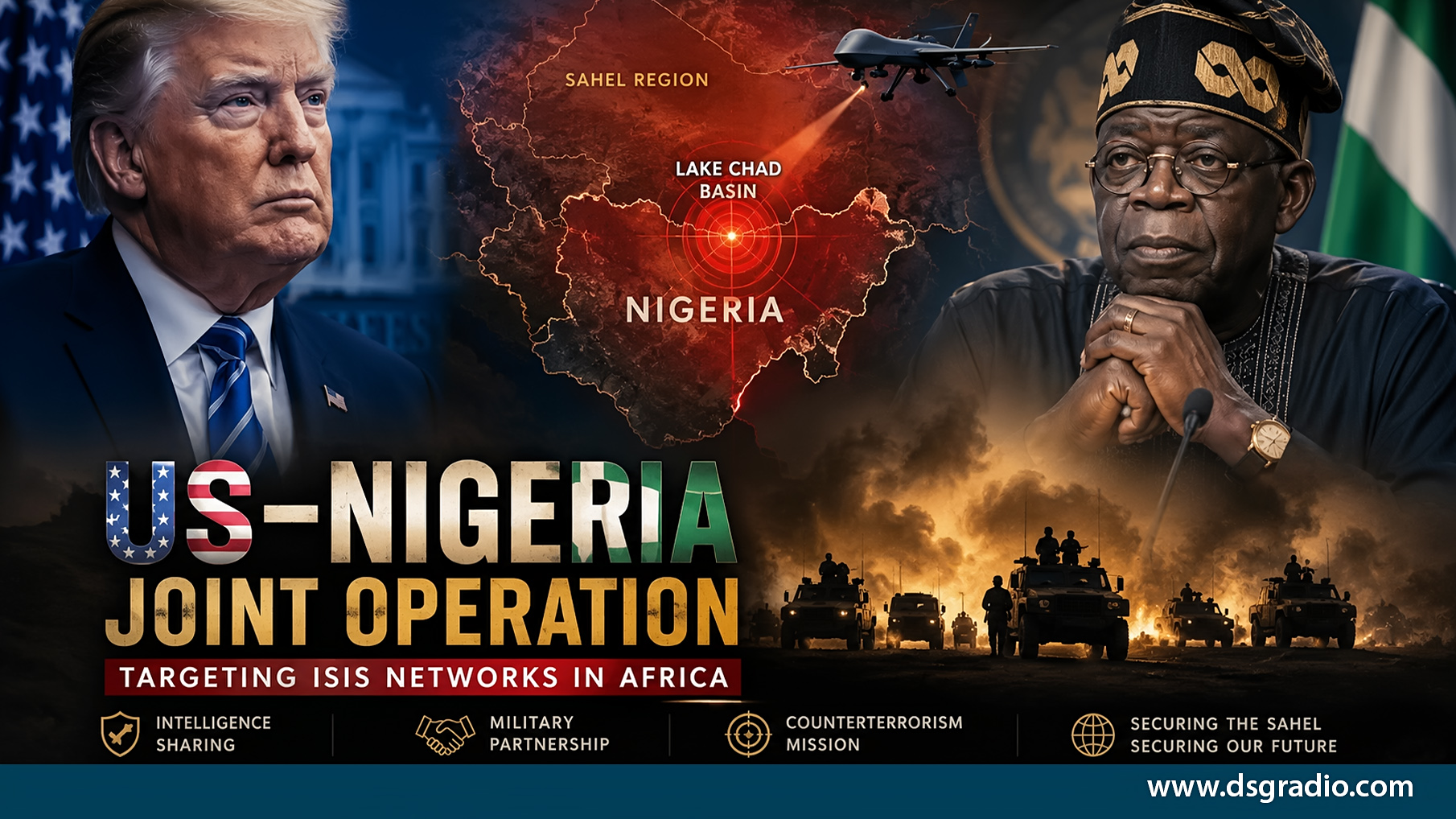
The US-Nigeria ISIS Operation that eliminated senior Islamic State figure Abu-Bilal al-Minuki has emerged as one of the most significant counterterrorism developments in Africa this year, highlighting a rapidly evolving military partnership between Washington and Abuja as extremist violence spreads across the Sahel and Lake Chad Basin.
United States President Donald Trump announced the operation late Friday, describing it as a “meticulously planned and very complex mission” jointly executed by American forces and the Armed Forces of Nigeria.
Trump identified al-Minuki as “ISIS’s second in command globally” and “the most active terrorist in the world,” claiming the militant leader had attempted to hide inside Africa while continuing to coordinate extremist activities linked to the Islamic State network.
Nigeria’s President Bola Ahmed Tinubu later confirmed the strike, stating that Nigerian forces working closely with the US military carried out a “daring joint operation” that killed al-Minuki alongside several of his lieutenants inside the Lake Chad Basin.
The operation immediately drew international attention because it underscored three major developments shaping global security:
- America’s increasing military focus on Africa
- Nigeria’s expanding role as a regional counterterrorism partner
- The growing importance of Islamic State affiliates operating outside the Middle East
The mission also reinforced concerns among security analysts that Africa has become one of the Islamic State group’s most active operational theatres following the collapse of ISIS strongholds in Syria and Iraq.
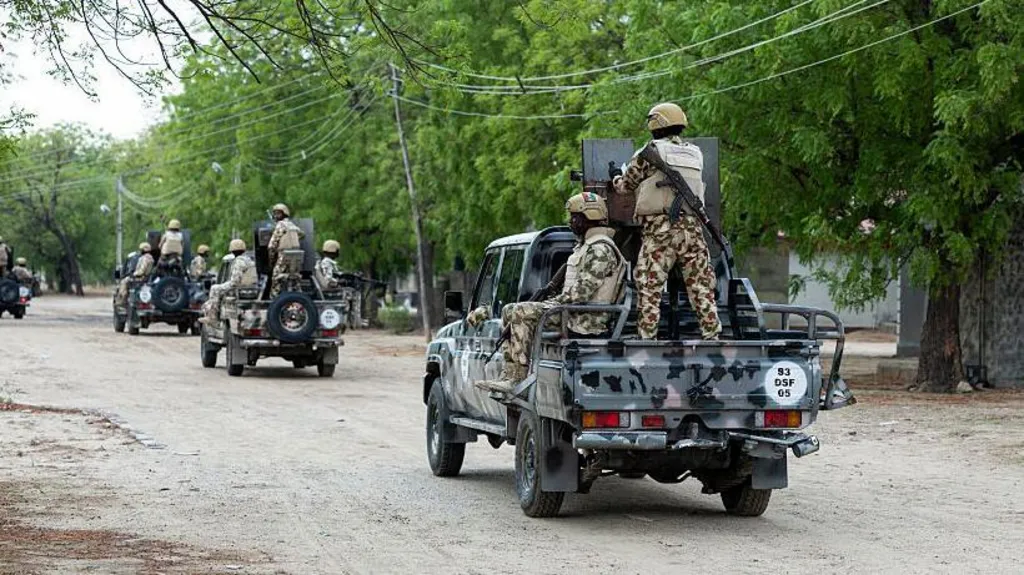
US Military Role Becomes Central in Africa Counterterrorism
The US-Nigeria ISIS Operation has placed renewed attention on the expanding role of American intelligence and military coordination across Africa.
Although details surrounding the operation remain limited, statements from both Washington and Abuja indicated that US intelligence-sharing capabilities played a decisive role in locating and targeting al-Minuki.
Trump suggested American surveillance assets and intelligence networks tracked the militant leader’s movements over time.
“He thought he could hide in Africa, but little did he know we had sources who kept us informed on what he was doing,” Trump wrote in a statement posted on Truth Social.
Nigerian military officials later confirmed that intelligence cooperation with the United States contributed significantly to the mission’s success.
The operation reflects a broader shift in US counterterrorism priorities after years of concentrating heavily on the Middle East.
Since the collapse of ISIS’s territorial control in Iraq and Syria, American defence and intelligence agencies have increasingly warned that extremist groups are rebuilding networks across parts of Africa, particularly in:
- The Sahel
- Lake Chad Basin
- Somalia
- Mozambique
- Central Africa
Washington now views African extremist groups not merely as localized insurgencies but as components of wider transnational militant networks capable of threatening regional and international security interests.
The United States has gradually expanded:
- Intelligence partnerships
- Drone operations
- Security advisory missions
- Counterterrorism coordination
- Surveillance operations
…across multiple African states.
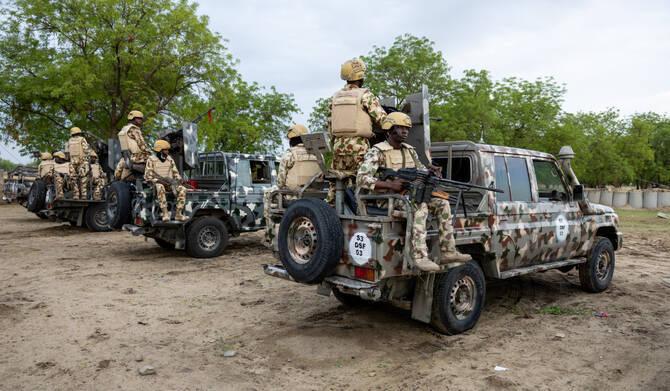
According to international reports, the United States deployed military advisers and additional security assets to Nigeria earlier this year as cooperation between the two countries intensified.
Recent operations have also included coordinated actions targeting ISIS-linked infrastructure and militant supply routes.
The latest strike, therefore, represents more than a single battlefield success. It signals Washington’s growing willingness to treat Africa as a major front in the global fight against extremist organisations.
Who was Abu-Bilal al-Minuki?
Abu-Bilal al-Minuki, also identified in some reports as Abu Bakr al-Mainuki, was considered one of the most influential Islamic State figures operating in Africa.
Security monitoring organisations and military officials said he rose through extremist ranks in northeastern Nigeria before becoming deeply involved in the Islamic State West Africa Province, commonly known as ISWAP.
Analysts believe his nickname originated in Mainok, a town in Borno State, in line with regional naming traditions.
Al-Minuki reportedly became increasingly influential after the death of Mamman Nur in 2018, eventually helping oversee extremist operations across parts of West Africa and the Sahel.
International security assessments linked him to:
- Cross-border militant coordination
- Financing operations
- Recruitment activities
- Logistics movement
- Operational planning
Nigerian military officials also alleged that he helped facilitate the movement of fighters into Libya during the height of ISIS expansion in North Africa.
Authorities further linked him to attacks targeting civilians and minority communities.
Some reports additionally associated him with the 2018 Dapchi schoolgirls kidnapping carried out by Boko Haram-linked militants in northeastern Nigeria.
Several of those claims could not be independently verified.
The United States designated al-Minuki as a Specially Designated Global Terrorist in 2023.
Officials described him as a senior operational strategist inside the global ISIS hierarchy and alleged he had become involved in directing extremist activities extending beyond West Africa.
The scale of his exact authority within ISIS remains unclear because militant networks often operate through fragmented regional structures.
However, both Nigerian and American officials portrayed his elimination as a major strategic victory.
Why Africa Has Become ISIS’s New Frontier
The US-Nigeria ISIS Operation reflects a wider geopolitical reality that many Western governments have increasingly acknowledged: Africa has become central to the future trajectory of global jihadist movements.
After losing physical territory in Iraq and Syria, ISIS affiliates began shifting operational focus toward unstable regions where governments struggled with weak institutions, porous borders and longstanding security crises.
The Sahel rapidly emerged as one such region.
Stretching across parts of:
- Mali
- Niger
- Burkina Faso
- Chad
- Nigeria
- Cameroon
…the region has experienced escalating violence involving:
- Islamist insurgencies
- Ethnic militias
- Criminal trafficking networks
- Political instability
- Military coups
Security analysts warn that extremist groups have exploited:
- Weak governance
- Economic hardship
- Youth unemployment
- Intercommunal tensions
- Limited state presence
…to expand influence.
The Lake Chad Basin became particularly important because its difficult terrain allows militant groups to cross borders while evading surveillance.
The region’s marshlands, waterways and remote settlements have long provided operational cover for Boko Haram and ISWAP factions.
The Islamic State West Africa Province emerged after Boko Haram pledged allegiance to ISIS in 2015.
Although internal divisions later fractured the movement, ISWAP gradually evolved into one of Africa’s most organised extremist groups.
The faction established taxation systems, coordinated attacks on military positions and expanded recruitment networks throughout remote communities.
International security observers increasingly regard ISWAP as one of the most dangerous ISIS affiliates globally.
The elimination of al-Minuki, therefore, carries symbolic importance because it targets not just a regional militant figure but a broader network connecting African insurgencies to the global Islamic State movement.
Nigeria’s Growing Role in Global Security Strategy
The US-Nigeria ISIS Operation also reflects Nigeria’s growing importance within international counterterrorism calculations.
Nigeria remains Africa’s most populous country and one of the continent’s largest economies.
Its geographic position places it at the centre of security dynamics affecting:
- West Africa
- The Sahel
- Central Africa
For years, Nigeria battled Boko Haram insurgency largely through domestic military operations and regional coalitions involving neighbouring states.
However, worsening instability across the Sahel has increased pressure for broader international cooperation.
President Tinubu recently defended Nigeria’s expanding security partnerships during a speech at the Africa CEO Forum in Kigali, Rwanda.
“Security challenges will always be there,” Tinubu said.
“Those are things you cannot do alone.”
His remarks reflected Abuja’s increasingly pragmatic approach to international military cooperation amid evolving extremist threats across the region.
Nigeria has recently strengthened its collaboration with:
- The United States
- France
- Regional intelligence services
- Multinational Joint Task Force partners
Joint operations now increasingly involve:
- Intelligence-sharing
- Drone surveillance
- Airstrike coordination
- Counterterrorism planning
- Border security cooperation
The US-Nigeria ISIS Operation demonstrates how Nigeria is positioning itself as a central security partner in efforts to contain extremist violence spreading throughout West Africa.
Lake Chad Basin Remains a Critical Battlefield
The operation against al-Minuki took place in the Lake Chad Basin, a region considered one of Africa’s most strategically important conflict zones.
The basin stretches across:
- Nigeria
- Chad
- Niger
- Cameroon
Its vast waterways and inaccessible terrain have complicated military operations for years.
Militant groups use the area to:
- Establish camps
- Hide weapons
- Move fighters
- Launch cross-border raids
- Evade government forces
Millions of civilians across the region have been affected by violence linked to Boko Haram and ISWAP insurgencies.
Humanitarian agencies continue to report:
- Mass displacement
- Food insecurity
- Destruction of communities
- Education disruption
- Healthcare shortages
The region’s instability has also fueled concerns among international governments that extremist organizations could strengthen long-term footholds across Africa.
Security analysts believe the Lake Chad Basin may remain one of the most active fronts in the global counterterrorism landscape over the coming decade.
America’s Expanding Military Focus on Africa
The US-Nigeria ISIS Operation comes amid a noticeable expansion of American security involvement across Africa.
Washington has become increasingly concerned about:
- Russian influence in the Sahel
- Chinese strategic expansion
- Growing extremist activity
- Regional instability
Counterterrorism now intersects with broader geopolitical competition.
The United States has recently:
- Increased military coordination
- Expanded intelligence cooperation
- Conducted drone missions
- Supported partner forces
- Carried out targeted strikes
…across multiple regions.
American officials argue these operations aim to prevent extremist groups from rebuilding international attack capabilities.
Critics, however, warn that foreign military involvement alone cannot solve the underlying political and economic conditions fueling insurgency.
Security experts say long-term stabilisation will require:
- Governance reforms
- Economic investment
- Community engagement
- Border security improvements
- Regional cooperation
Nevertheless, Washington appears increasingly determined to prevent Africa from becoming the next major operational hub for global extremist organisations.
What the Operation Means for ISIS Networks
The death of Abu-Bilal al-Minuki could temporarily disrupt command and operational structures linked to ISIS activities across West Africa.
Trump claimed the operation significantly weakened ISIS’s global capabilities.
“With his removal, ISIS’s global operation is greatly diminished,” he said.
Independent verification of that assessment remains limited.
Counterterrorism experts caution that extremist groups often adapt quickly after losing senior figures.
Leadership replacements, decentralised structures and localised recruitment networks can allow militant organisations to continue operating despite high-profile losses.
Still, the symbolic impact of the operation remains significant.
The mission demonstrated:
- Deep US-Nigeria operational cooperation
- Advanced intelligence-sharing
- Growing international focus on African militancy
- Washington’s willingness to conduct overseas counterterrorism missions
It also highlighted Africa’s increasing importance within global security calculations.
Risks of Retaliation and Regional Instability
Security analysts warn that retaliatory attacks remain possible after major operations targeting extremist leaders.
Nigeria continues facing multiple overlapping security crises involving:
- Boko Haram
- ISWAP
- Armed banditry
- Kidnapping networks
- Communal violence
Neighbouring countries, including Niger, Chad and Cameroon, also remain vulnerable to cross-border militant activity.
Recent instability in parts of the Sahel has complicated regional military coordination efforts.
Military coups, shifting alliances and tensions involving foreign powers have altered security partnerships across the region.
The US-Nigeria ISIS Operation therefore, occurs against a much larger geopolitical backdrop involving:
- Counterterrorism
- Strategic influence
- Regional power competition
- Security realignment
Whether the operation ultimately weakens extremist networks over the long term may depend on broader regional stability efforts beyond military strikes alone.
Recommended Coverage
- ISIS Expansion Raises New Security Fears in Nigeria — Examines how extremist networks have expanded across West Africa and intensified regional counterterrorism concerns.
- Boko Haram Attack Exposes Regional Security Gaps — Analyzes vulnerabilities facing Lake Chad Basin states amid rising militant attacks.
- Nigerian Army Intercepts Terrorist Medical Supplies — Details recent Nigerian military operations targeting insurgent logistics networks.
- Mali Security Crisis Tests Russia Alliance Strength — Explores how international power competition is reshaping Sahel security dynamics.
About the Author