Pyongyang Signals Tougher Nuclear Retaliation Doctrine Amid Rising Geopolitical Tensions
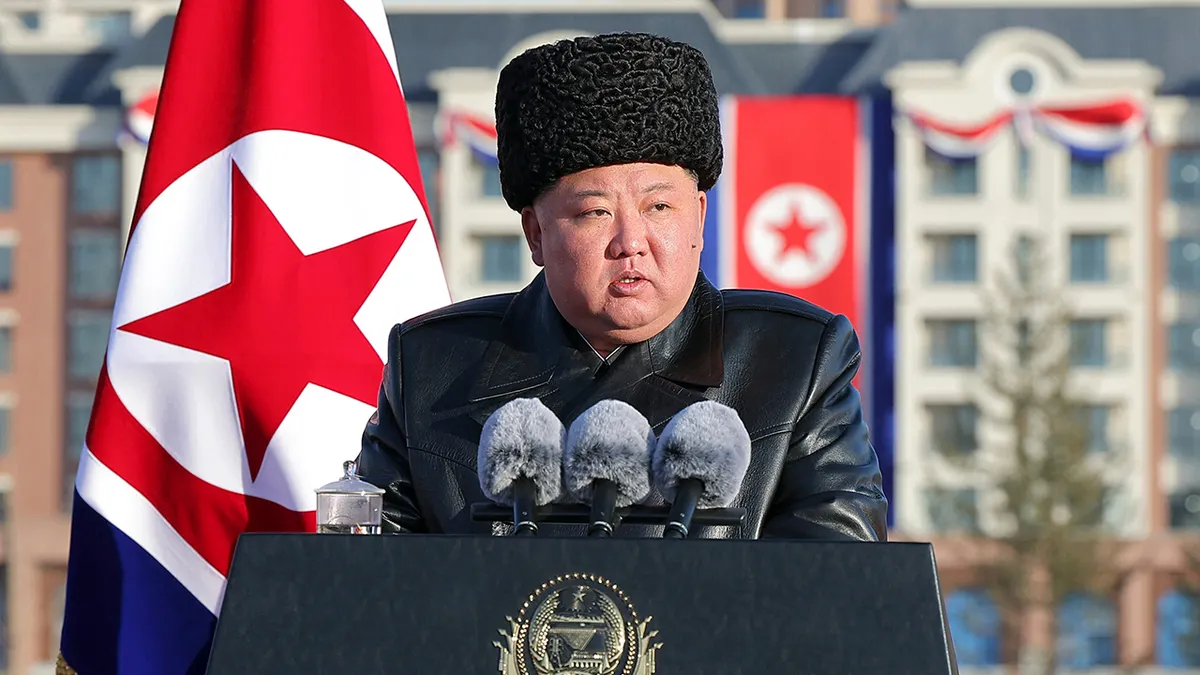
North Korea has reportedly revised its constitution to permit an automatic nuclear strike if leader Kim Jong Un is assassinated or the country’s command structure is incapacitated, according to intelligence assessments cited in international media reports. The move comes amid heightened global tensions following recent conflicts involving Iran, Israel, and the United States, raising fresh concerns over nuclear escalation and regional security in East Asia.
The constitutional update was reportedly approved during a session of North Korea’s Supreme People’s Assembly held in Pyongyang on March 22. South Korea’s National Intelligence Service (NIS) later briefed senior government officials on the changes, according to reports.
Under the revised policy, North Korea’s nuclear forces could launch retaliatory strikes automatically if the country’s leadership or command-and-control systems are attacked. Analysts say the doctrine resembles Cold War-era “dead hand” nuclear systems designed to guarantee retaliation even if national leadership is eliminated.
The development reflects Pyongyang’s increasing emphasis on nuclear deterrence as Kim Jong Un continues to expand the country’s military posture amid deteriorating relations with South Korea and the United States.
North Korea’s Constitutional Shift
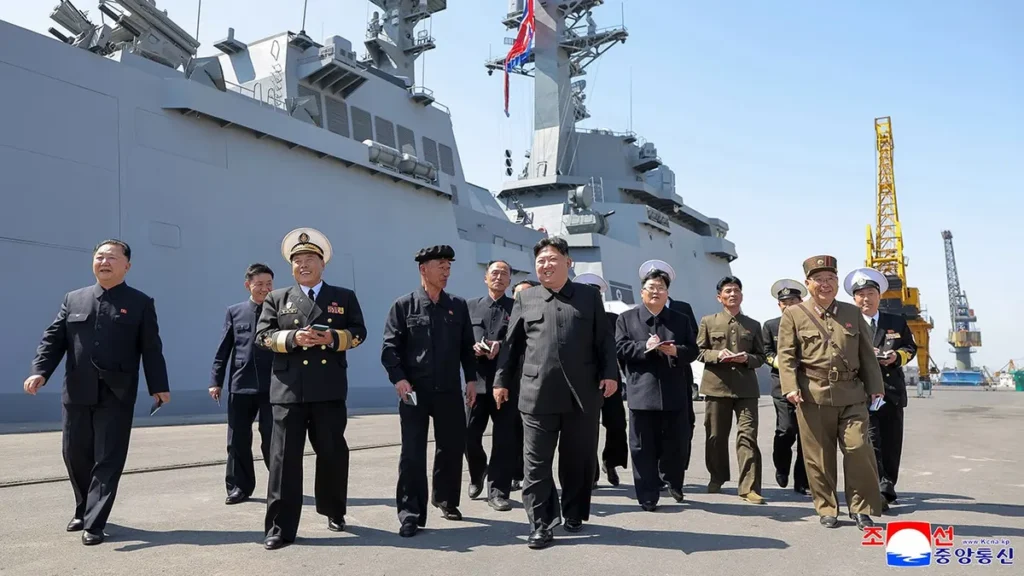
The reported constitutional change introduces one of the most aggressive elements yet into North Korea’s nuclear strategy. According to the reported wording of the amendment, a nuclear strike would be launched “automatically and immediately” if hostile attacks threaten the state’s nuclear command structure.
Security experts say the doctrine appears designed to deter any potential decapitation strike targeting Kim Jong Un or the country’s senior military leadership.
The policy adjustment reportedly followed growing global tensions after the killing of Iran’s Supreme Leader Ali Khamenei during a recent Israeli strike in Tehran, which was described in reports as part of a coordinated U.S.-Israeli military operation.
While details surrounding the broader geopolitical fallout remain contested internationally, analysts believe Pyongyang is increasingly studying global conflicts to shape its own military and nuclear strategies.
According to a report by Fox News, South Korean intelligence officials informed government leaders about the constitutional revision during a recent security briefing.
This could not be independently verified.
What Is an Automatic Nuclear Strike Policy?
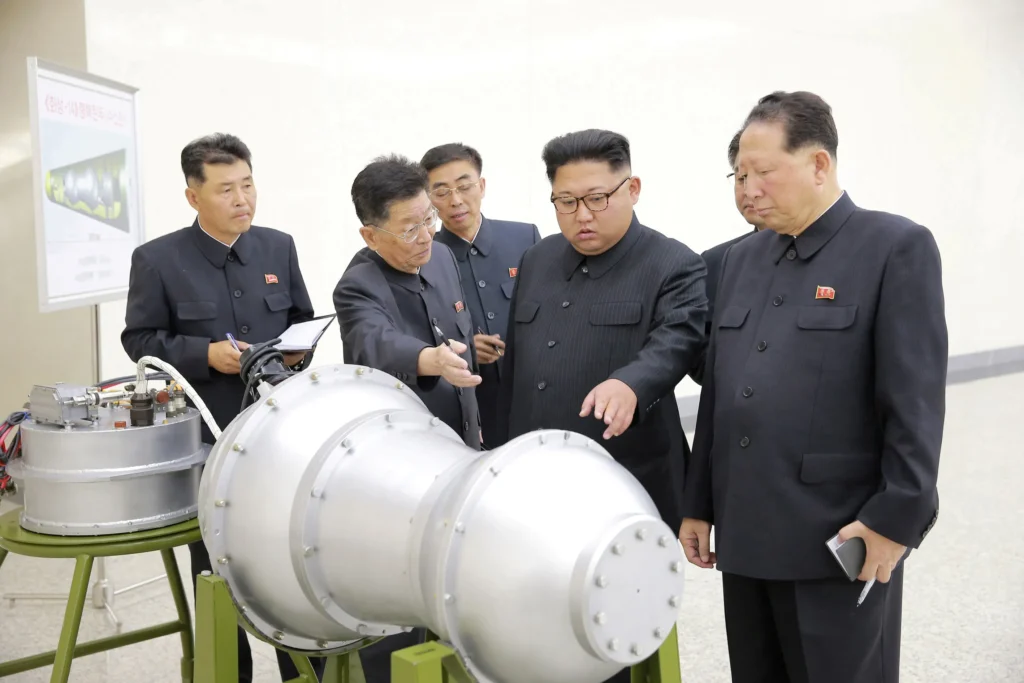
An automatic nuclear strike doctrine is a military policy that allows nuclear weapons to be launched without direct human authorisation if specific conditions are met, particularly the destruction or incapacitation of national leadership.
Such systems are intended to ensure retaliation even after a devastating first strike by an adversary. During the Cold War, similar concepts were associated with the Soviet Union’s so-called “Dead Hand” system, which was reportedly designed to trigger a retaliatory strike if the Soviet leadership were wiped out.
Security analysts warn that automated retaliation systems significantly increase global risk by reducing the time available for political or diplomatic intervention during crises.
Experts also argue that automated nuclear doctrines can increase the possibility of accidental escalation, especially during periods of high military tension or cyber warfare.
The latest North Korean move may therefore reshape regional military calculations across East Asia, where tensions involving South Korea, Japan, China, Russia, and the United States remain highly sensitive.
Kim Jong Un’s Expanding Nuclear Strategy
Kim Jong Un has repeatedly emphasised the importance of nuclear weapons to North Korea’s survival and sovereignty. In recent years, Pyongyang has accelerated missile tests, expanded military drills, and revised constitutional language surrounding national defence.
Reuters previously reported that North Korea amended its constitution to formally define South Korea as a separate hostile state while removing references to reunification policies that had historically shaped relations between the two Koreas.
The constitutional changes marked a major symbolic shift in inter-Korean relations and reflected Kim’s increasingly confrontational rhetoric toward Seoul.
Last month, Kim pledged to further strengthen North Korea’s nuclear arsenal while describing South Korea as the country’s “most hostile” adversary. He has also accused the United States of engaging in “state terrorism and aggression,” according to state media reports.
Analysts believe the latest constitutional revision is part of a broader strategy aimed at reinforcing deterrence while signalling that North Korea is prepared for long-term confrontation with Washington and its allies.
The country’s military modernisation program has included:
- Expansion of ballistic missile systems
- Development of submarine-launched missiles
- Increased nuclear warhead capabilities
- Cyber warfare operations
- Expanded military surveillance infrastructure
Earlier reports on cyber-related North Korean activities have also drawn international concern. In a related development, DSG HERALD previously examined how North Korean hackers targeted U.S. crypto firms through sophisticated cyber operations via this report: North Korean hackers linked to crypto attacks.
Regional Security Implications
The reported doctrine change is likely to deepen concerns among neighbouring countries, particularly South Korea and Japan, both of which rely heavily on U.S. security guarantees.
Military experts say any doctrine involving automatic retaliation increases the risk of rapid escalation during misunderstandings or military confrontations.
South Korea has consistently strengthened joint military coordination with the United States in response to North Korea’s expanding missile capabilities. Washington has also increased strategic deployments in the region, including nuclear-capable submarines and long-range bomber exercises.
China and Russia, meanwhile, continue to oppose instability on the Korean Peninsula while simultaneously criticising expanded U.S. military activity in East Asia.
The constitutional shift may also influence ongoing debates around missile defence systems and nuclear deterrence strategies in the Indo-Pacific region.
Some analysts warn that increasingly aggressive nuclear doctrines worldwide could create a dangerous cycle of escalation involving multiple global powers.
Global Tensions and the Iran Connection
The reported constitutional revision comes at a time when global geopolitical tensions are already running high.
Conflicts involving Iran, Israel, Russia, Ukraine, and U.S.-China rivalry have contributed to fears of broader international instability. Analysts say North Korea may be using these developments to reinforce its belief that nuclear deterrence remains essential for regime survival.
The reference to the killing of Iran’s Supreme Leader in reports surrounding the constitutional amendment has particularly attracted international attention because it suggests Pyongyang is drawing lessons from recent Middle East conflicts.
Some security experts believe North Korea fears that regime-targeting military operations used elsewhere could eventually be applied against its leadership.
That perception may partly explain why Kim Jong Un continues to prioritise military readiness and nuclear survivability.
DSG HERALD previously explored broader fears surrounding geopolitical escalation in this analysis: Will There Be World War 3? Analysing Global Tensions and Risks.
Growing International Concern
International observers say the latest doctrine reflects a continued deterioration in diplomatic relations involving North Korea.
Formal denuclearisation talks between Pyongyang and Washington have largely stalled in recent years, while sanctions and military tensions have continued to rise.
Critics argue that expanding automatic retaliation policies could complicate future diplomatic negotiations and reduce opportunities for de-escalation during military crises.
Others believe the move is primarily strategic messaging intended to discourage any attempt at regime change or military intervention.
Details regarding how the policy would operate in practice remain unclear.
No official public constitutional document detailing the exact mechanism of the reported automatic launch system has been independently released.
Conclusion
North Korea’s reported constitutional update marks another significant evolution in its nuclear doctrine and reflects the increasingly volatile global geopolitical landscape.
By reportedly embedding automatic retaliation into national policy, Pyongyang appears determined to strengthen deterrence while signalling that any attempt to eliminate its leadership could trigger catastrophic consequences.
The development is likely to intensify security concerns across Asia and beyond as world powers continue to navigate growing geopolitical rivalries, military buildups, and fears of wider conflict.
Whether the move represents an operational military reality or a strategic warning, analysts agree it underscores the fragile nature of international security in an era of escalating global tensions.
Recommended Coverage
- Will There Be World War 3? Analyzing Global Tensions and Risks
A deeper analysis of rising geopolitical tensions involving global powers and the risks of broader military escalation. - North Korean Hackers Linked to U.S. Crypto Attacks
Examines international concerns over North Korea’s cyber warfare capabilities and financial operations. - Liquid E-Cigarettes Regulation Expands Under New Law
Explores how governments worldwide are tightening regulations amid growing global policy shifts and security concerns.
About the Author