US Iran Strategy Faces Questions Over Mixed Signals
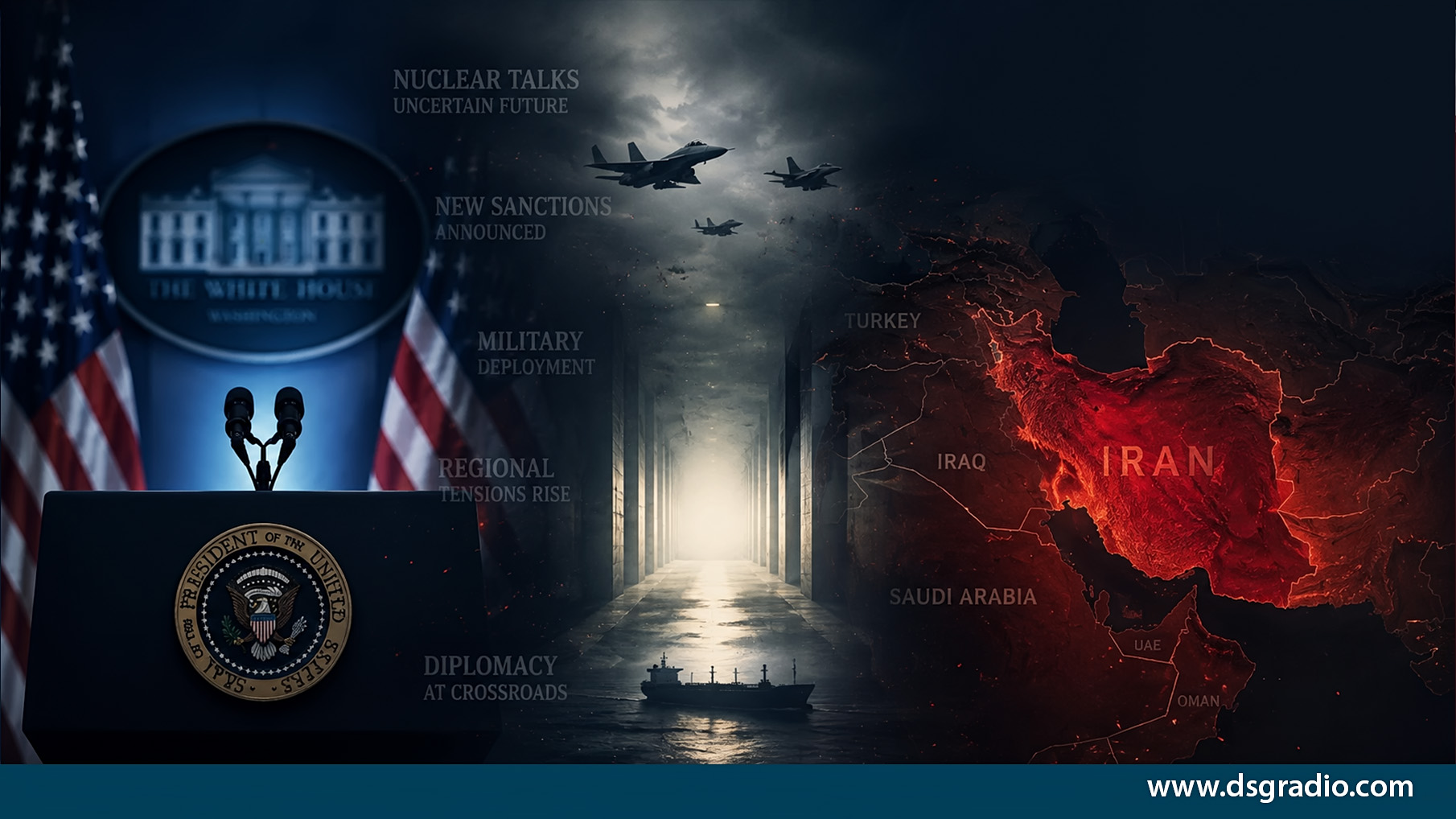
From shifting red lines to unclear military objectives, the US Iran strategy has become the focus of growing international scrutiny as Washington’s messaging on Iran appears to evolve rapidly, sometimes contradicting earlier statements within weeks.
The debate intensified after a series of policy shifts, military deployments, diplomatic warnings, and political disagreements in Washington raised questions over whether the United States is pursuing deterrence, regime pressure, negotiation, or a broader regional strategy. Analysts say the uncertainty is fueling concerns among allies, rivals, and global markets already watching instability in the Middle East.
The issue has become increasingly relevant as tensions involving Iran, Israel, Gulf allies, and the United States continue to reshape geopolitical calculations across Europe, Asia, and Africa.
What Is America’s Real Objective in Iran?
One of the biggest questions surrounding the current US Iran strategy is whether Washington’s end goal is clearly defined.
Official US statements have alternated between:
- Preventing wider regional escalation
- Deterring Iranian military influence
- Protecting allies and shipping routes
- Reviving diplomatic leverage
- Increasing economic pressure
- Avoiding direct war
However, critics argue that military positioning and policy rhetoric have sometimes suggested broader objectives than those publicly acknowledged.
Some analysts believe the mixed signals stem from competing priorities within Washington. While some officials emphasise diplomacy and containment, others advocate stronger military deterrence or tougher enforcement of sanctions.
The uncertainty has contributed to growing debate in Congress, media circles, and international policy institutions over whether the US strategy has a clearly defined endpoint.
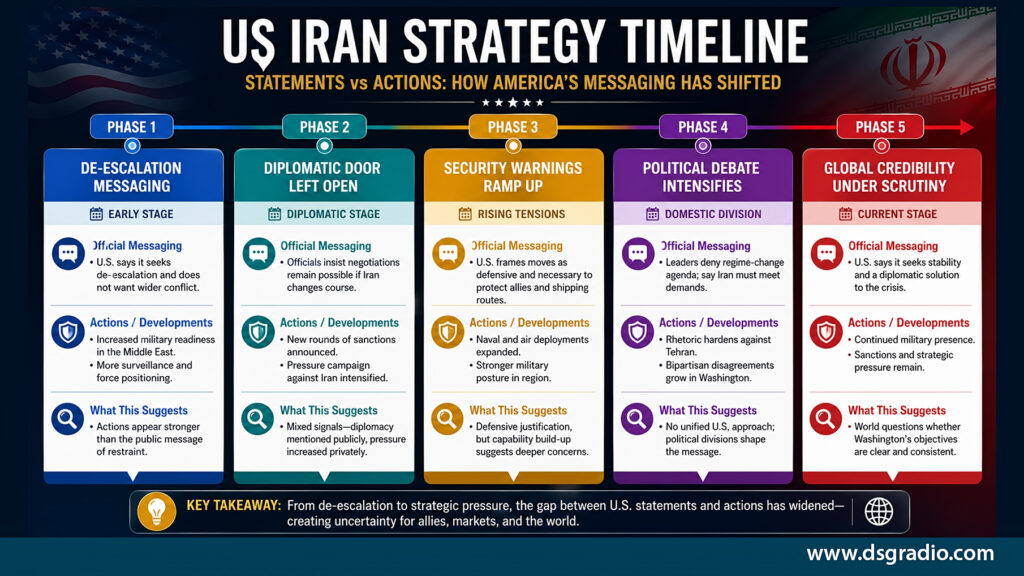
US Iran Strategy Timeline: Statements vs Actions
The evolving narrative surrounding the US Iran strategy has become more visible through comparisons between official statements and subsequent actions.
Timeline Breakdown
| Period | Official Messaging | Actions or Developments | Contradiction Raised |
|---|---|---|---|
| Early phase | US says it seeks de-escalation | Increased military readiness in region | Critics question escalation risks |
| Diplomatic stage | Officials stress negotiations remain possible | Additional sanctions announced | Mixed diplomatic signals |
| Security warnings | US frames moves as defensive | Expanded naval and air deployments | Concerns over mission expansion |
| Political debate intensifies | Leaders deny regime-change agenda | Rhetoric hardens against Tehran | Questions over long-term goals |
Analysts say these shifts have created confusion about whether Washington’s posture is primarily defensive or strategically transformative.
The evolving timeline has also become central to wider US Iran conflict analysis, especially as observers compare public messaging with operational decisions.
Why US Messaging on Iran Keeps Changing
Several factors appear to be driving the changing narrative.
Internal Political Divisions
The Iran debate has exposed divisions within US political circles over:
- Military engagement
- Diplomatic priorities
- Alliance management
- Energy security
- Regional influence
Some lawmakers argue that stronger deterrence is necessary to prevent instability. Others warn that unclear messaging risks dragging the United States into another prolonged Middle East conflict.
Election-Year Pressure
Political analysts also note that domestic political calculations may be influencing how leaders communicate foreign policy decisions.
Strong rhetoric may appeal to certain political audiences, while diplomatic messaging aims to reassure international partners concerned about the risk of escalation.
Rapidly Changing Regional Dynamics
Events involving Israel, Gulf states, shipping routes, proxy groups, and energy markets continue to evolve quickly, forcing policymakers to adjust their language and priorities in real time.
The Strait of Hormuz remains a major concern due to its importance to global oil supply routes. DSG HERALD previously reported on the growing tensions surrounding the region in its coverage of the US Navy blockade debate in the Strait of Hormuz.
Is the US Pursuing Regime Change or Deterrence?
The distinction between deterrence and regime pressure has become one of the most debated aspects of current policy discussions.
US officials have repeatedly stated that Washington does not seek full-scale war. However, critics point to:
- Expanded military positioning
- Escalating rhetoric
- Economic pressure campaigns
- Strategic alliance coordination
as indicators that the broader strategy may extend beyond simple deterrence.
Iranian officials, meanwhile, have accused Washington of attempting to weaken Tehran’s regional influence under the guise of security operations.
Details remain unclear regarding how far current policies could evolve if tensions continue to rise.
Iraq and Afghanistan Comparisons Return
The growing debate has revived comparisons to previous US military engagements in Iraq and Afghanistan.
Critics argue that some warning signs appear familiar:
- Unclear long-term objectives
- Expanding mission scope
- Intelligence-related disputes
- Public uncertainty
- Credibility challenges
Supporters of the current policy reject those comparisons, arguing that the present situation differs significantly in terms of regional alliances, military posture, and diplomatic engagement.
Still, the historical parallels continue to shape public debate, especially among analysts concerned about “mission creep”, the gradual expansion of limited military objectives.
The issue of alliance credibility has also resurfaced in broader geopolitical discussions. DSG HERALD recently examined similar concerns in its report on global security fears linked to NATO tensions.
How Policy Confusion Is Affecting US Global Credibility
The broader implications of the evolving US Iran strategy extend beyond the Middle East.
NATO and European Concerns
Several European allies have emphasised the importance of avoiding wider regional conflict, especially amid ongoing economic pressures and energy market instability.
Diplomatic observers say inconsistent messaging can complicate alliance coordination, particularly when governments interpret Washington’s intentions differently.
China and Russia Positioning
China and Russia have also increased diplomatic engagement with Iran amid deepening tensions.
Beijing has continued expanding its regional economic influence, while Moscow has strengthened strategic cooperation with Tehran in areas involving defence and regional coordination.
DSG HERALD previously explored the geopolitical implications of this power competition in its report on China’s growing strategic influence in global security corridors.
Energy and Global Markets
Oil markets remain highly sensitive to instability involving Iran and key shipping routes.
Any escalation affecting maritime trade could trigger wider economic consequences for countries already dealing with inflation and energy security challenges.
America Iran War Timeline Becomes Central to Public Debate
The phrase “America-Iran war timeline” has increasingly appeared in public discussions as analysts, journalists, and policymakers attempt to track how US messaging has evolved.
Observers say the issue is no longer only about military strategy, but also about credibility, predictability, and trust in official communication.
Questions surrounding transparency have intensified as lawmakers and analysts seek clearer explanations regarding:
- Military objectives
- Diplomatic conditions
- Strategic limitations
- Long-term regional planning
Some experts argue that inconsistent messaging may reduce Washington’s leverage internationally, while others believe strategic ambiguity can sometimes serve as a deterrence tool.
Can the Conflict Remain Controlled?
The central concern now facing policymakers is whether the current trajectory can remain contained.
Supporters of Washington’s approach argue that pressure and deterrence are necessary to prevent larger instability.
Critics warn that unclear objectives increase the risk of unintended escalation, especially in a region where military incidents can rapidly trigger wider geopolitical consequences.
If Washington’s strategy remains unclear, analysts say the risk may extend beyond military escalation to long-term damage to diplomatic credibility and alliance trust.
For now, the world continues to watch for greater clarity on what America’s actual endgame in Iran may be.
Recommended Coverage:
- US-Iran Talks Stall as Global Tensions Rise
This report examines how failed diplomatic negotiations are increasing pressure on regional security calculations. - Iran-Russia Relations Deepen Amid US Pressure
Explore how Moscow and Tehran are strengthening strategic coordination as geopolitical tensions intensify. - US-Iran Ceasefire Debate Raises Regional Concerns
This analysis looks at how ceasefire uncertainty could affect broader diplomatic talks in South Asia and the Middle East. - Trump Criticizes Pope Over Iran War Comments
A closer look at how the Iran debate is influencing political and cultural divisions globally.
About the Author