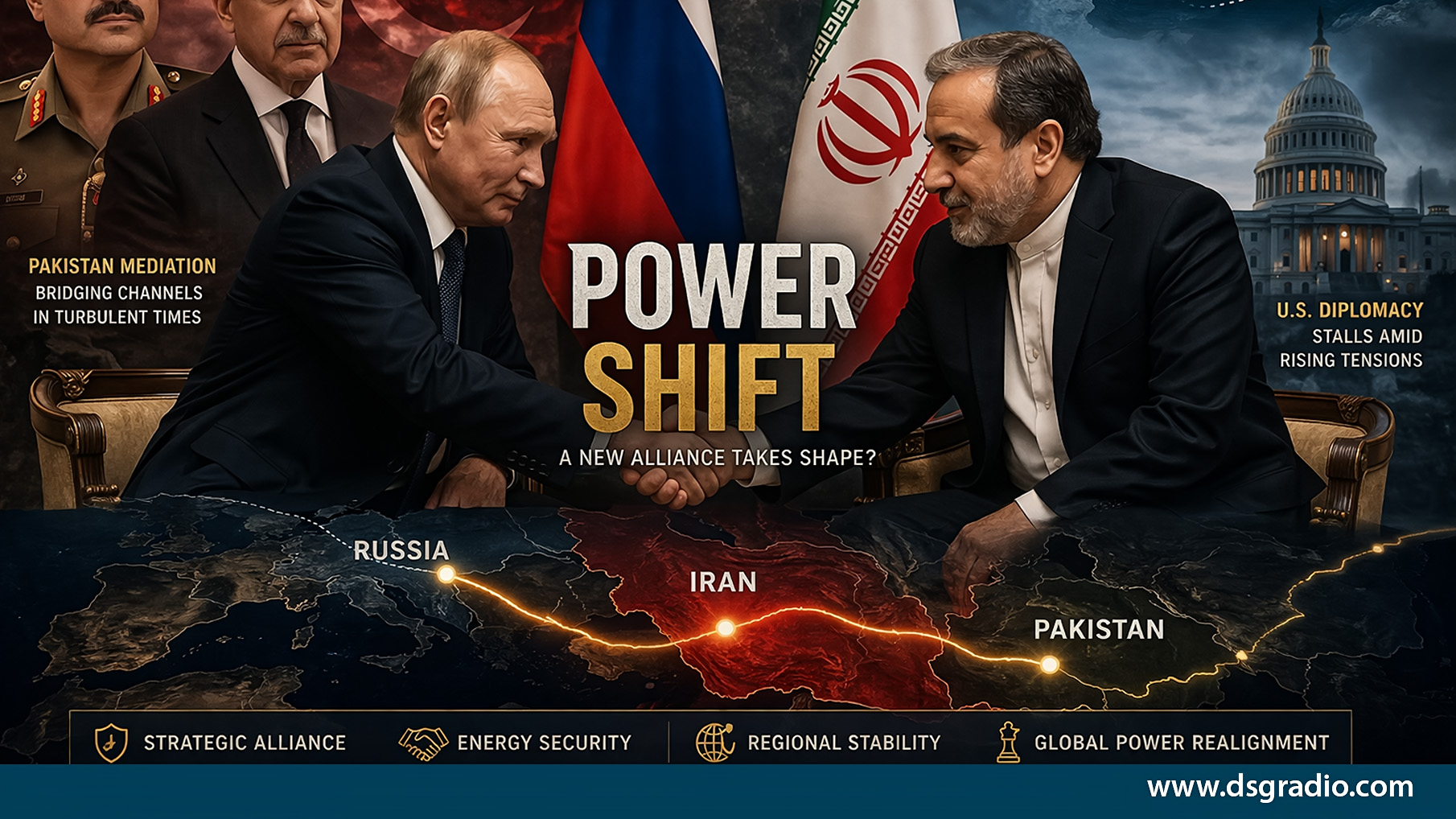
Iran Russia Talks Intensify as US Diplomacy Falters
Iran is recalibrating its global alliances as diplomatic efforts with the United States stall, with Foreign Minister Abbas Araghchi heading to Moscow for high-level Iran Russia talks with President Vladimir Putin following multiple mediation visits to Pakistan.
The diplomatic moves come amid escalating Iran US tensions, continued instability in the Strait of Hormuz crisis, and renewed hostilities involving Israel and Hezbollah, signalling a broader strategic shift in Tehran’s foreign policy approach.
Iran Russia Talks Mark Strategic Realignment
Iran Russia talks have emerged as a central pillar of Tehran’s evolving geopolitical strategy, as confirmed by Iranian officials and state media.
Foreign Minister Abbas Araghchi is scheduled to meet President Vladimir Putin on Monday, with discussions expected to cover:
- The ongoing war involving Iran, the United States, and Israel
- Ceasefire prospects
- Wider regional developments
Iran’s ambassador to Moscow, Kazem Jalali, described the meeting as part of a “diplomatic effort to advance national interests amid external threats.”
Russia’s foreign ministry also confirmed the visit, stating that Araghchi would travel to Moscow “with the aim of holding talks.”
The strengthening ties reflect an already deepening relationship between Moscow and Tehran, both of which face extensive Western sanctions.
Pakistan Emerges as Key Diplomatic Channel
Before heading to Russia, Araghchi undertook two rapid visits to Pakistan, underscoring the importance of Iran-Pakistan mediation in ongoing diplomatic efforts.
During his visits to Islamabad, the Iranian foreign minister met:
- Pakistan’s military chief, Asim Munir
- Prime Minister Shehbaz Sharif
- Foreign Minister Ishaq Dar
Pakistan has played a central role as a mediator between Tehran and Washington, facilitating indirect communication.
According to Iran’s ISNA news agency, Tehran transmitted “written messages” to the United States through Pakistani intermediaries. These communications reportedly addressed:
- Iran’s “red lines”
- Nuclear-related concerns
- The Strait of Hormuz
However, Iranian officials clarified that these exchanges were not formal negotiations.
Araghchi described his initial visit as “very fruitful” but expressed doubts about Washington’s intentions, stating he had “yet to see if the US is truly serious about diplomacy.”
For more context on the evolving negotiations, see DSG Herald’s report on US-Iran-Pakistan talks facing uncertainty.
US Cancels Talks, Deepening Iran US Tensions
The diplomatic landscape shifted sharply after US President Donald Trump cancelled a planned visit by American negotiators to Pakistan.
US special envoy Steve Witkoff and Jared Kushner were scheduled to meet with Iranian representatives. However, Trump dismissed the talks, stating there was no point “sitting around talking about nothing.”
He further asserted:
- “We have all the cards.”
- Iran could initiate contact if it wished to negotiate
Iranian state media countered that direct talks were never on the table, highlighting a widening gap in diplomatic narratives.
The cancellation has intensified Iran US tensions, pushing Tehran to rely more heavily on alternative diplomatic channels, particularly Russia.
Strait of Hormuz Crisis Raises Global Stakes
The Strait of Hormuz crisis continues to heighten global concern, as the vital oil and gas shipping route remains effectively blocked.
Iran’s Revolutionary Guards stated that:
- Controlling the Strait is a “definitive strategy”
- The move serves as a deterrent against the United States and its regional allies
In response, the United States has imposed a blockade on Iranian ports.
Iranian state media warned that such actions would provoke a response, describing them as “blockading, banditry and piracy.”
The strategic importance of the waterway—through which a significant portion of global energy supplies passes—has elevated the stakes of the crisis.
Further analysis can be found in DSG Herald’s coverage of the Strait of Hormuz crisis and global oil tensions.
Israel-Hezbollah Clashes Threaten Ceasefire Stability
Adding to regional volatility, Israel and Hezbollah have exchanged accusations over violations of a ceasefire agreement.
Israeli Prime Minister Benjamin Netanyahu ordered strikes on Hezbollah positions in Lebanon, stating:
“Hezbollah’s violations are, in practice, dismantling the ceasefire.”
Hezbollah responded by accusing Israel of continued violations and occupation of Lebanese territory.
According to Lebanese official sources:
- Israeli strikes caused casualties
- Religious structures, including a mosque, were destroyed
Israel’s military reported:
- One soldier killed
- Six others were wounded, four severely
Lebanon’s health ministry stated that since the war began on March 2:
- 2,509 people have been killed
- 7,755 have been injured
The escalation underscores the fragile nature of ceasefire agreements in the region.
Global and African Implications of Iran Russia Talks
The implications of Iran Russia talks extend far beyond the Middle East.
Global Impact
- Potential disruption to global energy markets due to Hormuz instability
- Strengthening of anti-Western alliances
- Reduced prospects for US-led diplomatic solutions
African and Nigerian Perspective
For African economies, particularly oil-dependent nations like Nigeria:
- Any disruption in the Strait of Hormuz could influence global oil prices
- Higher oil prices may boost revenues but increase volatility
- Diplomatic realignments could reshape Africa’s geopolitical partnerships
These developments position Iran Russia talks as a key factor in global economic and security calculations.
What Comes Next?
While Iran Russia talks signal a strategic pivot, several uncertainties remain:
- Whether Moscow can effectively mediate or influence outcomes
- The possibility of renewed indirect talks between Iran and the US
- The trajectory of the Strait of Hormuz crisis
- The stability of the Israel-Hezbollah ceasefire
Details regarding the specific agenda of the Putin-Araghchi meeting were not fully disclosed.
According to reports by The New Arab, the discussions are expected to focus on negotiations, ceasefire conditions, and broader regional developments.
Some aspects of the diplomatic exchanges could not be independently verified.
Iran Russia talks reflect a decisive shift in Tehran’s diplomatic posture, moving away from uncertain US engagement toward deeper coordination with Moscow.
Combined with Pakistan’s mediation efforts, rising Iran-US tensions, and the escalating Strait of Hormuz crisis, the developments highlight a rapidly evolving geopolitical landscape with far-reaching implications.
As global powers reposition and regional conflicts intensify, Iran’s multi-front diplomacy may shape the next phase of international relations.
🔗 Recommended Coverage
You may also want to read:
- Middle East Conflict Escalation and Global Security Risks
Explores how rising tensions across the region are affecting global stability and alliances. - Future of Global Governance and the UN
Examines how shifting alliances, such as Iran-Russia, could reshape international institutions. - US-Ukraine Relations Under Pressure
Highlights broader geopolitical fractures affecting Western alliances. - Trump’s Ukraine Appeal and Strategic Implications
Provides insight into US foreign policy priorities amid global crises.
About the Author