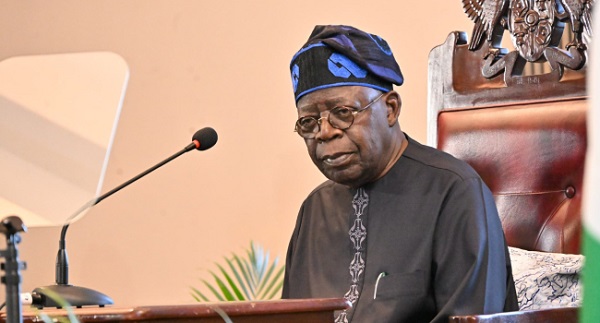
State Police Nigeria have moved significantly closer to becoming a constitutional reality after both chambers of the National Assembly advanced legislation designed to decentralise policing powers across the federation. The House of Representatives passed the constitutional amendment bill, while the Senate advanced the proposal to second reading and committee review, marking one of the most consequential security reform debates in recent Nigerian history. The development comes amid persistent concerns over terrorism, banditry, kidnappings, communal conflicts, armed robbery, cybercrime and other security threats that many stakeholders believe require a more localised policing approach.
The latest legislative action is more than a constitutional exercise. It represents a major attempt to redefine how security is managed in Africa’s most populous country, determine the future relationship between federal and state authorities, and address growing public demands for more effective responses to insecurity.

Why the State Police Debate Matters Now
For decades, Nigeria has operated a highly centralised policing system under the Nigeria Police Force. Under the current structure, policing remains largely under federal control, with operational command flowing from the Inspector-General of Police through state commands.
Supporters of reform argue that the security environment facing Nigeria today differs significantly from the circumstances that shaped the country’s existing policing framework.
Across various regions, authorities continue to confront:
• Banditry and mass abductions
• Terrorism and violent extremism
• Farmer-herder conflicts
• Pipeline vandalism
• Communal clashes
• Organised criminal networks
• Cult-related violence
• Cyber-enabled crimes
These challenges often possess strong local characteristics, requiring deep knowledge of communities, geography, languages and cultural dynamics.
According to lawmakers supporting the proposal, these realities have increased pressure for a security architecture capable of responding more quickly and effectively at the state level.
What Is State Police?
State police refers to a policing arrangement in which individual states maintain their own law enforcement agencies operating alongside federal police institutions.
Under the proposal currently before the National Assembly, Nigeria would adopt a dual policing structure consisting of:
• Federal Police
• State Police
The Federal Police would continue to perform national security functions and handle federal responsibilities.
State Police formations would operate within individual states under constitutional and statutory guidelines established through federal legislation and state laws.
Supporters describe the proposal as an effort to bring security decision-making closer to local communities while maintaining national oversight and constitutional safeguards.
The concept is not entirely new.
Several federal countries maintain layered policing systems where national and subnational law enforcement agencies coexist. Supporters of the Nigerian proposal frequently reference examples such as:
• United States
• Canada
• Australia
• Germany
In those countries, state, provincial or regional police agencies operate alongside federal security institutions.
What Changed in the National Assembly?
The latest legislative action represents one of the strongest institutional endorsements the proposal has received.
In the House of Representatives, lawmakers approved constitutional amendments designed to create the legal basis for state policing.
The House recorded overwhelming support for the proposal, with 289 members voting in favour and one member voting against after attendance verification confirmed the constitutional quorum requirement.
Speaker Tajudeen Abbas described the decision as a major constitutional step toward a policing framework that responds more effectively to local realities while preserving national unity.
At the Senate, lawmakers advanced the proposal through second reading before referring it to the Senate Ad-hoc Committee on the Review of the 1999 Constitution for further scrutiny.
Taken together, the actions of both chambers signal growing legislative momentum behind one of Nigeria’s most debated constitutional reforms.
State Police Nigeria and the Push for Security Reform
The current proposal is closely linked to wider discussions about Nigeria Security Reform.
Many analysts argue that centralised command structures can slow responses to local incidents.
Supporters contend that officers recruited, deployed and managed within states may possess advantages such as:
• Better local intelligence
• Stronger community relationships
• Improved language familiarity
• Greater understanding of local terrain
• Faster operational deployment
Senate Leader Opeyemi Bamidele argued that modern policing increasingly depends on intelligence rather than force alone. He maintained that local officers are often better positioned to gather actionable information because they understand community structures, customs and social dynamics.
The argument reflects broader global policing trends that emphasise prevention, intelligence-led operations and community engagement.
Supporters of decentralised policing argue that state police should operate alongside other community-based security initiatives. This aligns with recent legislative discussions on state police and forest guards as complementary security measures.
What Powers Would Federal Police Retain?
One of the central concerns surrounding the proposal involves the balance between federal and state authority.
The proposed constitutional amendments attempt to address this issue by clearly defining responsibilities.
Under the proposal, Federal Police would continue handling responsibilities associated with national security and federal jurisdiction.
Federal authorities would retain oversight over areas such as:
• Interstate crimes
• Terrorism
• Organised criminal networks
• Border security
• Protection of federal assets
• National security operations
Supporters argue that this arrangement would allow federal agencies to focus on strategic threats while state police address local security concerns.
The Federal Capital Territory would also remain under Federal Police jurisdiction.
What Powers Would State Police Receive?
The proposal establishes a constitutional pathway for states to create and operate their own police services.
However, states would not automatically acquire operational police formations.
The proposed framework requires:
• State legislation establishing the force
• Compliance with national standards
• Certification requirements prescribed by federal law
• Oversight mechanisms
Under the proposal, State Police would focus primarily on internal security responsibilities within their respective jurisdictions.
This approach seeks to balance local operational flexibility with national accountability.
Will Governors Control State Police?
One of the most frequently asked questions surrounding the proposal concerns governors’ powers.
Under the proposed framework, state governors would possess significant authority over state police formations.
A State Commissioner of Police would be appointed by the governor based on advice from the National Police Council and subject to confirmation by the State House of Assembly.
Governors would also be empowered to issue lawful directives regarding public safety and public order.
However, the proposal includes a safeguard allowing commissioners to seek National Police Council review if they believe directives violate policing standards or legal requirements.
This provision appears designed to address longstanding fears that state police could become instruments of political control.
Safeguards Against Abuse
The possibility of political misuse remains one of the strongest criticisms of state policing.
To address these concerns, lawmakers included several safeguards.
These include:
State Police Service Commissions
Independent structures would help oversee appointments and administration.
National Police Council Oversight
The National Police Council would continue exercising oversight functions and reviewing disputes where necessary.
Legislative Confirmation
Senior appointments would require legislative confirmation processes.
Removal Procedures
Commissioners could only be removed under specified constitutional grounds and through prescribed procedures.
Federal Intervention Powers
Federal authorities could intervene under limited circumstances, including severe breakdowns of law and order or where state police become inoperative.
Supporters argue these mechanisms create checks and balances capable of preventing abuse while preserving operational effectiveness.
Why Supporters Believe State Police Could Work
Support for the proposal extends beyond the National Assembly.
Several security stakeholders cited in the source report endorsed the initiative.
Retired Assistant Inspector-General of Police Ali Amodu argued that decentralisation offers more benefits than risks and recalled advocating similar reforms decades earlier.
Supporters generally advance five major arguments:
Faster Response Times
Security incidents often require immediate intervention.
Local command structures may reduce bureaucratic delays.
Better Intelligence Gathering
Officers familiar with communities may obtain information more effectively.
Stronger Community Trust
Community-based policing can improve cooperation between residents and law enforcement.
Improved Resource Allocation
Federal agencies could focus on strategic national threats.
Strengthened Federalism
Supporters argue the proposal aligns with federal principles by distributing responsibilities across different levels of government.
Questions about accountability remain central to the state police debate. Similar concerns have featured prominently in discussions about balancing police powers with accountability and public oversight.
Why Critics Remain Concerned
Despite growing support, opposition remains significant.
Retired Commissioner of Police Ladodo Rabiu questioned whether many states possess the financial capacity necessary to sustain police institutions.
His concerns reflect broader questions about implementation.
Critics identify several challenges:
Funding Constraints
Police operations require substantial spending on:
• Personnel
• Equipment
• Infrastructure
• Vehicles
• Communications systems
• Training
Jurisdictional Conflicts
Questions remain regarding operational coordination between federal and state forces.
Political Interference
Opponents fear governors could misuse police powers against political opponents.
Institutional Capacity
Some states may struggle to establish training facilities and operational systems.
These concerns explain why the state police debate has remained controversial for years.
Nigeria’s Rising Security Costs and the Bigger Picture
The debate is unfolding alongside growing security expenditure.
According to National Bureau of Statistics data referenced in the source report, Nigeria spent N32.5 billion on arms imports during the first quarter of 2026, compared with N22 billion during the same period in 2025.
The increase reflects continued government efforts to address multiple security threats.
Security analyst Chidi Omeje argued that rising arms procurement corresponds with expanding security challenges across the federation.
His comments highlight a broader reality.
Security reform discussions increasingly extend beyond policing structures to include:
• Equipment acquisition
• Intelligence systems
• Personnel training
• Surveillance technologies
• Local defence manufacturing
• Inter-agency coordination
The state police proposal therefore forms part of a wider conversation about how Nigeria should organise and fund security in the coming decades.
International Comparisons and Lessons
Countries with federal systems often rely on multiple policing layers.
In Australia, state police forces coexist with federal institutions.
Germany operates state-level police agencies alongside federal security services.
The United States combines local, state and federal law enforcement structures.
Supporters of State Police Nigeria frequently point to these examples as evidence that decentralised policing can function effectively within a federation.
However, international experiences also show that success depends heavily on:
• Strong oversight
• Professional standards
• Sustainable funding
• Effective coordination
• Political neutrality
These lessons may prove important if Nigeria ultimately adopts the proposal.
Public Expectations and Political Significance
Beyond security operations, the debate carries major political implications.
If implemented successfully, state police could reshape relationships between:
• Federal government and states
• Governors and security institutions
• Communities and law enforcement
• Legislatures and executive authorities
The proposal also represents a significant test of Nigeria’s constitutional reform process.
Supporters view it as an opportunity to strengthen cooperative federalism.
Critics remain concerned about accountability and institutional safeguards.
Either way, the outcome will likely influence future debates about decentralisation, governance and national security.
The renewed push for state police comes amid growing concerns about insecurity across several parts of the country. Recent attacks and security breaches have intensified calls for structural reforms, as discussed in DSG HERALD NEWS’ report on Nigeria’s deepening security crisis and the spread of multi-state attacks.
What Happens Next?
Although momentum has increased, State Police Nigeria has not yet become law.
Several constitutional and legislative steps remain.
These include:
• Further Senate review
• Committee consideration
• Constitutional amendment procedures
• Additional legislative approvals
• Ratification requirements involving state legislatures
Only after completion of these processes can the proposed framework move toward implementation.
The timeline remains uncertain.
However, recent actions by both chambers suggest the proposal now possesses stronger institutional backing than at any previous stage in the debate.
Conclusion: A Turning Point for Nigeria’s Security Future?
The advancement of the State Police Bill represents one of the most consequential security reform discussions in contemporary Nigeria. By moving policing from a strictly centralised model toward a dual federal-state structure, lawmakers are attempting to address persistent security challenges while strengthening local responsiveness.
Supporters believe the proposal could improve intelligence gathering, accelerate emergency responses, strengthen community trust and modernise Nigeria’s federal system. Critics warn that funding pressures, political interference and jurisdictional disputes could create new challenges if safeguards prove inadequate.
What remains clear is that State Police Nigeria is no longer a theoretical conversation confined to policy circles. It has moved to the centre of national legislative action. As the constitutional process continues, Nigerians will be watching closely to determine whether decentralised policing becomes a transformative solution to insecurity or another complex reform requiring careful implementation.
Recommended Coverage
Nigeria’s Economy Under Tinubu: Progress or Crisis?
A broader examination of governance, fiscal reforms and economic challenges shaping public policy decisions nationwide.
Owerri West Growth Fuels Calls for Good Leadership
Explores governance expectations and community development priorities at the local level.
Dr Eberechukwu Uneze: Rise, Influence and Impact
Profiles leadership influence and public service contributions within Nigeria’s evolving civic landscape.
Tinubu Police Academy Approval Expands Training
Examines efforts to strengthen law enforcement training and institutional capacity across Nigeria.
About the Author