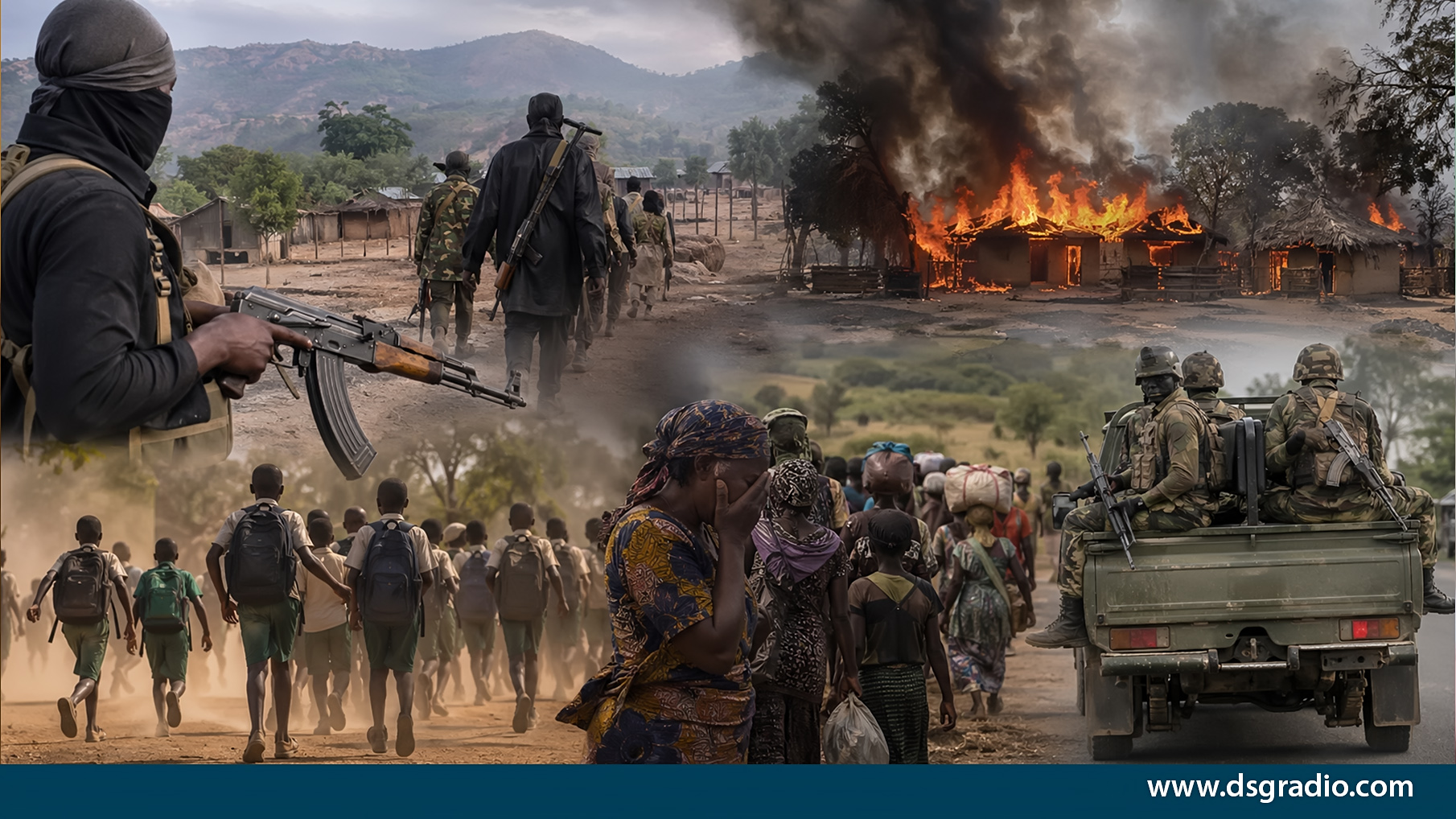
Nigeria security crisis deepens as coordinated rural attacks spread
Nigeria is facing a deepening security crisis after a wave of coordinated killings and abductions across several states exposed persistent vulnerabilities in rural communities. The attacks, reported in Adamawa, Benue, Plateau, and Kogi states, left at least 50 people dead and dozens abducted, including schoolchildren, highlighting growing concerns over the country’s fragile security architecture and the escalating reach of armed groups.
A Pattern of Violence Across States
The latest incidents are not isolated. Instead, they reflect a troubling pattern of simultaneous attacks targeting vulnerable rural communities.
According to details compiled from multiple incidents, armed groups carried out deadly assaults across different regions within a short period. As reported by Vanguard, the attacks collectively resulted in dozens of fatalities and abductions, signalling a coordinated escalation rather than sporadic violence.
Security analysts say the Nigerian security crisis is increasingly defined by:
- Multi-state attacks occurring within narrow timelines
- Targeting of unprotected rural populations
- Blending of insurgency, banditry, and communal violence
This convergence complicates response efforts and stretches already limited security resources.
Mass Killings: Adamawa, Benue, Plateau
Adamawa: Insurgent Activity Resurfaces
In Adamawa State, suspected Boko Haram insurgents launched an attack that left multiple residents dead. The incident underscores renewed fears of insurgent activity spilling beyond traditional hotspots in the North-East.
The Adamawa Boko Haram attack highlights:
- Continued insurgent mobility
- Weak border and rural surveillance systems
- Persistent threat despite military operations
Details regarding the exact number of casualties in specific locations were not specified in the original report.
Benue: Renewed Herdsmen Violence
Benue State, long plagued by farmer-herder conflicts, witnessed another deadly episode attributed to suspected herdsmen.
The Benue herdsmen killings:
- Claimed multiple lives in rural communities
- Reinforced ongoing tensions over land and grazing rights
- Added to a history of recurring violence in the region
Benue remains one of Nigeria’s most volatile flashpoints, where security responses have struggled to produce lasting peace.
Plateau: Cyclical Communal Attacks
In Plateau State, another round of violence resulted in fatalities, reflecting a recurring cycle of communal clashes and armed incursions.
Observers note that Plateau’s security situation is shaped by:
- Ethno-religious tensions
- Retaliatory attacks
- Weak early warning systems
Details about the perpetrators in this specific incident remain unclear.
Kidnappings: Schools Under Threat
Kogi: Students Abducted
In Kogi State, gunmen abducted 23 pupils in a school attack, reinforcing a disturbing trend of targeting educational institutions.
The Kogi school abduction highlights:
- Schools as soft targets
- Psychological impact on communities
- Disruption of education in rural areas
Kidnapping for ransom has become a major driver of insecurity in Nigeria, with schools increasingly targeted due to their vulnerability.
Rural Vulnerability at the Centre of Nigeria Security Crisis
Across all affected states, one factor stands out — rural exposure.
Most of the attacks occurred in remote communities where:
- Security presence is minimal
- Response times are slow
- The communication infrastructure is weak
This structural vulnerability allows armed groups to operate with relative ease.
A related analysis by DSG Herald previously noted that Nigeria’s insecurity surge has raised international concern over external involvement and internal response gaps, as explored in this report on Nigeria’s rising insecurity and global implications
Security Forces and Response Challenges
While security agencies continue operations across affected regions, several challenges persist:
- Limited manpower: Vast rural areas remain under-policed
- Intelligence gaps: Difficulty tracking mobile armed groups
- Coordination issues: Overlapping mandates among agencies
Officials have not released comprehensive statements covering all incidents collectively, and details remain fragmented across states.
Where official responses were provided, they focused on:
- Ongoing investigations
- Deployment of security personnel
- Assurances of restoring order
However, critics argue that reactive deployments are insufficient without long-term structural reforms.
National Implications: A System Under Strain
The Nigeria security crisis is no longer confined to specific regions. Instead, it has evolved into a nationwide concern affecting multiple zones simultaneously.
Key implications include:
1. Expansion of Armed Groups
The spread of attacks across states suggests:
- Increased operational capacity
- Possible coordination among groups
- Weak containment strategies
2. Economic Disruption
Rural insecurity affects:
- Farming activities
- Food supply chains
- Local economies
3. Education Crisis
School abductions threaten:
- Student safety
- Enrollment rates
- Long-term human capital development
International and Policy Dimensions
Nigeria’s security challenges are increasingly drawing global attention. Similar incidents have previously triggered international reactions, including concerns from foreign policymakers about escalating violence in regions like Plateau.
Experts emphasize that addressing the crisis requires:
- Intelligence-driven operations
- Community-based security models
- Regional cooperation across borders
However, specific policy changes in response to these latest incidents were not specified in the original report.
What This Means Going Forward
The recent wave of attacks underscores a critical reality: Nigeria’s security crisis is becoming more complex, widespread, and entrenched.
Without significant reforms, analysts warn that:
- Rural communities will remain vulnerable
- Armed groups will continue exploiting security gaps
- Public confidence in state protection may decline
The incidents collectively highlight the urgent need for a shift from reactive responses to proactive, coordinated national security strategies.
Recommended Articles
- Ebonyi Monarch Killed in Palace Attack
A traditional ruler’s killing reflects the spread of targeted violence into leadership structures. - US Reacts to Plateau Killings
International concern grows as violence in Plateau State attracts foreign policy attention. - Bandits Kill Policeman in Katsina Attack
Security forces themselves are increasingly targeted, highlighting operational risks. - Troops Neutralize Terrorists in Jos
Military response efforts continue amid escalating violence in Plateau State.
About the Author