Football Dynasties Set to Shine at the 2026 FIFA World Cup
The FIFA World Cup has always been a stage where legends are made, nations unite, and history unfolds before a global audience. Yet beyond the goals, trophies, and unforgettable moments lies another fascinating aspect of football’s greatest tournament, the continuation of family legacies across generations.
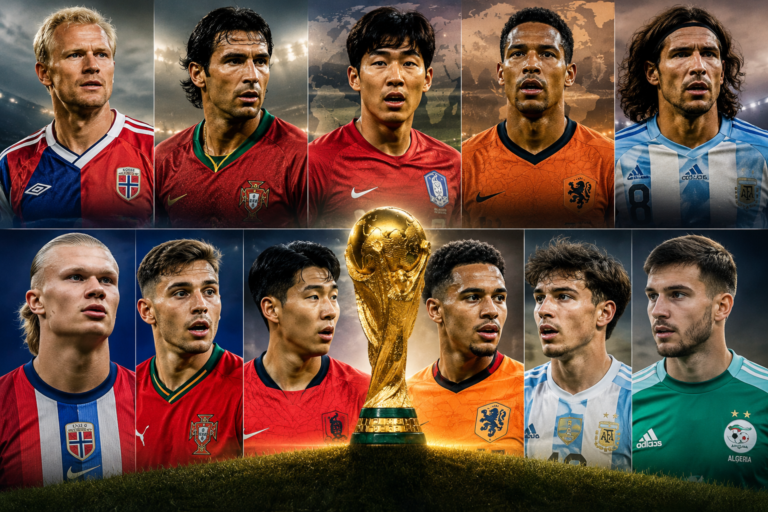
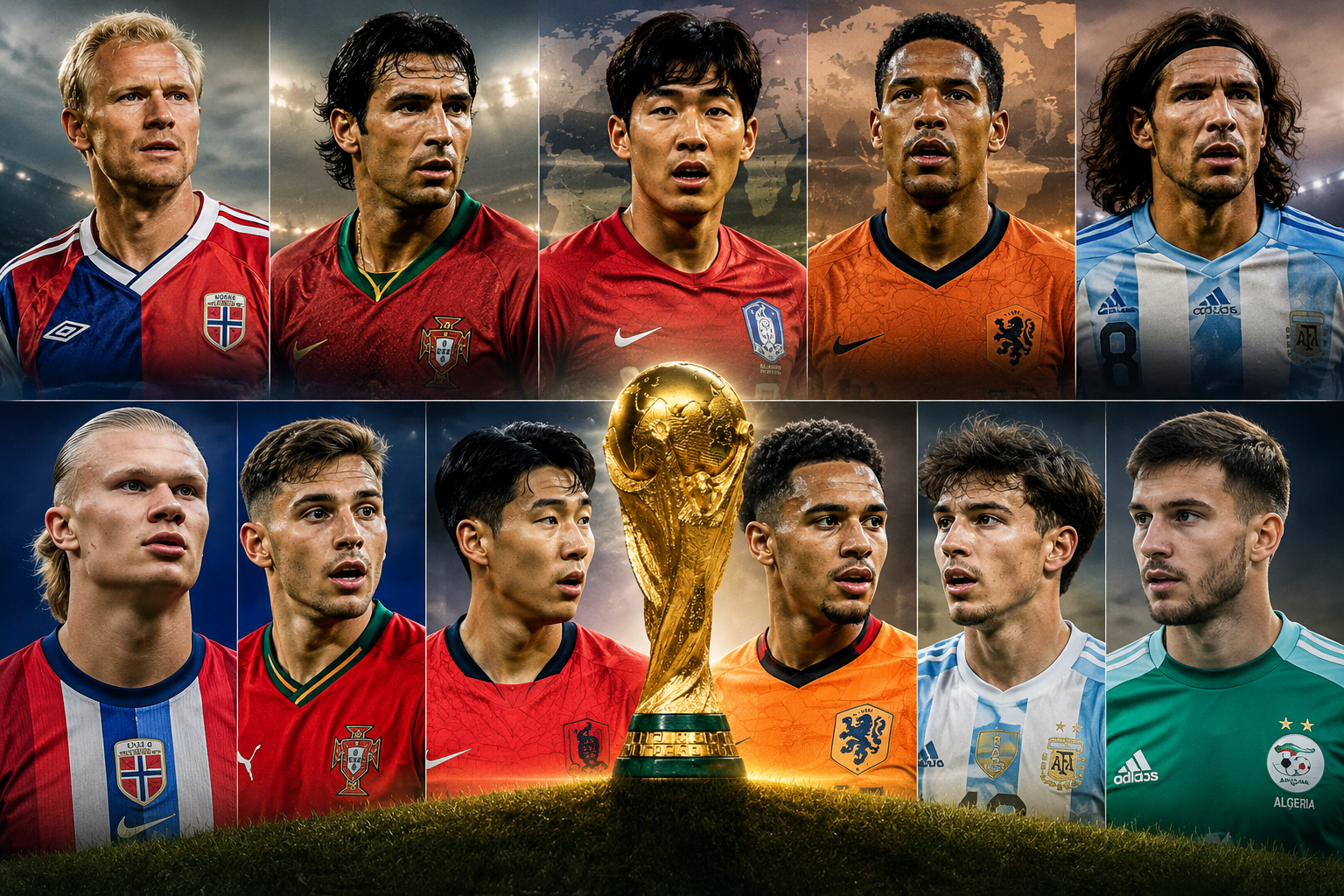
As the 2026 FIFA World Cup approaches, football fans may witness a rare and remarkable phenomenon: the sons of former World Cup stars stepping onto the same stage their fathers once graced. From Norway’s goal-scoring machine, Erling Haaland, to Argentina’s rising winger, Giuliano Simeone, and Algeria’s goalkeeper, Luca Zidane, a new generation is preparing to carry famous surnames into football’s biggest competition.
Throughout FIFA World Cup history, father-son appearances have remained relatively uncommon. While football has produced countless talented families, only a select number have managed to reach the pinnacle of international competition across two generations. Legendary names such as Maldini, Thuram, Forlán, Alonso, Schmeichel and now potentially Haaland, Kluivert, Simeone and Zidane represent a unique football tradition where talent, dedication and ambition are passed from one generation to another.
What makes these stories particularly compelling is that these players are not merely benefiting from famous family names. Each has forged his own path through domestic leagues, youth academies and international competitions, earning recognition through performances rather than pedigree alone. Some have already become stars in Europe’s elite leagues, while others are emerging talents hoping to establish themselves on football’s grandest stage.
With the 2026 FIFA World Cup set to take place across the United States, Canada, and Mexico, these football heirs could create new chapters in their family histories while pursuing their own dreams. Here are nine players hoping to continue their fathers’ World Cup legacy and leave a lasting mark on the world’s most prestigious football tournament.
Erling Haaland (Norway)
Father: Alf-Inge Haaland
Few footballers heading toward the 2026 FIFA World Cup carry expectations as immense as Erling Braut Haaland. Since bursting onto the European football scene, the Norwegian striker has established himself as one of the most prolific goalscorers of his generation, consistently delivering extraordinary numbers for club and country.
Born in Leeds, England, while his father, Alf-Inge Haaland, was playing in the Premier League, Erling quickly developed into a global football phenomenon. His remarkable rise included record-breaking spells with Molde, Red Bull Salzburg, Borussia Dortmund and Manchester City. During his time at City, he shattered multiple scoring records, including the Premier League single-season goal record, helping the club secure domestic and European success.
Internationally, Haaland has transformed Norway into a serious football force alongside Arsenal captain Martin Ødegaard. His goals played a vital role in Norway’s return to the FIFA World Cup after a 28-year absence, ending one of Europe’s longest World Cup droughts.
His father, Alf-Inge Haaland, represented Norway at the 1994 FIFA World Cup in the United States, appearing during a tournament where Norway narrowly missed progression despite finishing level on points with group rivals. Alf-Inge enjoyed a distinguished career across England, representing Nottingham Forest, Leeds United and Manchester City.
While comparisons between father and son are inevitable, Erling’s achievements have already surpassed those of many football legends. He has become one of the fastest players in international football history to reach major scoring milestones and remains central to Norway’s hopes of making a deep run in North America. For Haaland, the 2026 World Cup represents an opportunity to transform family legacy into football immortality.
Francisco Conceição (Portugal)
Father: Sérgio Conceição
Francisco Conceição has rapidly emerged as one of Portugal’s most exciting attacking talents, combining pace, agility and creativity to become a key figure in the national team’s next generation. The winger developed through FC Porto’s renowned academy before earning opportunities in top-level European football, where his dribbling ability and direct attacking style quickly attracted attention.
The son of former Portugal international Sérgio Conceição, Francisco has demonstrated a knack for producing decisive moments on major stages. His reputation soared during UEFA Euro 2024 when he scored a dramatic late winner against Czechia, instantly becoming one of the tournament’s breakout stars. His performances have continued to strengthen his case for a prominent role in Portugal’s 2026 World Cup plans.
His father, Sérgio Conceição, enjoyed a distinguished international career, earning more than 50 caps for Portugal and representing the nation at the 2002 FIFA World Cup. He later became one of Portugal’s most successful club coaches, guiding FC Porto to numerous domestic titles.
Football runs deep within the Conceição family. Three of Sérgio’s sons have pursued professional football careers, making the family one of the most recognisable football dynasties in Portugal. Should Francisco feature in North America in 2026, he will have the opportunity to continue a family tradition while helping Portugal pursue its long-awaited dream of winning a FIFA World Cup.
Lee Tae-seok (South Korea)
Father: Lee Eul-yong
Lee Tae-seok represents the latest chapter in South Korea’s proud football tradition and is increasingly viewed as one of the country’s most promising defenders. Known for his energy, attacking runs and technical quality from the full-back position, Lee has steadily established himself as a valuable member of the national team setup.
His development through South Korea’s football system eventually earned him opportunities in European football, where he has continued to refine his game against high-level competition. His ability to contribute at both ends of the pitch has made him an important asset as South Korea prepares for another World Cup campaign.
Lee’s father, Lee Eul-yong, remains one of the most respected figures in South Korean football history. He was a key member of the legendary South Korean team that reached the semi-finals of the 2002 FIFA World Cup on home soil, one of the greatest achievements in Asian football history. He also represented South Korea at the 2006 World Cup in Germany.
The family’s story reflects perseverance and determination. Before becoming a professional footballer, Lee Eul-yong reportedly worked various jobs and overcame significant challenges on his path to international success. His son now carries that legacy forward.
If selected for the 2026 World Cup, Lee Tae-seok will have the opportunity to follow in his father’s footsteps onto football’s biggest stage while helping South Korea maintain its reputation as one of Asia’s strongest football nations.
Angus Gunn (Scotland)
Father: Bryan Gunn
Angus Gunn has become one of Scotland’s most dependable players and is expected to play a crucial role in the country’s quest to qualify for the 2026 FIFA World Cup. The goalkeeper has built a respected career through English football, developing his reputation with clubs including Manchester City, Southampton and Norwich City.
Although he represented England at the youth level, Gunn ultimately chose to play for Scotland, the country of his father’s birth. His decision was widely welcomed by Scottish supporters, who viewed him as an important addition to the national team’s long-term future.
His father, Bryan Gunn, is already a celebrated figure in Scottish football. A legendary goalkeeper for Norwich City, Bryan was part of Scotland’s squad for the 1990 FIFA World Cup in Italy. While he did not feature during the tournament, his inclusion placed him among the elite players representing the nation on football’s biggest stage.
Angus has since carved out his own identity, becoming Scotland’s first-choice goalkeeper during a period of resurgence for the national team. His calm presence, shot-stopping ability and leadership qualities have helped strengthen Scotland’s defensive foundation.
Should Scotland secure qualification for North America 2026, Angus Gunn could become the latest member of his family to be associated with the World Cup. Unlike his father, he hopes to take the field and help Scotland pursue its first World Cup victory since 1990.
Justin Kluivert (Netherlands)
Father: Patrick Kluivert
Justin Kluivert has spent much of his career navigating the immense expectations that come with carrying one of football’s most famous surnames. The Dutch winger emerged from Ajax’s renowned academy before embarking on a journey through some of Europe’s most competitive leagues.
After spells in Italy, Germany, France and England, Kluivert rediscovered his best form in the Premier League, where his performances significantly boosted his international prospects. His speed, versatility and attacking intelligence have made him an increasingly important option for the Netherlands national team.
His father, Patrick Kluivert, remains one of the greatest strikers in Dutch football history. Patrick scored 40 goals for the Netherlands and starred at the 1998 FIFA World Cup, helping the Dutch reach the semi-finals. His career also included successful spells with Ajax, AC Milan and Barcelona.
Despite constant comparisons, Justin has worked tirelessly to establish his own reputation. His football journey has demonstrated resilience, adaptability and determination to succeed on merit rather than reputation.
A World Cup appearance in 2026 would represent a significant milestone in his career and further strengthen the Kluivert family’s place in football history. For Justin, the tournament offers an opportunity to create his own memories and contribute to the Netherlands’ pursuit of a first-ever FIFA World Cup title.
Giuliano Simeone (Argentina)
Father: Diego Simeone
Giuliano Simeone is rapidly becoming one of Argentina’s most promising young footballers and appears well-positioned to be part of the country’s future plans. The energetic winger has impressed both at club level and within Argentina’s national team setup, earning praise for his work ethic, intensity and attacking flair.
A product of Atlético Madrid’s system, Giuliano possesses many of the competitive qualities associated with his father. His breakthrough performances and growing confidence have helped him establish himself as one of Argentina’s rising talents.
His father, Diego Simeone, is one of the most influential figures in modern football. As a player, he represented Argentina at three FIFA World Cups and captained the national team at the 1998 FIFA World Cup. He later achieved global recognition as Atlético Madrid’s long-serving and highly successful manager.
Growing up in a football family exposed Giuliano to elite-level competition from an early age. Yet he has consistently demonstrated a desire to build his own career rather than rely on family reputation.
Argentina enters the 2026 World Cup cycle as one of football’s dominant forces following recent international successes. If Giuliano secures a place in the squad, he will have the opportunity to continue a proud family tradition while helping the reigning world champions defend their status on the global stage.
Kristian Thorstvedt (Norway)
Father: Erik Thorstvedt
Kristian Thorstvedt has become an increasingly influential figure for both Norway and his club sides thanks to his intelligence, versatility and physical presence in midfield. Capable of contributing goals and defensive stability, he has developed into one of Norway’s most reliable performers.
His rise through Scandinavian football eventually led him to major European leagues, where he continued to demonstrate maturity and consistency. Thorstvedt’s ability to influence matches in multiple areas has made him an important component of Norway’s ambitious generation.
His father, Erik Thorstvedt, was one of Norway’s most respected goalkeepers and represented the country at the 1994 FIFA World Cup. During that tournament, Norway earned international praise for its disciplined defensive performances, conceding only one goal during the group stage despite narrowly missing advancement.
The Thorstvedt family occupies a special place in Norwegian football history, and Kristian now has the chance to add another chapter to that story. His potential World Cup appearance would become even more significant if he shared the stage with Erling Haaland, whose father was also part of Norway’s football generation.
For Kristian, the 2026 FIFA World Cup represents more than personal achievement. It symbolises the continuation of a family legacy and an opportunity to help Norway re-establish itself among football’s elite nations.
Sebastian Berhalter (United States)
Father: Gregg Berhalter
Sebastian Berhalter has emerged as one of the most promising midfielders in American soccer and is increasingly attracting attention as the United States prepares to host the 2026 FIFA World Cup. His technical ability, vision and composure in possession have helped him stand out within a rapidly improving American football landscape.
Strong performances in Major League Soccer and continental competitions elevated his profile and earned him opportunities with the national team. His development reflects the broader growth of soccer in the United States, where a new generation of players continues to gain international recognition.
His father, Gregg Berhalter, represented the United States at both the 2002 and 2006 FIFA World Cups. Beyond his playing career, Gregg later became head coach of the national team and guided the Americans at the 2022 World Cup in Qatar.
The Berhalter name, therefore, carries significance both on and off the pitch within American soccer history. Sebastian, however, has focused on building his own reputation through performances rather than family connections.
With the United States expected to receive enormous support as co-hosts of the 2026 tournament, Sebastian could find himself participating in one of the biggest moments in American soccer history. A World Cup appearance would not only continue his family’s football legacy but also place him at the centre of a potentially transformative event for the sport in the United States.
Luca Zidane (Algeria)
Father: Zinedine Zidane
Luca Zidane carries one of the most famous surnames in football history. As the son of French legend Zinedine Zidane, he has carried the weight of expectations throughout his career. Yet the goalkeeper has steadily built his own professional identity through dedication and perseverance.
Having developed within Real Madrid’s academy, Luca gained valuable experience across Spanish football, establishing himself as a reliable goalkeeper. His decision to represent Algeria internationally added a unique dimension to his career and connected him to his family’s North African roots.
His father, Zinedine Zidane, is widely regarded as one of the greatest footballers ever to play the game. Zidane inspired France to victory at the 1998 FIFA World Cup and later captained the national team to the final of the 2006 tournament. His performances on football’s biggest stage remain among the most celebrated in World Cup history.
For Luca, following such a legendary figure is no easy task. However, his international ambitions with Algeria provide an opportunity to create his own legacy while representing a proud football nation with a passionate fan base.
If Algeria qualifies and Luca secures a place in the squad, he could become one of the most intriguing family stories at the 2026 FIFA World Cup. It would mark another chapter in one of football’s most iconic dynasties while introducing a new generation of Zidane to the global stage.
About the Author