Tinubu Democracy Day Speech: Tinubu Highlights Security Gains, Economic Reforms and Youth Empowerment in 2026 Democracy Day Address
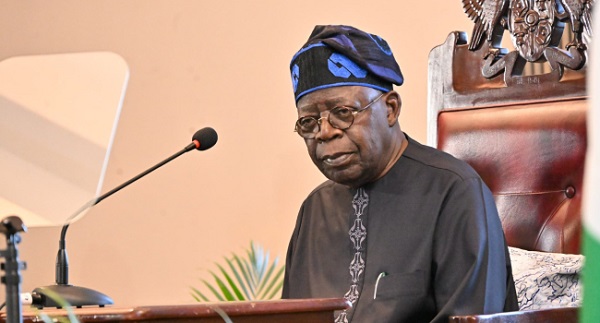
President Bola Ahmed Tinubu used Nigeria’s 2026 Democracy Day celebration to deliver a sweeping assessment of the country’s democratic journey, security challenges, economic reforms, and future prospects, positioning his administration’s agenda as the next phase in Nigeria’s democratic evolution. Speaking on June 12, the President combined reflections on the sacrifices that gave birth to modern democracy with arguments that political freedom must now be matched by economic prosperity, and urged young Nigerians to remain committed to building the nation’s future.
The address came at a critical moment for Africa’s most populous nation. Nigeria continues to grapple with insecurity, inflationary pressures, economic adjustment pains, and growing demands for improved governance. Against this backdrop, Tinubu sought to present a narrative of progress, arguing that reforms introduced since 2023 are beginning to yield results while acknowledging that many citizens still face significant hardship.
His speech touched on nearly every major national issue—from terrorism and local government autonomy to power sector reform, infrastructure development, youth participation, and democratic consolidation—making it one of the administration’s most comprehensive policy statements in recent months.
Key Highlights of Tinubu’s Democracy Day Speech
- Defence of Nigeria’s democratic journey since 1999
- Security improvements and anti-terrorism efforts
- Economic reforms and fiscal restructuring
- Youth participation in nation-building
- Local government autonomy
- Electricity sector reforms
- Infrastructure and agricultural development
- National honours for democracy activists
- Calls for national unity and optimism
At the centre of the address was an effort to connect democracy with everyday life. Tinubu repeatedly argued that democratic governance must translate into measurable improvements in citizens’ living standards, employment opportunities, infrastructure, and security.
The President structured his Democracy Day message around several major themes:
This emphasis reflects a broader challenge facing many democracies across Africa and the developing world. Citizens increasingly judge governments not only by electoral processes but by their ability to deliver tangible economic benefits.
For Nigeria, where democratic governance has now lasted 27 uninterrupted years, expectations continue to evolve beyond political participation toward economic outcomes.
Tinubu Speaks on Security Challenges
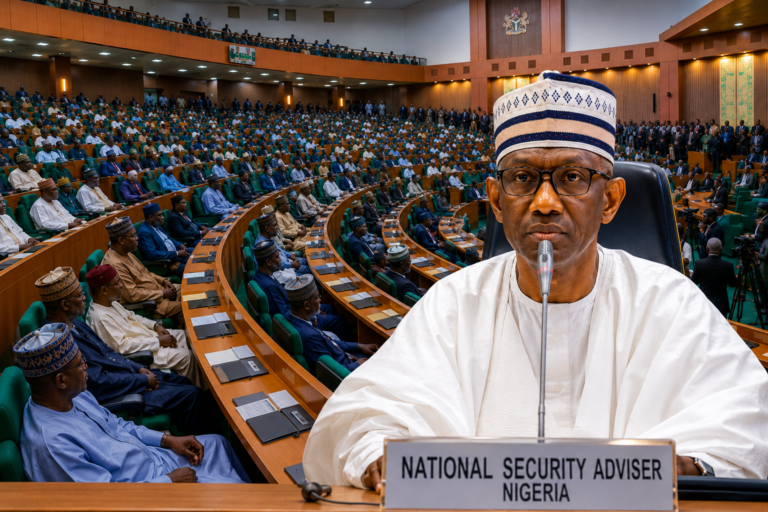
One of the most significant sections of the Tinubu Democracy Day Speech focused on national security.
The President acknowledged that the national mood had been affected by reports of child abductions in Oyo and Borno states, describing security as an essential pillar of democratic stability. He argued that democracy cannot thrive where citizens feel unsafe and outlined measures his administration has undertaken to address security threats.
According to Tinubu, the Federal Government approved the recruitment of more than 50,000 police officers, along with thousands of military recruits. He also disclosed that the 2026 national budget allocates N5.41 trillion to defence and security—the largest security allocation in Nigeria’s history.
The President further stated that Nigerian security agencies have shifted toward more targeted operations in collaboration with international partners, including the United States, France, and other European countries.
Among the security achievements cited were:
- Degradation of an ISWAP command centre in Arege, Borno State
- Reduction in terror-related deaths since 2015
- Neutralisation of more than 13,000 terrorists over the past year
- Continued implementation of Operation Safe Corridor
- More than 124,000 fighters and dependents have reportedly surrendered since 2023
These claims were presented as evidence that government efforts are producing measurable results, although independent verification of some operational figures was not provided during the address.
The security narrative remains politically important because insecurity continues to affect agriculture, investment, transportation, education, and broader economic activity across parts of Nigeria.
The President’s warning to terrorists, kidnappers, and criminal groups underscored the administration’s attempt to balance military pressure with rehabilitation initiatives.
Security remains a defining issue for the Tinubu administration and is likely to remain central to public assessments of government performance.
For additional context on the administration’s security messaging, readers may also explore Tinubu’s Easter security pledge and related DSG HERALD NEWS coverage.
Tinubu Democracy Day Speech: Economic Reforms and Investor Confidence
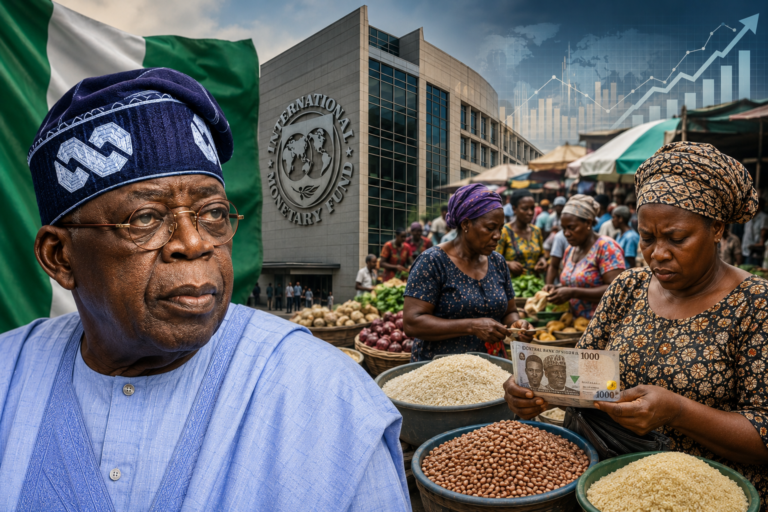
Perhaps the most consequential section of the speech concerned economic reforms.
Since assuming office in 2023, Tinubu has implemented a series of major economic changes aimed at restructuring public finances, attracting investment, and improving fiscal sustainability.
In the Democracy Day address, the President defended those reforms as necessary rather than politically convenient.
He argued that when his administration took office, Nigeria faced:
- Severe fiscal pressures
- Reduced investor confidence
- Economic uncertainty
- Structural inefficiencies
- Revenue leakages
- Weak infrastructure financing
According to Tinubu, reforms have improved fiscal transparency, increased federation revenues, and strengthened economic credibility.
The President also highlighted increased investments across several sectors, including:
- Agriculture
- Energy
- Manufacturing
- Mining
- Transportation
- Technology
- Creative industries
The emphasis on investor confidence reflects a broader strategy pursued by many emerging economies. Governments often seek to improve macroeconomic fundamentals as a foundation for long-term growth.
However, economic reforms frequently involve difficult transitions.
Nigeria’s experience mirrors reforms undertaken in countries such as India, Indonesia, Brazil, and Ghana, where governments attempted to balance fiscal discipline with social protection.
The challenge for policymakers is ensuring that economic gains eventually translate into visible improvements for ordinary citizens.
Tinubu acknowledged this reality by admitting that many Nigerians continue to face economic hardship despite reform efforts.
This acknowledgment may be significant politically because public opinion often focuses less on macroeconomic indicators and more on household purchasing power, food prices, employment opportunities, and living standards.
The President’s assertion that “democracy must be felt in the pocket” reflected an understanding of this reality.
Electricity Reform and Infrastructure Development
A major component of the administration’s economic strategy involves transforming Nigeria’s electricity sector.
Power shortages have long been viewed as one of the greatest barriers to industrialisation and economic competitiveness in Nigeria.
During the speech, Tinubu described the challenges inherited by his administration, including:
- Generation shortfalls
- Transmission bottlenecks
- Distribution inefficiencies
- Legacy debts
- Massive metering deficits
He highlighted the Electricity Act, which grants states greater authority to generate, transmit, and distribute electricity.
The decentralisation approach represents one of the most significant structural reforms in Nigeria’s power sector in decades.
Supporters argue that allowing states greater flexibility can accelerate investment and improve service delivery.
The President also disclosed efforts to reduce metering deficits and settle verified legacy debts through a proposed N4 trillion bond initiative.
In addition, the Rural Electrification Agency has continued deploying off-grid and mini-grid solutions to underserved communities, educational institutions, markets, and healthcare facilities.
The significance of electricity reform extends beyond energy policy.
Reliable power affects:
- Manufacturing productivity
- SME growth
- Healthcare delivery
- Educational outcomes
- Foreign investment
- Digital economy expansion
For a country seeking accelerated industrialisation, improvements in electricity infrastructure remain essential.
Agriculture, Exports and Economic Diversification
The Tinubu Democracy Day Speech also highlighted efforts to diversify Nigeria’s economy.
For decades, policymakers have sought to reduce dependence on oil revenues by strengthening agriculture, manufacturing, and exports.
The President pointed to several initiatives, including:
- Deployment of 10,000 tractors through the National Agricultural Development Fund over five years
- Certification of more than 1,000 SMEs for export
- Growth in non-oil exports
These initiatives align with longstanding efforts to broaden Nigeria’s productive base.
Economic diversification has become increasingly important because oil price fluctuations continue to expose vulnerabilities in public finances.
Countries such as the United Arab Emirates, Saudi Arabia, Indonesia, and Malaysia have pursued diversification strategies to reduce reliance on a single sector.
Nigeria’s challenge is particularly significant given its population size, infrastructure demands, and employment needs.
Agriculture remains a major employer, while SMEs account for a substantial share of economic activity.
As a result, policies that improve productivity, market access, financing, and export competitiveness have implications far beyond economic statistics.
Tinubu Democracy Day Speech: Message to Nigerian Youths
One of the most widely discussed moments of the address was Tinubu’s message to Nigerian youth.
The President urged young people to “build here, code here, work here, and vote here.”
The statement appeared aimed at addressing growing concerns about emigration, commonly referred to as the “Japa” phenomenon.
Over recent years, increasing numbers of Nigerian professionals, students, healthcare workers, and skilled employees have sought opportunities abroad.
The trend reflects a combination of economic pressures, career aspirations, security concerns, and global mobility opportunities.
Tinubu’s appeal was therefore both symbolic and strategic.
Young Nigerians represent:
- A significant share of the population
- Future voters
- Entrepreneurs
- Technology innovators
- Workforce participants
The administration’s emphasis on youth engagement suggests recognition that long-term national development depends heavily on retaining talent while creating opportunities domestically.
Globally, countries facing demographic transitions increasingly compete to attract and retain skilled workers.
Nigeria’s youthful population could become a major economic advantage if supported by appropriate investments in education, technology, entrepreneurship, and infrastructure.
The President’s call for youth participation in nation-building reflects this broader development conversation.
National Honours for Democracy Heroes
A major symbolic component of the speech involved recognition of individuals who contributed to Nigeria’s democratic struggle.
Tinubu paid tribute to figures associated with the June 12 movement and broader pro-democracy campaigns.
Among those remembered were:
- Chief M.K.O. Abiola
- Alhaja Kudirat Abiola
- Chief Gani Fawehinmi
- Chief Bola Ige
- Chief Alfred Rewane
- Pa Abraham Adesanya
- Dr Beko Ransome-Kuti
- Frank Kokori
- Arthur Nwankwo
- Chima Ubani
- Shehu Musa Yar’Adua
The President also announced national honours for numerous activists, journalists, politicians, lawyers, academics, and military officers associated with democratic advocacy.
The recognition serves several purposes.
First, it preserves historical memory.
Second, it reinforces democratic legitimacy.
Third, it reminds younger generations that Nigeria’s democratic freedoms emerged through sustained activism and sacrifice.
Many of those honoured experienced imprisonment, exile, harassment, or political persecution during military rule.
Their contributions remain central to contemporary discussions about democratic governance and civil liberties.
Tinubu Democracy Day Speech: What June 12 Means for Nigeria
June 12 occupies a unique place in Nigerian political history.
The date commemorates the 1993 presidential election widely regarded as one of the freest and fairest elections in the country’s history.
Although the election was annulled, the resulting pro-democracy struggle became a defining moment in Nigeria’s transition toward civilian rule.
For many Nigerians, June 12 symbolises:
- Democratic legitimacy
- National unity
- Political participation
- Resistance to authoritarianism
- Citizen activism
Tinubu’s speech framed June 12 not merely as a historical event but as an ongoing national project.
He argued that while the generation of June 12 secured political freedom, the current generation must secure economic freedom.
This framing is significant because it links democratic governance to socioeconomic outcomes.
Across Africa, citizens increasingly expect governments to deliver both political rights and economic opportunities.
The relationship between democracy and development remains one of the most important policy debates on the continent.
Nigeria’s experience continues to be closely watched because of its size, influence, and regional importance.
Local Government Autonomy and Grassroots Governance
Another notable element of the speech was the focus on local government autonomy.
Tinubu argued that grassroots governance remains critical to national development.
The administration’s push for financial autonomy for local councils reflects concerns that weak local governance contributes to insecurity, poor service delivery, and underdevelopment.
Supporters of local government reform argue that empowering councils could improve:
- Community development
- Infrastructure delivery
- Public accountability
- Local security coordination
Critics, however, often stress the need for stronger oversight mechanisms to ensure transparency and effective use of resources.
The debate highlights a broader governance challenge facing many federal systems worldwide.
Political Implications of the Address
From a political perspective, the speech served several functions.
It celebrated democratic continuity.
It defended government policies.
It acknowledged public hardship.
It projected optimism about future outcomes.
The President also appealed for national unity at a time when political discourse remains highly polarised.
His call for credible elections in Ekiti and Osun states may attract attention as those contests approach.
Electoral credibility remains fundamental to democratic legitimacy.
As Nigeria approaches future electoral cycles, issues such as voter trust, institutional independence, and political accountability are likely to remain central.
Looking Ahead: Prosperity as the Next Democratic Challenge
The overarching message of the Tinubu Democracy Day Speech was that Nigeria’s democratic journey has entered a new phase.
According to the President, the struggle is no longer primarily about securing political freedom but about delivering economic prosperity.
Whether citizens ultimately embrace that argument may depend on developments in key areas:
- Inflation reduction
- Job creation
- Security improvements
- Electricity reliability
- Infrastructure delivery
- Youth opportunities
- Living standards
As reported by Channels Television, the President repeatedly returned to themes of resilience, unity, and national confidence while urging Nigerians not to lose faith in the country’s future.
For more context on debates surrounding governance and public perception, readers may also explore DSG HERALD NEWS reports that examine the criticism and defence of the President’s handling of national issues following his airport meeting with Plateau victims.
The coming months will likely provide further evidence of whether the administration’s reform agenda can deliver the broad-based prosperity that Tinubu identified as the next major chapter in Nigeria’s democratic story.
Conclusion
The 2026 Democracy Day address was more than a ceremonial speech. It was a comprehensive defence of the administration’s record, a tribute to Nigeria’s democratic heroes, and a policy statement outlining the government’s priorities for security, economic growth, governance reform, and youth engagement.
By linking the legacy of June 12 to the pursuit of economic freedom, Tinubu attempted to redefine the next stage of Nigeria’s democratic journey. The success of that vision will ultimately be judged not by rhetoric alone, but by whether ordinary Nigerians experience meaningful improvements in security, opportunity, and quality of life in the years ahead.
Recommended Coverage
Oyo Forest Guards Security Initiative Gains National Attention
This report examines evolving security strategies and provides additional context for discussions around strengthening internal security.
Assessing Nigeria’s Economy Under Tinubu
A deeper look at competing views on economic reforms, fiscal policy, inflation, investment, and growth prospects.
About the Author