Trump EU Car Tariffs Raise Global Economic Risks
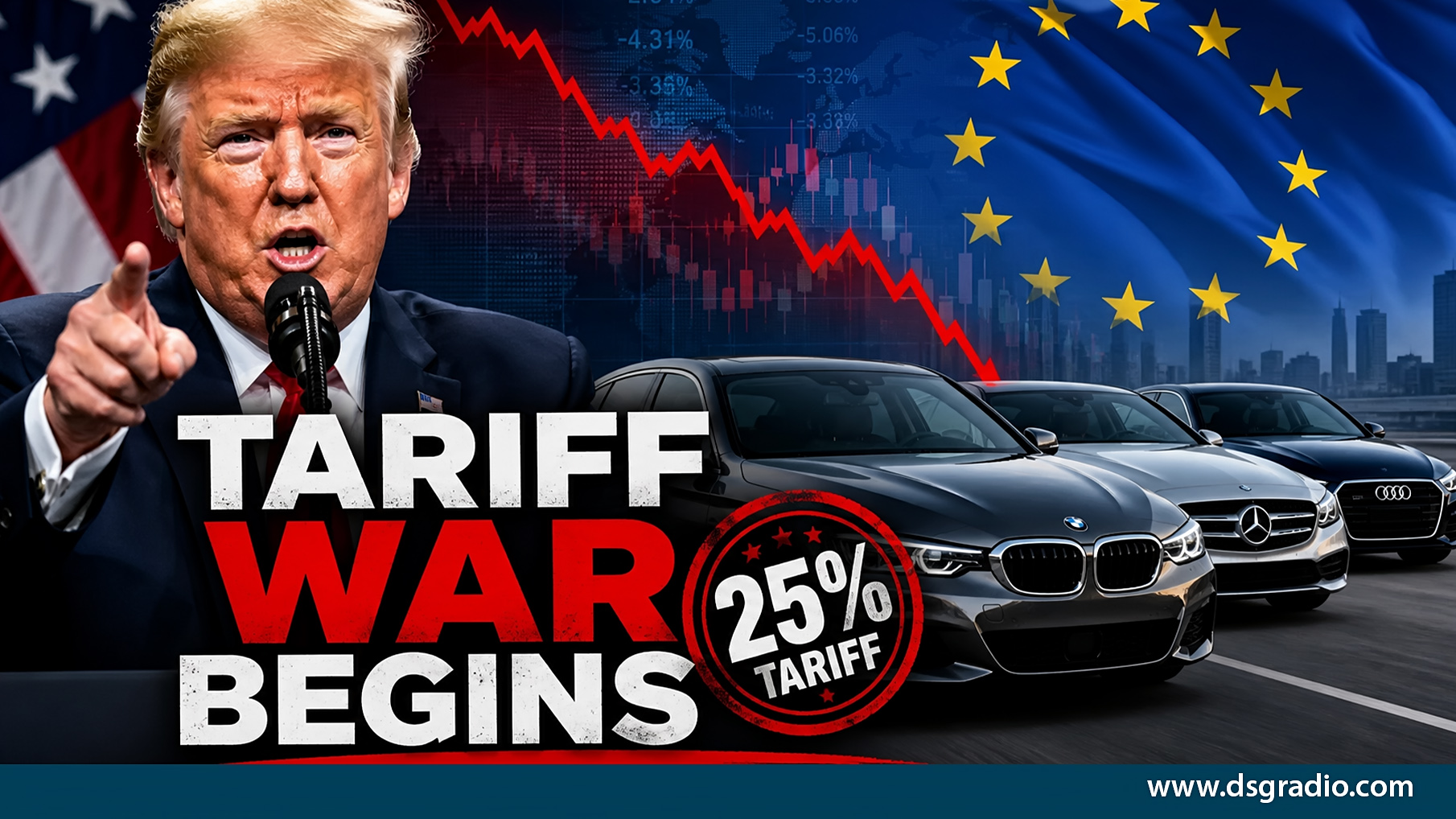
Trump EU car tariffs are set to increase to 25% on European vehicles entering the United States, a move announced by President Donald Trump that could reshape global trade dynamics, intensify US EU trade tensions, and disrupt the global auto industry at a fragile moment for the world economy.
The tariff hike, expected to take effect within days, targets one of Europe’s most critical economic sectors—automobile manufacturing and signals a renewed escalation in transatlantic trade disputes.
Trump’s Tariff Decision and Immediate Reactions
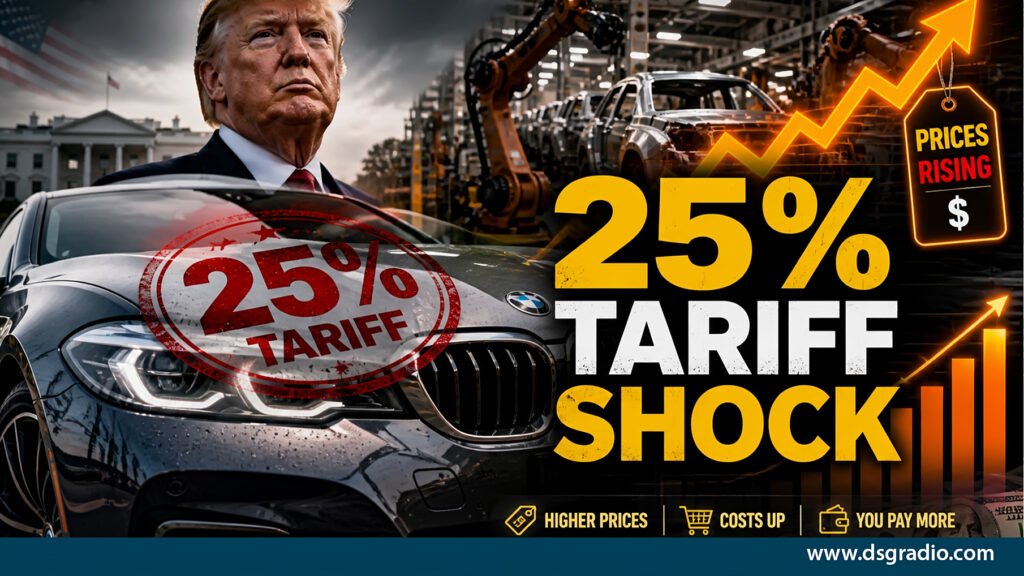
President Trump announced that tariffs on cars and trucks imported from the European Union will rise to 25%, accusing the bloc of failing to comply with an existing trade agreement.
In a statement posted on Truth Social, Trump said the EU was “not adhering” to the deal but did not specify the violations.
- The European Commission responded by stating it is implementing the agreement “in line with standard legislative practice.”
- EU officials warned they would “keep options open” to protect European interests.
- European Parliament trade committee chair Bernd Lange described the move as “unacceptable.”
According to a detailed report by AP News, the tariff increase comes amid unresolved disputes over steel and aluminium, as well as broader trade compliance issues, further complicating an already fragile agreement between the two economic powers.
Why the Auto Sector Is a Strategic Target
The decision to focus on automobile imports is significant.
Europe’s economy, particularly Germany and France, relies heavily on automotive exports, making the sector highly sensitive to trade barriers.
Key implications include:
- Germany’s auto industry vulnerability: As Europe’s largest car exporter, Germany faces immediate exposure.
- Supply chain disruptions: European manufacturers depend on integrated global production networks.
- Investment pressure: Trump has urged automakers to relocate production to the United States to avoid tariffs.
The US president emphasised that vehicles produced in the United States would face no tariffs, signalling a clear attempt to reshape global manufacturing patterns.
Impact on the Global Auto Industry
The global auto industry impact of Trump EU car tariffs could be far-reaching.
Potential consequences:
- Higher car prices in the US
- Tariffs typically increase import costs, which are passed on to consumers.
- Reduced competitiveness for European brands
- Luxury and mid-range European vehicles could lose market share.
- Shift in production strategies
- Automakers may accelerate plans to build factories in the US.
- Pressure on global supply chains
- Components sourced across continents could face delays and increased costs.
Jennifer Safavian, CEO of Autos Drive America, warned that the tariffs could threaten progress made in expanding the US auto market and undermine industry stability.
Political Pressure Driving Trade Policy
The tariff move also reflects domestic and geopolitical pressures shaping Trump’s economic strategy.
Key political drivers:
- US midterm elections
- Rising inflation has weakened public approval of Trump’s economic management.
- Supreme Court constraints
- Earlier tariffs imposed under emergency powers were ruled illegal, forcing the administration to seek alternative legal frameworks.
- Strained transatlantic relations
- Disputes over NATO funding and territorial tensions—such as Trump’s controversial stance on Greenland—have added friction.
This aligns with broader geopolitical strains highlighted in DSG Herald’s previous analysis of Trump’s NATO stance and global security concerns, where policy unpredictability was identified as a growing risk.
Global Economic Context: A Fragile Moment
The tariff escalation comes at a particularly sensitive time for the global economy.
Existing pressures include:
- Energy market instability
- Ongoing tensions linked to the Strait of Hormuz have pushed oil and gas prices higher, as explored in DSG Herald’s report on the Strait of Hormuz crisis.
- Rising inflation globally
- Increased energy costs are already feeding into consumer prices.
- Slowing economic growth
- The global economy faces reduced growth projections amid geopolitical uncertainty.
Against this backdrop, new tariffs risk amplifying economic stress by:
- Increasing costs for businesses and consumers
- Disrupting trade flows
- Reducing investor confidence
Legal and Trade Framework Uncertainty
The legal basis for Trump’s tariff policy remains complex.
- The Supreme Court ruled against previous tariffs imposed under emergency economic powers.
- The administration is now exploring alternatives under:
- Section 301 (trade imbalances and unfair practices)
- Section 232 (national security grounds)
These shifting legal justifications create uncertainty for:
- Businesses planning long-term investments
- Trade partners assessing compliance
- Markets reacting to policy unpredictability
Trade expert Professor Simon Evenett noted that such actions reinforce concerns about the reliability of US trade commitments.
US–EU Trade Relations Under Strain
The tariff increase threatens to undermine the broader US–EU trade relationship.
Key tensions:
- Disagreements over steel and aluminium tariffs
- Delays in implementing the Turnberry trade agreement
- Concerns over economic coercion and policy inconsistency
The EU has indicated it may respond if the tariffs violate existing agreements.
Possible responses include:
- Retaliatory tariffs on US goods
- Legal challenges through international trade bodies
- Suspension of trade cooperation measures
What Happens Next?
The situation remains fluid, with several possible scenarios:
Short-term outlook:
- EU seeks clarification from Washington
- Markets react to tariff announcement
- Automakers assess immediate operational impacts
Medium-term risks:
- Escalation into a broader trade war
- Increased costs across industries
- Slower economic growth globally
Long-term implications:
- Reshaping of global supply chains
- Shift toward regional manufacturing hubs
- Reduced trust in international trade agreements
Details on how and when the tariffs will be fully implemented remain unclear.
The escalation of Trump EU car tariffs marks a significant turning point in global trade relations, with implications extending far beyond the automotive sector.
While the immediate focus is on European car exports, the broader consequences—ranging from inflationary pressures to geopolitical tensions highlight the interconnected nature of modern economies.
As both the United States and European Union weigh their next steps, the risk of a prolonged trade conflict looms, raising critical questions about the stability of global markets and the future of transatlantic cooperation.
🔗 Recommended Coverage:
- Nigeria Police Accountability Tested in Mene Ogidi Killing
Explores governance and institutional accountability, a recurring theme in global policy debates. - Treason Charges Against Sylva and Others: Legal Battle Intensifies
Highlights how political tensions can influence economic and legal stability. - Tinubu Seeks $516m Loan Approval
Provides insight into fiscal pressures facing developing economies amid global uncertainty. - Apocalypto 2: Truth Behind Viral Sequel Rumours
A look at global media narratives and how information spreads in the digital age.
About the Author