China Africa Trade Deal Reshapes Global Alliances
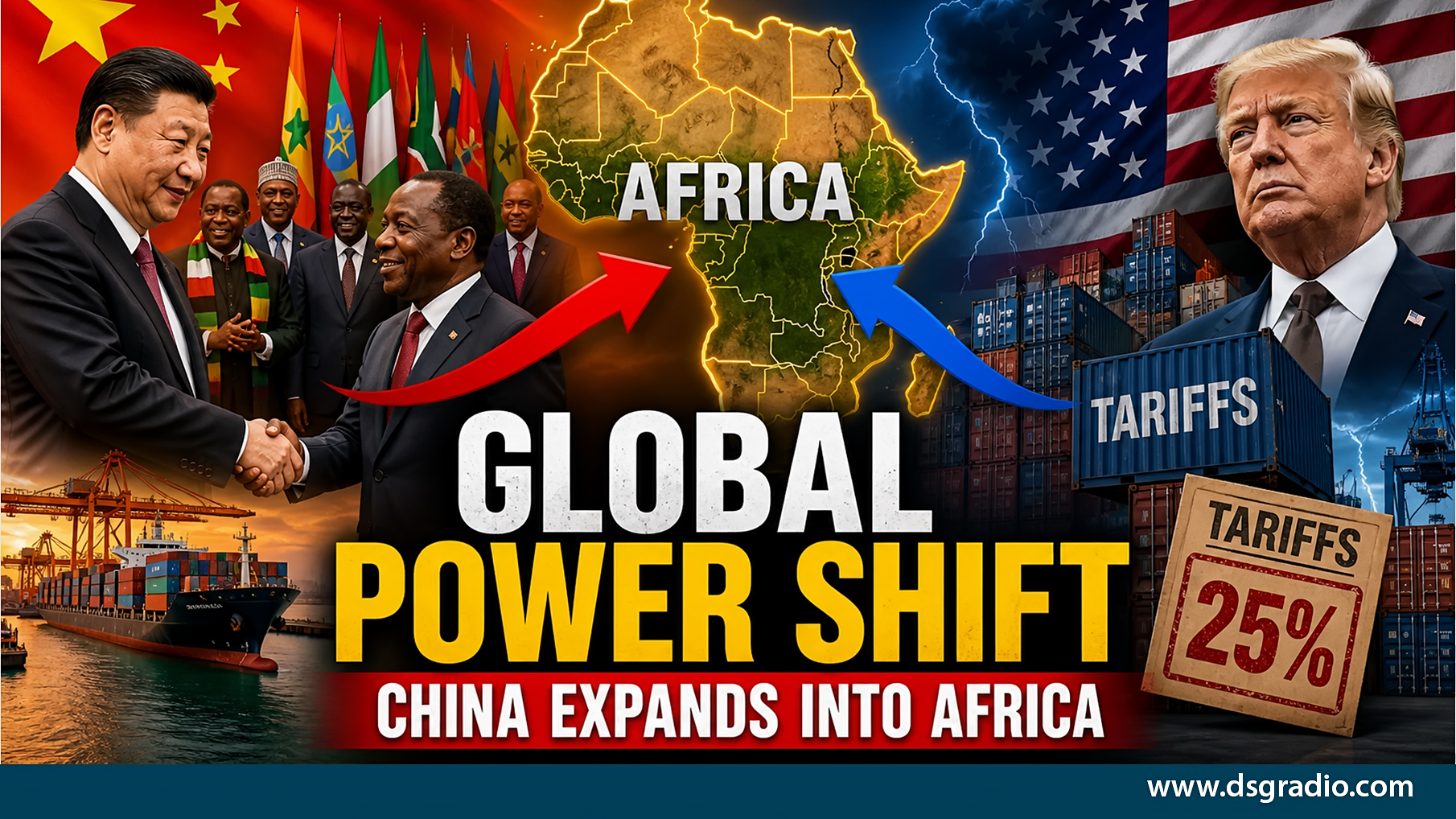
China has opened its market to nearly all African countries under a sweeping zero-tariff policy, a move that is rapidly reshaping global trade dynamics as competition between Beijing and Washington intensifies. The China-Africa trade deal now grants tariff-free access to goods from 53 of Africa’s 54 nations, positioning the continent at the centre of a growing economic rivalry between China and the United States.
China Zero Tariffs Africa: What Changed
The new policy, which came into effect recently, extends tariff-free treatment to Africa’s 20 largest economies, including Nigeria, South Africa, Egypt, Algeria, and Kenya.
China had previously removed tariffs on 33 lower-income African nations. With the latest expansion, the total number of eligible countries has reached 53.
The only exception is Eswatini, which remains excluded due to its diplomatic ties with Taiwan, highlighting how geopolitical alignments continue to shape trade decisions.
According to Chinese authorities, the policy is designed to promote “common development” between China and Africa. The first shipment under the new system a consignment of South African apples cleared customs in Shenzhen shortly after the policy took effect.
US China Trade Africa: A Growing Economic Rivalry
The China Africa trade deal is unfolding against the backdrop of renewed trade tensions involving the United States.
While China is lowering trade barriers, the U.S. has pursued protectionist measures, including imposing tariffs on imports from multiple countries, including African economies.
At one point, U.S. tariffs on South African goods reached up to 30%, with even higher rates applied to some other African nations. Although the U.S. Supreme Court later struck down some of these measures, alternative import taxes were quickly introduced.
This divergence in policy direction has prompted several African countries to reconsider their trade strategies and explore alternative markets, particularly China.
South Africa’s Trade Minister, Parks Tau, emphasised this shift earlier this year, stating that the country is seeking deeper cooperation with China through a “pragmatic and flexible” approach.
Africa Export China Market: Opportunities for Growth
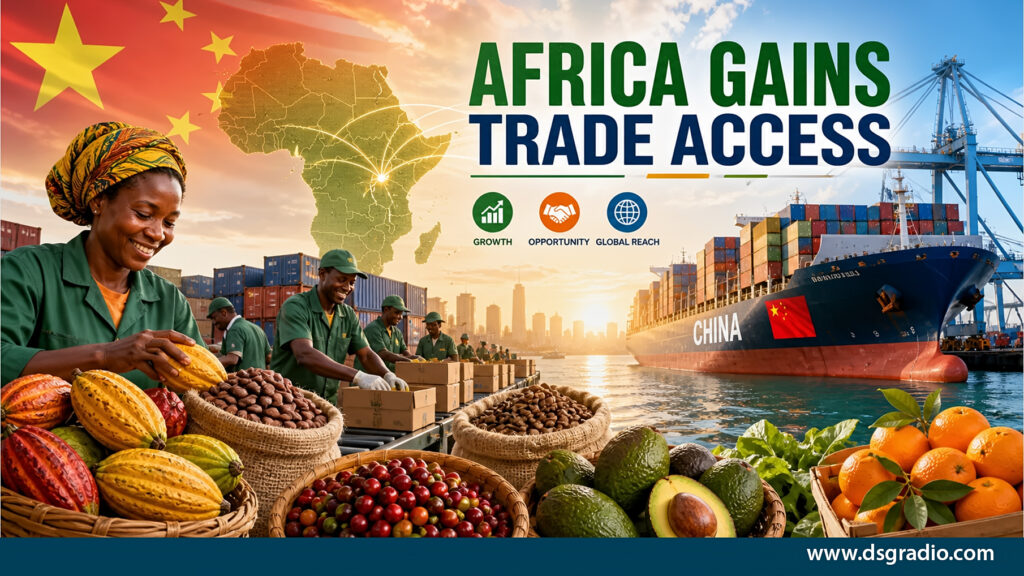
The China Africa trade deal is expected to significantly benefit African exporters, particularly in the agricultural sector.
Products likely to gain include:
- Cocoa from the Ivory Coast and Ghana
- Coffee and avocados from Kenya
- Citrus fruits and wine from South Africa
These products previously faced tariffs ranging from 8% to 30%, which limited their competitiveness in the Chinese market.
Key highlights:
- Ivory Coast and Ghana together produce over 50% of global cocoa supply
- South Africa is a major exporter of citrus fruits
- Kenya’s agricultural exports are expanding rapidly
By removing tariffs, China has effectively reduced the cost of entry for African goods, making them more competitive in one of the world’s largest consumer markets.
Nigeria’s Position in the China Africa Trade Deal
As Africa’s largest economy, Nigeria stands to benefit from the China Africa trade deal, particularly in sectors such as:
- Crude oil and refined petroleum
- Agricultural exports (cocoa, sesame, cashew)
- Solid minerals
However, Nigeria’s ability to fully capitalise on the policy depends on:
- Export infrastructure
- Value-added production capacity
- Trade facilitation systems
Without improvements in these areas, experts warn that Nigeria may struggle to maximise the advantages of tariff-free access.
Trade Imbalance Concerns Persist
Despite the opportunities, the China Africa trade deal also raises concerns about deepening economic imbalance.
Trade data shows:
- Total China-Africa trade reached $348 billion in 2025
- China exported $225 billion worth of goods to Africa
- Africa exported only $123 billion to China
This imbalance highlights a long-standing structural issue: Africa largely exports raw materials while importing manufactured goods from China.
Experts argue that while tariff removal may boost agricultural exports, it does little to address the broader imbalance.
A China-Africa analyst, Thierry Pairault, noted that many of Africa’s key exports—such as oil and minerals—already entered China duty-free, limiting the overall impact of the new policy.
Debt and Dependency Risks
Another major concern linked to the China Africa trade deal is Africa’s growing financial dependence on China.
Many African countries owe billions of dollars in debt to Beijing, raising questions about long-term sustainability.
Critics argue that:
- Increased trade could reinforce dependency
- Limited industrialisation may persist
- Africa risks remaining a supplier of raw materials
At the same time, China maintains that the policy is part of a broader strategy to promote shared growth and economic cooperation.
Geopolitical Signal: Eswatini and Taiwan
The exclusion of Eswatini from the China Africa trade deal underscores the geopolitical dimension of the policy.
Eswatini is the only African country to maintain formal diplomatic relations with Taiwan—a key rival of China.
By excluding Eswatini, Beijing sends a clear message about the strategic importance of diplomatic alignment in its economic partnerships.
China’s Expanding Influence in Africa
China is already Africa’s largest trading partner, and the new zero-tariff policy further strengthens its position.
The continent’s population—currently around 1.5 billion—is projected to reach 2.5 billion by 2050, making it a critical market for global economic powers.
China’s approach contrasts with Western policies, which have increasingly leaned toward protectionism.
As noted in a detailed AP News report on the policy rollout, the move is widely seen as part of China’s broader effort to position itself as an alternative to Western economic models.
What Comes Next for Africa?
The China Africa trade deal presents both opportunity and challenge.
Potential Gains
- Expanded access to Chinese markets
- Increased agricultural exports
- Diversification of trade partners
Key Risks
- Widening trade imbalance
- Continued reliance on raw material exports
- Rising debt obligations
The long-term impact will depend on how African countries respond—particularly their ability to build industrial capacity and move up the value chain.
The China Africa trade deal marks a pivotal moment in global trade, placing Africa at the intersection of a shifting economic order.
As China deepens its engagement and the United States recalibrates its trade policies, African nations face a critical choice: leverage new opportunities for growth or risk reinforcing long-standing structural dependencies.
The outcome will shape not only Africa’s economic future but also the broader balance of global power in the decades ahead.
🔗 Recommended Coverage:
- Nigeria Police Accountability Under Scrutiny
Examines governance and institutional reform issues affecting Nigeria’s global economic credibility. - FG Faces Treason Charges Case Fallout
Highlights political stability concerns that may influence investor confidence and trade partnerships. - Tinubu’s $516M Loan Request Raises Economic Questions
Provides insight into Nigeria’s fiscal strategy amid rising global economic shifts.
About the Author