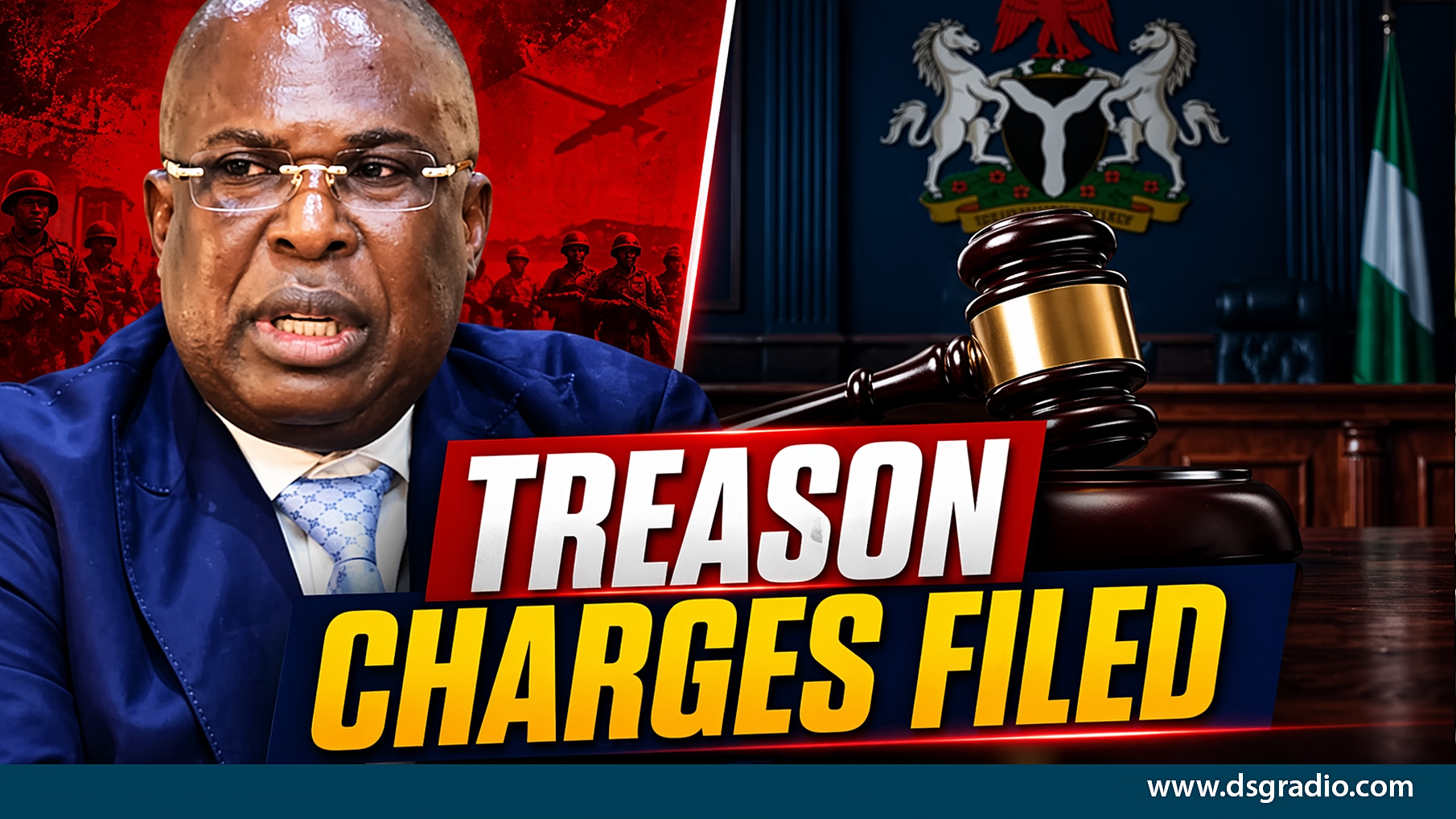
FG Treason Charges: Sylva, Others Face Trial Over Alleged Coup Plot
The Federal Government has filed a 13-count charge before the Federal High Court in Abuja against former Minister of State for Petroleum Resources, Timipre Sylva, and six others over an alleged plot to wage war against Nigeria and commit acts of terrorism, in a case that underscores rising concerns over national security and political stability.
Details of the Charges
The case, which falls under FG treason charges, Nigeria, was instituted by the Office of the Attorney-General of the Federation and signed by the Director of Public Prosecutions, Rotimi Oyedepo (SAN).
Those named in the charge include:
- Timipre Sylva (former minister, reportedly at large)
- Major General Mohammed Ibrahim Gana (retd)
- Captain Erasmus Victor (retd)
- Inspector Ahmed Ibrahim
- Zekeri Umoru
- Bukar Kashim Goni
- Abdulkadir Sani
They are scheduled to be arraigned before Justice Joyce Abdulmalik at the Federal High Court, Abuja.
According to prosecutors, the defendants allegedly conspired in 2025 to undermine the Nigerian state and destabilise its constitutional structure.
Allegations of Treason and Coup Plot
At the heart of the case is a serious allegation: that the accused individuals planned to “levy war against the state” to overpower the President of Nigeria.
Under Section 37(2) of the Criminal Code, such an act constitutes treason.
Prosecutors further claim:
- The defendants had prior knowledge of a planned treasonable act
- They failed to alert authorities despite being aware
- They did not take reasonable steps to prevent the alleged offence
The Federal Government argues that these actions form part of a coordinated effort to execute a coup plot against the administration.
Terrorism and National Security Concerns
Beyond treason, the case extends into terrorism-related offences under the Terrorism (Prevention and Prohibition) Act, 2022.
The charge alleges that the defendants:
- Conspired to commit acts of terrorism within Nigeria
- Participated in meetings linked to terrorist activities
- Promoted a political ideology capable of destabilising the country
Inspector Ahmed Ibrahim and Zekeri Umoru were specifically accused of attending meetings tied to the alleged plot.
Prosecutors claim these actions were intended to weaken Nigeria’s constitutional framework and threaten national stability.
Alleged Suppression of Intelligence
Another key component of the FG treason charges in the Nigeria case is the accusation of deliberate intelligence suppression.
According to the charge:
- The defendants possessed information that could have prevented the alleged acts
- They failed to disclose such intelligence to the relevant authorities
- This omission allegedly enabled the continuation of the plot
This aspect of the case raises critical questions about accountability within security and intelligence networks.
Money Laundering and Terrorism Financing
Financial transactions linked to the case form a significant part of the prosecution’s argument.
Several defendants are accused of handling funds suspected to be proceeds of terrorism financing, in violation of the Money Laundering (Prevention and Prohibition) Act, 2022.
Key allegations include:
- Bukar Kashim Goni allegedly retained ₦50 million linked to unlawful activities
- Abdulkadir Sani allegedly held ₦2 million from similar sources
- Zekeri Umoru allegedly received ₦10 million in cash and retained an additional ₦8.8 million
- Inspector Ahmed Ibrahim allegedly possessed ₦1 million connected to the scheme
These financial trails are expected to play a central role during the trial.
Legal and Political Implications
The Timipre Sylva treason case introduces significant political dimensions, given Sylva’s previous role as a federal minister.
Legal experts note that:
- Treason charges are among the most serious offences under Nigerian law
- Convictions could carry severe penalties, including life imprisonment
- The involvement of security personnel adds complexity to the case
The presence of both military and civilian defendants suggests what prosecutors describe as a “coordinated network” threatening national security.
Court Proceedings and Arraignment
The Abuja High Court arraignment is scheduled to take place before Justice Joyce Abdulmalik.
However, key details remain unclear, including:
- Whether all defendants will be present in court
- The current whereabouts of Timipre Sylva
- Whether additional suspects may be named
The Federal Government is expected to present its case formally once proceedings begin.
Broader Security Context
The Nigeria coup plot charges come at a time when West Africa has witnessed a series of military takeovers and political instability.
Although Nigeria has maintained civilian rule since 1999, analysts warn that:
- Internal security threats remain a concern
- Political tensions could create vulnerabilities
- Strong institutional responses are necessary to deter similar plots
This case may therefore serve as a test of Nigeria’s legal and democratic institutions.
Related Articles
You may also want to read:
- Congo Commutes Death Sentences in Coup Attempt Case
Explores how another African nation handled foreign nationals involved in a failed coup plot. - Gabon Approves Candidates Including Coup Leader
Highlights political transitions following military intervention and leadership shifts. - Burkina Faso’s Democratic Crisis Deepens
Examines the broader regional pattern of instability and governance challenges in West Africa.
The FG treason charges in the Nigerian case represent one of the most high-profile national security prosecutions in recent years.
With allegations spanning treason, terrorism, intelligence suppression, and financial crimes, the trial is expected to attract widespread attention both within Nigeria and internationally.
As proceedings begin in Abuja, the case will likely shape public discourse on governance, security, and the rule of law.
For now, authorities insist the charges are grounded in evidence, while further details are expected to emerge during court proceedings.
About the Author