Washington Dinner Shooting Exposes Security Risks at High-Profile Political Events
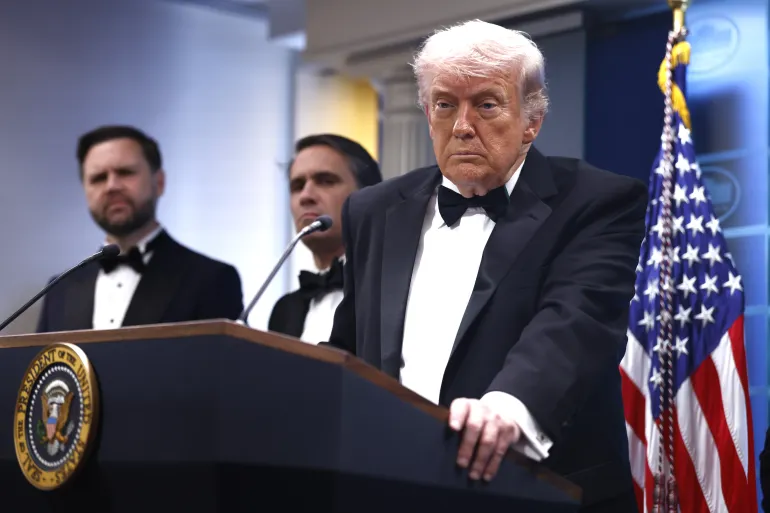
The Washington dinner shooting has triggered renewed scrutiny of security arrangements surrounding top US officials after a suspected gunman breached protective layers at the White House Correspondents’ Association (WHCA) dinner, forcing the evacuation of President Donald Trump and raising concerns over rising political violence risks in the United States.
Authorities identified the suspect as 31-year-old Cole Tomas Allen from Torrance, California, who allegedly attempted to target members of the Trump administration during the high-profile media and political gathering held at the Washington Hilton hotel.
What Happened in Washington? A Timeline of the Incident
The Washington dinner shooting unfolded rapidly during one of the most secure and high-profile political events in the United States.
According to law enforcement officials:
- The suspect gained access to the Washington Hilton as a registered guest
- The hotel had been sealed off to the public hours before the event
- Multiple layers of screening were in place, including magnetometers and credential checks
- The suspect reportedly forced his way through a security checkpoint
- Secret Service agents responded immediately, exchanging fire
- Several gunshots—estimated between five and eight—were reported
- President Donald Trump and senior officials were swiftly evacuated
- Guests inside the ballroom took cover amid chaotic scenes
Authorities confirmed that the suspect was apprehended at the scene and later taken to hospital for evaluation. He was not injured during the confrontation.
White House Dinner Security: Failure or System Success?
The incident has sparked debate over whether the White House dinner security system failed—or ultimately worked as designed.
Officials, including Secret Service Director Sean Curran, defended the response, stating that:
- The multilayered security plan prevented the suspect from reaching the ballroom
- Rapid intervention by agents neutralised the threat
- The suspect “barely broke the perimeter,” according to acting US Attorney General Todd Blanche
However, security analysts note key concerns:
- The suspect reportedly assembled weapons inside the hotel
- He was able to bypass initial security barriers
- The breach occurred at an event attended by over 2,000 guests, including top government officials
The ability of an armed individual to penetrate even part of the secured perimeter has intensified scrutiny of protective protocols at elite political events.
Target and Motive: Trump and Administration Officials
Investigators believe the suspect was targeting officials linked to the Trump administration, with early findings suggesting the US president himself may have been among the intended targets.
Acting Attorney General Todd Blanche stated that:
- The suspect appeared to have planned the attack
- He travelled from California to Washington via Chicago
- Evidence suggests he intended to attack government officials at the event
President Trump described the incident as an attack by a “would-be assassin,” reinforcing concerns over ongoing threats to political leaders.
Authorities have not yet confirmed a definitive motive, and investigations remain ongoing.
Who Is the Suspect? A Brief Profile
Cole Tomas Allen, 31, is described as:
- A resident of Torrance, California
- A mechanical engineer and computer science graduate
- A part-time tutor and game developer
- A former “Teacher of the Month” at a private tutoring company
Records indicate he made a small political donation to a Democratic campaign in 2024 and had no registered party affiliation.
Officials also revealed that:
- He was armed with a shotgun, a handgun, and knives
- He is believed to have acted alone
- He is currently facing federal charges, including assault on a federal officer
Further details about his motivations remain under investigation.
A Pattern of Threats: Rising Political Violence in the US
The Washington dinner shooting is not an isolated incident but part of a broader pattern of threats against US political figures.
Recent cases include:
- July 2024: Trump was wounded during a rally shooting in Pennsylvania
- September 2024: Armed suspect arrested near Trump’s golf course
- Early 2025: Intruder shot at Mar-a-Lago resort
These incidents highlight an escalating trend in US political violence risk, particularly targeting high-profile figures.
Security experts warn that:
- Lone-actor threats are increasingly difficult to predict
- Public political events remain vulnerable despite heavy security
- Online radicalisation and ideological extremism may be contributing factors
Global Implications: Why This Matters Beyond the US
The Washington dinner shooting carries implications far beyond American politics.
Globally, it raises questions about:
- The security of political leaders at public events
- The resilience of democratic institutions
- The rising threat of politically motivated violence
For countries like Nigeria, where high-profile political gatherings are frequent, the incident underscores the importance of:
- Strengthening event security frameworks
- Investing in intelligence gathering
- Enhancing coordination between security agencies
Political analysts note that such incidents can influence:
- Public confidence in leadership protection
- Electoral processes
- International perceptions of stability
Implications for Future Political Events
The incident is likely to prompt immediate and long-term changes in security planning for US political events.
Potential measures include:
- Tighter screening protocols for hotel guests
- Enhanced surveillance and threat detection systems
- Reduced physical access to high-profile events
- Increased reliance on intelligence-led security operations
President Trump has also used the incident to renew calls for constructing a secure ballroom within the White House complex, arguing that external venues present avoidable risks.
Related Coverage
You may also want to read:
- US-Iran tensions deepen as talks stall globally
Explores geopolitical tensions that form part of the broader global security landscape. - Will there be World War 3? Analyzing global tensions
Provides context on rising global instability and conflict risks. - Controversial US-Israel Gaza resettlement plan
Highlights political tensions influencing global security concerns.
The Washington dinner shooting has exposed critical vulnerabilities in even the most sophisticated security systems, reinforcing concerns over the safety of political leaders in an era of rising threats.
While authorities maintain that the system ultimately worked, the breach itself underscores a stark reality: high-profile political events remain prime targets, and the evolving nature of threats requires constant adaptation.
Investigations continue, and further details about the suspect’s motive and planning are expected to emerge in the coming days.
About the Author