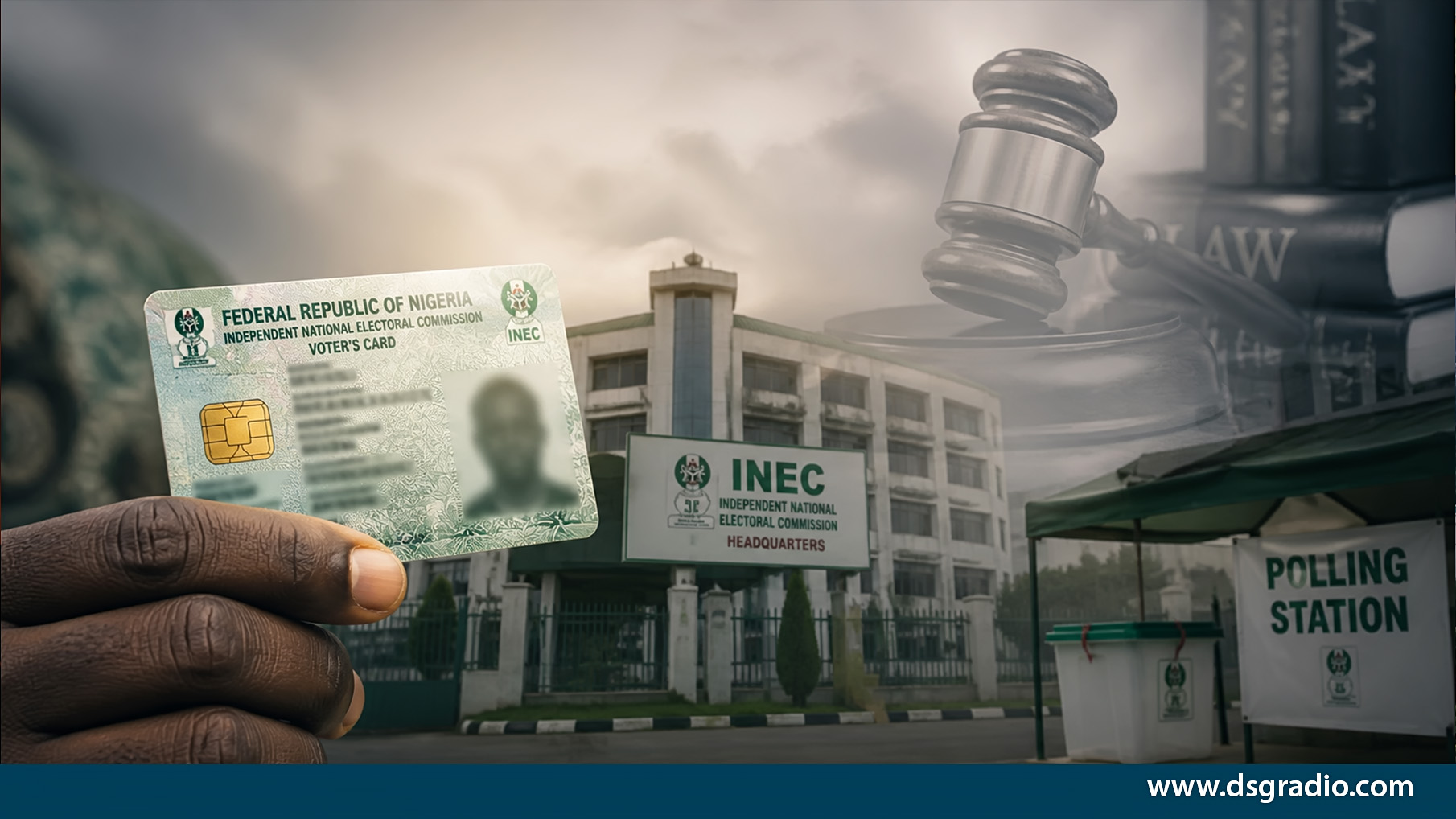
Dual Party Membership Nigeria: INEC Responds to APM–NDC Legal Adviser Controversy
Nigeria’s electoral integrity is under renewed scrutiny following allegations of dual party membership by a senior legal officer, who is listed in two political parties simultaneously. The controversy, which centres on the Allied Peoples Movement (APM) and the Nigeria Democratic Congress (NDC), has triggered calls for an INEC investigation in Nigeria and raised fresh concerns about compliance with the Electoral Act.
Allegations Trigger Legal Debate
The issue emerged after a civil society group, Nigeria Democratic Rights Advocacy (NDRA), flagged what it described as a serious legal contradiction in party records. According to the group, Barrister Reuben Egwuaba was listed as National Legal Adviser in both APM and NDC, one of the listings reportedly backed by a court order.
The NDRA, through its General Secretary Julius Aondowase, argued that this situation goes beyond administrative error and may constitute a direct breach of Nigeria’s electoral laws. The group emphasised that holding executive roles in two political parties simultaneously is incompatible with legal provisions governing party membership.
What the Law Says About Dual Membership
At the heart of the controversy is the Electoral Act violation Nigeria debate, particularly amendments affecting Section 77.
Key legal provisions include:
- Membership in more than one political party at the same time is prohibited
- Violators may face penalties of up to ₦10 million
- Offenders may also face imprisonment of up to two years
The NDRA stressed that the role of National Legal Adviser is not ceremonial but a critical executive position within a party’s National Executive Committee (NEC). As such, it requires exclusive loyalty to one political party.
Timeline of Events
A structured review of the APM NDC controversy shows how the issue developed:
- Initial Listing: Egwuaba appeared as National Legal Adviser in APM records
- Subsequent Listing: His name also appeared in NDC records, reportedly linked to a court directive
- Public Alarm: NDRA raised concerns over possible dual membership
- INEC Response: The Electoral Commission acknowledged the issue and provided clarification
This sequence has raised questions about record accuracy and regulatory oversight.
INEC Responds to the Controversy
The Independent National Electoral Commission (INEC), through its Deputy Director of Voter Education and Publicity, Wilfred Ifogah, addressed the issue.
According to INEC:
- Egwuaba had reportedly resigned from APM
- He is now recognised as a member of NDC
- The dual listing may have resulted from delayed communication by APM
INEC also stated that updates would be made to correct the records.
As reported by Vanguard in its original coverage of the issue, the commission indicated that administrative delays could explain the discrepancy, though it acknowledged the need for proper documentation and updates (see original report).
Accountability Questions Raised
Despite INEC’s clarification, the case has sparked broader questions about Nigeria’s electoral system:
- How did dual listings persist without immediate correction?
- Are political party databases fully synchronised with INEC records?
- What safeguards exist to prevent similar cases?
These concerns reflect ongoing challenges in maintaining transparent and accurate electoral data.
Implications for Electoral Integrity
The dual party membership Nigeria controversy goes beyond one individual case. It highlights systemic issues that could affect public confidence in democratic processes.
Key Implications:
- Trust Deficit: Perceived inconsistencies weaken voter confidence
- Regulatory Gaps: Delayed updates suggest coordination issues between parties and INEC
- Legal Risks: Potential violations could trigger prosecutions
The situation reinforces the importance of strict adherence to electoral laws, particularly as Nigeria approaches future election cycles.
This aligns with broader political developments, including recent party realignments discussed in reports such as INEC deadline driving defections and shifting opposition dynamics in Peter Obi’s ADC exit.
Political Context and Party Discipline
Nigeria’s multi-party system has historically faced challenges related to:
- Party switching (defections)
- Weak internal discipline
- Administrative inconsistencies
The APM NDC controversy adds another dimension, suggesting that even internal party records may require stronger oversight mechanisms.
Political analysts note that maintaining accurate membership records is essential not only for compliance but also for ensuring credible elections.
What Happens Next?
While INEC has indicated that corrective action will be taken, several outcomes remain possible:
- Administrative Resolution: Records updated without further legal action
- Formal Investigation: If discrepancies persist or new evidence emerges
- Legal Consequences: If dual membership is proven under the law
At this stage, details remain unclear regarding whether any formal investigation will be launched.
Broader Democratic Impact
The dual party membership Nigeria issue underscores a fundamental principle: electoral laws must be consistently enforced to maintain democratic integrity.
Failure to address such cases effectively could:
- Encourage loopholes in party administration
- Undermine institutional credibility
- Set problematic precedents for future elections
For civil society groups like NDRA, the case represents a test of Nigeria’s commitment to the rule of law.
🔗 Recommended Coverage:
- FG Treason Charges Against Sylva Explained
Explores legal accountability in Nigeria’s political system, relevant to the enforcement of the Electoral Act. - Tinubu’s $516M Loan Request and Governance Debate
Highlights transparency and institutional oversight issues in Nigerian governance. - Police Accountability After Mene Ogidi Killing
Examines the rule of law and enforcement challenges, similar to electoral accountability concerns.
About the Author