IMF Backs Nigeria’s Economic Reforms, Warns of Rising Poverty
Nigeria’s economic transformation under President Bola Ahmed Tinubu is receiving renewed endorsement from the International Monetary Fund (IMF), but the global lender has also issued a stark warning: despite stronger economic indicators, millions of Nigerians continue to face worsening hardship.
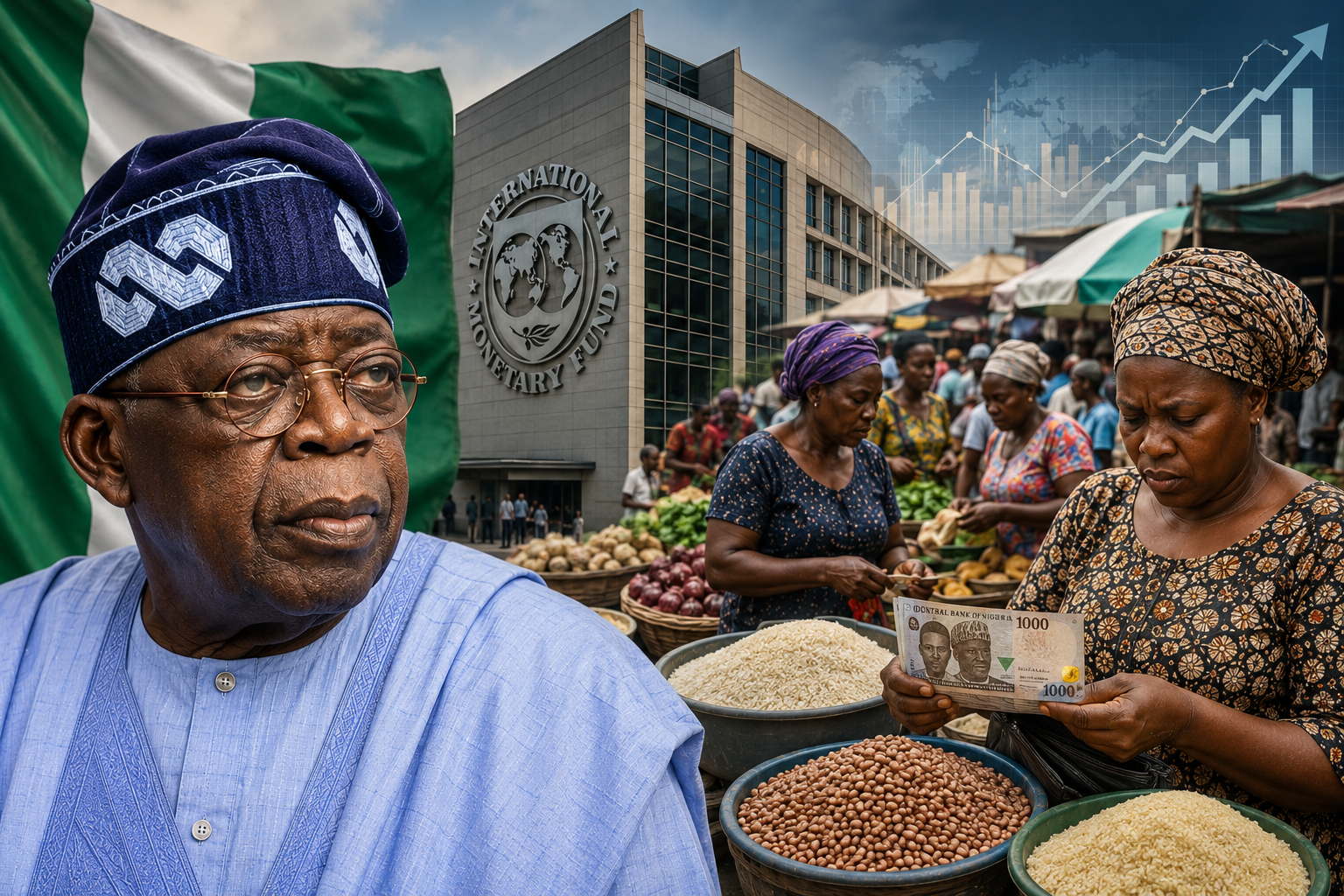
In its latest Article IV consultation on Nigeria, released on Tuesday, the IMF said the country’s reform programme has strengthened macroeconomic stability, improved resilience to external shocks, and restored confidence in the economy. However, the institution noted that poverty reached 63 per cent of the population by the end of 2025, while an estimated 27 million Nigerians faced food insecurity. The findings have reignited debate over whether Nigeria’s Economic Reforms are translating into meaningful improvements in citizens’ daily lives.
What the IMF Says About Nigeria Economic Reforms
The IMF’s latest assessment paints a picture of an economy that is stabilising after years of structural distortions.
Since assuming office in 2023, President Tinubu’s administration has implemented some of the most significant economic reforms in decades. These include the removal of fuel subsidies, liberalisation of the foreign exchange market, fiscal reforms, tax restructuring, and efforts to strengthen public finances.
According to the IMF, these measures have produced tangible macroeconomic results.
The institution said reforms implemented over the past three years have improved economic outcomes and enhanced Nigeria’s resilience against global shocks. It highlighted improvements in foreign exchange market operations, stronger external reserves, ongoing revenue reforms, and increased investor confidence.
The IMF projected economic growth of approximately 4.1 per cent in 2026, slightly above the estimated 4 per cent recorded in 2025.
For policymakers, these figures suggest that difficult reforms are beginning to achieve their intended objectives.
The Federal Government welcomed the report, describing it as independent validation of its economic agenda.
Minister of Finance and Coordinating Minister of the Economy, Taiwo Oyedele, said the report confirms that the administration’s decisions to eliminate fuel subsidies, reform the foreign exchange system, and strengthen fiscal discipline have helped reduce vulnerabilities and improve economic stability.
Economic Recovery Without Relief?
The most striking aspect of the IMF assessment is the contrast between improving economic indicators and deteriorating living conditions.
While growth is strengthening and investor confidence appears to be improving, poverty remains widespread.
The IMF estimates that nearly two-thirds of Nigerians now live below the national poverty line.
This contradiction lies at the heart of Nigeria’s current economic debate.
For many Nigerians, economic recovery remains difficult to see in everyday life.
Food prices remain high.
Transportation costs have increased significantly.
Household purchasing power has been weakened by inflation.
Small businesses continue to struggle with rising operational costs.
Although economists generally agree that reforms were necessary to correct long-standing economic imbalances, the short-term social cost has been substantial.
The challenge facing policymakers is how to bridge the gap between macroeconomic recovery and household welfare.
Economic growth figures may reassure investors and international institutions, but citizens often judge economic performance by their ability to afford food, transportation, healthcare, education, and housing.
For many families, those pressures remain intense.
Why Poverty Remains High Despite Economic Growth
The IMF’s findings suggest that poverty in Nigeria is not solely the result of recent reforms.
According to previous World Bank assessments referenced in the report, poverty has been increasing for several years.
The World Bank estimated that approximately 61 percent of Nigerians were living in poverty, compared with about 40 percent in 2019.
Significantly, three-quarters of that increase occurred before 2023.
This means that while current reforms may have contributed to short-term hardship, many poverty-related challenges predate the present administration.
Several structural factors continue to drive poverty across Nigeria.
These include:
- Rapid population growth
- High unemployment and underemployment
- Weak infrastructure
- Low agricultural productivity
- Insecurity in farming communities
- Limited access to quality education and healthcare
- Regional economic disparities
Experts have long argued that economic growth alone cannot solve these issues without corresponding investments in human capital and productivity.
The IMF itself acknowledged that reforms in governance, security, electricity, agriculture, infrastructure, and human capital development remain essential for achieving more inclusive growth.
How Rising Food and Fuel Costs Affect Ordinary Nigerians
One of the most immediate concerns highlighted by the IMF is inflation.
Although inflation had shown signs of moderation, the institution warned that global developments are creating fresh pressure.
Recent tensions in the Middle East have contributed to higher international energy prices, increasing fuel costs across many economies.
The IMF noted that rising global fuel and food prices have begun affecting Nigeria, pushing inflation higher.
Official data showed inflation accelerating to approximately 15.7 percent in April, marking a five-month high.
For ordinary Nigerians, inflation remains one of the most visible economic challenges.
When food prices rise, household budgets come under pressure.
When transportation costs increase, workers spend more simply getting to work.
When fuel prices climb, businesses face higher production and distribution costs.
These costs often cascade through the economy.
The IMF warned that higher prices for food, fertiliser, and fuel could further aggravate poverty and food insecurity, particularly among vulnerable households.
This remains a major concern given that more than 27 million Nigerians reportedly experienced food insecurity during 2025.
The Fuel Subsidy Debate Returns
The IMF has also urged Nigeria not to reverse one of its most controversial reforms: the removal of fuel subsidies.
For decades, fuel subsidies consumed substantial government resources.
Supporters of subsidy removal argue that the policy frees funds for infrastructure, education, healthcare, and social investments.
Critics contend that the immediate impact has been severe, contributing to higher transportation costs and increased living expenses.
Despite these concerns, the IMF advised the Federal Government to resist pressure to reintroduce petrol subsidies.
The institution argued that maintaining fiscal discipline remains crucial to preserving economic stability and investor confidence.
The recommendation is particularly significant because Nigeria is approaching another election cycle, a period when governments often face pressure to increase spending or introduce popular relief measures.
Government Response: Reforms Are Building a Stronger Economy
The Federal Government insists that reforms are beginning to deliver results.
According to Oyedele, Nigeria is now better positioned to absorb global economic shocks than at any point in recent years.
He cited stronger foreign exchange market performance, stable investor sentiment, improved fiscal management, and enhanced external buffers.
The minister also highlighted government programmes designed to cushion vulnerable households.
These include:
- Direct cash transfers
- Student loans through NELFUND
- Consumer credit initiatives
- Support for small businesses
- Healthcare interventions
- Agricultural development programmes
According to the government, these initiatives are intended to ensure that economic growth eventually translates into broader improvements in living standards.
The administration maintains that macroeconomic stability is only the first phase of a longer reform process aimed at creating jobs, increasing incomes, and reducing poverty.
Agriculture, Security and the Food Challenge
Beyond monetary and fiscal policy, the IMF identified insecurity as a significant threat to economic progress.
Large parts of northern Nigeria remain affected by insecurity involving armed groups and criminal networks.
Because much of Nigeria’s food production occurs in northern states, disruptions to farming activities can have nationwide consequences.
Reduced agricultural output often leads to:
- Higher food prices
- Supply shortages
- Reduced rural incomes
- Increased food insecurity
The Federal Government says it is investing in agricultural mechanisation, irrigation expansion, dry-season farming, and improved access to agricultural inputs.
These initiatives are designed to increase productivity and strengthen food security.
However, analysts note that sustained progress will depend heavily on improved security conditions and effective implementation.
Political Implications Ahead of Elections
The IMF report arrives at a politically sensitive moment.
Nigeria is preparing for another election cycle, with President Tinubu expected to seek a second term.
Economic performance is likely to become a central campaign issue.
Supporters of the administration will point to improving growth figures, stronger reserves, and positive assessments from international institutions.
Critics are likely to focus on rising living costs, poverty levels, unemployment, and food insecurity.
The political challenge for the government will be demonstrating that reforms are not only stabilising economic indicators but also improving household welfare.
Ultimately, voters are more likely to judge economic success through personal experience than through macroeconomic statistics.
What Comes Next for Nigeria Economic Reforms?
The IMF’s report offers both encouragement and caution.
On one hand, it confirms that Nigeria Economic Reforms are producing measurable improvements in stability, resilience, and investor confidence.
On the other hand, it highlights a reality that cannot be ignored: millions of Nigerians continue to face severe economic hardship.
The central question is no longer whether reforms are working at the macroeconomic level.
The more pressing question is whether those gains can be translated into jobs, lower inflation, improved food security, and higher living standards.
For Nigeria, the next phase of reform may be judged less by growth rates and more by whether ordinary citizens begin to feel tangible relief.
The IMF’s message is clear: the foundations of economic recovery may be strengthening, but until poverty and food insecurity begin to decline significantly, the benefits of reform will remain difficult for many Nigerians to see.
Recommended Coverage
President Tinubu Raises 2025 Budget to ₦54.2 Trillion
This report explains how increased government spending is expected to support economic growth, security operations, and infrastructure development.
Nigeria Minimum Wage Debate Intensifies
The wage discussion provides additional context to concerns about inflation, purchasing power, and household welfare.
Owerri West Growth Sparks Leadership Debate
An examination of local economic development and governance challenges within a rapidly expanding Nigerian community.
About the Author