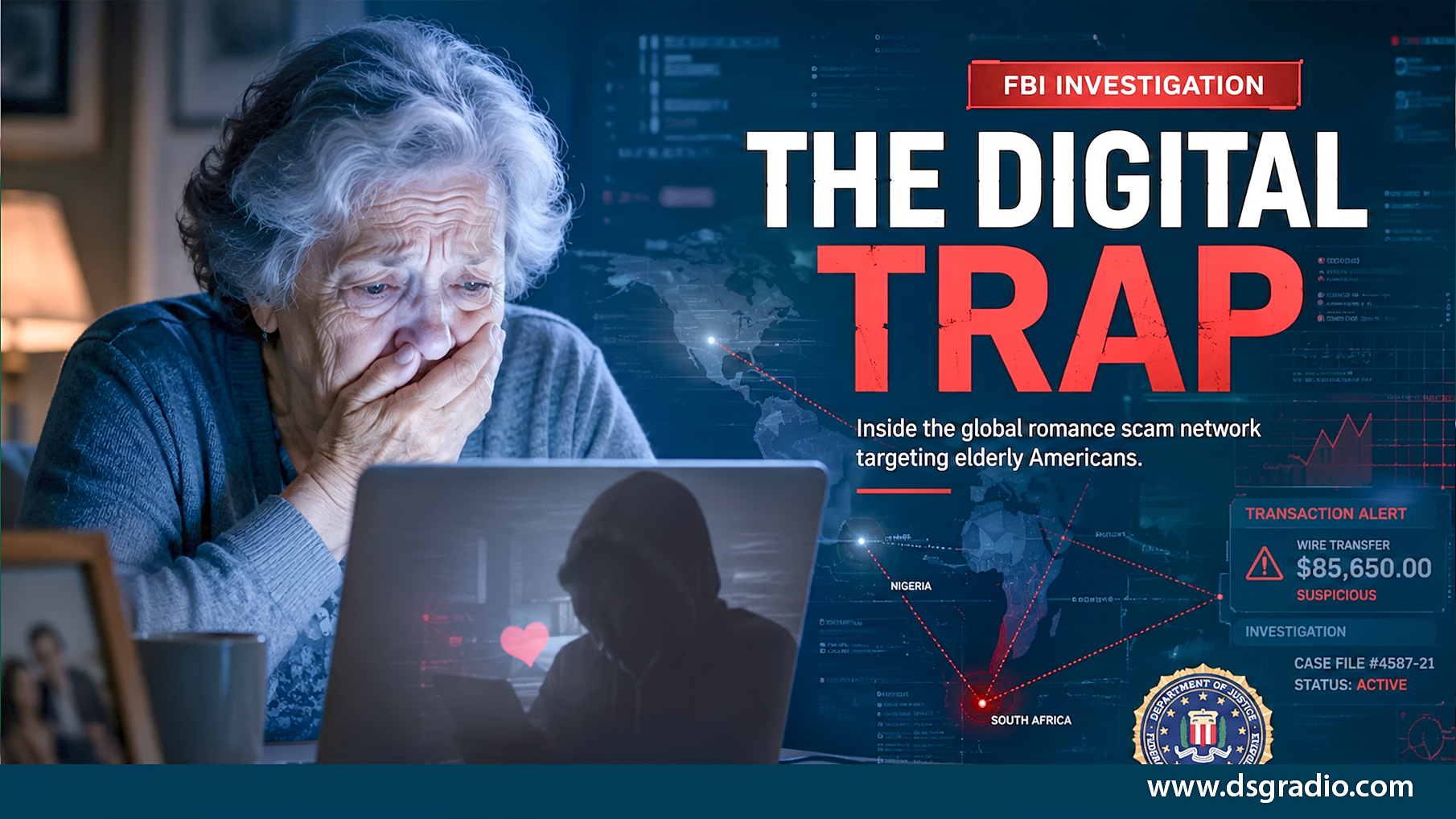
Romance Scam Network: For many elderly victims, what began as an online friendship or romantic connection allegedly evolved into devastating financial loss, emotional trauma, and years of deception. Investigators now say these schemes are increasingly linked to sophisticated international cybercrime operations stretching across multiple countries and financial systems.
The latest development came after U.S. authorities announced the extradition of Nigerian national Samuel Ugberaese to the United States over allegations tied to an international romance scam network accused of targeting elderly Americans through online deception and money laundering operations.
According to a report by THISDAY LIVE, Ugberaese was extradited to face prosecution in the Eastern District of North Carolina on charges including conspiracy to commit wire fraud and conspiracy to commit money laundering.
U.S. prosecutors allege that the operation used fake online identities and emotional manipulation tactics to convince victims to transfer large sums of money through complex financial channels designed to disguise the movement of funds.
Authorities say the case represents part of a wider international crackdown involving the FBI, U.S. Department of Justice, INTERPOL, Nigerian authorities, and South African investigators.
The investigation has renewed global attention on the growing threat posed by digital emotional exploitation schemes that increasingly target elderly internet users.
FBI and Global Agencies Intensify Cybercrime Cooperation
The extradition highlights the growing collaboration between international law enforcement agencies in tackling transnational cybercrime networks.
According to U.S. officials, the investigation involved multiple agencies and governments, including:
- Federal Bureau of Investigation (FBI)
- U.S. Department of Justice
- U.S. Department of State
- INTERPOL
- Nigeria Police Force
- Nigeria’s Ministry of Justice
- South African law enforcement authorities
Officials say international cooperation has become increasingly necessary because cybercriminals often move money, communications, and digital identities across multiple jurisdictions within hours.
Court filings cited in the report state that a federal grand jury indicted Ugberaese on January 22, 2021. Following extradition proceedings, he appeared before U.S. Magistrate Judge Brian S. Myers, who ordered him held pending trial.
If convicted, prosecutors say the charges could carry a combined sentence of up to 40 years imprisonment under U.S. federal law.
The case is reportedly being prosecuted by Assistant U.S. Attorney Adam F. Hulbig in the Eastern District of North Carolina.
How Romance Scam Networks Operate
Cybercrime experts say romance scam networks have evolved from isolated internet fraud attempts into sophisticated international operations.
Authorities allege that perpetrators often create fake digital personas on:
- Dating websites
- Messaging applications
- Professional networking platforms
Investigators say operators typically spend weeks or months building emotional trust with victims before introducing financial requests.
Common tactics allegedly include:
- Fake medical emergencies
- Travel-related crises
- Business investment opportunities
- Cryptocurrency schemes
- Inheritance claims
- Requests for temporary financial support
Officials say emotional manipulation remains one of the most powerful tools used in these operations because victims may feel emotionally attached before realising they are being deceived.
According to investigators, Ugberaese allegedly worked with co-defendant Oluwadamilare Kolaogunbule, a naturalised U.S. citizen, to process and conceal proceeds linked to the alleged operation through multiple financial accounts associated with export companies.
Prosecutors claim the accounts were used to disguise the source and movement of funds associated with the operation.
Authorities stressed that the allegations remain subject to proof in court.
Elderly Victims Face Growing Digital Risks
One of the most alarming aspects of global romance fraud investigations is the repeated targeting of elderly victims.
Law enforcement agencies say older adults are frequently vulnerable because cybercriminals allegedly exploit:
- Loneliness
- Emotional isolation
- Trust
- Limited digital awareness
- Reduced familiarity with online verification systems
According to the FBI’s Internet Crime Complaint Centre (IC3), romance-related cybercrime complaints have continued to rise globally over recent years, resulting in billions of dollars in reported losses.
Cybersecurity experts warn that victims often hesitate to report incidents due to embarrassment, emotional attachment, or fear of public exposure.
Analysts say this underreporting may allow criminal networks to operate longer before detection.
A recent case in the United States involved a 73-year-old woman who reportedly lost hundreds of thousands of dollars and her home after prolonged online manipulation by fraud operators.
Experts say such cases demonstrate how emotional exploitation can become financially devastating for vulnerable individuals.
Nigeria’s Role in International Cybercrime Enforcement
The extradition also reflects Nigeria’s expanding cooperation with international anti-cybercrime investigations.
Over the past decade, Nigerian authorities have increasingly collaborated with U.S. and European agencies in digital financial crime investigations involving extraditions, intelligence sharing, and financial tracking.
Several high-profile cybercrime prosecutions involving Nigerian nationals have attracted global attention in recent years.
These include cases linked to:
- Business email compromise schemes
- Cryptocurrency laundering
- Romance fraud operations
- International wire transfers
Security analysts say stronger cooperation may improve:
- Digital evidence collection
- Financial tracing
- Asset recovery
- International prosecutions
- Intelligence sharing
At the same time, experts caution against associating cybercrime with any single nationality, noting that modern digital fraud networks often involve participants, financial institutions, and infrastructure spread across several countries.
Analysts argue that global cybercrime is increasingly multinational and technologically decentralised.
Money Laundering Systems Under International Scrutiny
Financial investigators say romance scam operations frequently rely on sophisticated money movement systems designed to conceal the origin of funds.
Authorities say such systems may involve:
- Shell companies
- Multiple bank accounts
- Cryptocurrency transfers
- International money mules
- Import-export businesses
- Layered financial transactions
According to investigators, financial accounts associated with export companies were allegedly used in the Ugberaese case to process proceeds tied to the alleged operation.
Experts say modern cybercrime groups increasingly prioritise financial concealment strategies because authorities worldwide have improved cyber investigation capabilities.
Anti-money laundering enforcement agencies are therefore placing greater emphasis on:
- Transaction monitoring
- Cross-border banking cooperation
- Suspicious activity reporting
- Digital asset regulation
Financial crime analysts believe these measures will continue to expand as cyber-enabled fraud becomes more sophisticated.
AI and the Future of Online Deception
Cybersecurity researchers warn that artificial intelligence could significantly increase the sophistication of online deception schemes.
Experts say emerging threats may include:
- AI-generated profile photos
- Voice cloning
- Deepfake video calls
- Automated emotional conversations
- Synthetic identities
Although authorities in the current case did not publicly allege the use of artificial intelligence tools, experts say future romance fraud investigations may become more difficult as technology evolves.
Researchers warn that victims may find it increasingly difficult to distinguish real individuals from digitally generated identities.
This has prompted calls for stronger public awareness campaigns focused on:
- Online verification
- Digital literacy
- Elderly internet safety
- Financial protection education
Extradition Diplomacy Expands Globally
The case also demonstrates how extradition agreements are becoming more central to global cybercrime enforcement.
Legal experts say international cyber investigations now often involve:
- Diplomatic negotiations
- Evidence-sharing agreements
- INTERPOL notices
- Judicial cooperation
- Cross-border arrest warrants
Such processes can take years because investigators may need to coordinate across multiple legal systems.
Authorities said cooperation between Nigeria, South Africa, and the United States played a key role in the extradition process.
Experts believe governments will continue expanding extradition partnerships as cybercrime increasingly transcends national borders.
Wider Implications for Global Cybersecurity
Cybersecurity analysts say the latest case reflects broader concerns about the rapid globalisation of digital financial crime.
Authorities warn that online romance fraud is increasingly tied to:
- Organised cybercrime structures
- International money laundering
- Digital identity manipulation
- Emotional exploitation systems
- Global financial transfer networks
Experts say governments are likely to intensify investment in:
- Cybercrime enforcement
- International intelligence cooperation
- Digital financial regulation
- Online identity verification systems
Law enforcement agencies continue advising internet users to:
- Verify identities independently
- Avoid sending money to online acquaintances
- Report suspicious requests
- Consult relatives before major transfers
- Use secure communication platforms
Meanwhile, prosecutors stressed that the charges against Ugberaese remain allegations and that he is presumed innocent unless proven guilty in court.
Recommended Coverage
- Yahaya Bello Trial Faces Fresh Financial Questions — The ongoing scrutiny surrounding Yahaya Bello reflects wider concerns about financial accountability and international enforcement cooperation.
- Diezani London Trial Tests Global Anti-Corruption Efforts — The Diezani investigation highlights how cross-border legal coordination is reshaping anti-corruption enforcement globally.
- Illegal Mining Arrests Raise Cross-Border Crime Concerns — Recent arrests tied to illegal mining underscore growing attention on transnational crime networks and international cooperation.
About the Author