Owerri West Growth Raises Fresh Questions About Infrastructure and Representation
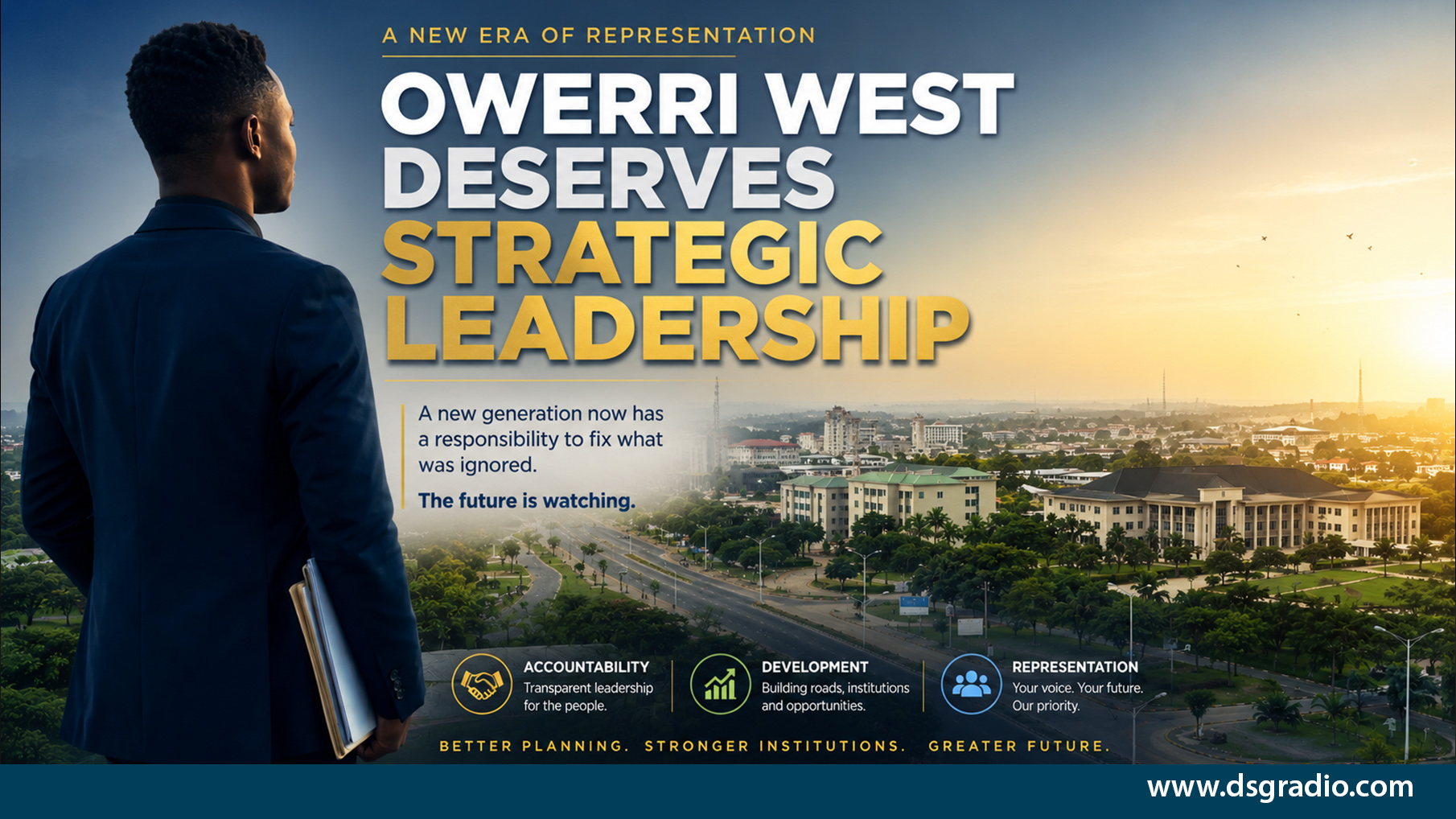
Owerri West Local Government Area in Imo State is increasingly becoming the centre of discussions on development, governance, and urban expansion, as residents and policy observers question whether the area’s growing economic importance is matched by adequate infrastructure support and strategic political representation.
The debate around Owerri West growth has intensified in recent years due to the rapid expansion of residential communities, rising commercial activity, institutional development, and increasing pressure on public infrastructure across the LGA.
Many residents and development advocates argue that, despite the rising profile of the Owerri West economy, the area continues to face structural challenges in funding, road networks, waste management, security coordination, and long-term urban planning.
At the same time, conversations around Imo political representation have also gained attention, with observers questioning whether past and present political leaders have pursued sustained, policy-driven advocacy capable of improving the area’s allocation realities and development priorities.
Owerri West Growth and Economic Expansion
Over the years, Owerri West growth has transformed the LGA into one of the most economically active regions in Imo State.
What was once viewed largely as a semi-urban area now functions as a strategic extension of the Owerri metropolitan economy, driven by education, housing expansion, transportation, hospitality, and industrial activities.
The LGA hosts several major federal institutions, including:
- Federal University of Technology, Owerri (FUTO)
- Federal Polytechnic Nekede
- Federal College of Land Resources Technology
These institutions attract thousands of students, lecturers, business operators, transport workers, and visitors daily, contributing significantly to the strength of the Owerri West economy.
Communities such as Nekede, Avu, Eziobodo, and Umuguma have also witnessed rapid housing development, commercial expansion, and growing population movement linked to ongoing Owerri urban expansion.
Observers say the scale of transformation has increased pressure on roads, drainage systems, waste management structures, healthcare access, and security coordination within the LGA.
Despite these realities, many residents believe that Owerri West infrastructure development has not fully kept pace with the area’s rapid urban and economic growth.
Imo Revenue Allocation Debate Gains Attention
The conversation surrounding Imo revenue allocation has become a major part of wider discussions about fairness, development planning, and infrastructure support in Owerri West.
Nigeria’s local government allocation system considers several factors, including:
- population figures,
- landmass,
- internally generated revenue,
- infrastructure needs,
- equality of local governments,
- and poverty indicators.
However, development analysts argue that these metrics often fail to capture what is increasingly referred to as “functional population” — the actual number of people who live, study, work, or conduct business in an area daily.
In the case of Owerri West growth, many observers believe this gap has become increasingly significant.
The LGA supports major educational institutions, growing commercial transportation networks, industrial clusters, and expanding residential communities connected to the wider Owerri urban expansion taking place around the state capital.
Yet many residents say the realities of Owerri West infrastructure pressure are not adequately reflected in current allocation structures.
Road congestion, sanitation challenges, increased housing demand, and security concerns continue to place pressure on local systems, according to several residents interviewed by DSG HERALD NEWS.
For more insight into the broader fiscal system, readers can explore How Revenue Allocation Works in Nigeria’s Local Governments.
Questions Around Imo Political Representation
As concerns about Owerri West’s growth continue to grow, conversations about Imo’s political representation have also become more prominent.
Many residents and policy observers argue that successive political leaders representing the area have not consistently pursued long-term, evidence-based advocacy capable of influencing allocation policies or attracting stronger infrastructure consideration.
Rather than focusing on emotional political criticism, analysts say the discussion should centre on measurable governance outcomes and policy engagement.
Key questions repeatedly raised include:
- Were updated demographic audits commissioned?
- Were economic impact assessments conducted?
- Were institutional development reports submitted to relevant authorities?
- Were policy proposals presented during budget or allocation reviews?
- Was there sustained lobbying for increased infrastructure funding?
Political analysts say these questions are central to understanding whether representation has evolved beyond symbolic political participation.
One development observer told DSG HERALD NEWS that the future of Imo political representation may increasingly depend on economic intelligence, policy engagement, and long-term planning rather than traditional political visibility.
“For years, representation appears to have focused more on political survival than long-term structural advocacy,” the analyst said.
The statement reflects broader public conversations surrounding development planning and governance accountability within the area.
Owerri Urban Expansion and Infrastructure Pressure
The continued pace of Owerri urban expansion has also intensified pressure on communities within Owerri West.
Housing demand has increased significantly.
Road traffic has become heavier.
Commercial activities have expanded rapidly.
Waste management systems face growing pressure.
Security coordination has become more complex due to increased population movement and economic activity.
Development experts say these are common realities in rapidly urbanising regions where infrastructure planning struggles to keep pace with growth.
Many residents argue that while Owerri West growth has accelerated, the pace of Owerri West infrastructure development has remained relatively slow compared to the realities on the ground.
Readers seeking additional context can also explore Urban Expansion and Infrastructure Pressure in Owerri Suburbs.
Analysts say urban expansion without coordinated planning can place long-term pressure on transportation systems, public utilities, housing structures, and security operations.
Security Concerns and Institutional Pressure
Security has also emerged as a major aspect of discussions surrounding Owerri West infrastructure and development planning.
With increasing movement of students, workers, traders, and visitors across the LGA, maintaining effective security coordination requires significant planning and financial investment.
Some residents believe local security systems appear overstretched relative to the growing realities associated with Owerri West growth.
Questions are now being raised about whether stronger institutional partnerships, expanded security infrastructure, and improved funding mechanisms are necessary to address future risks.
Development analysts warn that rapid Owerri urban expansion without strategic planning can create vulnerabilities capable of affecting businesses, institutions, and residential communities alike.
Shift Toward Accountability and Strategic Leadership
Observers say one of the most significant changes in recent public discussions has been the shift away from emotional political accusations toward accountability-focused conversations.
Rather than relying on partisan rhetoric, many residents now want measurable answers regarding:
- infrastructure planning,
- economic development,
- budget advocacy,
- policy implementation,
- and institutional engagement.
Political analysts say this reflects a broader shift in public expectations surrounding Imo political representation.
“The next political era must move beyond empowerment slogans and focus on measurable structural reforms,” one observer said during discussions monitored by DSG HERALD NEWS.
Another analyst argued that representation should not end after elections but should continue through sustained policy engagement and strategic development advocacy.
Many residents believe future leaders must better understand:
- fiscal systems,
- economic planning,
- demographic studies,
- infrastructure policy,
- and development financing.
According to observers, the future of Owerri West growth may depend less on political popularity and more on strategic leadership capable of translating economic realities into long-term policy influence.
Owerri West’s Future Potential
Despite ongoing concerns surrounding Imo revenue allocation, infrastructure pressure, and governance planning, development experts believe Owerri West remains one of the most strategically positioned LGAs in Imo State.
Its combination of:
- educational institutions,
- expanding residential communities,
- industrial activity,
- entrepreneurial growth,
- and proximity to the state capital
continues to strengthen the Owerri West economy and increase its long-term development importance.
Observers say the key challenge moving forward will be whether governance structures, allocation systems, and Imo political representation can evolve quickly enough to keep pace with the realities emerging across the LGA.
For many residents, the conversation is no longer simply about whether Owerri West growth is happening.
The bigger question now is whether leadership, planning, and infrastructure development are evolving fast enough to support it.
Recommended Coverage:
- Rebuild Imo Movement Gains Attention After Ihedioha Visit
Explores ongoing political realignments and development-focused conversations shaping Imo State ahead of future elections. - Imo CARE Initiative Expands Free Healthcare Access
Highlights how public policy and healthcare reforms are affecting communities across Imo State. - Irete Community Launches N50m School Revamp Project
Examines grassroots infrastructure and education development efforts within Imo communities. - Igwejiuba Francis Foundation Supports Imo Student Scholarship
Focuses on youth empowerment and human capital development initiatives connected to Imo State.
About the Author