Nigerian Army Detention Faces Scrutiny After Soldier’s Death
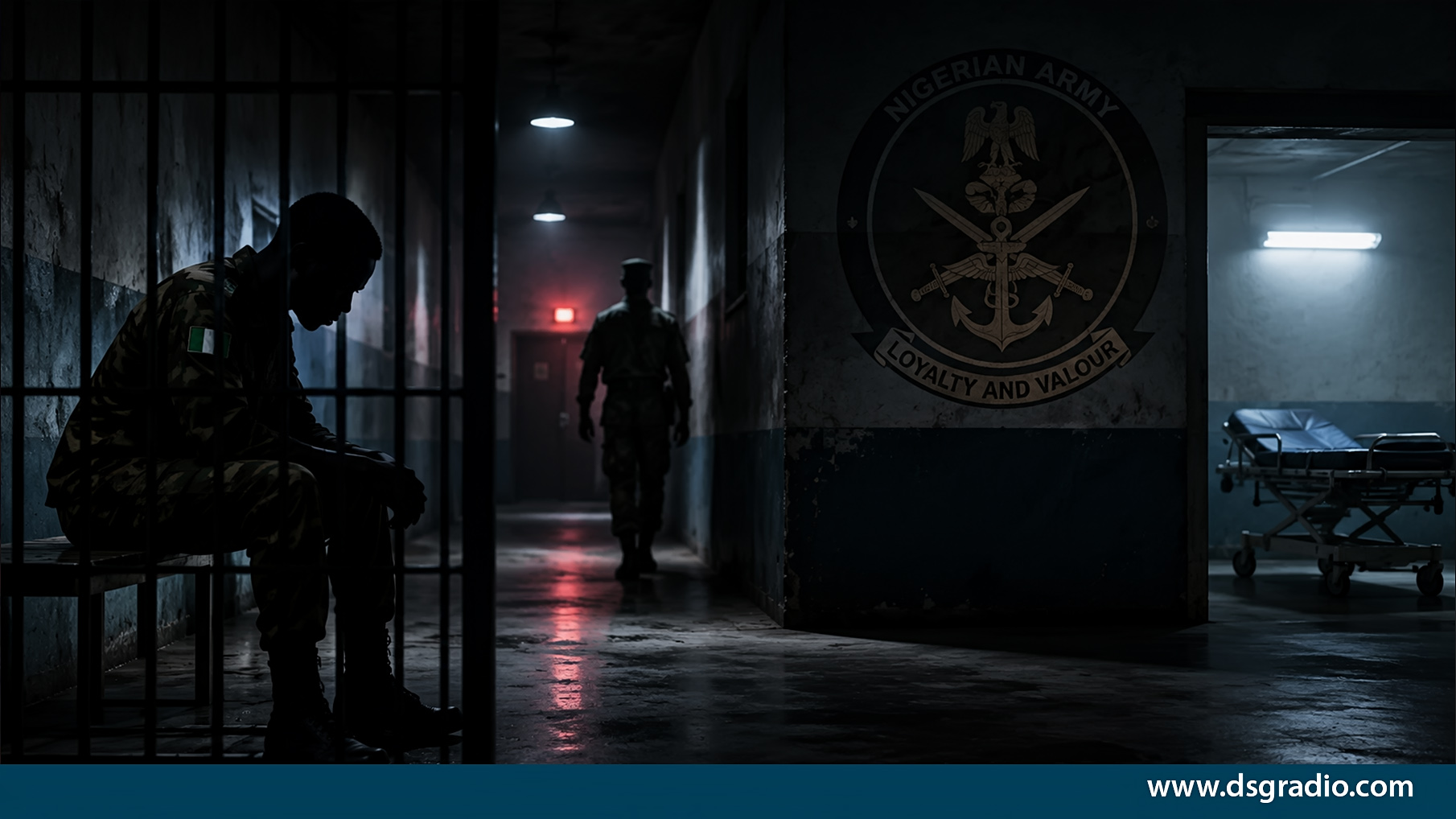
Nigeria’s military detention system is facing renewed scrutiny following the death of detained soldier Corporal Bala Hudu and allegations of medical neglect inside an Army facility, raising wider concerns about welfare standards, detainee rights, and accountability within the Nigerian Army detention structure.
The controversy intensified after fresh details emerged alleging that Hudu, attached to the 223 Light Tank Battalion under 8 Division, died after repeated requests for medical care were allegedly ignored while he remained in custody. The claims, which could not be independently verified, have also drawn attention to the condition of another detained soldier reportedly suffering severe health complications while awaiting further disciplinary action.
The allegations have triggered broader debates over military justice procedures, transparency, and the treatment of personnel held in prolonged detention across Nigeria.
Questions Over Medical Access In Military Custody
According to sources familiar with the matter, Corporal Bala Hudu had been in detention since October 2023 over an allegation described as “self-defence.” Details surrounding the underlying case were not specified in the original report.
Sources claimed that Hudu’s health began deteriorating in early April 2026 while he remained in military custody alongside other detainees.
According to the account, several detainees reportedly attempted to seek treatment at a military medical facility on April 4, 2026, but were allegedly denied access to care after officials concluded they were pretending to be ill.
The report alleged that Hudu’s condition continued to worsen over several days without adequate medical intervention.
Sources further claimed that attempts to obtain medication independently were reportedly rejected by military authorities on the grounds that detainees were not permitted to self-medicate.
Fellow detainees later alleged that Hudu developed severe symptoms, including vomiting and persistent illness, before he was eventually transported for treatment days later.
According to the account, he died shortly after being taken to the hospital.
As reported by SaharaReporters, Hudu was confirmed dead on April 17, 2026.
The Nigerian Army had not publicly issued a detailed response specifically addressing the latest allegations at the time of reporting.
Growing Debate Over Nigerian Army Detention Procedures
The case has intensified conversations around the broader Nigerian Army detention system and how disciplinary procedures are handled internally.
Military detention in Nigeria is governed by the Armed Forces Act and internal military regulations, which allow disciplinary custody for personnel facing investigation or military offences. However, rights advocates have repeatedly argued that prolonged detention without transparent judicial review can create risks of abuse, neglect, or procedural violations.
Legal analysts say the controversy could renew calls for:
- Independent oversight of military detention centres
- Improved medical access for detainees
- Faster disciplinary proceedings
- Greater transparency in military justice cases
Human rights organisations in Nigeria have previously raised concerns over conditions in security detention facilities, particularly regarding healthcare access and due process protections.
The latest controversy also arrives amid wider national conversations about accountability within security institutions.
Earlier, DSG HERALD reported how the SERAP defamation case fueled debates over constitutional rights and institutional accountability, reflecting growing public attention on transparency across Nigerian institutions.
Another Soldier Allegedly Suffers Severe Health Decline
The controversy deepened further following separate allegations involving another detained soldier, Private Solomon Gideon, attached to the 26 Battalion under Headquarters 8 Division.
According to sources cited in the report, Gideon’s health allegedly deteriorated significantly while in custody, with claims that he had developed severe vision problems.
The original report stated that Gideon had previously been punished through the forfeiture of two years’ salary over what was described only as a “miscellaneous offence.”
Sources further alleged that senior military authorities later considered the punishment insufficient and reportedly sought a retrial process.
The Nigerian Army has not publicly released full details regarding Gideon’s case, and the allegations surrounding his health condition could not be independently verified.
Security analysts say the situation highlights the tension between military discipline and personnel welfare, particularly during lengthy detention periods.
Military Justice System Under Renewed Spotlight
The latest allegations are not the first time questions have emerged regarding treatment of military personnel under detention.
In May 2025, the Nigerian Army publicly defended its handling of Corporal Amina Sani Maidoki, who was detained during an investigation into the disappearance of $50,000 reportedly linked to Salamatu Faruk Yahaya, wife of former Chief of Army Staff Lt. Gen. Faruk Yahaya (retd).
At the time, the Army rejected accusations of unlawful detention and insisted that due process was being followed.
Army spokesperson Colonel Appolonia Anele stated that disciplinary procedures within the Nigerian Army were conducted according to established legal and institutional standards.
“The Nigerian Army categorically denies any allegation of unlawful detention, or denial of legal representation,” the statement said at the time.
The Army also maintained that personnel undergoing disciplinary procedures were entitled to procedural fairness and welfare protections.
However, critics argue that repeated allegations involving military detainees risk damaging public trust if independent investigations are not conducted transparently.
The issue has also drawn attention amid broader security concerns in Nigeria and the Lake Chad region, where military operations continue against insurgent groups. DSG HERALD recently examined how the latest Boko Haram attack in Chad exposed wider regional security gaps affecting military operations and personnel welfare.
Calls For Independent Investigation
Human rights observers and legal analysts say the death of a detained soldier under disputed circumstances may increase pressure for independent review mechanisms inside Nigeria’s armed forces.
Some analysts argue that military discipline must be balanced with constitutional protections and internationally recognised human rights standards.
Global human rights bodies, including Amnesty International and the Human Rights Watch, have previously documented concerns surrounding detention conditions in security facilities across various countries, including Nigeria.
Although the Nigerian military remains one of Africa’s most active forces in counterinsurgency operations, observers say operational pressure should not weaken institutional accountability mechanisms.
Details regarding any internal investigation into Hudu’s death remain unclear at the time of reporting.
No announcement had been made regarding possible disciplinary action or external inquiry connected to the allegations.
Broader Implications For Military Welfare
Analysts say the controversy could influence wider conversations around:
- Mental and physical health support for soldiers
- Conditions inside military detention centres
- Welfare monitoring mechanisms
- Transparency in military disciplinary systems
Nigeria’s armed forces continue to face heavy operational demands due to insurgency, banditry, kidnapping, and regional security threats.
Experts warn that unresolved welfare concerns within the military could eventually affect morale, institutional credibility, and public confidence.
The Nigerian Army has consistently maintained that its disciplinary systems follow lawful procedures and military regulations.
However, the latest allegations surrounding Nigerian Army detention conditions are likely to intensify public scrutiny in the coming weeks.
Recommended Coverage:
- Justice Crack Arraignment Sparks Rights Debate
This report examines how legal accountability and institutional transparency continue to shape public trust in Nigeria’s justice system. - Diezani London Trial Tests Anti-Corruption Systems
The case highlights international accountability pressures and concerns over institutional oversight involving Nigerian public figures. - Uche Nnaji Court Proceedings Face Delays
This article explores how legal processes and procedural disputes continue to influence public perception of justice in Nigeria. - UNILAG Court Case Draws National Attention
The report focuses on due process, victim rights, and institutional responsibility within Nigeria’s legal framework.
About the Author