Nigeria Political Realignment Reshapes 2027 Race
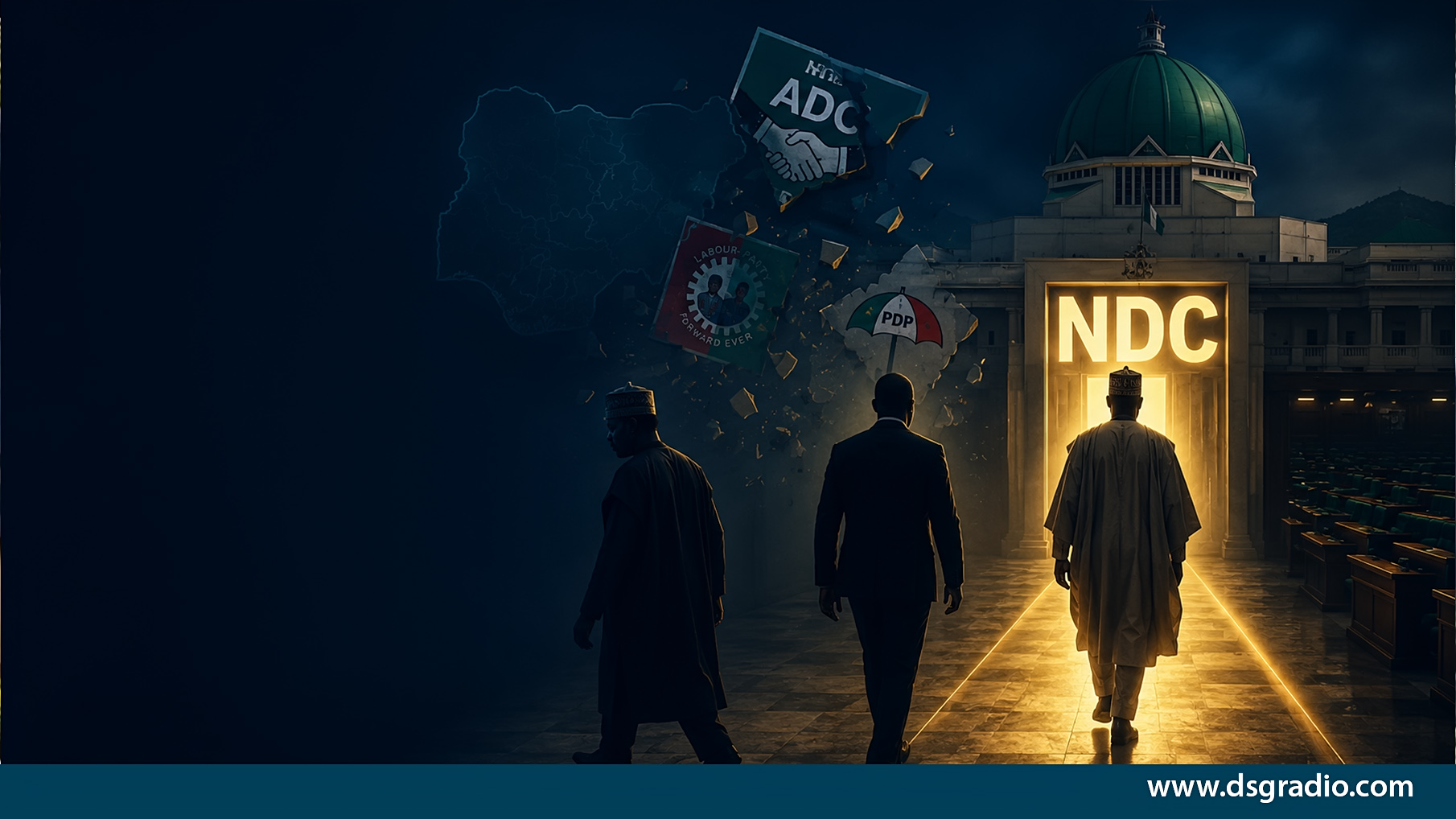
Nigeria’s opposition may be heading toward its biggest political shake-up since the coalition movements that preceded the 2015 elections, as a growing wave of defections from the African Democratic Congress (ADC) to the emerging Nigerian Democratic Congress (NDC) alters the country’s political landscape ahead of the 2027 Nigeria elections.
The latest phase of the Nigeria political realignment intensified on May 5, 2026, when 17 lawmakers in the House of Representatives reportedly defected from the ADC to the NDC, adding momentum to a wider opposition restructuring that has already drawn high-profile politicians and influential regional actors.
Political observers say the rapid movement reflects deeper instability within Nigeria’s opposition parties and may redefine coalition politics over the next 18 months. While supporters of the NDC describe the development as the birth of a stronger opposition platform, critics argue the growing defections reveal a pattern driven more by political survival and electoral calculations than ideology.
Nigeria Political Realignment Begins Ahead of 2027
The current Nigeria political realignment comes at a time when opposition parties are struggling with leadership disputes, internal legal battles, and concerns over electoral viability ahead of the next presidential contest.
Several opposition figures who previously aligned with the ADC have now shifted toward the NDC, triggering a broader migration among supporters and lawmakers across multiple regions.
Among the most notable developments are the reported movements involving former presidential candidates Peter Obi and Rabiu Musa Kwankwaso, whose political influence remains significant across southern and northern Nigeria, respectively. Their alignment with the NDC has fueled speculation that the emerging platform may attempt to build a nationwide coalition capable of challenging the ruling All Progressives Congress (APC) in 2027.
The movement also reflects growing anxiety within opposition ranks over party fragmentation and the struggle to maintain relevance in an increasingly competitive political environment.
The trend follows earlier debates surrounding electoral positioning and party restructuring, including discussions around INEC regulations and coalition politics previously examined in DSG HERALD’s report on INEC deadline pressures and party realignment.
Inside the ADC to NDC Defection Wave
The ADC to NDC defections represent one of the most significant parliamentary shifts in recent Nigerian political history outside general election periods.
Key developments include:
- 17 House of Representatives members defecting from ADC to NDC on May 5, 2026
- Increased alignment of opposition leaders with the NDC
- Rising uncertainty surrounding ADC’s future organisational stability
- Reports of additional negotiations involving lawmakers and political blocs
The Senate has also witnessed notable changes. Senators, including Enyinnaya Abaribe and Victor Umeh, have reportedly shifted positions amid the ongoing political restructuring.
The rapid changes prompted Senate President Godswill Akpabio to reportedly remark that the ADC appeared politically weakened amid the escalating instability.
Analysts note that the defections are not occurring in isolation. Instead, they appear tied to a broader calculation among politicians seeking platforms with stronger national structures and clearer electoral prospects before the 2027 Nigeria elections.
Why Top Politicians Are Abandoning ADC
Several factors appear to be driving the Nigeria political realignment and the collapse of confidence within parts of the opposition.
Internal Crisis and Leadership Battles
Persistent leadership disputes within opposition parties have weakened internal cohesion and eroded lawmakers’ confidence.
Political observers say many politicians fear prolonged legal disputes could undermine electoral preparations and weaken party legitimacy before 2027.
Search for Political Stability
The NDC is increasingly being viewed by some opposition figures as a potentially more stable coalition platform.
The appeal appears rooted in efforts to create a unified opposition structure capable of avoiding the fragmentation that affected previous election cycles.
Electoral Survival
Critics argue that many defections are motivated primarily by personal political calculations rather than ideological alignment.
In Nigeria’s political history, defections often intensify ahead of major elections as politicians reposition themselves around perceived power centres and stronger alliances.
The trend also connects with broader national debates over party deregistration and coalition survival, issues previously explored in DSG HERALD’s analysis of political party deregistration and the 2027 race.
NDC: A New Opposition Force or Temporary Alliance?
One of the biggest questions emerging from the Nigeria political realignment is whether the NDC can evolve into a durable political force or become another temporary alliance weakened by internal contradictions.
Supporters of the platform argue that the NDC offers an opportunity to consolidate fragmented opposition movements into a stronger national coalition.
However, Nigerian political history shows that coalition politics often face major challenges after rapid expansion. Ideological differences, zoning disputes, leadership rivalries, and regional calculations have historically weakened similar alliances.
Analysts say the NDC’s long-term survival may depend on several factors:
- Ability to maintain internal unity
- Clear leadership structure
- Regional balance between the northern and southern blocs
- Candidate selection process ahead of 2027
- Capacity to build grassroots structures nationwide
Details regarding the NDC’s full organisational framework were not specified in the original report.
Historical Comparison: Why This Realignment Is Different
Political analysts increasingly compare the current Nigeria political realignment with the coalition-building process that led to the formation of the APC before the 2015 elections.
However, there are key differences.
Unlike the 2015 merger movement, which centred around a more structured coalition process, the present opposition shifts appear more fluid and less ideologically coordinated.
The current environment is also shaped by:
- Greater voter fragmentation
- Stronger regional political blocs
- Social media-driven political mobilization
- Increased scrutiny over party legitimacy
- Economic pressures influencing voter expectations
Some observers argue that the present realignment reflects a deeper crisis within opposition politics rather than a fully consolidated alternative movement.
Winners and Losers in the Power Shift
Potential Winners
NDC
The emerging party appears to be gaining momentum as defectors search for a new political platform ahead of 2027.
APC
Despite opposition restructuring, the ruling APC may still benefit if opposition fragmentation continues and coalition disputes deepen.
Potential Losers
ADC
The party appears to be facing its most serious existential crisis yet as defections erode its national influence.
Smaller Opposition Parties
Continued migration toward larger blocs may reduce the relevance of smaller political movements ahead of the elections.
The broader implications of coalition disputes and legal battles were also highlighted in DSG HERALD’s earlier report on dual party membership controversies involving INEC and NDC-related cases.
What This Means for the 2027 Elections
The Nigeria political realignment could significantly influence campaign structures, regional alliances, and opposition strategy heading into 2027.
Several possible scenarios are emerging:
Scenario 1: Strong Opposition Coalition
If the NDC successfully consolidates major opposition figures, it could emerge as a serious national challenger.
Scenario 2: Fragmented Opposition
Internal disputes and competing ambitions could weaken coalition efforts and indirectly strengthen the APC.
Scenario 3: More Defections Ahead
Political observers expect additional defections as politicians continue reassessing their electoral prospects.
Analysts say the coming months may prove decisive in determining whether the current movement represents a genuine restructuring of Nigeria’s opposition politics or another short-term electoral alliance.
Will More Defections Follow?
Political stakeholders expect further movement across party lines as preparations for the 2027 Nigeria elections intensify.
Nigeria’s political history suggests defections often accelerate closer to election periods, particularly when coalition negotiations and candidate positioning become clearer.
At this stage, the full scale of the Nigeria political realignment remains uncertain. However, the emerging trend already signals a major transformation in the opposition landscape and may reshape the balance of political power before Nigerians return to the polls in 2027.
Some aspects of the reported defections could not be independently verified at the time of publication.
Recommended Coverage:
- Police Accountability Debate Deepens After Mene Ogidi Killing
The report examines governance and institutional trust issues shaping public confidence ahead of Nigeria’s next electoral cycle. - FG Treason Charges Trigger Political Tension
The case highlights the growing intersection between legal battles and political competition in Nigeria. - Tinubu’s $516m Loan Request Sparks Senate Debate
Economic governance and fiscal policy remain central issues likely to influence the 2027 elections. - Fact-Checking the Viral Apocalypto 2 Rumours
An analysis of misinformation trends and online narratives shaping public discourse.
Nigeria Political Realignment Begins Ahead of 2027
INEC deadline pressures and party realignment.
Inside the ADC to NDC Defection Wave
The trend also connects with broader national debates over party deregistration and coalition survival, issues previously explored in DSG HERALD’s analysis of political party deregistration and the 2027 race.
NDC: A New Opposition Force or Temporary Alliance?
Peter Obi, Rabiu Kwankwaso, Abuja Politics, Nigeria Elections, Political Defections, Opposition Crisis, NDC Coalition,
About the Author