Mali militant alliance attack escalates Sahel conflict as defence chief killed
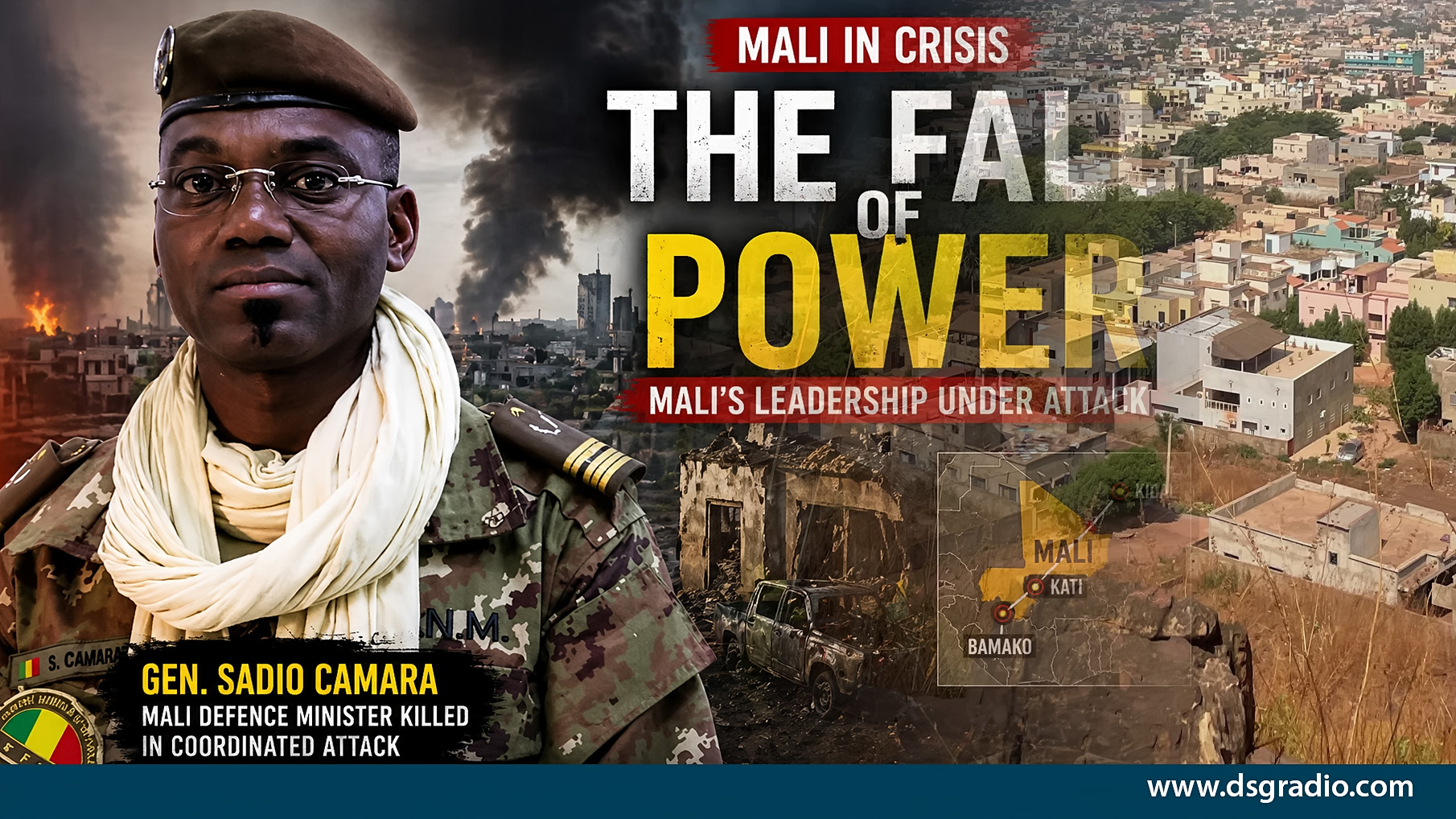
The Mali militant alliance attack that killed Defence Minister General Sadio Camara marks a significant turning point in the Sahel security crisis, as jihadist fighters linked to al-Qaeda and Tuareg separatist rebels launched coordinated assaults across the country, exposing deep vulnerabilities in Mali’s security architecture and raising fresh concerns about regional stability.
The attacks, which began on Saturday and extended into Sunday, targeted military bases, strategic towns, and the residence of the defence minister in Kati, a heavily fortified garrison town near the capital Bamako. Camara later died from injuries sustained during the assault, according to official statements.
A New Phase: Militant Alliance Reshapes Conflict
The Mali militant alliance attack stands out not only for its scale but for the unprecedented cooperation between two historically distinct armed groups:
- Jama’at Nusrat al-Islam wal-Muslimin (JNIM), an al-Qaeda-linked jihadist network
- The Azawad Liberation Front (FLA), a Tuareg separatist movement
Analysts say this coordination represents a strategic shift in the Sahel conflict.
Security analyst Bulama Bukarti noted that groups that had been fighting separate battles have now aligned against a common enemy — the Malian state.
“This is the actual implementation of an agreement between them,” he said, highlighting a new operational reality that could intensify future attacks.
The alliance signals what experts increasingly describe as a new phase of war in the Sahel, where ideological and separatist forces converge tactically.
How the Attack Unfolded
Authorities confirmed that the Mali militant alliance attack involved simultaneous strikes across multiple regions, including:
- Bamako (capital)
- Kati (military stronghold)
- Gao and Kidal (northern regions)
- Sévaré and Mopti (central Mali)
Key developments include:
- A suicide car bomb attack targeted Camara’s residence in Kati
- Gunmen launched coordinated assaults on military installations
- Heavy gunfire and explosions were reported in multiple cities
According to government spokesperson General Issa Ousmane Coulibaly, Camara engaged attackers in combat before being wounded and later dying in the hospital.
Family members, including his wife and grandchildren, were also reported killed in the attack.
Security Breakdown in Strategic Zones
The ability of militants to strike:
- Kati, one of Mali’s most secure military zones
- Areas near Bamako, the seat of power
has raised serious questions about intelligence failures and internal security lapses.
Kati is particularly significant because:
- It hosts key military installations
- It is home to interim president General Assimi Goïta
Despite the scale of the attack, officials confirmed Goïta remained “alive and well in a secure location.”
The breach of such high-security areas underscores the growing sophistication of armed groups operating in Mali.
Russia’s Role Under Scrutiny
The Mali militant alliance attack has also intensified scrutiny of Russia’s military involvement in the country.
Mali’s junta turned to Russian mercenaries after distancing itself from Western allies, including France and the United Nations.
However, the latest attacks suggest:
- Limited intelligence capabilities
- Inability to prevent coordinated assaults
- Weak protection of major urban centres
Analysts say the attacks represent a major setback for Russian-backed security efforts.
Ulf Laessing of the Konrad Adenauer Foundation described the assault as one of the most significant coordinated attacks in years, adding that Russian forces appeared unprepared.
Kidal Conflict and Territorial Control
The northern city of Kidal has emerged as a key battleground in the aftermath of the Mali militant alliance attack.
Key developments:
- The Azawad Liberation Front claimed control of Kidal
- Malian forces and Russian units reportedly withdrew
- The army confirmed repositioning troops to Anefis
Kidal holds strategic and symbolic importance:
- It was a long-time stronghold of Tuareg rebels
- It was recaptured by government forces in 2023 with Russian support
Its potential loss again suggests a renewed fragmentation risk within Mali
However, the government has not independently confirmed that the rebels have full control of the city.
Regional Security Implications
The Mali militant alliance attack has triggered strong reactions across West Africa.
The Economic Community of West African States (ECOWAS):
- Condemned the attacks
- Described them as a threat to regional peace and stability
- Called for a unified response
In a statement, ECOWAS urged:
“All states, security forces, and populations of West Africa to unite and mobilise.”
The crisis extends beyond Mali, affecting:
- Niger
- Burkina Faso
- Wider Sahel region
All three countries are currently governed by military juntas and face similar insurgencies.
The attack reinforces concerns that the Sahel security crisis is entering a more coordinated and dangerous phase.
Political Impact on Mali’s Junta
The death of General Sadio Camara represents a significant blow to Mali’s ruling military leadership.
Camara was:
- A central figure in the 2020 and 2021 coups
- Considered one of the most influential figures in the junta
- Seen by some analysts as a potential future leader
His death may:
- Weaken internal cohesion within the military government
- Undermine public confidence in security leadership
Despite official claims that the situation is “under control,” reports of ongoing clashes in Kidal and other regions suggest continued instability.
Human Toll and Civilian Impact
Authorities reported:
- At least 16 people were wounded
- Civilian and military casualties
Additional reports indicate:
- Destruction of residential areas
- Damage to a mosque near the attack site
- Ongoing fear among residents
Details on the total number of casualties were not fully specified in the original report.
Global Reactions
The attacks drew condemnation from multiple international actors, including:
- African Union
- United Nations
- United States Bureau of African Affairs
- European Union
According to a Reuters report on the incident, international partners expressed concern over escalating violence and its implications for regional stability.
A Turning Point in the Sahel Conflict
The Mali militant alliance attack is increasingly seen as a defining moment in the region’s long-running conflict.
Key takeaways:
- First major operational alliance between jihadists and separatists
- Demonstrated ability to strike nationwide simultaneously
- Exposed vulnerabilities in Mali’s military and foreign-backed security systems
Experts warn that more coordinated attacks and territorial battles are likely in the coming weeks
🔗 RELATED ARTICLES
Recommended Coverage:
- Burkina Faso’s Democracy Crisis Deepens Under Traoré
Explores how military rule in Burkina Faso mirrors Mali’s governance and security challenges. - African Unity vs Youth Expectations: A Growing Divide
Examines broader regional tensions that influence instability across West Africa. - Ivory Coast Requests French Troops Withdrawal
Highlights shifting security alliances in West Africa, relevant to Mali’s Russia pivot.
About the Author