Jimmy Kimmel Controversy Deepens After White House Shooting Sparks Debate on Political Rhetoric
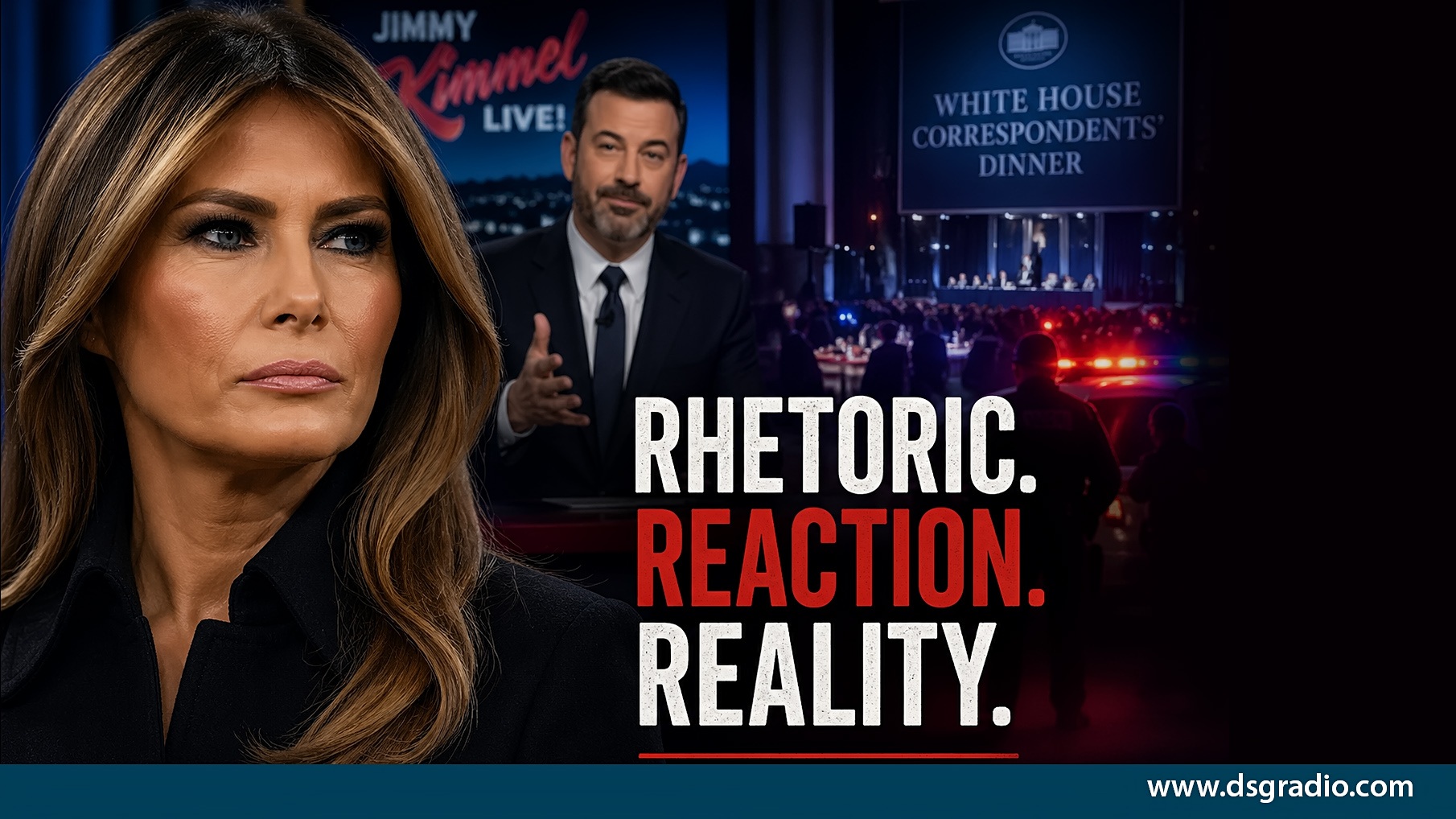
The Jimmy Kimmel controversy has intensified into a broader national debate over political rhetoric and media responsibility in the United States following a shooting at the White House Correspondents’ Dinner, with First Lady Melania Trump sharply criticising the late-night host over remarks made days before the incident.
The sequence of events—beginning with a televised joke, followed by a real-world security breach, and culminating in political backlash—has raised renewed concerns about the intersection of satire, political tension, and public safety.
Timeline: From Comedy Monologue to National Incident
The controversy unfolded across a series of closely linked events:
- Thursday: Jimmy Kimmel aired a monologue parodying the White House Correspondents’ Dinner, during which he referred to Melania Trump as an “expectant widow.”
- Saturday: A gunman opened fire near a security checkpoint at the Washington Hilton, where the dinner was being held.
- Monday: Melania Trump publicly condemned Kimmel’s remarks, while President Donald Trump and White House officials joined the criticism.
- Aftermath: Social media backlash escalated, with calls for Kimmel’s removal from television.
The suspect, identified as 31-year-old Cole Tomas Allen, was subdued by security agents near a staircase leading to a ballroom filled with journalists, officials, and public figures. The Trumps were evacuated unharmed.
President Trump later described the event as “a rather traumatic experience” for the First Lady.
Melania Trump Reaction and White House Response
At the centre of the Jimmy Kimmel controversy is the strong response from Melania Trump, who described the comedian’s remarks as “hateful and violent.”
In a post on X (formerly Twitter), she stated:
- “People like Kimmel shouldn’t have the opportunity to enter our homes each evening to spread hate.”
- She urged ABC, Kimmel’s network, to “take a stand” against what she described as “atrocious behaviour.”
President Trump echoed similar sentiments on Truth Social, calling the remarks a “call to violence” and demanding that Kimmel be “immediately fired by Disney and ABC.”
White House Press Secretary Karoline Leavitt also weighed in, describing the rhetoric as “completely deranged” and harmful in an already polarised political environment.
The White House Dinner Shooting: What Happened
The White House dinner shooting has become a critical focal point in the debate.
Authorities confirmed that:
- The shooting occurred near a security checkpoint at the Washington Hilton.
- The suspect was apprehended before reaching the main ballroom.
- Hundreds of attendees, including government officials and journalists, were present at the time.
Officials indicated that the attack may have targeted members of the Trump administration, although investigations are ongoing. Details about the suspect’s motive were not specified in the original report.
According to a BBC report, the incident sparked immediate security concerns and heightened scrutiny of the country’s political climate.
Rising Concerns Over Political Comedy and Incitement
The Jimmy Kimmel controversy has reignited a longstanding debate about the role of satire in political discourse.
Critics argue that:
- Political comedy may heighten tensions in an already polarised society.
- Language perceived as hostile or suggestive can be interpreted as normalising aggression.
Supporters of free expression counter that:
- Satire remains a protected form of speech under democratic principles.
- Comedians often reflect societal tensions rather than create them.
This is not the first time Kimmel has faced backlash. In September, he was temporarily taken off air following comments about the killing of conservative influencer Charlie Kirk, which some viewers described as inappropriate. He later acknowledged that his remarks may have been “ill-timed or unclear.”
Social Media Backlash and Public Reaction
Public response to the political comedy backlash has been swift and polarised.
- Conservative commentators and social media users accused Kimmel of encouraging political violence.
- Calls for his removal from television gained traction online.
- Others defended the comedian, arguing that criticism of political figures is a longstanding tradition in American media.
The resurfacing of the Thursday monologue clip after the shooting intensified the backlash, linking the timing of the joke to the subsequent incident in public discourse.
Media Responsibility vs Free Speech Debate
At the heart of the controversy lies a deeper question: Where should the line be drawn between free speech and responsible broadcasting?
The case highlights several competing concerns:
Media Responsibility
- Broadcasters face increasing pressure to monitor content that could inflame tensions.
- Networks like ABC may be forced to evaluate editorial standards for political satire.
Free Speech Protections
- The United States maintains strong protections for speech, including satire.
- Any move to censor or penalise comedians raises constitutional and ethical questions.
Political Climate
- The incident underscores how political polarisation can amplify the impact of media content.
Security Implications and Political Context
The shooting itself has raised broader security concerns about high-profile political events in the United States.
Key implications include:
- Increased scrutiny of security protocols at major public gatherings.
- Heightened awareness of threats targeting political figures.
- Renewed debate over the relationship between rhetoric and real-world actions.
While authorities have not established a direct link between Kimmel’s remarks and the shooting, the timing has fueled public speculation. This could not be independently verified.
“Why This Story Matters”
- It highlights the growing tension between media influence and political stability.
- It reflects the deepening polarisation in American public discourse.
- It raises critical questions about whether rhetoric—especially in entertainment—can shape real-world behaviour.
- It positions media organisations at the centre of accountability debates.
What Happens Next?
Several key developments are expected:
- ABC’s response: The network has been contacted for comment, but has not publicly responded.
- Legal proceedings: The suspect is expected to appear in court.
- Media scrutiny: The incident may prompt broader industry reflection on political satire.
The Jimmy Kimmel controversy is likely to remain a focal point in discussions about media ethics, political rhetoric, and public safety in the United States.
Recommended Articles
You may also want to read:
- UK Rejects Hormuz Blockade Proposal Amid Global Tensions
Explores how geopolitical tensions and political decisions can escalate global instability—mirroring concerns about rhetoric and consequences. - US-Iran Tensions Deepen as Talks Stall
Highlights rising diplomatic strain, offering broader context on how political narratives shape real-world conflict risks. - Will There Be World War 3? Global Risk Analysis
Examines how rhetoric, alliances, and conflict escalation intersect—paralleling debates seen in US political discourse. - US-Israel Gaza Resettlement Plan Sparks Backlash
Focuses on how controversial political proposals trigger public and international reactions, similar to media-driven controversies.
About the Author