SpaceX IPO Reshapes AI Investing as Musk Hits $2 Trillio
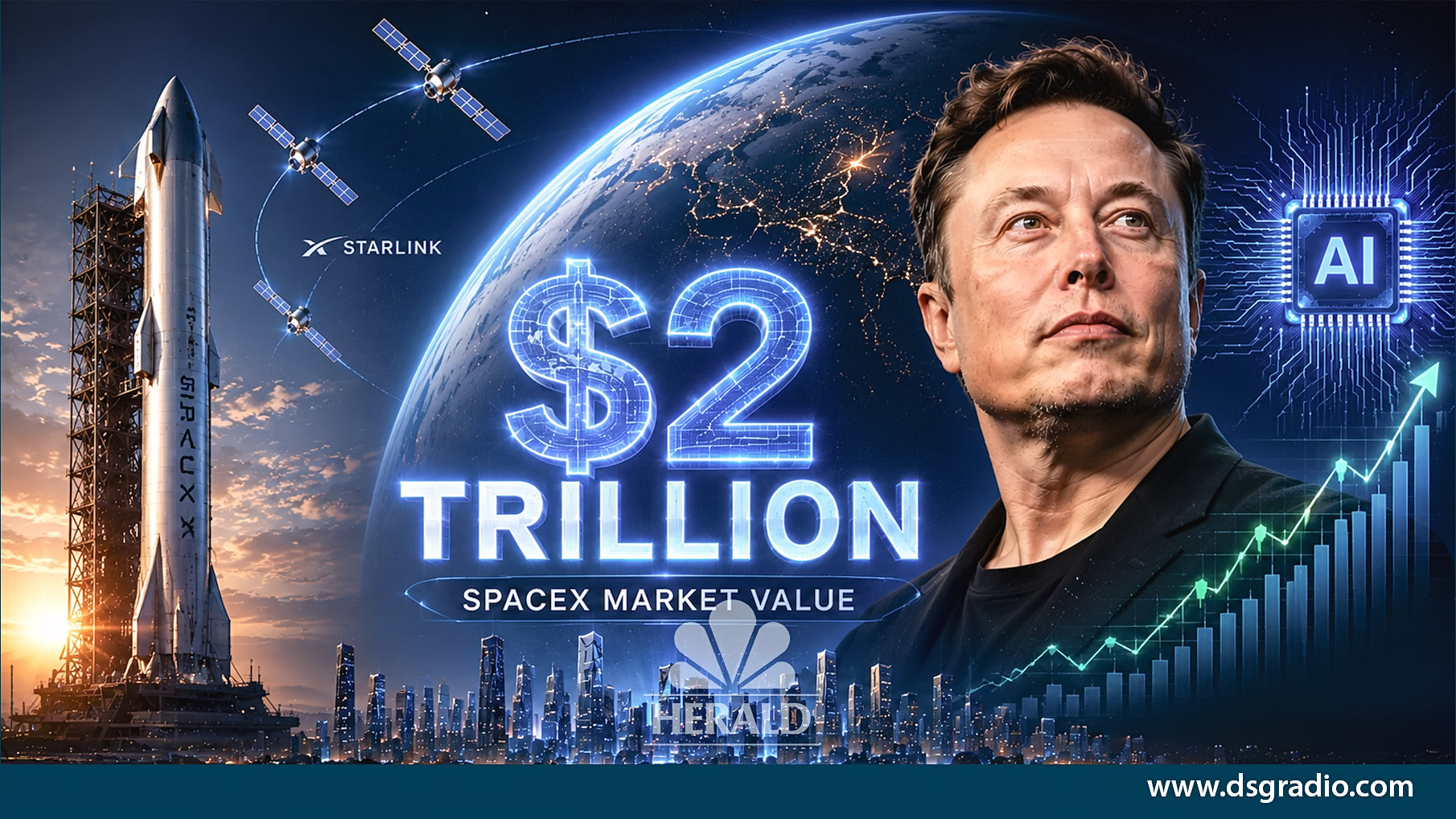
The SpaceX IPO on June 12, 2026, did more than break Wall Street records. It transformed Elon Musk into the world’s first trillionaire, elevated SpaceX into one of the world’s most valuable publicly traded companies, and signaled a dramatic shift in how investors view the future of artificial intelligence, space technology, and digital infrastructure. What began as the largest initial public offering in history quickly evolved into a defining moment for global finance, highlighting the growing convergence of rockets, satellites, AI systems, and next-generation computing. The implications extend far beyond the Nasdaq trading floor, influencing investment trends, technology development, and future public offerings around the world.
The SpaceX IPO That Rewrote Wall Street History
SpaceX entered public markets after raising approximately $75 billion in what became the largest IPO ever recorded, surpassing the previous benchmark established by Saudi Aramco in 2019. Shares were priced at $135 before opening at $150, climbing as high as $176.52 during trading before closing at $160.95.
The closing price valued the company at approximately $2.1 trillion to $2.2 trillion, placing it among the largest corporations in the United States and ahead of many long-established technology giants. More than 555 million shares were sold, while an unusually large allocation was reserved for retail investors. According to the company’s filings, roughly 30 percent of the offering was designated for retail participation, reflecting a strategy that differed significantly from traditional Wall Street IPO structures.
The market response was immediate. Trading volumes surged, investor demand remained strong throughout the session, and analysts quickly began debating whether the valuation reflected future potential or excessive optimism.
Yet the most important aspect of the offering may not have been the amount raised. Rather, it was the nature of the company investors were buying.
Why the SpaceX IPO Is Also an AI Story
For years, SpaceX was known primarily as a rocket manufacturer and launch provider. The company’s Falcon rockets, Starship development program, and partnerships with NASA helped establish it as a dominant force in commercial spaceflight.
However, the entity that reached public markets in 2026 represented something fundamentally different.
Before the IPO, Elon Musk consolidated several businesses into a single corporate structure. The reorganization brought together:
- SpaceX’s launch and space transportation operations
- Starlink’s global satellite internet network
- xAI’s artificial intelligence business
- Assets connected to X, formerly known as Twitter
The result was a vertically integrated technology conglomerate spanning space infrastructure, communications networks, social platforms, and artificial intelligence. According to company disclosures, public investors are now effectively investing in all of these operations through a single publicly traded entity.
This restructuring helps explain why the IPO has attracted attention far beyond aerospace circles.
Investors are not merely betting on rockets. They are betting on the possibility that AI, connectivity, and space infrastructure could become deeply interconnected industries in the coming decades.
The Rise of AI as a Core Growth Engine
Artificial intelligence emerged as one of the most closely watched aspects of the SpaceX offering.
The company’s AI division, xAI, houses the Grok family of models and major computing infrastructure assets. According to information disclosed in company filings, xAI has become an increasingly significant component of the broader organization, despite requiring enormous capital investment.
Reports indicate that xAI has pursued large-scale computing agreements and infrastructure expansion initiatives. The business has focused heavily on data centers, AI processing capabilities, and computational services.
This strategic direction reflects a broader trend occurring across the technology sector.
Over the past several years, artificial intelligence has evolved from a specialized research field into one of the world’s most significant investment themes. Governments, corporations, venture capital firms, and institutional investors are committing unprecedented resources to AI development.
The SpaceX IPO appears to have accelerated this momentum.
Rather than separating its AI business from its aerospace operations, SpaceX presented them as interconnected components of a larger technological vision.
For investors, this created a unique proposition: exposure to both the future of space transportation and the future of artificial intelligence.
Elon Musk Becomes the World’s First Trillionaire
One of the most widely discussed outcomes of the IPO was its effect on Elon Musk’s personal wealth.
Based on post-listing valuations, Musk’s holdings reportedly pushed his net worth beyond the $1 trillion threshold, making him the first individual to achieve trillionaire status according to estimates cited in the source material. His ownership position and voting control remain substantial, ensuring continued influence over the company’s direction.
The milestone carries symbolic significance beyond personal wealth.
For decades, billionaire entrepreneurs represented the pinnacle of private economic influence. The emergence of a trillionaire reflects the extraordinary scale that technology companies can now achieve.
It also highlights the growing concentration of economic power within a relatively small number of technology-driven enterprises.
Supporters argue that Musk’s achievement reflects innovation, risk-taking, and long-term vision. Critics contend that such levels of wealth raise questions about corporate governance, market concentration, and accountability.
Regardless of perspective, the milestone marks a historic moment in global business history.
The Starlink Factor Behind Investor Enthusiasm
Although headlines focused on AI and Elon Musk, many analysts point to Starlink as a critical reason investors embraced the offering.
Starlink operates one of the world’s largest satellite internet networks, consisting of thousands of low-Earth orbit satellites. According to company disclosures, Starlink remains the most consistently profitable segment within the broader corporate structure.
Its business model differs significantly from traditional telecommunications providers.
Rather than relying on terrestrial infrastructure, Starlink uses satellite connectivity to provide internet access across remote regions, underserved communities, maritime routes, and aviation markets.
This capability has implications for:
- Digital inclusion
- National security
- Emergency communications
- Remote economic development
- Global connectivity
For investors, Starlink offers a revenue-generating foundation beneath the company’s more speculative ventures.
While AI and Starship represent future opportunities, Starlink provides evidence that portions of the business can already generate meaningful operational returns.
Why Wall Street Is Divided Over the SpaceX Valuation
Despite widespread enthusiasm, significant skepticism remains.
Several analysts have questioned whether a valuation exceeding $2 trillion can be justified based on current financial performance. According to disclosed figures, SpaceX remains unprofitable and has accumulated substantial losses since its founding. Capital expenditures tied to AI infrastructure continue to rise sharply.
Some of the concerns include:
High Revenue Multiples
Analysts noted that SpaceX debuted at valuation multiples significantly above those historically assigned to major technology firms during their early public years.
Continued Losses
The company reported billions of dollars in losses despite rapid growth.
AI Infrastructure Costs
Building advanced AI systems requires enormous investment in data centers, chips, computing power, and energy.
Execution Risks
Success depends on multiple ambitious initiatives reaching commercial maturity simultaneously.
Morningstar analysts reportedly estimated a valuation considerably lower than the market’s assessment, while CFRA Research initiated coverage with a cautious stance. According to Reuters, several market observers warned that investor enthusiasm could eventually be tested by financial realities and execution challenges.
The debate reflects a broader question facing financial markets:
How should investors value companies whose worth depends heavily on future technological breakthroughs?
How the SpaceX IPO Could Trigger a Wave of AI Company IPOs
Perhaps the most consequential aspect of the SpaceX IPO is its impact on the broader technology sector.
The successful debut has strengthened confidence among investors, bankers, and technology executives considering public listings.
According to the source material, OpenAI and Anthropic have already filed confidential paperwork indicating intentions to pursue public offerings later in 2026.
If those plans move forward, the market could witness a sequence of AI-focused IPOs unlike anything seen before.
The significance extends beyond individual companies.
A successful AI IPO cycle would:
- Increase public participation in AI growth
- Expand capital available for innovation
- Intensify competition among AI developers
- Influence global technology investment patterns
The SpaceX debut therefore serves as both a financial event and a signal to the broader market.
Historical Context: From Dot-Coms to AI Markets
Technology investment booms are not new.
The late 1990s witnessed the rise of internet companies. The 2000s saw social media reshape communications. The 2010s brought cloud computing and mobile technology into mainstream business.
Artificial intelligence now appears to be defining the current era.
Unlike previous technology waves, however, AI is intersecting simultaneously with multiple industries, including healthcare, education, manufacturing, transportation, finance, defense, and communications.
SpaceX’s strategy reflects this convergence.
Its vision combines:
- Space transportation
- Satellite communications
- Artificial intelligence
- Advanced computing
- Global connectivity
This integrated approach helps explain why many investors view the company as more than an aerospace business.
What This Means for Africa and Nigeria
Although the IPO occurred in the United States, its implications extend globally.
African governments and technology ecosystems are closely monitoring developments in AI, satellite communications, and digital infrastructure.
For Nigeria, several themes stand out.
Expanding Connectivity
Satellite internet technologies could help address connectivity challenges in underserved regions.
AI Investment Lessons
The willingness of investors to support large-scale AI projects highlights opportunities for emerging technology ecosystems.
Digital Economy Growth
As artificial intelligence becomes more important globally, countries seeking economic diversification may face increasing pressure to invest in digital skills and innovation infrastructure.
Capital Market Inspiration
The success of large technology listings may encourage discussions about how African markets can support high-growth technology firms.
These developments reinforce the growing importance of technology policy and innovation strategies across the continent.
The Future of Space, AI and Public Markets
The SpaceX IPO may ultimately be remembered as a turning point rather than simply a record-breaking transaction.
The company now faces the difficult challenge of justifying extraordinary investor expectations.
To maintain confidence, it must continue advancing:
- Starship development
- Starlink expansion
- AI infrastructure growth
- Commercial partnerships
- Revenue generation
At the same time, competitors such as OpenAI and Anthropic are preparing for potential public market debuts that could further reshape investor priorities.
Whether the valuation proves sustainable remains uncertain.
What is clear is that the IPO has altered conversations about technology investing.
Investors are increasingly evaluating companies not only on current earnings but also on their ability to define future industries.
Conclusion
The SpaceX IPO was far more than the largest public offering in history. It transformed Elon Musk into the world’s first trillionaire, elevated a unique combination of space technology and artificial intelligence into the center of global financial markets, and potentially opened the door for a new generation of AI company IPOs.
While questions remain about profitability, governance, and long-term SpaceX valuation, the offering has already achieved something remarkable. It demonstrated that investors are willing to place enormous bets on businesses positioned at the intersection of AI, connectivity, and space exploration.
For supporters, the IPO represents confidence in a future shaped by technological ambition. For skeptics, it serves as a reminder that market enthusiasm can sometimes outpace financial fundamentals.
Either way, the event marks a historic moment in the evolution of global technology, investment, and innovation. As reported by Reuters and discussed in NPR coverage, the next chapter will depend on whether SpaceX can convert extraordinary expectations into sustained results.
Recommended Coverage
Explore how advances in SpaceX technology are shaping long-term plans for human settlement beyond Earth.
A closer look at how artificial intelligence is transforming robotics and real-world performance.
Examines how major economies are competing to lead the next generation of AI development.
Analyzes the economic implications of expanding trade ties between China and Africa.
Explores how strategic infrastructure investments are reshaping geopolitical influence.
About the Author