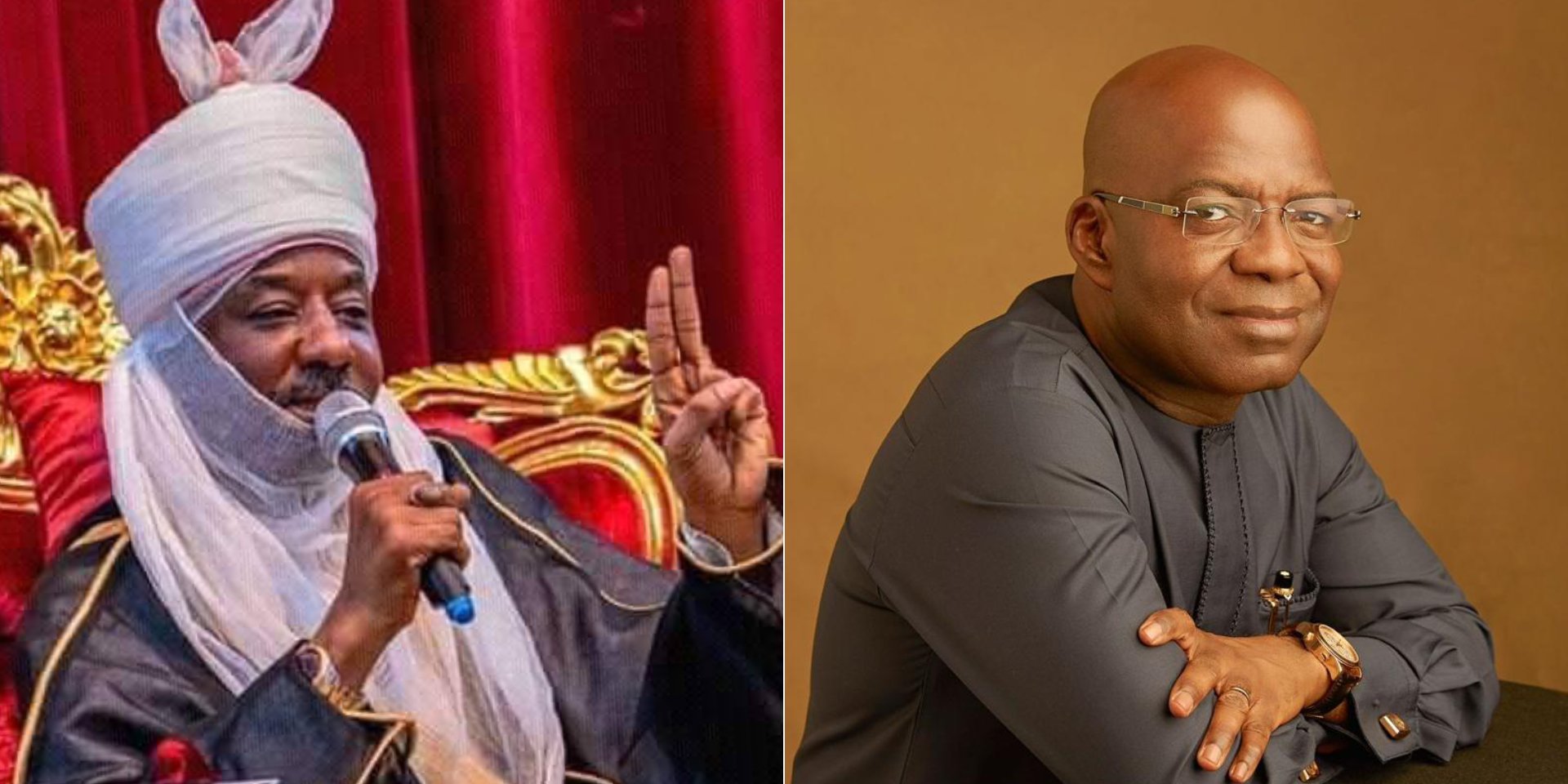
Nigeria borrowing concerns are mounting as continued government borrowing after the removal of fuel subsidies raises questions about fiscal discipline, policy coordination, and economic outcomes. Former Central Bank of Nigeria (CBN) Governor Muhammadu Sanusi II and other political leaders have warned that the country’s current fiscal trajectory may undermine the expected gains of recent reforms.
Growing Nigeria Borrowing Concerns After Subsidy Removal
Nigeria’s decision to remove fuel subsidies was widely expected to free up fiscal space, reduce government spending, and ease pressure on public finances. However, emerging developments suggest a contradiction between policy expectations and current fiscal realities.
At a public lecture in Lagos, Sanusi questioned why borrowing levels continue to rise despite the elimination of subsidy payments. He argued that the government should not simultaneously remove subsidies and increase debt without a clear justification.
- Subsidy removal was intended to reduce the fiscal burden
- Borrowing levels remain high
- Public benefits remain unclear
Sanusi’s remarks highlight widening Nigeria borrowing concerns, especially as citizens continue to grapple with inflation and rising living costs.
Loan Requests and Expanding Debt Profile
The debate intensified following President Bola Ahmed Tinubu’s request for Senate approval of a $516 million loan to fund sections of the Sokoto–Badagry Superhighway.
The project, described as a 1,000-kilometre corridor linking Nigeria’s North-West and South-West regions, has drawn mixed reactions.
- Supporters view it as critical infrastructure
- Critics question timing amid rising debt
Former Vice President Atiku Abubakar acknowledged the importance of infrastructure development but urged the government to explore alternative funding sources rather than increasing borrowing.
This aligns with existing reports on Nigeria’s rising debt profile, including coverage of how Nigeria’s debt reached ₦155 trillion, reinforcing broader concerns about Nigeria’s borrowing.
Fiscal Policy Contradictions and Reform Sequencing
Sanusi emphasised that the issue is not the reforms themselves, but how they are implemented.
He identified key policy contradictions:
- Removal of fuel subsidies
- Simultaneous liberalisation of exchange rates
- Delayed monetary tightening
According to him, these overlapping reforms created instability in the foreign exchange market and contributed to the depreciation of the naira.
He warned that:
- Artificial exchange rates were unsustainable
- Policy timing played a critical role
- Poor coordination weakened reform impact
These concerns reflect deeper Nigeria fiscal policy issues, particularly in balancing fiscal and monetary strategies.
Economic Impact on Nigerians
Despite policy changes, many Nigerians have yet to experience tangible improvements in economic conditions.
Key concerns include:
- Rising cost of living
- Persistent inflation
- Limited visible public welfare gains
Sanusi noted that reforms must deliver measurable outcomes that citizens can feel, warning that failure to do so could erode public trust in government.
The situation has intensified Nigeria debt crisis warning signals, particularly as debt servicing continues to consume a significant portion of government revenue.
Broader Political and Governance Perspectives
Abia State Governor Alex Otti expanded the discussion by linking Nigeria’s economic challenges to long-standing governance issues.
He stated that:
- Current economic hardships stem from decades of poor leadership
- Declining civic participation has worsened governance outcomes
- Institutional decay is a cumulative problem
Otti emphasised the need for:
- Stronger leadership decisions
- Improved investor confidence
- Active citizen participation
He also warned that economic choices made today will significantly shape Nigeria’s future, particularly ahead of the 2027 elections.
Debt Sustainability and Fiscal Risks
A key concern raised by Sanusi is the sustainability of Nigeria’s debt trajectory.
He warned that:
- When 100% of revenue goes to debt servicing, sustainability becomes impossible
- Continued borrowing without revenue growth creates long-term risks
This reinforces ongoing concerns about Nigeria’s borrowing, especially in light of reports that its borrowing plan has expanded significantly.
What This Means for Nigeria’s Economy
The current situation presents several implications:
1. Debt Sustainability Risk
Rising borrowing levels could limit fiscal flexibility and increase vulnerability to economic shocks.
2. Investor Confidence
Policy inconsistencies may discourage investors who rely on predictable economic environments.
3. Currency Pressure
Poor coordination between fiscal and monetary policy could continue to weaken the naira.
4. Public Trust Erosion
If reforms fail to deliver visible benefits, public confidence in government may decline.
Reform Outlook and Policy Credibility
Despite the concerns, Sanusi acknowledged that removing the fuel subsidy was necessary and long overdue. He noted that Nigeria’s reliance on subsidies and foreign refining created structural inefficiencies.
He also highlighted progress in domestic refining, stating that Nigeria is increasingly reducing dependence on imported petroleum products.
However, he stressed that:
- Reforms must be coherent
- Policy sequencing must be improved
- Fiscal discipline must be enforced
Without these, the intended benefits of reforms may not materialise.
Forward-Looking Implications Ahead of 2027
Looking ahead, the debate over fiscal policy and borrowing is likely to shape Nigeria’s political and economic landscape.
Key issues expected to influence future outcomes include:
- Economic performance
- Job creation
- Poverty reduction
- Governance accountability
Otti emphasised that voters must critically assess candidates and policies ahead of the 2027 elections, noting that economic decisions will directly impact citizens’ lives.
Related Articles
You may also want to read:
- Tinubu Expands 2025 Budget to ₦54.2 Trillion
Examines how increased government spending is shaping Nigeria’s fiscal outlook and debt trajectory. - Nigeria’s Forex Reserves Rise to $23.11 Billion
Provides context on external reserves and their role in stabilising the economy amid policy changes. - Senate Approves ₦68.3 Trillion 2026 Budget
Highlights legislative backing for expanded fiscal plans and implications for national spending. - Tinubu Seeks $516 Million Loan Approval
Directly linked to current borrowing debates and infrastructure financing strategy.
About the Author