US Expands Focus on Religious Violence Nigeria as Washington Commits $3.5 Million to Monitoring Initiative
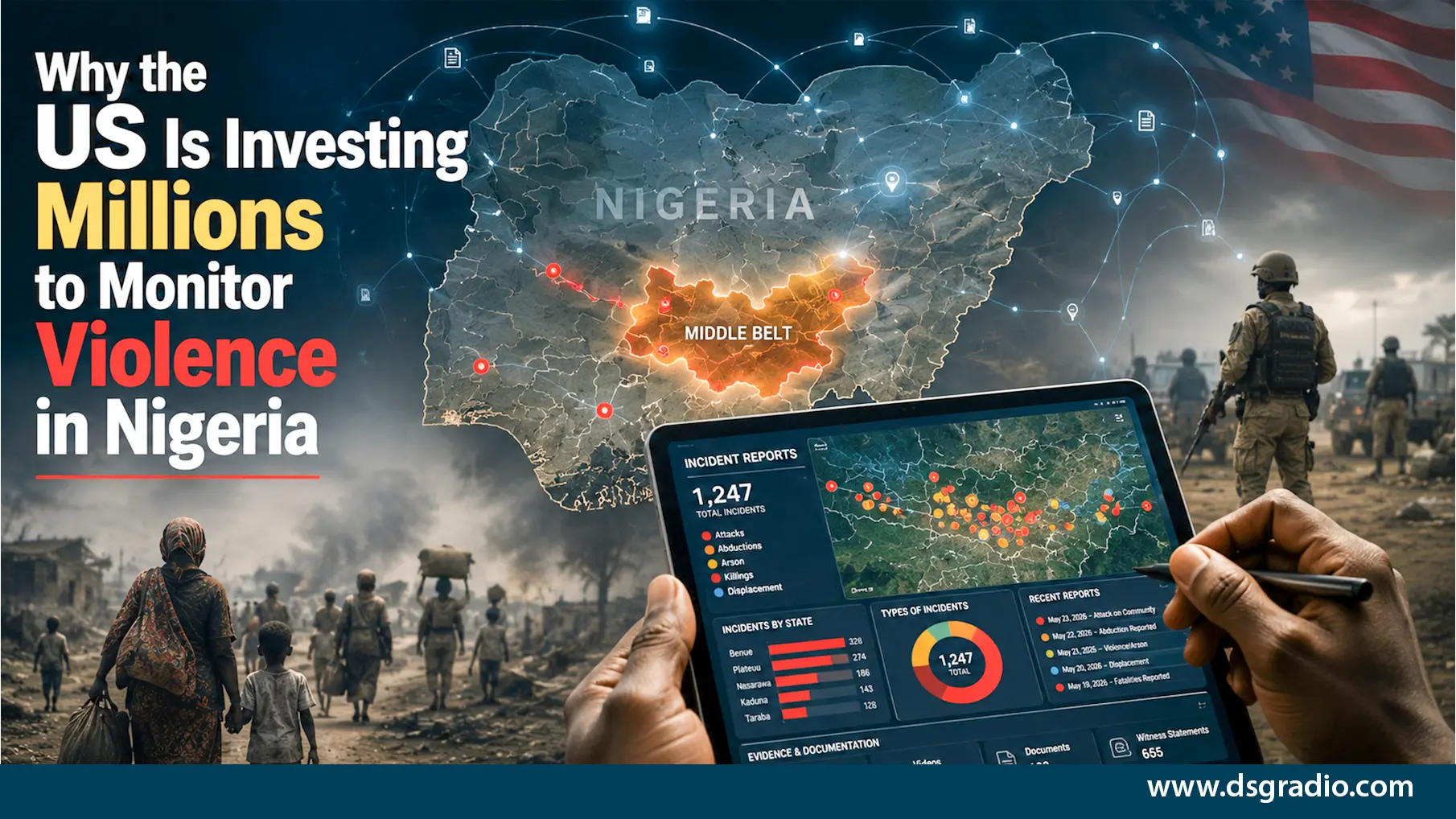
As insecurity continues to affect communities across parts of Nigeria, a new United States-backed initiative is drawing attention to the role of documentation and accountability in addressing violence linked to religion and belief. The programme, announced by the US Department of State, will provide up to $3.5 million in funding to improve the monitoring, documentation, and reporting of abuses associated with Religious Violence in Nigeria, amid growing international concern about attacks attributed to extremist groups, armed militias, and other armed actors.
The funding opportunity, unveiled by the Office of International Religious Freedom under the Bureau of Democracy, Human Rights, and Labour, seeks organisations capable of strengthening evidence-gathering and reporting efforts across Nigeria. The programme is expected to run between 24 and 48 months, with applications closing on July 9, 2026.
The initiative represents more than a routine grant announcement. It signals increasing international scrutiny of violence affecting religious communities and highlights ongoing debates over accountability, security responses, and human rights protections in Africa’s most populous nation.
Why Religious Violence Remains a Concern in Nigeria
Nigeria has faced years of violence involving insurgent groups, armed bandits, communal conflicts, and criminal networks operating across different regions.
According to the US notice, documentation by civil society organisations, academics, journalists, religious leaders, and survivors has contributed to a growing body of evidence regarding attacks carried out by Boko Haram, ISIS-West Africa, Fulani ethnic militias, and other armed groups against both Christians and Muslims.
The impact of such violence extends beyond immediate casualties.
Communities affected by attacks often experience displacement, economic disruption, school closures, destruction of property, and long-term psychological trauma. Entire villages have been forced to relocate in some regions, while humanitarian organisations continue to warn about the broader consequences of insecurity on development and social stability.
The Middle Belt region has frequently been cited as one of the areas most affected by recurring violence due to its complex mix of ethnic, religious, and land-use tensions.
What the US Monitoring Initiative Will Do
The State Department says the programme is designed to improve monitoring, documentation, and reporting of religious freedom abuses committed by both state and non-state actors. The objective is to strengthen accountability mechanisms and preserve evidence that can support advocacy efforts and future justice initiatives.
According to the funding notice, applicants are expected to identify at least four Nigerian states where activities will be implemented, with a particular focus on the Middle Belt. The initiative is open to US-based and foreign non-profit organisations, public international organisations, higher education institutions, and certain for-profit entities, although preference will be given to non-profit groups.
The programme aims to support:
- Monitoring of religious freedom abuses
- Improved reporting systems
- Evidence preservation
- Advocacy efforts
- Accountability initiatives
- Memorialization of victims and affected communities
US officials argue that stronger documentation can help policymakers, human rights organisations, and security stakeholders better understand patterns of violence and identify areas requiring intervention.
The Debate Over Religious Persecution Claims
One of the most sensitive aspects of the announcement concerns allegations of religious persecution in Nigeria.
The State Department notice cited civil society reports claiming authorities often fail to respond effectively to attacks against civilians and faith communities, particularly Christians. It argued that inadequate responses contribute to a climate of impunity that allows further violence and displacement.
The document also referenced reports alleging that some security personnel had raided places of worship while pursuing criminal suspects, resulting in injuries to clergy and congregants.
However, Nigeria’s Federal Government has consistently rejected accusations that insecurity in the country is driven by systematic religious persecution.
Officials maintain that criminal violence affects Nigerians of all faiths and backgrounds and argue that the country’s security challenges are rooted in a combination of terrorism, banditry, organised crime, and communal conflicts rather than state-sponsored discrimination.
The government has also emphasised continued cooperation with the United States on counterterrorism efforts, intelligence sharing, and broader security reforms.
Religious Violence Nigeria and the Country of Particular Concern Designation
The funding announcement follows a significant policy decision by President Donald Trump, who designated Nigeria as a “Country of Particular Concern” (CPC) in November 2025 over alleged violations of religious freedom.
The designation placed Nigeria under increased international scrutiny and elevated religious freedom issues within broader US foreign policy discussions.
Countries designated as CPCs are identified by the United States as engaging in or tolerating severe violations of religious freedom.
While such designations do not automatically trigger sanctions, they can influence diplomatic discussions, aid priorities, human rights reporting, and international perceptions.
For Nigeria, the designation added another dimension to an already complex security relationship with Washington.
How Violence Affects Communities in the Middle Belt
The Middle Belt remains central to discussions surrounding Religious Violence in Nigeria because it sits at the intersection of multiple fault lines.
The region experiences recurring disputes involving farming communities, pastoralist groups, ethnic identities, land access, and political representation. These disputes are often complicated by religious affiliations, making it difficult to separate economic, social, and faith-based factors.
Human rights advocates argue that improved documentation can help distinguish between criminal, communal, and religious motivations behind attacks.
Supporters of the US initiative believe accurate reporting could contribute to better policy responses and help prevent misinformation.
Critics, however, caution that external monitoring efforts must avoid oversimplifying Nigeria’s security challenges or reducing complex conflicts to purely religious narratives.
What This Means for Nigeria-US Relations
The announcement arrives at a time when security cooperation remains a major pillar of relations between Abuja and Washington.
The United States has long supported Nigeria through counterterrorism assistance, military training programmes, humanitarian aid, and governance initiatives.
Recent security concerns have also kept Nigeria on the radar of US policymakers. Readers may recall DSG HERALD’s report on US-Nigeria counterterrorism cooperation following operations against ISIS-linked leaders in Africa, available here: US-Nigeria ISIS Operation Kills Top IS Leader in Africa
The latest funding initiative demonstrates that Washington’s engagement with Nigeria extends beyond military cooperation into human rights monitoring and governance concerns.
Analysts note that while the programme may create diplomatic sensitivities, it is unlikely to fundamentally alter broader strategic cooperation between the two countries.
Nigeria remains a critical partner for regional security, economic development, and counterterrorism efforts across West Africa.
Can Documentation Improve Accountability?
A central question raised by the initiative is whether better documentation can translate into greater accountability.
Human rights organisations have long argued that reliable data is essential for understanding violence patterns, identifying perpetrators, supporting victims, and informing public policy.
Without comprehensive documentation, many incidents risk being forgotten or poorly understood.
Advocates believe stronger evidence collection can:
- Improve transparency
- Support judicial processes
- Inform policy reforms
- Strengthen early-warning systems
- Enhance victim support programmes
However, documentation alone cannot solve insecurity.
Long-term progress will depend on effective law enforcement, judicial reforms, conflict prevention strategies, economic development, and stronger protection for vulnerable communities.
As DSG HERALD previously reported in its analysis of rising insecurity concerns and international engagement, questions about accountability continue to shape debates over Nigeria’s security future: Nigeria Insecurity Surge Raises US Role Questions
Looking Ahead
With applications scheduled to close in July 2026 and implementation expected to span up to four years, the initiative is likely to become an important part of ongoing discussions about security, religious freedom, and human rights in Nigeria.
The programme’s success will ultimately depend on the quality of the documentation produced, cooperation from local stakeholders, and the extent to which the collected evidence contributes to meaningful policy responses.
For now, the announcement underscores a growing international focus on violence affecting religious communities and reinforces the importance of accountability as Nigeria continues to confront some of its most persistent security challenges.
Recommended Coverage
New Yam Festival in Wisconsin Showcases Igbo Culture Abroad
A look at how Nigerian cultural heritage is gaining visibility among diaspora communities while strengthening international cultural ties.
President Tinubu Launches Nigerian Youth Academy Initiative
Examines government efforts aimed at youth development, skills acquisition, and long-term economic participation.
Nigeria Terrorism Financing Sanctions List Names 48 Individuals
Provides important context on ongoing efforts to combat terrorism financing and strengthen national security frameworks.
About the Author