Africa G20 Strategy Drives Push for Global Influence
Africa shifts from observer to active architect of global economic policy
Africa is no longer a spectator in global economic governance. The continent is positioning itself as a strategic actor within the Group of 20 (G20), as the Africa G20 strategy gathers momentum ahead of the United States’ presidency in 2026.
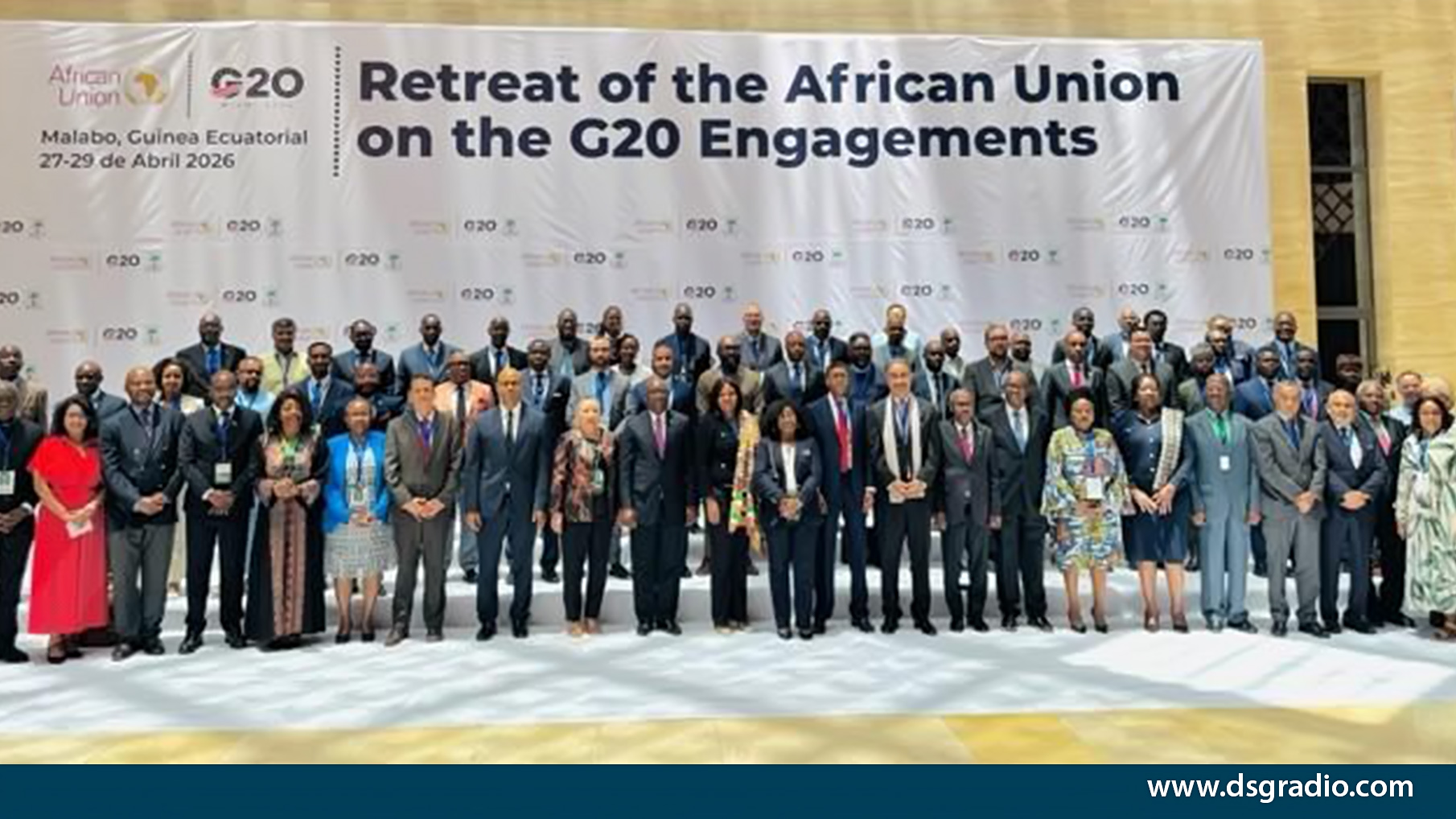
The African Union (AU), now a permanent member of the G20, is intensifying efforts to transform its presence into measurable influence. This shift was underscored during a high-level AU G20 Retreat hosted by the Republic of Equatorial Guinea, where member states, financial institutions, and policy actors convened to align continental priorities.
The objective is clear: ensure Africa’s participation in global decision-making translates into economic gains and policy outcomes for its 1.4 billion population.
From symbolic inclusion to strategic execution
The AU’s inclusion in the G20 marked a historic milestone. However, policymakers now emphasise that representation alone is insufficient. The current Africa G20 strategy focuses on building internal coordination mechanisms to ensure Africa speaks with one voice.
According to details from the AU engagement, the retreat reviewed lessons from South Africa’s 2025 G20 presidency as it prepared for the 2026 cycle under U.S. leadership.
Key areas of focus include:
- Strengthening institutional frameworks within the AU
- Enhancing coordination among member states
- Establishing a unified continental negotiating position
Officials stress that Africa must transition from participation to impact by defending its priorities at every level of the G20 process.
Why the 2026 U.S. presidency is a critical test
The United States’ upcoming G20 presidency introduces a new strategic environment for Africa.
The U.S. agenda is expected to focus on:
- Economic growth
- Deregulation
- Energy expansion
- Trade and innovation
For Africa, these priorities intersect with long-standing development goals under Agenda 2063 goals, including industrialisation, infrastructure development, and energy access.
However, emerging diplomatic tensions could complicate this alignment. AU officials noted concerns regarding developments affecting South Africa’s participation in the G20 process. They warned that such actions could undermine the inclusivity that has historically defined the G20 framework.
Details surrounding these developments remain limited, and this could not be independently verified.
Aligning AU G20 priorities with continental ambitions
A central pillar of the Africa G20 strategy is aligning AU G20 priorities with Agenda 2063.
The AU has identified several strategic priorities for its G20 engagement:
- Reform of international financial institutions
- Expansion of agricultural productivity
- Promotion of intra-African trade through AfCFTA
- Investment in vaccine manufacturing and pandemic preparedness
- Improvement of Africa’s credit ratings
These priorities aim to address structural challenges facing African economies while positioning the continent as a competitive player in global markets.
As DSG HERALD previously reported on the launch of a $50 million Africa think tank platform, strengthening policy capacity is increasingly seen as critical to achieving these objectives.
Economic sovereignty and industrialisation at the centre
Economic sovereignty has emerged as a defining theme within the AU’s strategic positioning.
African policymakers emphasise that:
- Industrialisation must be accelerated
- Domestic production capacity must be strengthened
- Structural dependencies on external markets must be reduced
These priorities are closely linked to the continent’s broader ambition to enhance its bargaining power within global governance systems.
Efforts to promote fair trade and regional integration are also gaining traction, particularly through the African Continental Free Trade Area (AfCFTA).
Complementary discussions around youth inclusion and long-term development were also highlighted in DSG HERALD’s analysis on bridging the gap between AU aspirations and youth expectations.
Debt, finance, and global system reforms
Africa’s engagement in the G20 is also shaped by ongoing concerns about global financial systems.
Key issues include:
- Rising debt burdens across African economies
- Limited access to affordable financing
- Structural imbalances in global financial institutions
AU leaders are advocating for reforms that would enable:
- More equitable access to capital
- Increased investment in infrastructure
- Greater support for energy transition projects
According to the AU discussions, reforming the international financial architecture remains a priority to ensure global systems work in Africa’s favour rather than against it.
Leadership transitions and continuity planning
The AU is also focusing on internal continuity as it prepares for leadership transitions.
The transition from Angola to Burundi in 2026 is expected to play a key role in shaping Africa’s engagement with the G20.
To ensure consistency, the AU aims to:
- Preserve institutional memory
- Maintain policy continuity
- Strengthen coordination across the Sherpa and Finance Tracks
A Strategic Roadmap is expected to guide Africa’s participation across G20 working groups, ministerial meetings, and leaders’ summits.
Measuring success: From presence to results
African leaders have made it clear that success will not be measured by attendance at global meetings, but by tangible outcomes.
These include:
- Accelerated industrialization
- Reduced debt burdens
- Improved trade performance
- Inclusive economic growth
The AU has emphasised that Africa’s contributions must deliver real benefits for its population, reinforcing the importance of strategic engagement.
Global implications of Africa’s rising influence
The evolution of the African G20 strategy signals a broader shift in global power dynamics.
As Africa strengthens its voice within the G20:
- Global economic policies may become more inclusive
- Investment opportunities in Africa could expand
- Trade partnerships may deepen
However, challenges remain:
- Ensuring unity among AU member states
- Managing geopolitical tensions
- Translating policy commitments into implementation
Despite these challenges, Africa’s trajectory suggests a growing role in shaping global economic governance.
Conclusion: A defining moment for Africa’s global role
The current phase of the Africa G20 strategy represents a critical opportunity for the continent.
By aligning AU G20 priorities with Agenda 2063 goals, Africa is positioning itself to influence global decision-making in unprecedented ways.
The success of this strategy will depend on:
- Effective coordination among member states
- Strategic engagement with global partners
- Consistent implementation of agreed policies
As the 2026 G20 cycle approaches, Africa’s ability to convert influence into impact will be closely watched.
For further details, see the official AU briefing as reported in the African Union press release.
🔗 Recommended Articles
- Nigeria Illegal Mining Crackdown Highlights Resource Control Issues
Examines how governance and resource management affect Africa’s broader economic positioning. - WAEMU Grant Boosts Africa Trade Integration Efforts
Shows how regional funding aligns with Africa’s push for stronger global trade participation. - Nigeria’s 2026 Borrowing Plan Raises Debt Sustainability Questions
Connects directly to Africa’s call for financial reform within global institutions like the G20.
About the Author