US Iran Peace Deal Launches 60-Day Push for Permanent Settlement
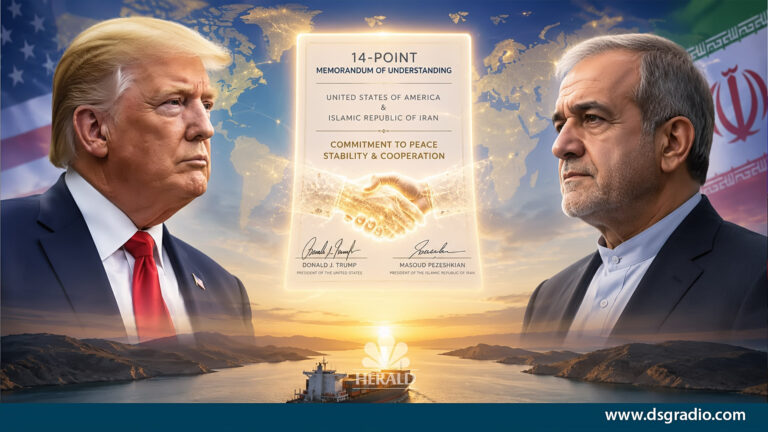
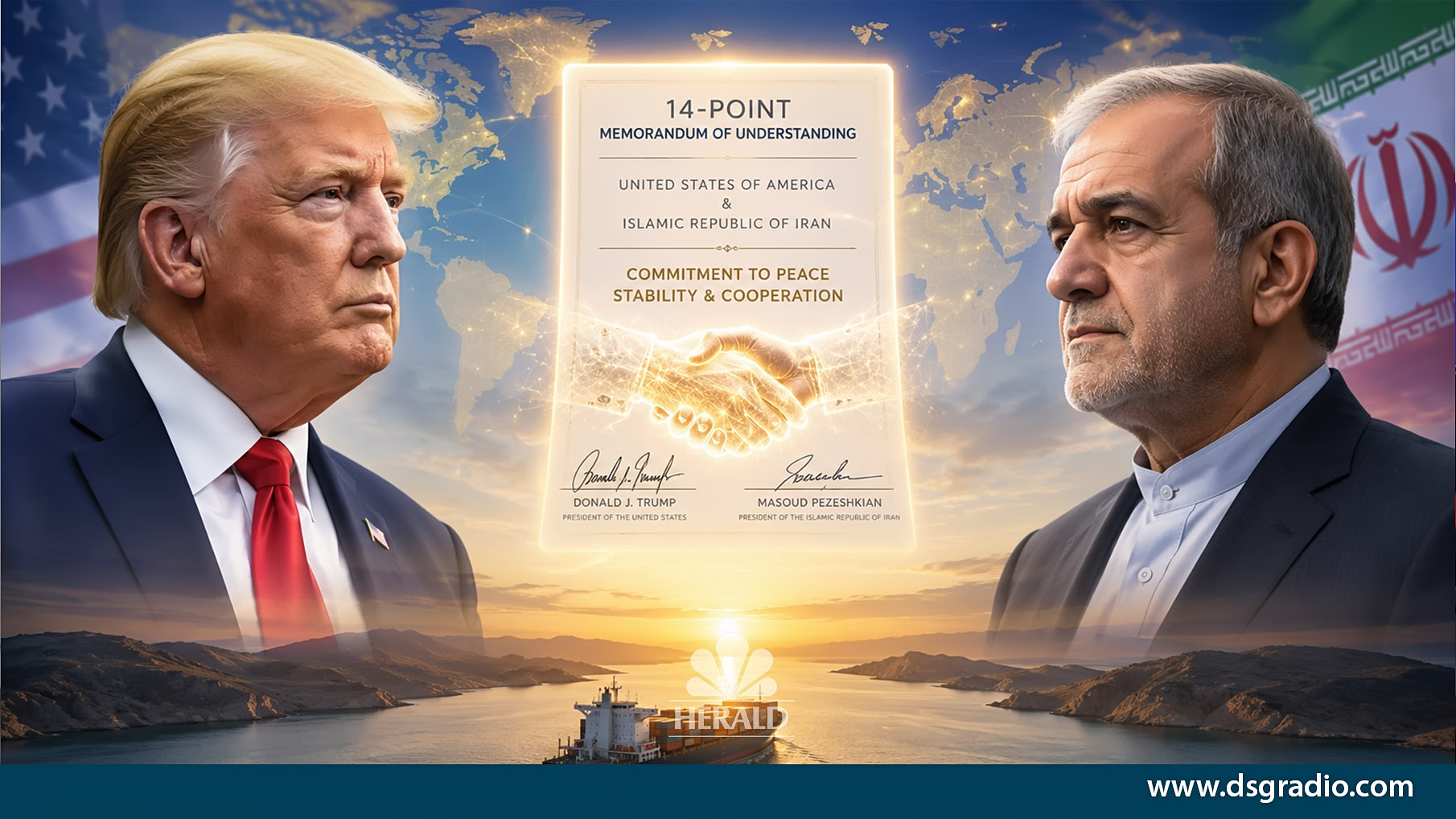
A major diplomatic breakthrough emerged on Thursday after United States President Donald Trump and Iranian President Masoud Pezeshkian formally ratified an initial 14-point framework designed to halt hostilities and establish a pathway toward a broader peace settlement. The agreement, described as an interim memorandum of understanding, took immediate effect and includes a commitment to a ceasefire, the reopening of critical shipping routes, sanctions relief measures, nuclear oversight provisions, and a 60-day timetable for negotiations toward a comprehensive treaty. The development could reshape security dynamics across the Middle East while carrying significant implications for global energy markets, international trade, and geopolitical stability.
US Iran Peace Deal Marks Dramatic Diplomatic Shift
The agreement represents one of the most consequential diplomatic developments in recent years between Washington and Tehran.
According to the framework outlined by US officials, both governments have committed themselves and their regional partners to an immediate cessation of hostilities across all active fronts. The arrangement specifically includes conflict areas linked to Lebanon, making it broader than a conventional bilateral ceasefire.
The memorandum was reportedly ratified electronically by both leaders. President Trump also signed a physical copy while attending events in France following the G7 summit, according to details contained in the source material.
While the agreement stops short of becoming a final peace treaty, it establishes the framework under which future negotiations will take place.
Diplomatic observers note that interim agreements often serve as confidence-building mechanisms designed to reduce tensions while negotiators work through more difficult political, military, and security issues.
Key Elements of the US Iran Peace Deal
Several provisions immediately stand out because of their potential impact on international security and commerce.
Immediate Ceasefire
The most urgent provision is the commitment to stop active fighting.
The framework reportedly requires all parties and associated regional allies to halt military operations immediately. This provision is intended to reduce the risk of further escalation and create conditions necessary for sustained negotiations.
Strait of Hormuz Reopens
Perhaps the most economically significant provision involves maritime traffic.
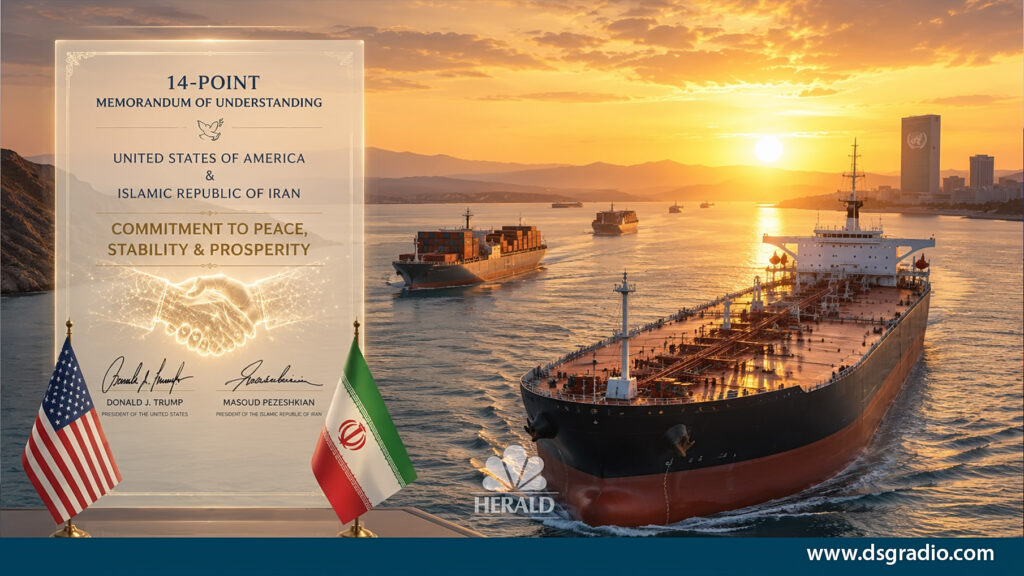
Iran is expected to reopen the Strait of Hormuz to commercial shipping without transit tolls, while the United States would remove restrictions affecting Iranian ports.
The Strait of Hormuz remains one of the world’s most strategic waterways, carrying a substantial share of global oil exports.
Any reduction in disruptions through the route could help stabilize energy markets and reduce pressure on international supply chains.
Nuclear Commitments
Another major component concerns Iran’s nuclear activities.
Under the framework, Iran has reaffirmed that it will not seek nuclear weapons and has agreed to dilute portions of its highly enriched uranium stockpile under International Atomic Energy Agency supervision.
Nuclear issues have long represented one of the central obstacles in relations between Washington and Tehran.
The inclusion of IAEA oversight suggests an attempt to establish international monitoring mechanisms that could build confidence among stakeholders.
Economic Relief Measures
The framework also includes immediate economic concessions.
US authorities are expected to issue waivers permitting Iran to resume oil exports and regain access to associated international financial services.
Such measures could significantly influence global energy flows, particularly if Iranian crude returns to international markets at higher volumes.
Reconstruction Fund
The agreement further envisions the creation of a massive reconstruction and economic development package.
According to the framework, the United States and regional partners intend to develop a $300 billion reconstruction fund to support Iran’s post-conflict recovery.
Details regarding funding sources, timelines, and implementation remain unclear.
Why the Strait of Hormuz Matters
Few regions influence the global economy as directly as the Strait of Hormuz.
The narrow waterway connects Gulf oil producers to international markets and has repeatedly been at the center of geopolitical tensions.
Whenever uncertainty emerges around shipping through the strait, energy prices tend to react quickly.
For oil-importing countries, including Nigeria’s trading partners in Europe and Asia, uninterrupted maritime movement is vital for economic stability.
Financial markets often interpret reduced tensions in the Gulf as a positive signal for trade, transportation, and manufacturing sectors.
What Happens During the 60-Day Negotiation Window?
The memorandum establishes a strict 60-day period for intensive diplomacy.
Negotiators are expected to use this period to transform the interim framework into a comprehensive peace treaty addressing security arrangements, economic cooperation, compliance mechanisms, verification procedures, and regional concerns.
The agreement reportedly allows for extensions if both sides consent.
A diplomatic ceremony mediated by Pakistan and Qatar is expected to take place in Switzerland to formally launch technical negotiations. Any eventual settlement would reportedly require endorsement through a binding United Nations Security Council resolution.
This requirement underscores the international significance of the process.
Trump Defends Agreement Amid Criticism
President Trump has strongly defended the arrangement.
According to the source material, Trump argued that the agreement helps prevent broader economic disruption and reduces the risk of a larger international crisis. At the same time, he reportedly warned that severe consequences could follow if Iran violates the agreement or if negotiations collapse.
Those remarks highlight the delicate balance between diplomacy and deterrence that often characterizes high-stakes international negotiations.
Supporters argue that diplomacy offers the best opportunity to avoid a prolonged confrontation.
Critics counter that concessions should only follow after long-term commitments have been secured.
Tehran Signals Support but Maintains Caution
Although President Pezeshkian ratified the framework, Iranian officials have publicly expressed caution.
Iranian parliamentary speaker and senior negotiator Mohammad Bagher Ghalibaf reportedly emphasized continued skepticism toward Washington while indicating that Iran remains prepared to defend its interests if the process breaks down.
These statements suggest that substantial mistrust remains despite the breakthrough.
Such mistrust is not unusual in negotiations involving adversaries with decades of political, military, and ideological disagreements.
Domestic Political Blowback Emerges
The agreement has already triggered political debate.
Critics in Washington have questioned whether sanctions relief was granted too early and whether leverage was surrendered before permanent nuclear restrictions were finalized.
Supporters respond that interim agreements often require reciprocal concessions to build momentum and encourage compliance.
The debate is expected to intensify as negotiators move toward more detailed discussions.
Lebanon Remains a Potential Flashpoint
Despite the ceasefire framework, challenges remain.
The source material indicates that limited military activity has continued in some areas, particularly concerning developments linked to Lebanon. Iranian officials reportedly warned that continued military operations in southern Lebanon could be interpreted as a violation of the agreement.
This illustrates how fragile ceasefire arrangements can be during their earliest stages.
Even isolated incidents have the potential to complicate negotiations if not managed carefully.
Global Economic Impact
The implications extend well beyond the Middle East.
Energy traders, shipping companies, investors, and governments worldwide are closely monitoring developments.
Reduced tensions could support lower transportation risks, improved shipping confidence, and greater stability across energy markets.
Financial institutions may also view a successful agreement as a positive signal for broader international economic conditions.
However, markets are likely to remain cautious until concrete implementation measures are verified.
Nigerian and African Relevance
For Nigeria and other African economies, the development carries several important implications.
First, global oil market movements directly influence government revenues, investment decisions, and foreign exchange conditions.
Second, shipping stability through major international routes affects global trade patterns and supply chains that impact African importers and exporters.
Third, a successful diplomatic outcome could reinforce the value of negotiated conflict resolution in regions facing security challenges.
African policymakers will likely study the agreement closely, particularly its combination of security guarantees, economic incentives, and international oversight mechanisms.
Historical Context
Relations between the United States and Iran have experienced repeated cycles of confrontation and negotiation over several decades.
Disputes surrounding sanctions, regional influence, military activities, and nuclear development have frequently dominated bilateral relations.
Against that backdrop, the current framework stands out because it attempts to address security concerns, economic pressures, and diplomatic engagement simultaneously.
Whether it succeeds will depend largely on implementation, verification, and political commitment from all parties involved.
Outlook: Opportunity and Uncertainty
The signing of the framework does not guarantee a final peace settlement.
Instead, it creates a structured opportunity to pursue one.
The next 60 days will likely determine whether the agreement evolves into a lasting diplomatic achievement or joins the list of ambitious initiatives that ultimately failed under political pressure.
For now, the immediate focus remains on ceasefire compliance, maritime security, economic implementation, and the launch of formal negotiations.
As reported by CNN, BBC, and other international outlets referenced in the source material, global attention is now shifting from military developments to diplomatic execution.
Conclusion
The US Iran Peace Deal represents a significant diplomatic opening at a moment of heightened international uncertainty. By combining ceasefire commitments, maritime access, nuclear oversight, economic relief, and a roadmap for future negotiations, the framework creates a potential pathway toward broader regional stability. Yet major challenges remain, including implementation risks, political opposition, and unresolved security concerns. The coming 60-day negotiation period will be critical in determining whether this breakthrough becomes a lasting peace process or a temporary pause in a long-running conflict.
Related Analysis:https://dsgradio.com/iran-us-peace-deal-signals-end-to-months-of-conflict/
Background Reading:https://dsgradio.com/iran-us-peace-deal-signals-end-to-months-of-conflict/
Recommended Coverage
Relevant to understanding how broader US foreign policy decisions may influence global alliance structures.
North Korea Nuclear Policy Raises International Concerns
Provides additional context on how nuclear diplomacy continues to shape global security discussions.
Examines how international developments can affect economic planning and market confidence.
Explores leadership, policy implementation, and community development issues at the local level.
Profiles leadership, public service, and community engagement in Nigeria.
About the Author