South East Security Concerns Grow Over Forest Routes
South East security has emerged as a major national conversation following intelligence reports suggesting that some insurgents displaced by military operations in northern Nigeria may be attempting to exploit forest and riverine corridors stretching across multiple states to move toward the southern part of the country. According to security and intelligence sources cited by Saturday PUNCH, suspected terrorists dislodged from strongholds in parts of Zamfara and Sokoto states are allegedly navigating interconnected routes through Niger, Kogi, Anambra, Abia, Imo and other locations as military pressure intensifies in the North.
While authorities in Anambra, Imo and Abia have challenged or disputed aspects of the claims, the reports have nevertheless reignited a broader national debate about Nigeria security threats, the vulnerabilities of forested corridors, and the evolving tactics employed by armed groups seeking to evade security operations.
The issue extends beyond a single intelligence report. It raises larger questions about how armed groups adapt under pressure, why geographic corridors matter in modern security operations, and whether states across Nigeria are adequately prepared for changing security dynamics.
More importantly, it highlights an uncomfortable reality that security experts have repeatedly emphasized over the years: when insurgent groups lose territory in one region, they often seek alternative routes, safe havens, and logistical networks elsewhere.
Why Terror Groups Relocate After Military Pressure
One of the most consistent patterns observed in counterterrorism campaigns worldwide is the displacement effect.
When security forces successfully disrupt insurgent strongholds, the immediate result is often territorial loss for armed groups. However, the longer-term consequence can be migration into less monitored areas.
Nigeria has witnessed this pattern repeatedly.
Over the past decade, military operations against Boko Haram and later Islamic State West Africa Province (ISWAP) significantly altered the geography of insurgency in the Lake Chad Basin. As military offensives intensified, insurgent elements adapted by moving into remote forests, border regions and difficult terrain.
The Sambisa Forest experience remains one of the most notable examples.
For years, Sambisa served as a major operational base for Boko Haram. As military pressure increased, fighters dispersed into smaller cells, making them harder to track and allowing them to exploit other geographic spaces.
Security analysts frequently describe this phenomenon as strategic dispersion.
Instead of concentrating personnel and resources in one location, armed groups fragment into smaller units capable of moving across large areas while avoiding direct confrontation with security forces.
The allegations contained in the recent intelligence reports appear consistent with this broader pattern.
According to sources quoted in the report, insurgents displaced from northern locations are allegedly utilizing forest networks and riverine routes rather than conventional highways. Such tactics are not new in conflict environments and have been observed in various regions across Africa, including the Sahel, the Lake Chad Basin and parts of Central Africa.
The significance of these movements lies not only in where individuals may be traveling but also in how such routes can facilitate logistics, recruitment, intelligence gathering and operational planning.
South East Security and the Growing Focus on Transit Networks
The current debate is less about permanent occupation of territory and more about mobility.
Security experts increasingly argue that terrorist transit routes can be as important as operational bases.
Groups under pressure often prioritize freedom of movement over territorial control.
This is why forests, riverbanks, valleys and difficult terrain continue to attract attention from security agencies.
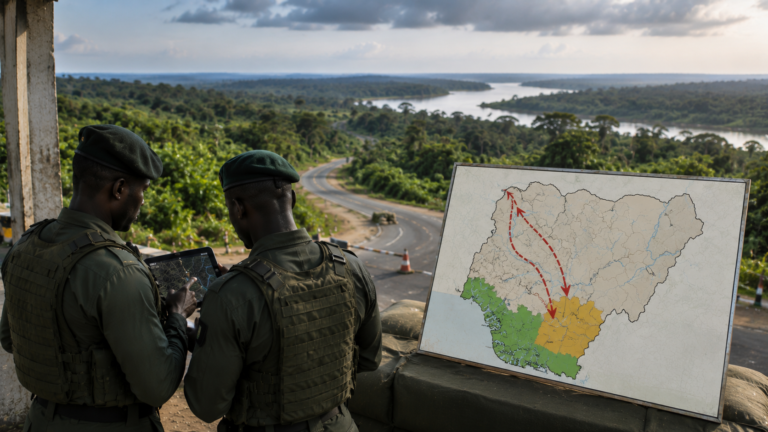
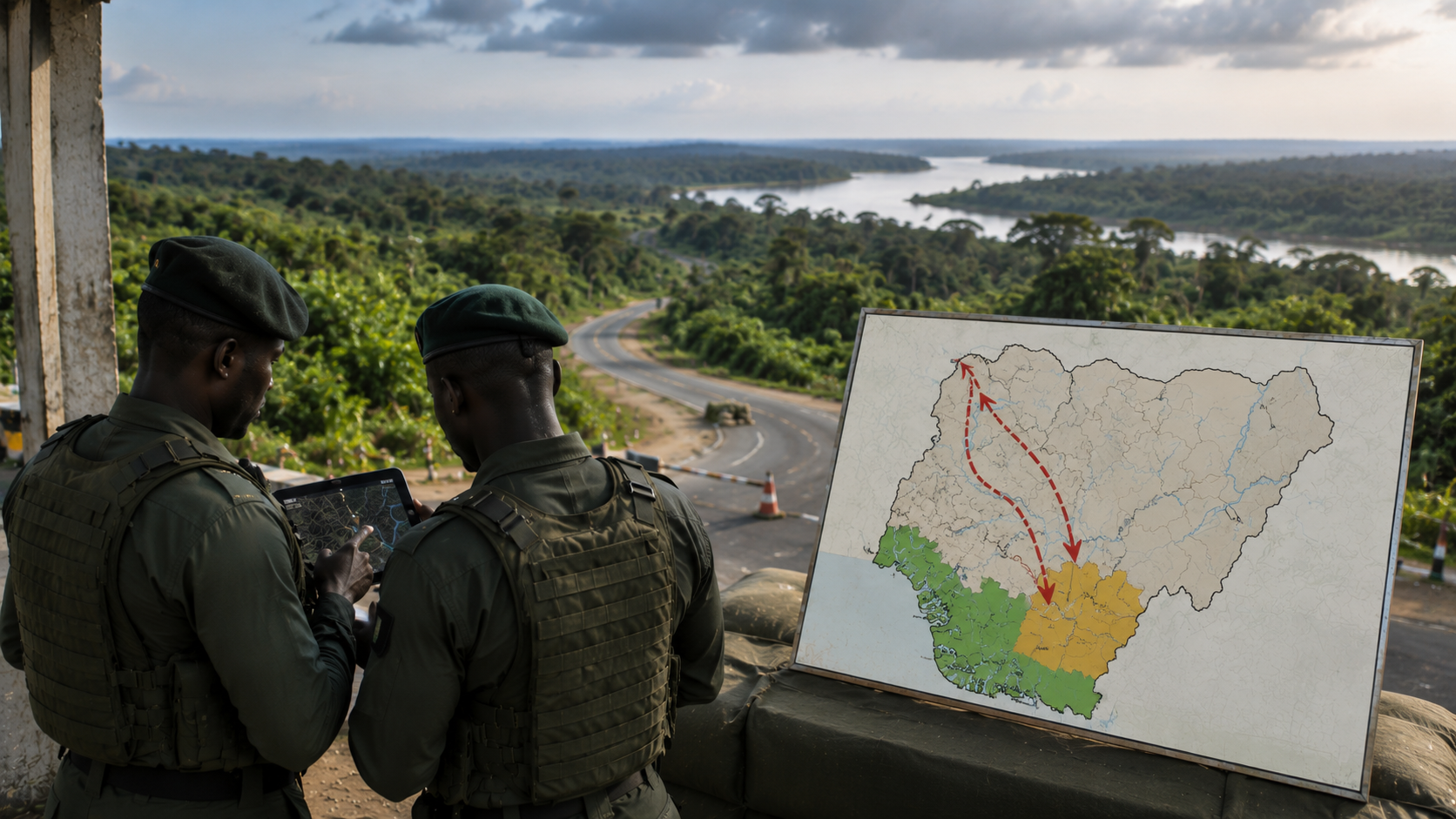
The intelligence sources cited in the report identified a network stretching through Niger State, Kogi State and parts of Anambra before extending toward other southern regions. These areas contain vast stretches of vegetation, forest reserves, agricultural land and rural pathways that can be difficult to monitor continuously.
For South East security planners, the concern is not necessarily that every forested area contains terrorists.
Rather, the concern revolves around vulnerability.
Large ungoverned spaces can become attractive corridors for criminal activity if surveillance and intelligence capabilities are insufficient.
This challenge is not unique to Nigeria.
Countries including Kenya, Mali, Burkina Faso, Niger Republic and the Democratic Republic of Congo have all faced situations where armed groups used remote terrain to move between operational zones.
In many cases, the issue was not the existence of forests themselves but the inability to maintain sustained monitoring across vast geographic areas.
The Forest Corridors Linking Northern and Southern Nigeria
The intelligence report specifically points to a chain of interconnected routes allegedly linking northern and southern Nigeria.
According to the sources, these pathways traverse parts of Niger State, Kogi State, Anambra State, Imo State, Abia State and potentially Edo State.
The significance of such routes lies in geography.
Nigeria’s landscape contains:
- Dense forests
- Riverine environments
- Agricultural pathways
- Cattle migration routes
- Mountainous terrain
- Border communities
Together, these features create complex movement networks that can be exploited by both legitimate users and criminal actors.
A retired Army General cited in the report described Kogi and Kwara as critical intersection points, linking northern and southern pathways through forests and riverine environments. The source emphasized that insurgents allegedly rely on bush routes and existing movement corridors rather than major highways.
Another intelligence source identified routes connecting forests in Kogi with parts of Ekiti, Ondo and Edo states. The report also referenced difficult terrain around portions of Anambra, Imo and Abia states that could potentially provide concealment for criminal actors.
These observations have renewed calls for improved mapping, aerial surveillance and intelligence-driven monitoring of forest corridors nationwide.
Why Kogi State Remains Strategically Important
Among all the locations mentioned in the intelligence reports, Kogi State appears most frequently.
That is not surprising.
Kogi occupies a unique position within Nigeria’s geographic structure.
Often referred to as the gateway between northern and southern Nigeria, the state sits at the intersection of multiple transportation, economic and ecological networks.
The River Niger passes through the state.
Major road networks connect it to several geopolitical zones.
Large forested areas remain difficult to monitor continuously.
According to the retired military officer quoted in the report, Kogi serves as a convergence point where multiple routes intersect. He described the state as central to logistics and coordination for individuals seeking movement across different regions.
Beyond security concerns, Kogi’s strategic importance also has economic implications.
The state functions as a commercial gateway for trade, agriculture and transportation.
Any perception of insecurity affecting movement corridors can potentially impact:
- Trade flows
- Agricultural supply chains
- Transportation networks
- Investor confidence
- Regional commerce
This explains why security developments in Kogi frequently attract national attention.
The state’s location means that events occurring there often have consequences extending beyond its borders.
Are South-East States Prepared?
One of the most important questions arising from the latest intelligence reports is whether states in the South-East possess the institutional capacity, intelligence networks and security coordination mechanisms required to detect and neutralize emerging threats before they become entrenched.
The responses from security agencies and government officials across the region reveal a complex picture.
While authorities acknowledge the need for vigilance, they do not all agree on the scale of the threat being reported.
This divergence is not unusual in security matters.
Intelligence assessments often focus on possibilities and risk indicators, while public officials typically rely on verified incidents and operational evidence before confirming a threat.
According to the report, Anambra’s security outfit, Agunechemba, confirmed that its personnel had encountered armed criminal groups, kidnappers and suspected bandits operating in forests, border communities and riverine locations across the state. However, the outfit stated that it had no intelligence indicating that terrorists displaced from northern Nigeria were actively migrating through Anambra into Abia or Imo states.
Agunechemba spokesperson Nweke Nweke said the agency had discovered arms caches during operations and continued to deploy intelligence gathering, checkpoints and joint patrols with federal security agencies.
These measures reflect a broader trend in Nigeria’s evolving security architecture.
Increasingly, state-level security initiatives are complementing federal institutions by providing localized intelligence and community engagement that national agencies may struggle to achieve independently.
The Imo State Police Command adopted an even stronger position.
Police spokesperson Henry Okoye rejected claims that terrorists were operating within the state, describing such reports as propaganda. He stated that ongoing forest raids involving police officers, vigilantes and community partners had significantly reduced criminal activity.
Okoye maintained that security operations had successfully disrupted criminal networks and that no cases involving mass abduction of schoolchildren had been recorded in the state. He also noted that investigations into kidnapping incidents occasionally revealed the involvement of IPOB, ESN members, community actors or individuals posing as herders.
In Abia State, officials similarly stated that they were unaware of terrorist camps or organized terrorist presence within state forests. Security Adviser MacDonald Uba emphasized that the government had established strategies designed to prevent infiltration and protect lives and property.
Taken together, these responses indicate that South-East authorities are not dismissing security concerns outright.
Rather, they are emphasizing preparedness while disputing conclusions that may not yet be supported by publicly available evidence.
The Edo School Closure and Why It Matters
Perhaps the most tangible development connected to the intelligence claims involves Edo State.
According to the report, a DSS source linked recent security concerns to movements through the Ondo–Ose axis into Edo State. The source alleged that insurgent activity had contributed to heightened threat perceptions in the area.
Separately, the Edo State Government ordered the closure of three secondary schools in Akoko-Edo Local Government Area following intelligence warnings regarding a potential kidnapping threat.
The affected schools were:
- Ososo Grammar School
- Ososo Comprehensive High School
- Makeke Secondary School
State authorities explained that the decision followed security advisories warning of credible threats against students, teachers and residents.
The significance of this development extends beyond the immediate security concern.
School closures carry profound social and economic implications.
When educational institutions suspend activities because of security fears, communities often experience:
- Reduced educational access
- Economic disruption
- Increased parental anxiety
- Declining investor confidence
- Negative perceptions of regional stability
Across Africa, attacks on educational institutions have become a major security concern over the past decade.
Incidents involving school abductions in Nigeria have repeatedly drawn international attention and underscored the vulnerability of educational infrastructure in conflict-affected areas.
Consequently, preventive measures such as temporary closures often reflect attempts to avoid worst-case scenarios rather than confirmations of imminent attacks.
The IPOB Buffer Debate
One of the most unusual aspects of the report involves what some observers have described as the “IPOB buffer paradox.”
A military officer attached to Anambra State’s security structure argued that northern terror groups would struggle to establish operational footholds within parts of the South-East because of the presence of local armed actors already operating in the forests.
According to the officer, the region remains hostile terrain for external insurgent groups.
The officer suggested that the Indigenous People of Biafra (IPOB) and its armed wing, the Eastern Security Network (ESN), would resist attempts by outside terrorist organizations to establish bases in local forests.
This assessment highlights the complexity of Nigeria’s security environment.
Different regions face different forms of insecurity.
In the North-East, insurgency has dominated security discussions.
In the North-West, banditry and mass kidnappings have become major concerns.
In parts of the South-East, security agencies continue to focus on separatist violence and attacks attributed to IPOB and ESN.
The interaction between these security challenges creates a complicated landscape where multiple actors may operate simultaneously but pursue different objectives.
Importantly, the claims regarding the deterrent effect of local armed groups represent the opinion of the military officer cited in the report and should not be interpreted as independently verified fact.
Lessons From Previous Terrorist Movements
Understanding the current debate requires examining how insurgent groups have historically adapted to pressure.
Nigeria’s experience provides several examples.
Boko Haram’s Evolution
Boko Haram initially operated primarily in urban centers before relocating into more remote environments as security pressure increased.
The movement’s shift toward forested areas and rural strongholds demonstrated how geography can shape insurgent strategy.
ISWAP Expansion
ISWAP adopted a more structured territorial approach, focusing on strategic mobility and logistical networks.
The group’s ability to exploit difficult terrain complicated military operations and prolonged conflict in parts of the Lake Chad Basin.
Bandit Migration Patterns
Bandit groups operating in North-West Nigeria have also displayed remarkable adaptability.
As security operations intensify in one area, criminal elements frequently relocate to neighboring states.
Security analysts often describe this as a “balloon effect.”
Pressure applied in one location causes criminal activity to reappear elsewhere unless broader regional coordination exists.
This is why experts increasingly emphasize nationwide intelligence integration rather than isolated state-by-state responses.
Political Implications of Emerging Nigeria Security Threats
The current debate is likely to intensify discussions surrounding security reform.
Nigeria’s security architecture remains highly centralized, with primary responsibility resting on federal institutions.
However, increasing insecurity across multiple regions has fueled calls for alternative approaches.
One proposal receiving significant attention is state policing.
Advocates argue that locally controlled police forces could improve intelligence gathering, community engagement and rapid response capabilities.
Critics caution that state policing may introduce political risks if not accompanied by strong safeguards and oversight mechanisms.
The broader conversation highlights a recurring challenge:
How can Nigeria secure vast forests, border communities and rural spaces while balancing constitutional responsibilities and resource limitations?
The answer remains a subject of active policy debate.
Readers interested in the broader discussion on security reform can also explore DSG HERALD’s analysis of Nigeria’s security crisis and the push for state police and forest guards, which examines how institutional reforms could reshape security management nationwide.
Economic Consequences Beyond Security
Security concerns rarely remain confined to law enforcement.
They often generate significant economic consequences.
If perceptions of insecurity expand along major transit corridors, several sectors could experience pressure:
Agriculture
Many of the areas mentioned in the report serve as agricultural hubs.
Fear of attacks can discourage farming activities and reduce productivity.
Transportation
Road transport remains essential for moving goods between northern and southern Nigeria.
Security concerns can increase transportation costs and insurance risks.
Investment
Investors typically prioritize stability.
Persistent reports of insecurity may influence decisions regarding manufacturing, logistics and commercial expansion.
Tourism
States with eco-tourism assets, cultural attractions and hospitality investments could face reputational challenges if security concerns dominate public discourse.
For these reasons, governments often treat emerging security threats as both security and economic issues.
Global Comparisons: What Other Countries Have Learned
Nigeria is not alone in confronting challenges associated with remote terrain and insurgent mobility.
Several countries have faced similar situations.
Kenya
Kenya strengthened community intelligence systems and border surveillance after militant groups exploited remote regions near Somalia.
Colombia
Colombia invested heavily in aerial surveillance and intelligence-driven operations to monitor movement through forests and mountainous terrain.
Indonesia
Indonesia combined technology, community engagement and specialized counterterrorism units to disrupt militant networks operating across difficult terrain.
Sahel Region
Countries such as Mali, Burkina Faso and Niger continue to grapple with insurgent mobility across vast, sparsely governed territories.
These experiences suggest that successful responses usually combine:
- Intelligence gathering
- Technology deployment
- Community participation
- Inter-agency cooperation
- Regional coordination
What Security Experts Recommend
Although security professionals differ on specific tactics, there is broad agreement on several priorities.
Strengthened Intelligence Sharing
Federal, state and local agencies must exchange information quickly and efficiently.
Forest Surveillance
Large forest belts require continuous monitoring using modern technologies and intelligence networks.
Community Policing
Local residents often provide the earliest warning signs of suspicious activity.
Drone Technology
Unmanned aerial systems can monitor remote terrain more effectively than traditional patrol methods.
Border Community Partnerships
Communities situated along transit routes can play critical roles in identifying unusual movements.
Regional Coordination
Security threats rarely respect administrative boundaries.
Effective responses require collaboration across states and regions.
Readers seeking additional context on rehabilitation and long-term security strategies may also find DSG HERALD’s report on terrorist reintegration in Nigeria and the challenges of post-conflict recovery relevant to the broader national conversation.
Conclusion: Prevention Must Remain the Priority
The emerging discussion surrounding South East security reflects a broader reality confronting Nigeria’s security establishment.
Whether every intelligence claim ultimately proves accurate or not, the concerns raised by security sources underscore the importance of vigilance, preparedness and proactive planning.
The report highlights allegations that displaced insurgents may be utilizing forest and riverine networks stretching from northern Nigeria toward southern regions. At the same time, officials in Anambra, Imo and Abia maintain that they have not identified evidence confirming the establishment of terrorist strongholds within their territories.
These differing assessments demonstrate why security reporting requires careful distinction between intelligence warnings, operational evidence and confirmed incidents.
For policymakers, the central lesson may be clear.
The debate should not be driven by fear but by preparedness.
As terrorist transit routes, criminal mobility and evolving Nigeria security threats continue to challenge governments worldwide, success will depend on intelligence-led policing, technological innovation, community partnerships and sustained intergovernmental cooperation.
Ultimately, protecting South East security—and Nigeria’s broader national security—will require anticipating threats before they become crises rather than responding after damage has already occurred.
Recommended Coverage
An analysis of economic reforms, inflation pressures and the broader impact of government policies on businesses and households.
Owerri West Growth Drives New Leadership Debate
Examines rapid urban expansion, governance challenges and development priorities in one of Imo State’s fastest-growing areas.
A profile exploring the contributions, leadership style and public influence of Dr. Eberechukwu Uneze.
About the Author