Fibre Optic Drones Warfare Reshapes Israel-Hezbollah Conflict
Fibre optic drone warfare is rapidly redefining the dynamics of the Israel-Hezbollah conflict, highlighting a critical shift in modern combat where low-cost, low-tech innovation is challenging advanced military systems. Recent battlefield developments in southern Lebanon suggest that Hezbollah’s deployment of fibre-optic-controlled drones is exposing vulnerabilities in Israel’s defence architecture and signalling a broader transformation in global warfare tactics.
A New Phase in the Israel-Hezbollah Conflict
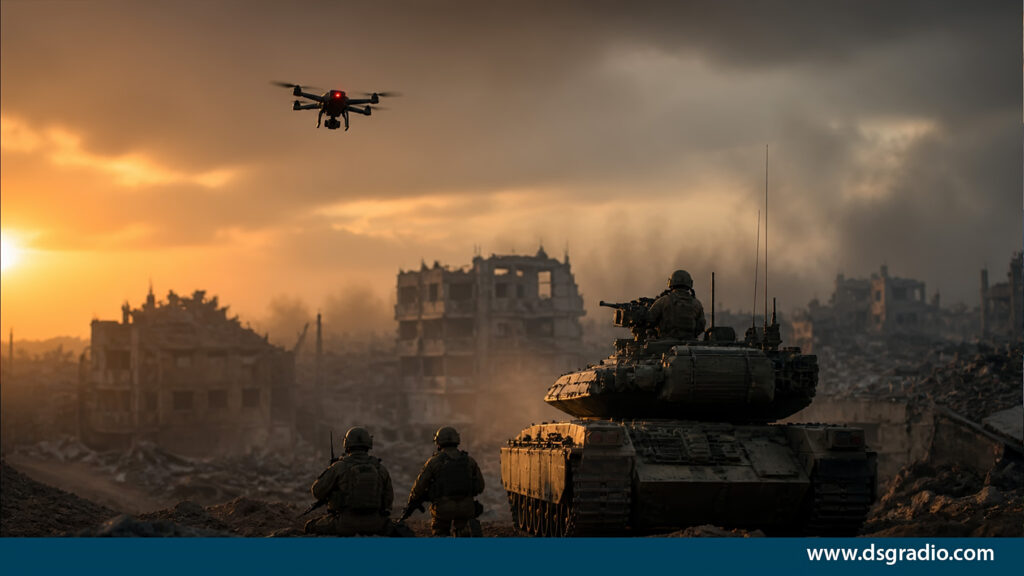
The latest escalation unfolded in southern Lebanon, where Hezbollah deployed an explosive-laden quadcopter drone capable of navigating terrain with precision while transmitting real-time visuals to its operator. The drone targeted an Israeli tank and nearby soldiers, resulting in the death of a 19-year-old Israeli soldier, Sgt. Idan Fooks and injuries to others.
According to Israeli military sources, Hezbollah followed up the initial strike with additional drone attacks aimed at a rescue helicopter, underscoring a coordinated and evolving operational strategy.
As reported by CNN, the weapon used was a fibre-optic drone—a system that fundamentally differs from conventional UAVs
What Makes Fibre Optic Drones Warfare Different
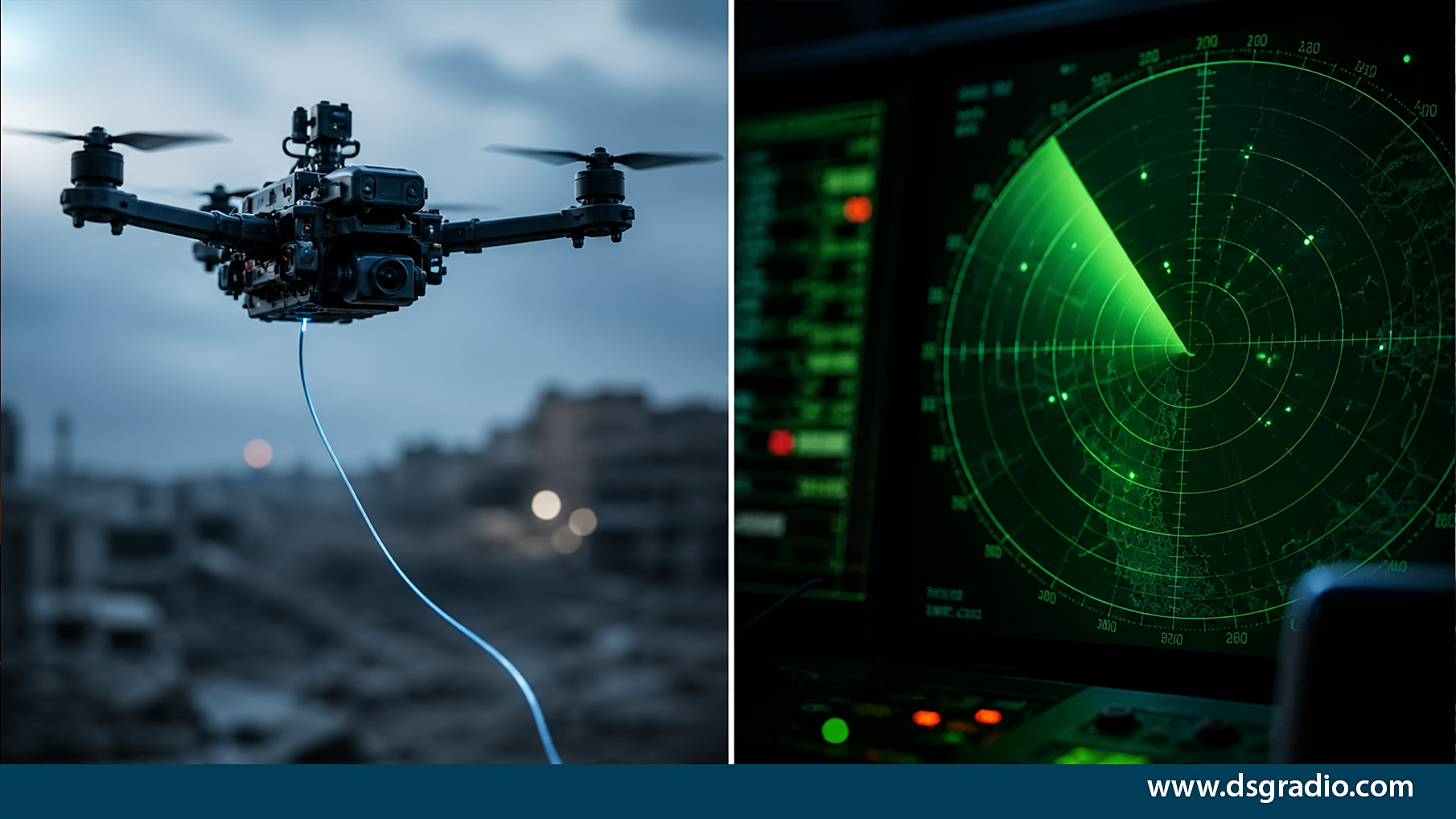
Unlike traditional drones that rely on radio signals, fibre-optic drones are physically connected to their operators via ultra-thin cables. This design creates a major tactical advantage:
- No electronic signal emission, making detection extremely difficult
- Immunity to jamming, rendering electronic warfare defences ineffective
- High-resolution real-time visuals, allowing precise targeting
- Extended operational range, reportedly up to 15 kilometres
Israeli security researcher Yehoshua Kalisky noted that these drones are virtually impossible to track electronically because they lack a signal footprint.
This development represents a critical turning point in fibre optic drone warfare, where simplicity becomes a strategic advantage.
Israel Drone Defence Challenge: Limits of Technological Superiority
For years, Israel has relied heavily on advanced electronic warfare systems to counter drone threats. These systems are designed to:
- Jam communication signals
- Disrupt navigation systems
- Disable incoming UAVs before impact
However, fibre-optic drones bypass these defences entirely.
An Israeli military official acknowledged the limitations, stating that beyond physical barriers such as nets, “there is little that can be done.”
This exposes a growing challenge for Israel’s drone defence, where high-tech systems struggle against low-tech adaptations.
From Ukraine to Lebanon: The Spread of Asymmetric Warfare Drones
Fibre optic drone warfare did not originate in the Middle East. The technology first gained prominence in Ukraine, where Russian forces used similar systems to:
- Strike deep behind enemy lines
- Disrupt supply chains
- Protect operators by increasing the distance from the battlefield
Hezbollah’s adoption of this model highlights the global diffusion of drone-based asymmetric warfare, in which non-state actors replicate battlefield innovations from major conflicts.
The shift underscores a key trend: modern warfare is no longer defined solely by technological superiority but by adaptability.
Hezbollah’s Strategy: Precision Over Scale
Hezbollah’s broader military strategy has evolved significantly.
Before the Gaza war, Israeli estimates suggested Hezbollah possessed approximately 150,000 rockets. However, ongoing conflict and Israeli targeting have reportedly reduced this arsenal to around 10% of its original capacity.
Faced with reduced firepower, Hezbollah has pivoted toward:
- Targeted drone strikes
- Low-cost, high-impact attacks
- Decentralised warfare tactics
Experts say the group imports civilian drones—reportedly from China or Iran—and modifies them with explosive payloads.
This approach reflects a broader shift toward cost-efficient warfare, where relatively inexpensive systems can neutralise high-value military assets.
Asymmetric Warfare: Cheap Weapons vs Expensive Defence
The rise of fibre optic drone warfare highlights a fundamental imbalance in modern conflict:
| Factor | Cost Estimate | Impact |
|---|---|---|
| Fiber-optic drone | Low (few thousand dollars) | High precision strike |
| Military tank/system | Millions of dollars | Vulnerable to attack |
This disparity creates a strategic dilemma:
- Defenders invest heavily in advanced systems
- Attackers exploit low-cost, adaptable tools
Samuel Bendett, a defence analyst with the Centre for New American Security, described the system as “quite effective” even against prepared forces.
Implications for Global Security and Africa
Security analysts warn that the implications extend far beyond the Middle East.
The success of fibre optic drone warfare raises concerns that similar tactics could be adopted in other regions, including Africa, where insurgent groups already utilise improvised technologies.
Potential risks include:
- Increased use of stealth drones by non-state actors
- Challenges for conventional military forces
- Expansion of asymmetric warfare across fragile regions
For countries like Nigeria, which face evolving security threats, this development may influence future counter-insurgency strategies.
What This Means for Future Conflicts
The emergence of fibre optic drone warfare signals a broader transformation in military doctrine:
Key Trends:
- Shift from signal-based to wired control systems
- Reduced reliance on expensive military hardware
- Increased importance of adaptability over dominance
Military planners worldwide may now need to rethink defence strategies, focusing not just on advanced technology but also on countering low-tech innovations.
An Israeli official acknowledged the ongoing challenge, stating that the military is still adapting to the threat.
Broader Context: A Fragile Regional Security Landscape
The drone escalation comes amid ongoing tensions between Israel and Hezbollah, despite intermittent diplomatic efforts.
Earlier developments, including a fragile ceasefire agreement, highlighted the region’s volatility. Read more in our report on the Israel-Hezbollah ceasefire breakthrough.
Recommended Coverage:
- Global Tensions and World War III Risks
A deeper analysis of escalating global conflicts and how regional wars could trigger broader geopolitical crises. - Jerusalem’s Historical Role in Middle East Conflict
Explores the deep-rooted historical and religious factors shaping ongoing tensions in the region. - US-Iran Ceasefire Crisis and Regional Fallout
Examines diplomatic breakdowns and their implications for Middle East stability. - Strait of Hormuz Tensions and Global Impact
Highlights how rising tensions could affect global oil markets and security dynamics.
Conclusion
Fibre optic drone warfare is not just a new battlefield tactic—it represents a paradigm shift in how wars are fought and won. By combining simplicity with precision, Hezbollah has demonstrated how non-state actors can challenge technologically superior forces.
As militaries worldwide assess the implications, one reality is becoming clear: the future of warfare may depend less on who has the most advanced systems—and more on who adapts fastest.
About the Author