Political party deregistration Nigeria: Court case threatens 2027 election landscape
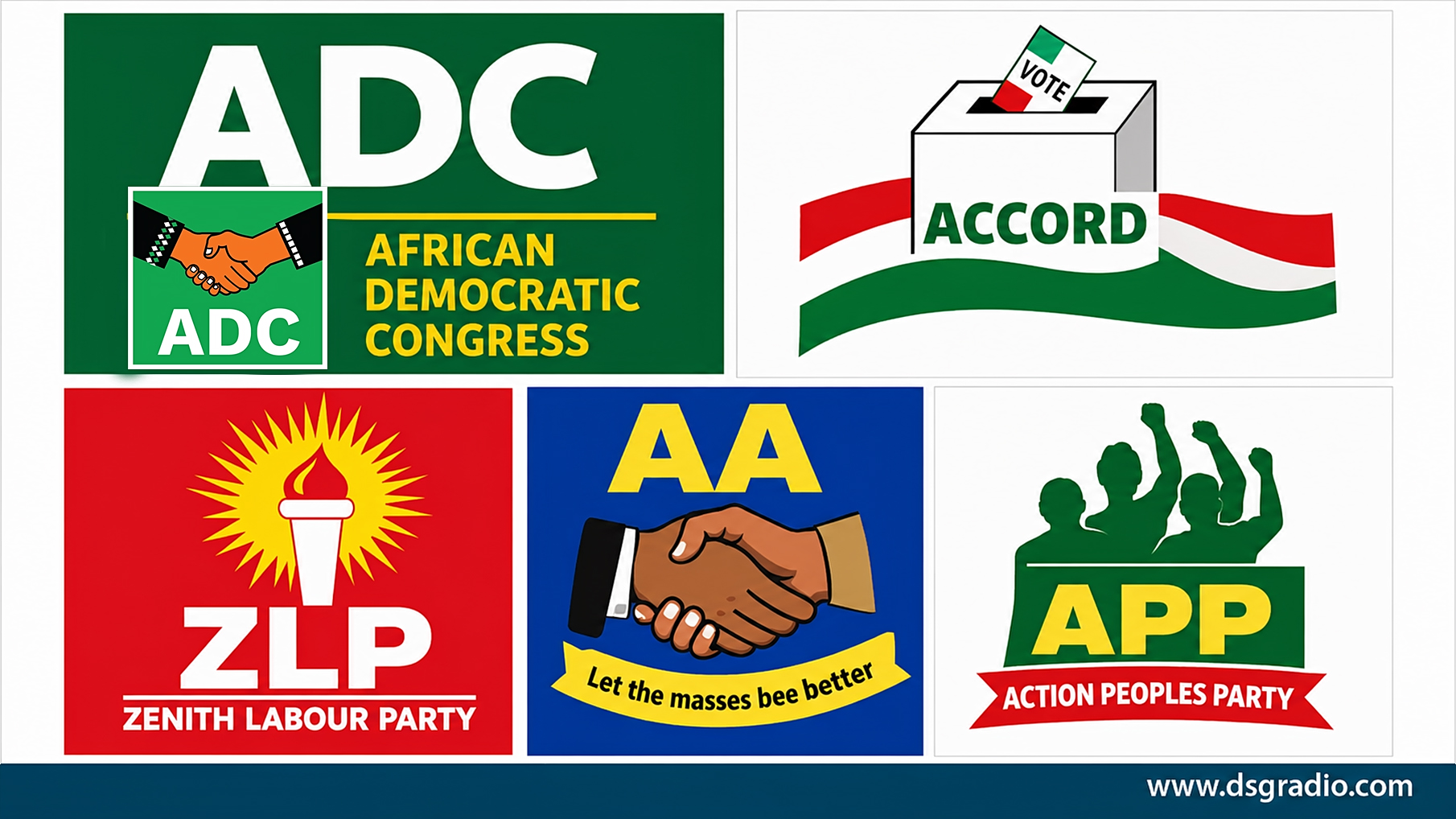
The debate over political party deregistration Nigeria has intensified after a Federal High Court in Abuja adjourned a suit seeking to deregister the African Democratic Congress (ADC), Accord Party, Zenith Labour Party (ZLP), and Action Alliance (AA), a move that could significantly reshape the country’s political landscape ahead of the 2027 general elections.
Court Proceedings and Timeline
Justice Peter Lifu of the Federal High Court, Abuja, adjourned the case to May 5, 2026, after granting the National Forum of Former Legislators (NFFL) permission to amend its originating summons.
According to the primary report :
- The plaintiffs expanded the suit to include additional political parties
- The case alleges violations of Section 225 of the 1999 Constitution
- All affected parties must respond to the amended summons
Justice Lifu emphasised the urgency of the case, directing parties yet to respond to do so promptly due to its public importance.
Why Political Party Deregistration Nigeria Matters for 2027
The political party deregistration Nigeria case is not just a legal dispute—it has far-reaching electoral consequences.
If the court rules in favour of the plaintiffs:
- Several political parties could be barred from participating in 2027 elections
- The number of parties on the ballot could be significantly reduced
- Political alliances and realignments may accelerate
The judge noted that the matter is time-sensitive, particularly because party primaries are approaching ahead of the 2027 elections.
The Core Legal Dispute
The suit filed by the NFFL seeks:
- Declaratory orders compelling the Independent National Electoral Commission (INEC) to enforce constitutional compliance
- Injunctions preventing affected parties from engaging in political activities until compliance is achieved
Plaintiffs’ Position
The former lawmakers argue that:
- Non-compliant parties undermine electoral integrity
- Excessive party participation leads to ballot overcrowding
- Public funds are wasted managing overly complex elections
Opposition from ADC
The ADC opposed the application, arguing that:
- The application is incompetent
Further details of the ADC’s legal argument were not specified in the original report.
INEC and Constitutional Compliance
At the centre of the debate over political party deregistration in Nigeria is INEC’s role in enforcing compliance.
The plaintiffs are asking the court to:
- Compel INEC to strictly apply constitutional provisions
- Restrict recognition of non-compliant parties
This adds pressure on the electoral body, already facing scrutiny as highlighted in
👉 INEC-ADC dispute deepens ahead of 2027 elections
Explainer: Section 225 of the 1999 Constitution
Section 225 governs:
- Financial transparency of political parties
- Submission of audited accounts
- Compliance with electoral regulations
Failure to comply may result in:
- Legal sanctions
- Deregistration
- Restrictions on political participation
However, the exact details of how each party allegedly breached this provision were not specified in the original report.
Public Interest Concerns
The political party deregistration Nigeria case raises broader concerns about electoral efficiency and governance.
Key Issues Raised by Plaintiffs
- Ballot Overcrowding: Too many parties complicate voting processes
- Cost of Elections: More parties increase administrative expenses
- Electoral Integrity: Non-compliance weakens the system
These concerns align with wider fiscal pressures, including reports such as
👉 FG budgets N135bn for election lawsuits
Historical Context: Deregistration in Nigeria
Nigeria has previously attempted to streamline its political system.
- INEC has deregistered parties for poor electoral performance in past cycles
- Courts have occasionally overturned such decisions
This current case differs because:
- It is driven by former lawmakers, not INEC
- It focuses on constitutional compliance, not election results
Implications for Political Parties
If deregistration proceeds, affected parties could face:
- Loss of legal recognition
- Exclusion from elections
- Disruption of political structures
This could lead to:
- Mergers or alliances among smaller parties
- Increased dominance of major parties
- Reduced political diversity
Election Timeline Pressure
Justice Lifu ordered all parties to file necessary processes before May 1, 2026, reinforcing the urgency of the case.
The timeline suggests:
- Rapid legal developments before party primaries
- Potential uncertainty in candidate selection
- Increased political tension
Details remain unclear on how quickly the court will deliver a final ruling.
As reported by Channels Television, the Federal High Court adjourned the case and directed parties to respond promptly due to its public importance. Read the original report via
👉 Channels TV report on the court adjournment
What Happens Next
The next hearing is scheduled for May 5, 2026.
Possible next steps include:
- Consideration of preliminary objections
- Further legal arguments from all parties
- Potential interim rulings
The final outcome could significantly influence Nigeria’s electoral framework.
The political party deregistration Nigeria case has emerged as a defining legal battle ahead of the 2027 elections. Beyond the courtroom, it raises critical questions about electoral integrity, constitutional compliance, and the future structure of Nigeria’s multi-party system.
As proceedings continue, the case is expected to shape both political strategy and institutional accountability in the lead-up to one of the country’s most consequential elections.
🔗 Related Articles
- INEC-ADC Dispute Escalates Ahead of 2027 Elections
Examines the growing legal and political tensions between INEC and ADC in the run-up to national polls. - FG Allocates N135bn for Election Lawsuits Before 2027 Vote
Highlights the financial burden of increasing electoral litigation and its implications for governance.
About the Author