Nigeria Prize for Literature 2026 Begins Adjudication After 223 Entries
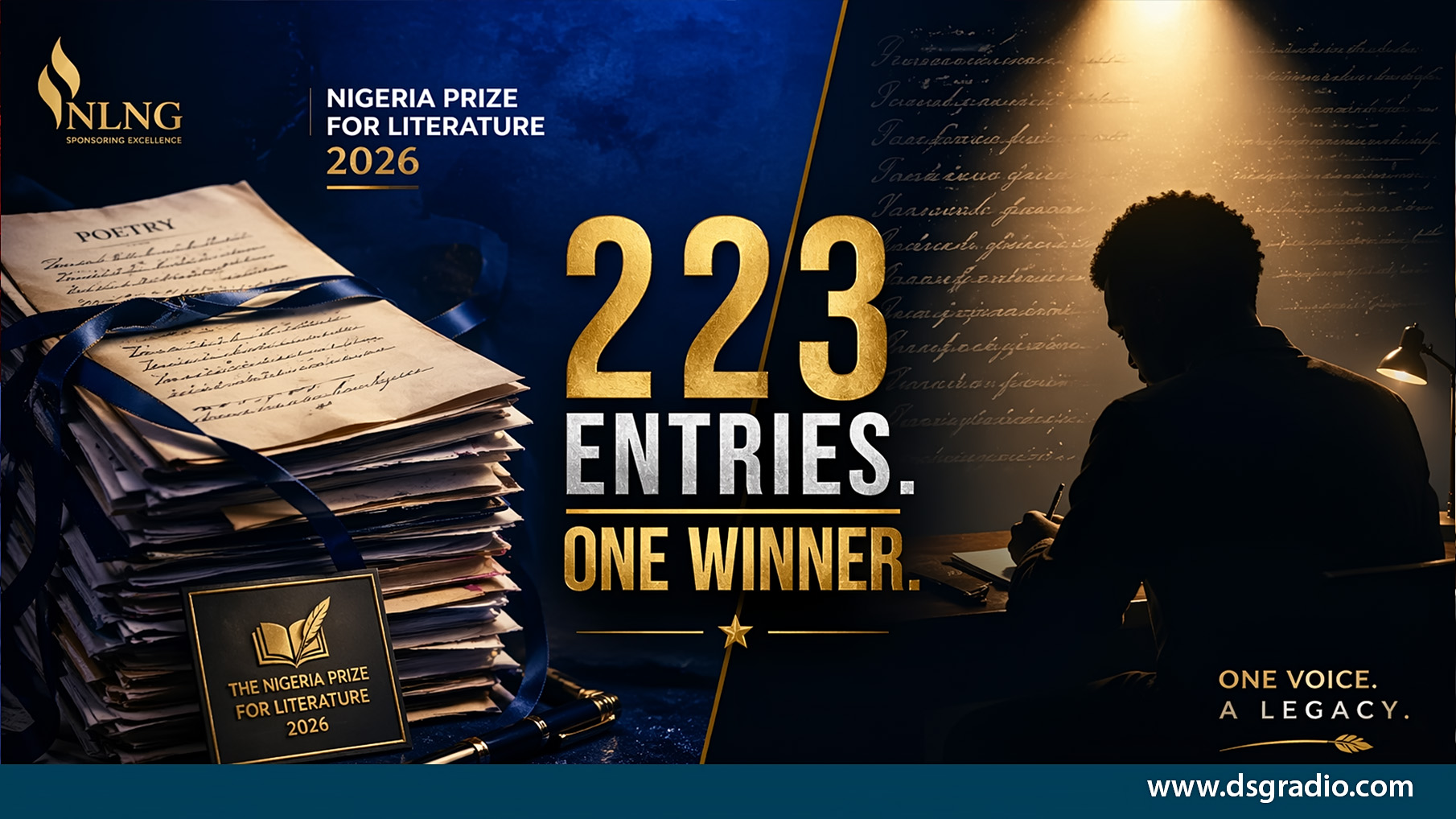
The Nigeria Prize for Literature 2026 has officially entered its adjudication phase after 223 entries were submitted and handed over by the Nigeria LNG Limited (NLNG) to the Advisory Board and panel of judges in Lagos on Monday. The competition, which focuses on poetry this year, reflects sustained participation from writers across Nigeria and reinforces the prize’s standing as one of Africa’s most prestigious literary awards.
Strong Entry Numbers Signal Continued Literary Engagement
The submission of 223 entries marks a competitive outing for the Nigeria Prize for Literature 2026, particularly within the poetry category. While the number is slightly below peak submission years, it remains significant when compared with recent prose cycles.
The figures indicate:
- Continued interest in the NLNG-sponsored prize
- Sustained engagement among Nigerian writers
- Ongoing relevance of literary awards in shaping cultural discourse
The entries were formally transferred in Lagos, signaling the beginning of what organisers described as a rigorous evaluation process.
NLNG Describes Process as Rigorous and Defining
Speaking at a press conference, Dr Sophia Horsfall, General Manager, External Relations and Sustainable Development at NLNG, represented by Abdul Umar, Manager, Government Relations, described the adjudication stage as critical to determining the year’s winning work.
“This marks the start of a process that demands attention, patience, and sound judgement, and will ultimately determine the work that defines this year’s Prize,” she said.
Dr Horsfall emphasised that the credibility of the Nigeria Prize for Literature 2026 depends heavily on the integrity of its adjudication process.
According to her, the evaluation will involve:
- Months of detailed reading
- Structured assessment and scoring
- Deliberations among judges
- Selection of a longlist of 11 entries
- Narrowing down to a shortlist of three finalists
- Final selection of a winner
Poetry Takes Centre Stage in 2026 Edition
The 2026 edition of the Nigeria Prize for Literature 2026 focuses on poetry, a genre that organisers say demands precision, clarity, and depth.
Dr Horsfall noted that expectations for this year’s entries are influenced by previous high standards, particularly the 2022 edition, which produced a winning work that continues to resonate within contemporary Nigerian literature.
The prize, valued at $100,000, remains one of the most lucrative literary awards in Africa, further elevating its global reputation.
Advisory Board and Judges Begin Evaluation
The entries were formally presented to the Advisory Board, chaired by Professor Akachi Adimora-Ezeigbo, who subsequently handed them over to the panel of judges.
Receiving the submissions, Prof. Adimora-Ezeigbo commended NLNG for maintaining the prize over the years, highlighting its contribution to literary development in Nigeria.
She said:
- Each edition reflects evolving literary depth and diversity
- Writers play a central role in sustaining the prize’s relevance
- The adjudication panel must uphold professionalism and fairness
She urged judges to demonstrate “the highest level of professionalism and depth” in selecting the winning entry.
Literary Prize as a Tool for National Development
NLNG reaffirmed that the Nigeria Prize for Literature 2026 goes beyond recognising talent, serving as a platform that contributes to broader societal goals.
Dr Horsfall outlined key impacts of the prize:
- Promotion of reading culture in Nigeria
- Encouragement of discipline in creative writing
- Strengthening of Nigeria’s literary ecosystem
- Support for education and cultural development
She stated that the initiative aligns with NLNG’s commitment to sustainable development through arts and education.
Benchmark for African Literary Excellence
The Nigeria Prize for Literature 2026, sponsored annually by NLNG, continues to function as a benchmark for literary excellence across Africa.
The prize has gained international recognition due to:
- Its transparent adjudication process
- High monetary value
- Rotational genre focus (including poetry, prose, drama, and children’s literature)
- Consistent institutional backing
According to details reported by Independent Nigeria, the current adjudication phase will ultimately determine a winning work that defines this year’s literary cycle .
Broader Context: Nigeria’s Expanding Literary Influence
Nigeria’s literary scene has continued to gain global attention, with writers increasingly participating in international festivals, publishing platforms, and award circuits.
The Nigeria Prize for Literature 2026 plays a central role in this ecosystem by:
- Providing visibility for emerging and established writers
- Encouraging high standards in literary production
- Connecting Nigerian literature to global conversations
The focus on poetry in 2026 also reflects renewed interest in the genre, particularly among younger writers exploring identity, politics, and social change through verse.
Implications for Writers and the Creative Industry
For writers, the adjudication phase represents a period of anticipation and critical evaluation. The structured selection process ensures that only the most compelling works advance.
For the broader creative industry, the prize continues to:
- Influence publishing trends
- Drive readership engagement
- Elevate literary discourse in Nigeria and beyond
Related Articles
You may also want to read:
- Basic Education Boost in Irete Community
A grassroots education initiative highlights local efforts to improve learning infrastructure, aligning with broader cultural development themes. - Nigeria Launches ₦120bn TVET Education Scheme
Government investment in technical education reflects national efforts to strengthen human capital alongside cultural initiatives. - Student Loan Fund Disburses ₦22bn
Expanding access to education funding supports intellectual growth, which feeds into Nigeria’s literary and creative sectors. - Child Labour Crisis Threatens Education in Mining Areas
Challenges in access to education highlight the importance of initiatives like literary prizes in promoting knowledge and development.
As the Nigeria Prize for Literature 2026 moves into its adjudication phase, attention shifts to the panel of judges tasked with selecting a winner from 223 entries. With poetry at the forefront this year, the competition is expected to produce a work that not only meets high literary standards but also reflects the evolving voice of Nigerian writers.
The coming months will determine which entry emerges as the defining literary work of 2026, reinforcing the prize’s role as a cornerstone of African literature.
About the Author