Africa Economic Resilience AfDB 2026 Report Shows Strong Growth Outlook Amid Global Pressures
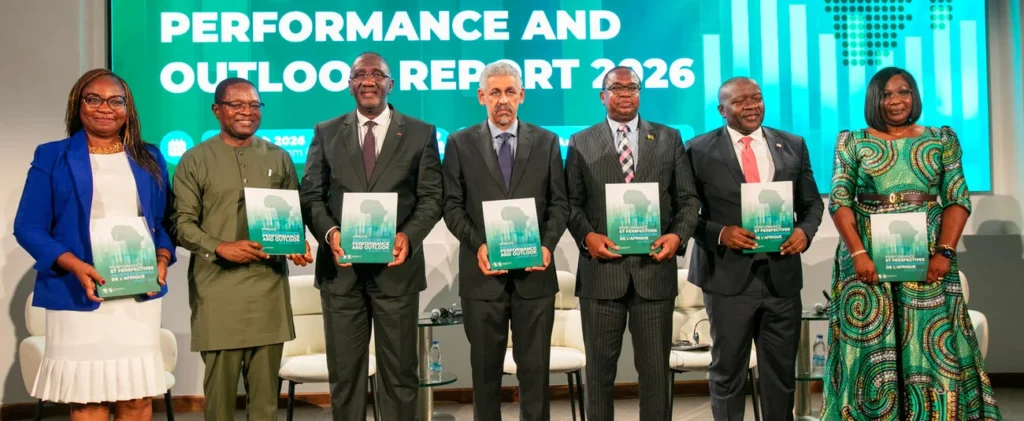
Africa’s economic resilience remains strong despite mounting global uncertainties, according to the 2026 Africa Macroeconomic Performance and Outlook (MEO) report released by the African Development Bank (AfDB) on Monday, March 30, 2026, at its headquarters in Abidjan, Côte d’Ivoire.
The report reveals that the continent is projected to record 4.3% GDP growth in 2026, following a 4.2% expansion in 2025, outperforming the global average of 3.1%. The AfDB 2026 Africa economic resilience report highlights a sustained recovery driven by improved macroeconomic management, easing inflation, and stronger investment inflows.
According to the AfDB report, Africa continues to position itself as a global growth frontier, even as the world faces geopolitical fragmentation, trade tensions, and declining development finance flows.
The report notes that Africa’s growth rebounded significantly:
- 2024: 3.1%
- 2025: 4.2%
- 2026 (projected): 4.3%
- 2027 (projected): 4.5%
This steady upward trend underscores the continent’s resilience in navigating both internal and external economic shocks.
The Africa economic resilience AfDB 2026 report identifies a broad-based growth pattern across the continent:
- Growth exceeded 5% in 22 African countries
- At least six countries recorded over 7% growth
- 12 of the 20 fastest-growing economies globally were African
Regionally:
- East Africa remained the fastest-growing region at 6.4% GDP growth
- Ethiopia: 9.8%
- Rwanda: 7.5%
- Uganda: 6.4%
The report attributes this performance to:
- Improved macroeconomic policies
- Favourable agricultural conditions
- Declining inflationary pressures
Dr Sidi Ould Tah, President of the African Development Bank Group, described the current period as critical:
“The continent faces an important moment when the world is changing, not always in favour of Africa.”
He emphasised that AfDB’s “Four Cardinal Points” strategy is designed to help African economies withstand global shocks.
Meanwhile, Prof. Kevin Urama, Chief Economist and Vice President for Economic Governance and Knowledge Management, expressed cautious optimism:
“Africa has held strong in previous shocks and has the capacity to bounce back, provided the right policy measures are applied.”
He added that if the ongoing Middle East crisis persists beyond three months, it could reduce Africa’s projected growth by 0.2 percentage points in 2026.
The Africa economic resilience AfDB 2026 report highlights several key economic indicators:
📊 Growth & Income
- GDP growth: 4.2% (2025) → 4.3% (2026 projected)
- GDP per capita growth:
- 2023: 0.9%
- 2024: 1.1%
- 2025: 1.9%
(Still insufficient for rapid poverty reduction)
📉 Inflation Trends
- Inflation dropped from 21.8% in 2024 to 13.6% in 2025
- Further declines expected in 2026 and 2027
💰 Investment & Financial Flows
- Foreign Direct Investment (FDI):
- Increased by over 75%
- Reached $97 billion in 2024
- Remittances:
- Rose by 14% to $104.6 billion
- Became the largest source of external non-debt financing
These figures reinforce the strength of Africa’s economic recovery and its growing attractiveness to global investors.
The Africa economic resilience AfDB 2026 report places strong emphasis on external risks, particularly:
- Middle East geopolitical tensions
- Global trade fragmentation
- Declining development finance flows
Although the report’s projections were prepared before the escalation of the Middle East crisis, AfDB officials and partners, including the United Nations Development Programme (UNDP), are currently assessing potential spillover effects.
Experts believe Africa’s resilience could act as a buffer, but prolonged instability could:
- Affect commodity prices
- Disrupt trade routes
- Increase fiscal pressures
During the expert panel discussion, policymakers from multiple African countries emphasised the need for structural reforms:
Key Policy Priorities:
- Strengthening domestic resource mobilisation
- Expanding local equity and bond markets
- Accelerating digital tax systems
- Enhancing regional integration
Panel participants included:
- Souleymane Diarrassouba (Côte d’Ivoire – Planning Minister)
- Augustine Kpehe Ngafuan (Liberia – Finance Minister)
- Prof. Mthuli Ncube (Zimbabwe – Finance Minister)
- Dr. Retselisitsoe Matlanyane (Lesotho – Finance Minister)
- Aminata Toure (IMF Representative)
A consensus emerged that Africa must leverage lessons from past crises to build stronger, shock-resistant economies.
The African Development Bank will continue publishing its biannual macroeconomic reports alongside the annual Africa Economic Outlook.
According to Dr. Ould Tah, these reports aim to provide:
- Timely economic insights
- Policy guidance for governments
- Decision-making tools for investors
Looking ahead, sustaining the gains outlined in the Africa economic resilience AfDB 2026 report will depend on:
- Fiscal discipline
- Continued reforms
- Strategic regional cooperation
About the Author