Macron Responds to Trump Remarks Over Wife Comments
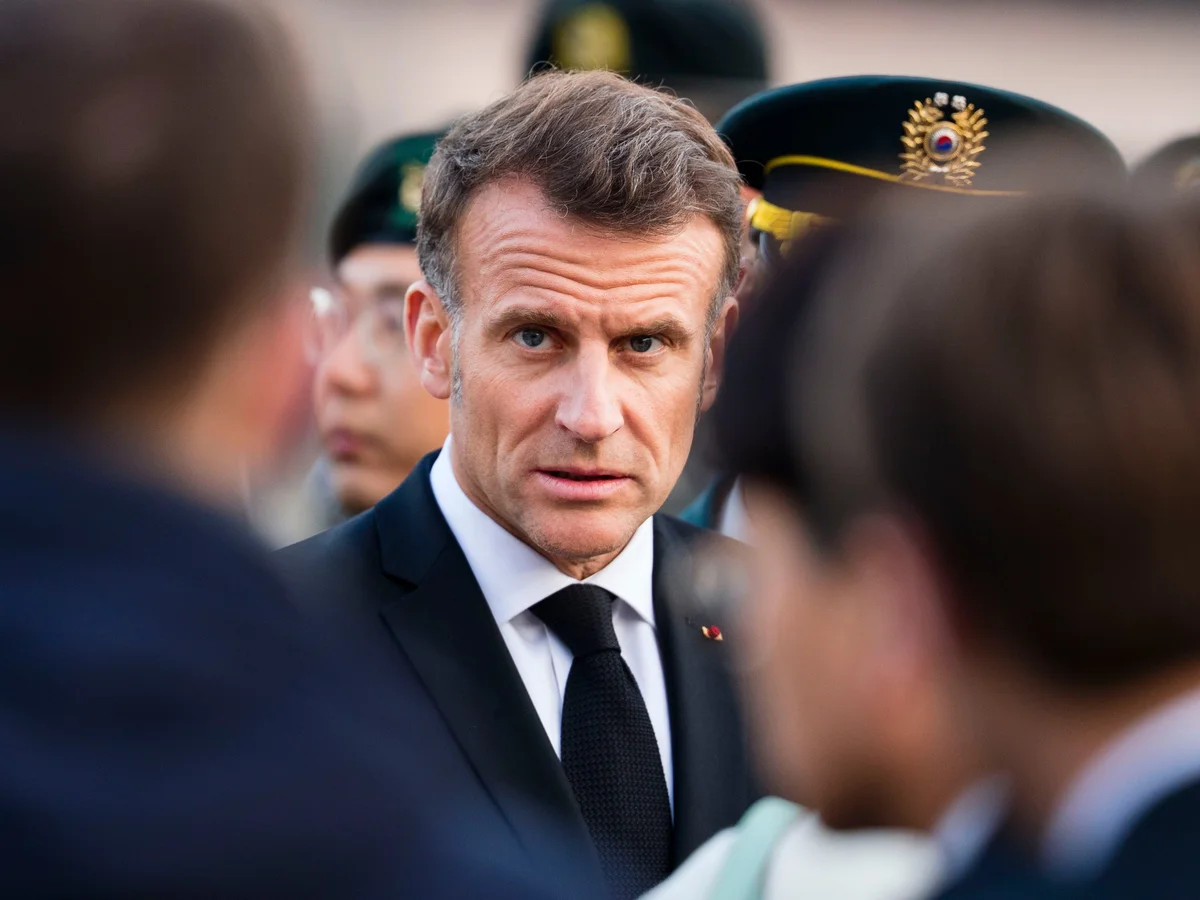
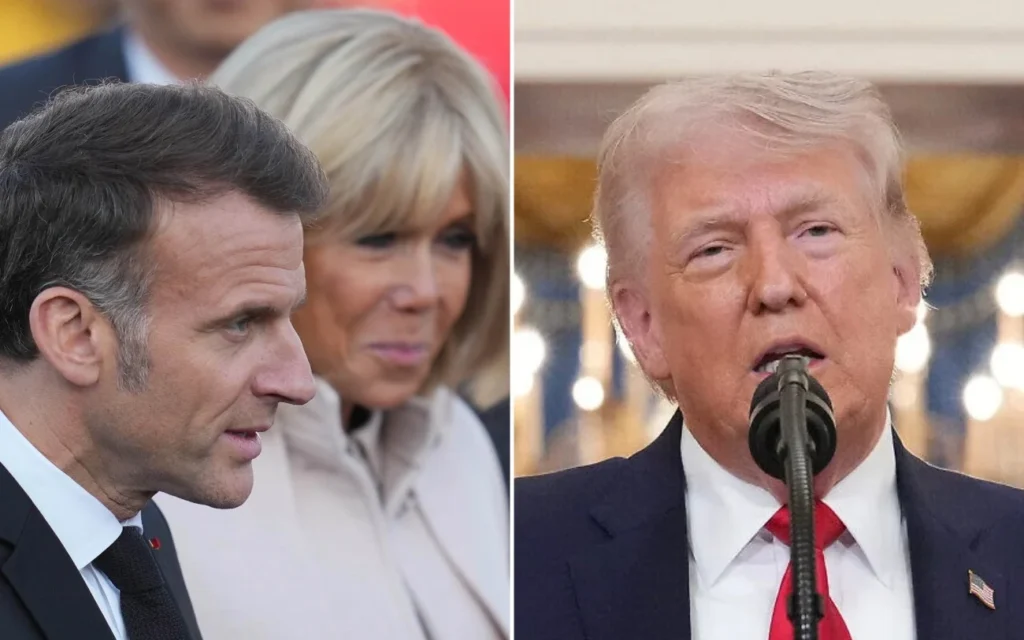
Paris / Seoul — April 2026: French President Emmanuel Macron has publicly pushed back after former U.S. President Donald Trump mocked his marriage during remarks tied to France’s refusal to support U.S.-Israel military operations against Iran. Macron, speaking during an official visit to South Korea on Thursday, described Trump’s comments as “not elegant” and “not up to par,” signalling rising tensions between the two leaders.
The dispute underscores a broader geopolitical divide as France maintains a cautious stance on escalating conflict in the Middle East.
According to the report, Trump made the controversial remarks during a private event on Wednesday, criticising Macron for not aligning with U.S. policy in the Middle East.
Trump said:
- Macron’s wife treats him “extremely badly”
- Referenced a 2025 viral video where Brigitte Macron appeared to shove her husband aboard a presidential jet
The comments were widely interpreted as a personal attack, shifting attention from diplomatic disagreements to private matters.
Macron, when pressed for a response in Seoul, avoided escalating the rhetoric but firmly criticised the tone of Trump’s remarks, emphasising that such language falls short of the expected standards between global leaders.
The disagreement comes amid escalating tensions surrounding the U.S.-Israel military campaign targeting Iran’s nuclear infrastructure.
Key developments include:
- The United States has pushed for broader allied support.
- France has refused to fully participate in the campaign.
- European allies remain divided over strategy and the risks of escalation.
France has instead taken a defensive and stabilising role, including:
- Deploying jets and air defence systems to the Persian Gulf
- Positioning naval assets near Cyprus
- Supporting regional allies without engaging in offensive operations
However, France has notably:
- Refused to deploy naval forces to reopen the Strait of Hormuz
- Banned use of its airbases for U.S. military operations (alongside Spain and Italy)
These decisions have contributed to growing friction with Washington.
Macron’s response reflects mounting frustration with both the tone and substance of U.S. criticism.
Macron’s Position
- Called Trump’s remarks “not elegant”
- Emphasised diplomatic standards and the seriousness of global crises
- Maintained France’s independent foreign policy approach
Political Backlash in France
Several French leaders condemned Trump’s comments:
- Manuel Bompard (far-left lawmaker): described the remarks as “absolutely unacceptable”
- Yaël Braun-Pivet, President of the French National Assembly:
- Criticised Trump for mocking during a time of war
- Highlighted that “people are dying on the battlefield”
The backlash reflects France’s political culture, where the private lives of leaders are generally respected more than in U.S. political discourse.
The relationship between Macron and Trump has evolved significantly over time.
Earlier Relations
- Initially described as friendly during Trump’s first term.
- Known for symbolic interactions, including notable handshake moments
Current Dynamics
- Increasingly marked by:
- Policy disagreements
- Public criticism
- Personal remarks
Trump has:
- Shared private communications from Macron
- Publicly mocked the French leader in speeches.
Macron, in contrast, has:
- Responded with measured but firm criticism
- Focused on policy disagreements and international cooperation
This latest incident signals a shift from strategic rivalry to personal confrontation.
Sensitive Issue: Brigitte Macron
The remarks also touch on a sensitive subject in French politics.
- Brigitte Macron is nearly 25 years older than the president.
- The couple has previously faced:
- Online misinformation
- Defamation claims
In 2025:
- The Macrons filed a lawsuit against Candace Owens, a U.S. podcaster.
- The case involved false claims about Brigitte Macron’s identity.
This context explains why Trump’s comments triggered strong reactions within France.
Global and Regional Implications
The controversy highlights deeper geopolitical implications:
1. Fracturing Western Unity
- France, Spain, and Italy are resisting U.S. pressure.
- Lack of a unified NATO or EU position on Iran
2. Strategic Autonomy in Europe
- France is asserting an independent military and diplomatic strategy.
- Growing push for European defence autonomy
3. Escalation Risks in the Middle East
- Continued strikes on Iran’s nuclear infrastructure
- Increased drone and missile threats in the region
- Vulnerability of critical routes like the Strait of Hormuz
France’s approach suggests a preference for containment over escalation.
What Happens Next
Several developments are expected:
- Continued diplomatic tension between Washington and Paris
- Possible EU coordination on a unified Middle East response
- Increased scrutiny of political rhetoric among Western leaders
However, key uncertainties remain:
- Whether France will adjust its military posture
- Whether U.S. allies will align more closely with Washington
- How escalating rhetoric may impact broader cooperation
As of now, France appears committed to its current position, balancing support for regional security with resistance to full-scale military involvement.
About the Author