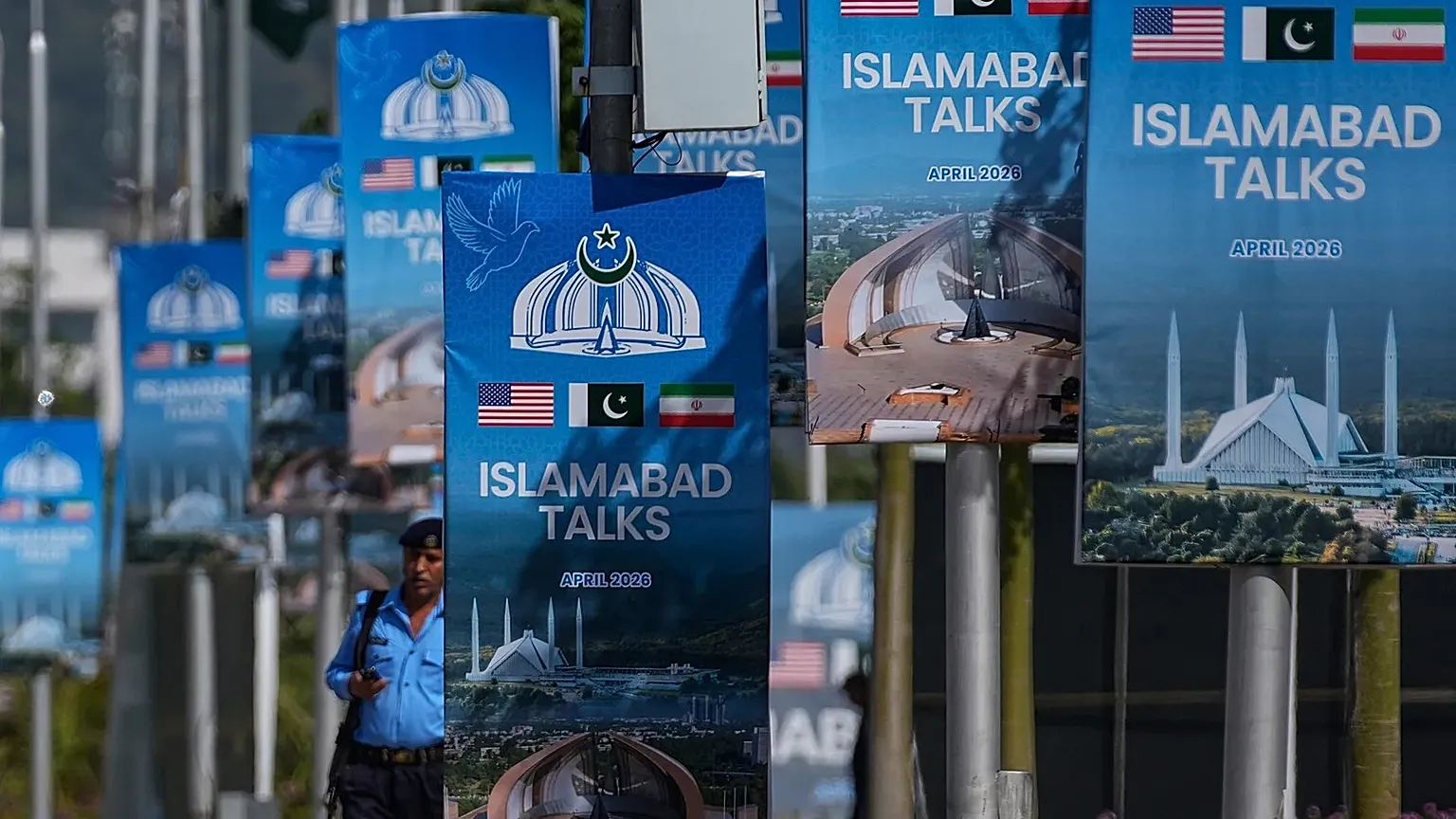
US Iran Pakistan talks face uncertainty in Islamabad
The US Iran Pakistan talks have entered a phase of uncertainty as US special envoy Steve Witkoff and Jared Kushner prepare to travel to Islamabad, while Iran insists no negotiations with Washington are currently planned. The developments come as diplomatic efforts intensify in Pakistan amid ongoing Middle East tensions, raising questions about the true purpose and potential outcome of the engagements.
Conflicting Signals Over US Iran Pakistan Talks
The emerging narrative around the US Iran Pakistan talks is marked by contradiction.
- The White House confirmed it is dispatching Steve Witkoff and Jared Kushner to Pakistan.
- US officials suggest the visit is tied to potential in-person discussions with Iranian representatives.
- However, Iranian state media has rejected claims that negotiations with the United States are scheduled.
According to Iranian authorities, Foreign Minister Abbas Araghchi, who is already in Islamabad, is not engaging in talks with US officials but is instead focused on bilateral relations between Iran and Pakistan.
This divergence has created uncertainty over whether the Pakistan peace talks are substantive diplomatic negotiations or merely exploratory contacts.
US Position: Push for Direct Engagement
From Washington’s perspective, the visit signals a willingness to pursue diplomacy.
The White House indicated that:
- Iran had shown interest in discussions
- Talks would likely occur in person
- The objective is to explore pathways toward reducing conflict
President Donald Trump, speaking to Reuters, stated that Iran is “making an offer and we’ll have to see”, suggesting that diplomatic channels remain open but outcomes are unclear.
This aligns with broader US efforts to maintain influence in ongoing US Iran diplomacy, particularly as tensions continue across the Middle East.
Iran’s Position: No Negotiations Planned
In contrast, Iran’s messaging remains cautious and controlled.
Iranian state media reports that:
- No negotiations with the US are planned during Araghchi’s visit
- Discussions in Islamabad are focused on Iran-Pakistan bilateral matters
- Any claims of direct talks with the US are premature
Iran has also indicated that Pakistan could act as a “bridge” to convey its considerations on de-escalation efforts.
This suggests that while Iran is not publicly committing to negotiations, it is leaving space for indirect diplomatic communication.
Why Pakistan Is Central to US Iran Pakistan Talks
Pakistan’s role is emerging as a critical dimension of the unfolding diplomacy.
Islamabad offers several strategic advantages:
- Neutral ground acceptable to both Washington and Tehran
- Established diplomatic channels with Iran
- Regional influence bridging South Asia and the Middle East
The country has reportedly been preparing for high-level engagements, including:
- Road closures in Islamabad for several days
- Security arrangements for visiting delegations
- Diplomatic coordination ahead of potential talks
Pakistan’s positioning reflects a broader trend in which regional actors are increasingly serving as intermediaries in global conflicts.
For more on how regional tensions are shaping global security, see the escalation of the Middle East conflict, which is disrupting global stability, on DSG HERALD.
Broader Context: Rising Middle East Tensions
The uncertainty surrounding the US Iran Pakistan talks comes amid escalating instability in the region.
Key developments include:
- Accusations between Israel and Hezbollah of violating the ceasefire agreements
- A three-week extension of the Israel-Lebanon ceasefire announced by Trump
- Continued concerns about wider regional conflict
Local perspectives reflect cautious optimism mixed with scepticism.
In Beirut, residents have expressed hope for peace but doubt about immediate stability, with some unwilling to return home despite ceasefire measures.
This broader environment complicates diplomatic efforts and raises the stakes for any potential breakthrough in Pakistan.
For deeper context, DSG HERALD previously reported on the Strait of Hormuz tensions and global implications, highlighting how regional instability can affect international security and trade.
What Happens Next Remains Unclear
The immediate outcome of the US Iran Pakistan talks remains uncertain.
Key unanswered questions include:
- Will US and Iranian officials meet directly in Islamabad?
- Is Pakistan acting as a mediator or merely a host?
- Can these engagements lead to tangible progress toward de-escalation?
While both sides appear interested in maintaining diplomatic channels, there is no confirmation that formal negotiations will take place.
As reported by BBC live coverage, which detailed the sequence of diplomatic movements and official statements, the situation remains fluid and subject to rapid change.
👉 Details remain unclear about the extent and format of any potential talks.
Diplomacy or Strategic Positioning?
The current developments suggest that the US Iran Pakistan talks may be as much about positioning as they are about negotiation.
- The US is signaling openness to dialogue
- Iran is maintaining strategic ambiguity
- Pakistan is positioning itself as a regional diplomatic hub
This layered dynamic reflects the complexity of modern geopolitics, where public statements and behind-the-scenes diplomacy often diverge.
The unfolding situation in Islamabad highlights the fragile and complex nature of US Iran diplomacy.
While the movement of high-level envoys signals intent, conflicting narratives from Washington and Tehran underscore the challenges of achieving clarity and consensus.
As Middle East tensions continue to evolve, Pakistan’s role may prove pivotal — whether as a mediator, facilitator, or strategic stage for broader geopolitical manoeuvring.
For now, the US Iran Pakistan talks remain a developing story, defined as much by uncertainty as by diplomatic ambition.
🔗 RELATED ARTICLES
Related coverage:
- Strait of Hormuz Crisis and Global Impact
Explores how tensions in key shipping routes influence global security and diplomacy. - Middle East Conflict Escalation Analysis
Provides context on how ongoing regional conflicts shape international negotiations. - US Naval Strategy in Gulf Waters
Examines military positioning and its implications for US-Iran relations.
About the Author