ECOWAS Court Judgments Nigeria: Enforcement Crisis Deepens
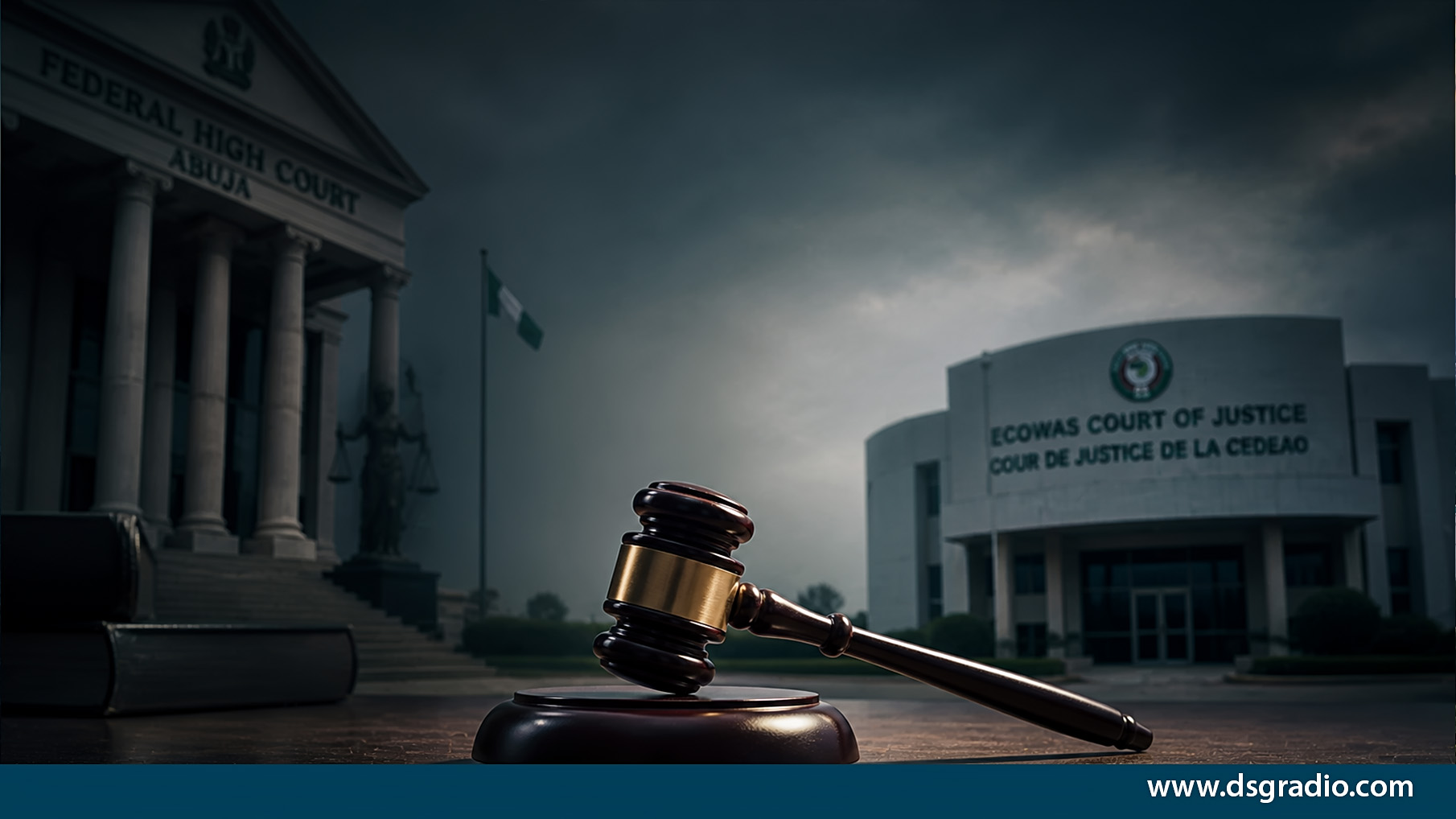
Nigeria’s failure to enforce over 40 ECOWAS Court judgments is intensifying concerns about accountability, press freedom, and the rule of law, with legal experts warning that persistent non-compliance is enabling human rights violations and weakening democratic safeguards.
At least 44 rulings delivered by the ECOWAS Court of Justice remain unenforced by Nigerian authorities, according to legal and civil society sources. The backlog includes landmark decisions involving journalists, victims of state violence, and individuals subjected to unlawful detention.
The trend, analysts say, reflects a broader governance challenge where international legal obligations exist on paper but lack domestic enforcement mechanisms.
Nigeria’s Growing List of Ignored ECOWAS Judgments
The ECOWAS Court of Justice, a regional tribunal established to address human rights violations and disputes among member states, has repeatedly ruled against Nigeria in cases involving unlawful detention, torture, and breaches of fundamental rights.
However, compliance remains inconsistent.
Among the most cited cases is that of journalist Agba Jalingo. In 2021, the court ruled that Nigeria violated the African Charter on Human and Peoples’ Rights by detaining him for 34 days under conditions described as arbitrary and abusive. The court ordered compensation of ₦30 million.
Years later, the judgment remains unenforced.
Similarly, a ruling tied to the October 2020 #EndSARS protests directed the Nigerian government to compensate three applicants, DJ Switch, Perpetual Kamsi, and Dabiraoluwa Adeyinka, with ₦2 million each for rights violations, including torture. As of March 28, 2025, ActionAid Nigeria identified this as the 44th unenforced judgment.
These cases illustrate a pattern of delayed or absent compliance, raising questions about Nigeria’s commitment to regional legal frameworks.
Impact on Journalists and #EndSARS Victims
The failure to implement ECOWAS court judgments has direct consequences for victims seeking justice.
For journalists, the implications are particularly significant. Arbitrary arrests, intimidation, and legal restrictions continue to shape the media environment, with press freedom in Nigeria facing sustained pressure.
Legal experts argue that when court-ordered remedies are ignored, it creates a climate where violations can recur without consequence.
Victims of the #EndSARS protests also remain affected. The protests, which drew global attention to allegations of police brutality, led to multiple legal actions. While ECOWAS Court rulings have provided a pathway to accountability, the lack of enforcement has limited their impact.
Key consequences include:
- Delayed justice for victims of torture and unlawful detention
- Reduced deterrence against future rights violations
- Erosion of public confidence in legal institutions
Security Votes and Transparency Concerns
Beyond individual cases, broader governance issues have emerged.
A legal analysis presented at a World Press Freedom Day event in May 2026 highlighted concerns about Nigeria’s annual security spending. Federal and state governments reportedly allocate approximately $670 million (about ₦242 billion) to “security votes.”
These funds are often classified and lack transparent reporting mechanisms.
Experts argue that opacity in security spending contributes to systemic accountability gaps, making it difficult to trace how resources are used and whether they address underlying security challenges.
Proposed reforms include:
- Publishing detailed data on security expenditures
- Establishing independent accountability frameworks
- Strengthening civil society oversight
Without such measures, analysts warn, financial opacity could continue to undermine both security outcomes and public trust.
Legal Experts Warn of Democratic Backslide
Legal scholar and Media Law Centre Director Richard Akinnola has warned that persistent disregard for ECOWAS court judgments in Nigeria represents a deeper institutional problem.
Speaking at a programme organised by the Socio-Economic Rights and Accountability Project (SERAP) and the Nigerian Guild of Editors (NGE), Akinnola emphasised that non-compliance weakens the rule of law and encourages repeat violations.
He also criticised restrictions on media access in high-profile legal proceedings, including the ongoing trial of former Kaduna State Governor Nasir El-Rufai. The exclusion of journalists from court sessions, he argued, undermines transparency and contradicts constitutional principles.
“Any judge or magistrate that prevents a journalist from accessing court proceedings is acting outside constitutional bounds,” he said, noting that the case involves corruption allegations rather than national security issues.
Details of the proceedings remain limited, and this could not be independently verified.
Why Enforcement Remains Weak
Experts point to several structural factors behind Nigeria’s non-compliance with ECOWAS court judgments:
- Lack of domestic legal mechanisms to enforce regional rulings
- Limited political will to implement judgments involving state liability
- Weak coordination between federal agencies
- Absence of sanctions for non-compliance
Unlike national courts, the ECOWAS Court relies on member states to voluntarily enforce its decisions. When enforcement is delayed or ignored, victims have limited recourse.
This structural gap has been highlighted in multiple international assessments of Nigeria’s human rights violations.
International Implications for Nigeria
Nigeria’s reputation as a regional leader is also at stake.
As a key member of ECOWAS, Nigeria plays a central role in promoting democratic governance and human rights across West Africa. However, continued non-compliance with court rulings risks undermining its credibility.
International observers have noted that failure to enforce judgments could:
- Weaken Nigeria’s influence in regional legal frameworks
- Affect investor confidence in rule-of-law protections
- Complicated diplomatic engagements on governance issues
According to a report by civil society organisations, they have called for coordinated action to compel enforcement, including direct engagement with the Attorney-General of the Federation.
The Role of Civil Society and Next Steps
Civil society groups are increasingly stepping in to bridge the gap between legal rulings and implementation.
Advocates have proposed:
- Legal pressure campaigns targeting enforcement agencies
- Public accountability initiatives
- Expanded legal aid for victims
There are also calls for stronger collaboration between media organisations, human rights groups, and international partners.
The goal, analysts say, is to ensure that ECOWAS court judgments in Nigeria translate into tangible outcomes rather than remaining symbolic victories.
Can Accountability Be Restored?
The enforcement crisis surrounding ECOWAS court judgments in Nigeria raises fundamental questions about governance and justice.
While legal frameworks exist, their effectiveness depends on political will and institutional capacity. Without meaningful reforms, experts warn that non-compliance could continue to erode trust in both national and regional systems.
For victims, the stakes remain high.
Justice delayed or denied risks becoming the norm rather than the exception.
🔗 Recommended Coverage:
- Mali Security Crisis Tests Russia Alliance Strength
Examines governance and security accountability issues in West Africa, offering regional context to Nigeria’s enforcement challenges. - Benin Election 2026: Wadagni Leads Race
Provides insight into democratic processes in West Africa, contrasting electoral integrity with rule-of-law concerns. - FG Files Treason Charges Against Sylva, Others
Highlights Nigeria’s legal enforcement priorities, relevant to discussions on judicial consistency. - Tinubu Seeks Senate Approval for $516M Loan
Explores governance and financial accountability, linking to broader transparency concerns raised in security spending debates.
About the Author