DIEZANI ALISON-MADUEKE ACQUITTAL ENDS HIGH-PROFILE UK BRIBERY TRIAL
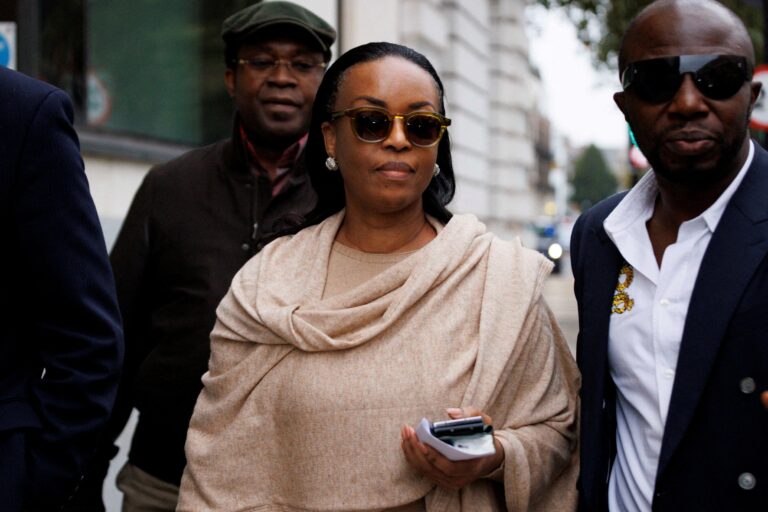
The Diezani Alison-Madueke acquittal has brought to an end one of the most closely watched international corruption cases involving a former Nigerian public official, after a jury at Southwark Crown Court in London found the former Petroleum Minister not guilty on all six charges. The verdict, delivered on Wednesday after more than 46 hours of deliberation, concludes a legal battle that lasted more than a decade and carried significant implications for anti-corruption enforcement, Nigeria’s oil sector, and international efforts to prosecute alleged financial crimes involving public officials.
Jury Clears Former Nigerian Oil Minister
Diezani Alison-Madueke, 65, served as Nigeria’s Minister of Petroleum Resources between 2010 and 2015 under former President Goodluck Jonathan. During that period, she became one of the most influential figures in Nigeria’s energy industry and later made history as the first woman to serve as president of the Organisation of the Petroleum Exporting Countries (OPEC).
British prosecutors accused Alison-Madueke of accepting benefits and luxury services from wealthy oil executives seeking favourable treatment in relation to business interests in Nigeria’s oil and gas industry. The allegations formed the basis of five counts of accepting bribes and one count of conspiracy to commit bribery.
Throughout the proceedings, Alison-Madueke denied all allegations and maintained that she neither solicited nor accepted bribes.
Following months of courtroom arguments and extensive jury deliberations, the court returned unanimous not-guilty verdicts on all charges.
Diezani Alison-Madueke Acquittal Marks Major Setback for Investigators
The Diezani Alison-Madueke acquittal represents a significant setback for British authorities, who had pursued corruption allegations against the former minister for more than 13 years.
Investigators argued that prominent oil industry figures provided luxury accommodations, travel arrangements, and other benefits to Alison-Madueke in exchange for access to lucrative opportunities in Nigeria’s petroleum sector.
However, the prosecution faced challenges in convincing jurors that the alleged benefits constituted criminal bribery under UK law.
A central issue throughout the trial was whether prosecutors could establish a direct connection between the alleged gifts and any official decisions made by Alison-Madueke while serving in government.
According to reports presented in court, prosecutors were unable to demonstrate that contracts were awarded in exchange for alleged benefits received from oil executives.
Co-Defendants Also Cleared
The trial involved two additional defendants.
Oil industry executive Olatimbo Ayinde, 54, faced charges relating to bribery and bribery of a foreign public official.
Meanwhile, Alison-Madueke’s brother, Doye Agama, 69, was charged with conspiracy to commit bribery in connection with alleged payments linked to a church organisation.
Both defendants denied wrongdoing throughout the proceedings.
The jury ultimately acquitted Ayinde and Agama, along with Alison-Madueke, clearing all three defendants of the charges brought against them.
Defence Raised Questions About Missing Evidence
One of the most significant themes of the trial was defence lawyers’ claims that crucial evidence had not been made available to the court.
Lawyers representing Alison-Madueke argued that documents allegedly capable of supporting her innocence were either missing or never produced during the prosecution process.
The defence maintained that records existed showing reimbursements for expenses allegedly paid on her behalf during official government-related activities.
Alison-Madueke also argued that Nigerian government officials operating overseas often relied on third-party logistical support and that such arrangements were not unusual during official assignments.
The former minister told the court that she had never requested or sought bribes and insisted that accusations against her had misrepresented routine interactions within government and business circles.
Why the Case Attracted International Attention
The case extended far beyond a standard criminal proceeding.
Alison-Madueke was one of Africa’s most prominent energy officials during her time in government. As head of Nigeria’s petroleum ministry, she oversaw policies affecting one of the world’s largest oil-producing countries.
Nigeria’s petroleum sector remains the backbone of government revenue and foreign exchange earnings, making allegations involving former energy officials especially significant.
The trial, therefore, became a test of international anti-corruption cooperation involving agencies in both the United Kingdom and Nigeria.
For years, investigators described the case as an important effort to demonstrate that alleged corruption involving politically exposed persons could be pursued across international borders.
The eventual acquittal is likely to prompt debate among legal experts, anti-corruption advocates, and policymakers regarding the effectiveness of such investigations and the evidentiary standards required to secure convictions.
Implications for Nigeria
Although the verdict was delivered in London, its political and public significance extends to Nigeria.
The allegations against Alison-Madueke have been a recurring feature of public discourse since she left office in 2015. Her tenure coincided with a period of intense scrutiny over governance, transparency, and accountability within Nigeria’s oil industry.
The court’s decision does not eliminate broader concerns regarding corruption challenges that have historically affected the sector. However, it does underscore the principle that criminal allegations must be supported by sufficient evidence before convictions can be secured.
For many Nigerians, the verdict is likely to reignite discussions about accountability, institutional reform, and the long-running efforts to improve transparency within the country’s petroleum industry.
The outcome may also influence perceptions of ongoing anti-corruption initiatives pursued by both domestic and international agencies.
For further insight into international anti-corruption enforcement challenges, see our analysis of Nigeria’s evolving global corruption investigations
Questions About International Anti-Corruption Enforcement
The Diezani Alison-Madueke acquittal is expected to fuel broader conversations about how corruption cases involving public officials are investigated and prosecuted across jurisdictions.
The trial highlighted several recurring challenges faced by investigators, including:
- Access to evidence located in multiple countries.
- Reliance on foreign law-enforcement agencies.
- Delays associated with international cooperation.
- Complex financial transactions crossing borders.
- Difficulties securing witness testimony.
Defence lawyers repeatedly questioned why certain individuals allegedly involved in the case were never prosecuted and why some evidence was unavailable to the court.
Those issues became central points of contention throughout the proceedings and may continue to attract scrutiny in legal and policy circles.
Alison-Madueke Says “Nightmare Is Over”
Following the verdict, Alison-Madueke welcomed the jury’s decision.
In a statement issued after the ruling, she described the case as a long and painful ordeal that had affected both her and her family.
She said the legal process had lasted more than a decade and expressed relief that the proceedings had finally concluded.
The statement marked the end of a chapter that began shortly after she left office and evolved into one of the most widely followed corruption cases involving a former African cabinet minister.
What Happens Next?
The verdict closes the criminal case against Alison-Madueke in the United Kingdom, but its wider implications are likely to be discussed for years.
Legal analysts are expected to examine what the acquittal reveals about the evidentiary burden required in complex international bribery cases.
Anti-corruption advocates may also review lessons from the lengthy investigation and consider how future cases involving politically exposed persons can be strengthened.
For Nigeria, the ruling arrives as debates continue over governance reforms, transparency measures, and the future direction of the country’s vital oil industry.
The outcome serves as a reminder that while allegations can generate international attention, criminal convictions ultimately depend on whether prosecutors can prove their case beyond a reasonable doubt.
As reported by BBC and Reuters, the jury’s decision ends one of the most significant UK corruption prosecutions involving a former Nigerian government official.
Recommended Coverage
FG Treason Case: Key Developments in the Trial Against Sylva and Others
A look at one of Nigeria’s closely watched legal proceedings and its implications for governance and accountability.
Tinubu’s $516 Million Loan Request Explained
Examines the proposed borrowing plan, legislative approval process, and economic implications.
Apocalypto 2: Separating Facts From Viral Rumours
A breakdown of claims surrounding the reported sequel and what is actually known.
Truth Behind the Apocalypto 2 Speculation
Explores the online discussion and verifies available information surrounding the franchise.
About the Author