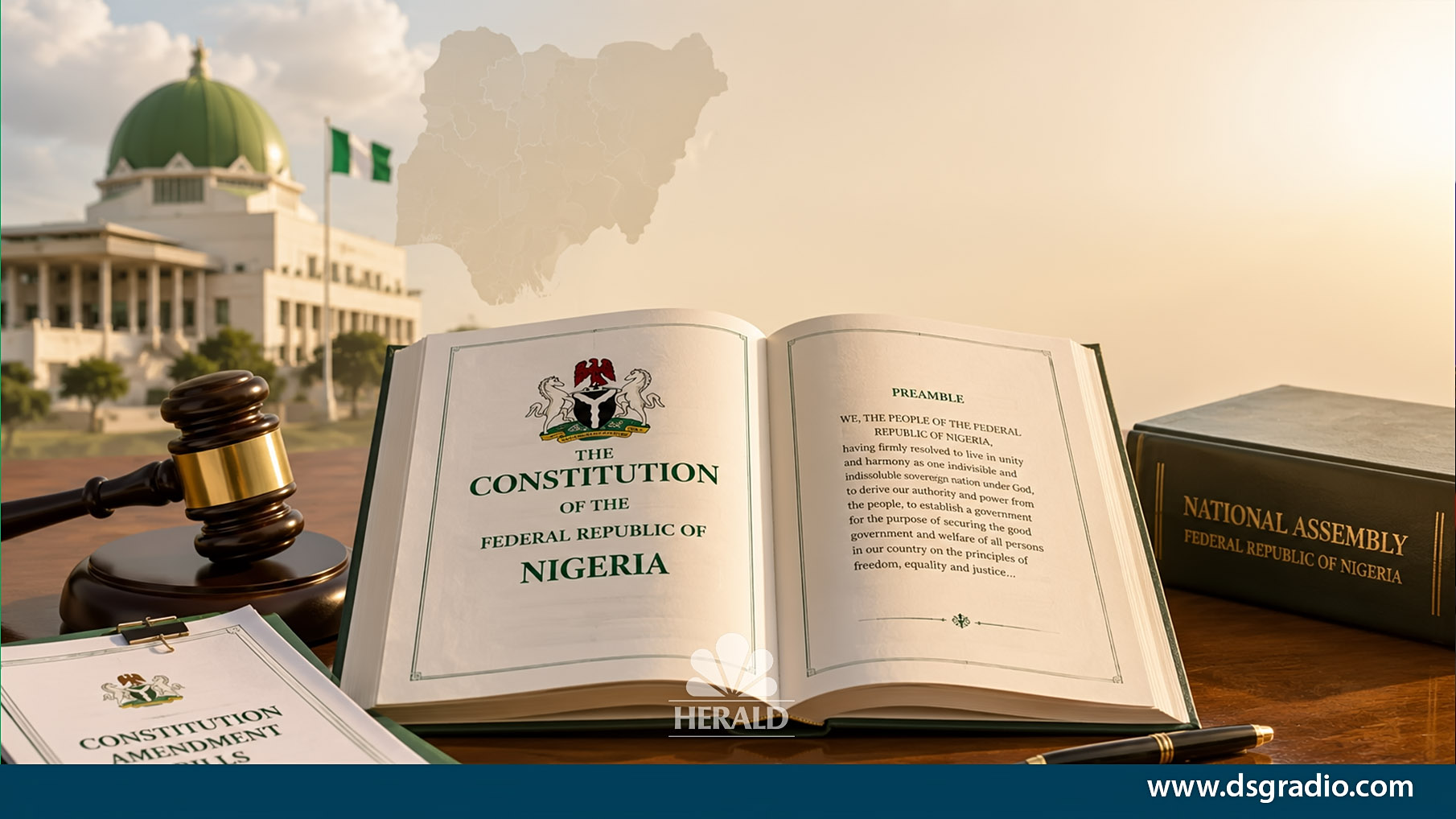
Constitution Amendment Bills: NASS Prioritises 37 Reforms
ABUJA — Nigeria’s National Assembly has identified 37 Constitution Amendment Bills for priority legislative action as lawmakers intensify efforts to review key aspects of the 1999 Constitution. The proposals, selected from about 260 constitutional review bills that have already passed second reading, cover major national issues including state police, electoral reforms, local government autonomy, judicial efficiency, fiscal accountability, women’s political representation and the devolution of powers.
The development marks one of the most significant constitutional reform exercises in recent years and could reshape governance, security, elections, and public administration across Nigeria if it is eventually approved by both the National Assembly and the required number of state legislatures.
Why the Constitution Amendment Bills Matter
The latest move by the Senate and House of Representatives Committees on Constitution Review reflects growing pressure for structural reforms across the country.
For years, stakeholders, including state governments, civil society groups, legal experts, traditional institutions and political parties, have argued that several provisions of the 1999 Constitution no longer adequately address Nigeria’s evolving governance and security challenges.
The prioritised Constitution Amendment Bills touch on areas that have repeatedly dominated national conversations, particularly insecurity, electoral integrity, fiscal transparency and grassroots governance.
If passed and ratified, some of the amendments could significantly alter the relationship among federal, state, and local governments while introducing new accountability mechanisms in public institutions.
Constitution Amendment Bills Focus on Security and State Police
Among the most closely watched proposals are those relating to policing and national security.
The constitutional review committees have prioritised four security-related reforms:
- Establishment of state police
- Creation of State Police Service Commissions
- Strengthening federal-state policing cooperation
- Placing armed forces funding on the first-line charge
The state police proposal has generated intense national debate for several years.
Supporters argue that decentralised policing would allow states to respond more effectively to local security threats such as banditry, kidnapping, communal conflicts and terrorism.
Advocates believe governors and local authorities possess better knowledge of security challenges within their jurisdictions and can deploy resources more efficiently.
Critics, however, have warned about the possibility of political abuse, concerns over funding and fears that state-controlled police structures could be used against political opponents.
The proposal gains additional significance at a time when lawmakers continue to seek solutions to Nigeria’s security challenges.
For further background, readers may also explore nigeria-security-crisis-reps-push-state-police-forest-guards/
Electoral Reforms Receive Major Attention
Electoral reforms constitute another major component of the constitutional review process.
The National Assembly has prioritised bills seeking to:
- Reform State Independent Electoral Commissions (SIECs)
- Introduce independent candidacy
- Establish an Electoral Offences Commission
Political observers have long argued that local government elections conducted by many state electoral bodies often lack credibility and competitiveness.
Reforms targeting SIECs are expected to spark renewed discussions about electoral transparency and democratic accountability at the grassroots level.
Meanwhile, the proposed introduction of independent candidacy could expand political participation by allowing qualified individuals to contest elections without party sponsorship.
The Electoral Offences Commission proposal is designed to strengthen enforcement mechanisms against electoral malpractice, including vote-buying, voter intimidation, and election-related violence.
Analysts say such reforms could improve public confidence in future elections if effectively implemented.
Local Government Autonomy Returns to the National Agenda
One of the most consequential groups of Constitution Amendment Bills focuses on local government administration.
The proposals include:
- Financial autonomy for local governments
- Constitutional protection of local government councils
- Expanded powers and responsibilities for local authorities
Local government autonomy has remained a recurring issue in Nigeria’s governance debate.
Supporters argue that empowering local councils financially and administratively could improve service delivery, infrastructure development and grassroots democracy.
The issue gained renewed prominence following recent legal and policy discussions concerning direct allocation of resources to local governments.
If adopted, the reforms could redefine fiscal relationships among federal, state and local governments.
Women’s Representation and Inclusive Governance
The constitutional review process also seeks to address concerns about gender representation in public office.
Lawmakers have prioritised bills proposing:
- Special seats for women in the Senate
- Special seats for women in the House of Representatives
- Special seats for women in State Houses of Assembly
Nigeria continues to record relatively low female representation in elective offices compared to many countries globally.
Supporters of affirmative representation argue that constitutional safeguards could help address longstanding barriers to women’s political participation.
In addition, lawmakers are considering a proposal for citizenship by investment, which could potentially expand pathways for foreign investors seeking stronger ties with Nigeria.
Judicial Reforms Aim to Improve Efficiency
Several proposed amendments target Nigeria’s judicial system.
The bills seek to:
- Restrict and streamline appeals to the Supreme Court
- Improve timelines for election petitions
- Enhance judicial administration
The Supreme Court has frequently faced criticism over growing case backlogs and delays.
Legal experts have repeatedly suggested constitutional reforms to reduce congestion and ensure faster resolution of disputes.
Election petition reforms are also expected to attract significant attention, particularly following recent electoral cycles in which legal battles extended long after elections concluded.
Supporters argue that faster adjudication would strengthen democratic stability and public confidence in the electoral process.
Fiscal Accountability and Governance Reforms
Another major theme within the Constitution Amendment Bills is public financial accountability.
The National Assembly has prioritised measures aimed at:
- Strengthening the Auditor-General’s Office
- Compelling timely submission of financial statements
- Mandating publication of audit reports
- Enhancing government financial accountability
Transparency advocates have long called for stronger constitutional safeguards to improve oversight of public spending.
If enacted, the reforms could strengthen institutional mechanisms for monitoring government finances and ensuring compliance with accountability standards.
The proposals arrive amid increasing public scrutiny of government borrowing and fiscal management.
For related coverage, readers may also review: Tinubu’s $516 Million Loan Request Heads to Senate Review
Devolution of Powers Back on the Reform Agenda
The constitutional review exercise also revisits longstanding debates about Nigeria’s federal structure.
Among the proposals are:
- Moving tourism from the Exclusive Legislative List to the Concurrent Legislative List
- Devolving additional powers to states
Supporters of devolution argue that states should possess greater authority over economic development, infrastructure and resource management.
Advocates believe decentralisation could improve governance efficiency and stimulate regional growth.
Opponents, however, caution that uneven institutional capacity across states could create implementation challenges.
The debate remains central to discussions about restructuring and federalism in Nigeria.
Traditional Institutions Seek Constitutional Recognition
Traditional rulers may gain a stronger constitutional role if the proposed amendments succeed.
The bills seek to:
- Establish State Councils of Traditional Rulers
- Grant constitutional recognition to traditional institutions
Traditional leaders continue to play influential roles in conflict resolution, cultural preservation and community development across Nigeria.
Supporters argue that constitutional recognition could formalise existing contributions and strengthen collaboration between traditional institutions and government authorities.
Institutional Reforms and Checks on Executive Power
Several amendments aim to strengthen democratic institutions and accountability.
These include proposals to:
- Separate the legal fate of governors and deputy governors regarding qualification and disqualification
- Remove certain executive law-making powers
- Strengthen checks and balances within government
Governance experts say such reforms could contribute to institutional stability and reinforce constitutional safeguards against abuse of power.
Technical Corrections and Administrative Changes
The constitutional review package also contains several technical amendments involving local government names.
The proposals seek to:
- Change Ibeno to Ibono
- Change Aiyekire to Aiyedire
- Change Jaba to Ham
- Correct Ibadan Central Local Government Area to Ibadan North-East
While administrative in nature, such corrections are considered important for legal clarity and constitutional consistency.
What Happens Next?
Despite being prioritised, the Constitution Amendment Bills are still far from becoming law.
Under Nigeria’s constitutional amendment process, each proposal must:
- Pass both chambers of the National Assembly.
- Secure support from at least two-thirds of the State Houses of Assembly.
- Complete all constitutional requirements before taking effect.
This means extensive legislative negotiations and stakeholder consultations are likely in the months ahead.
Some proposals, particularly state police, women’s reserved seats and devolution of powers, are expected to generate robust debate across political, legal and civil society circles.
Broader Implications for Nigeria
The constitutional review exercise represents more than a routine legislative process.
Many of the proposed reforms address long-standing concerns surrounding governance efficiency, security management, democratic participation and institutional accountability.
Whether the amendments ultimately succeed will depend on political consensus across federal and state levels.
However, the prioritisation of these bills signals that lawmakers are prepared to revisit some of Nigeria’s most sensitive constitutional questions at a time when citizens continue to demand stronger institutions, improved security and more effective governance.
The coming legislative stages will determine whether these Constitution Amendment Bills become transformative reforms or remain proposals within Nigeria’s ongoing constitutional debate.
Recommended Coverage
State Police and Forest Guards Gain Momentum in Security Debate
Examines growing legislative efforts to decentralise policing and strengthen local security architecture.
Questions Raised Over Nigeria’s Space Agency Performance
Explores accountability concerns surrounding public institutions and government oversight mechanisms.
Senate Reviews Tinubu’s $516 Million Loan Proposal
Provides context on fiscal governance, public borrowing and legislative scrutiny of government finances.
About the Author