Iran Leadership Crisis Deepens Amid IRGC Power Claims
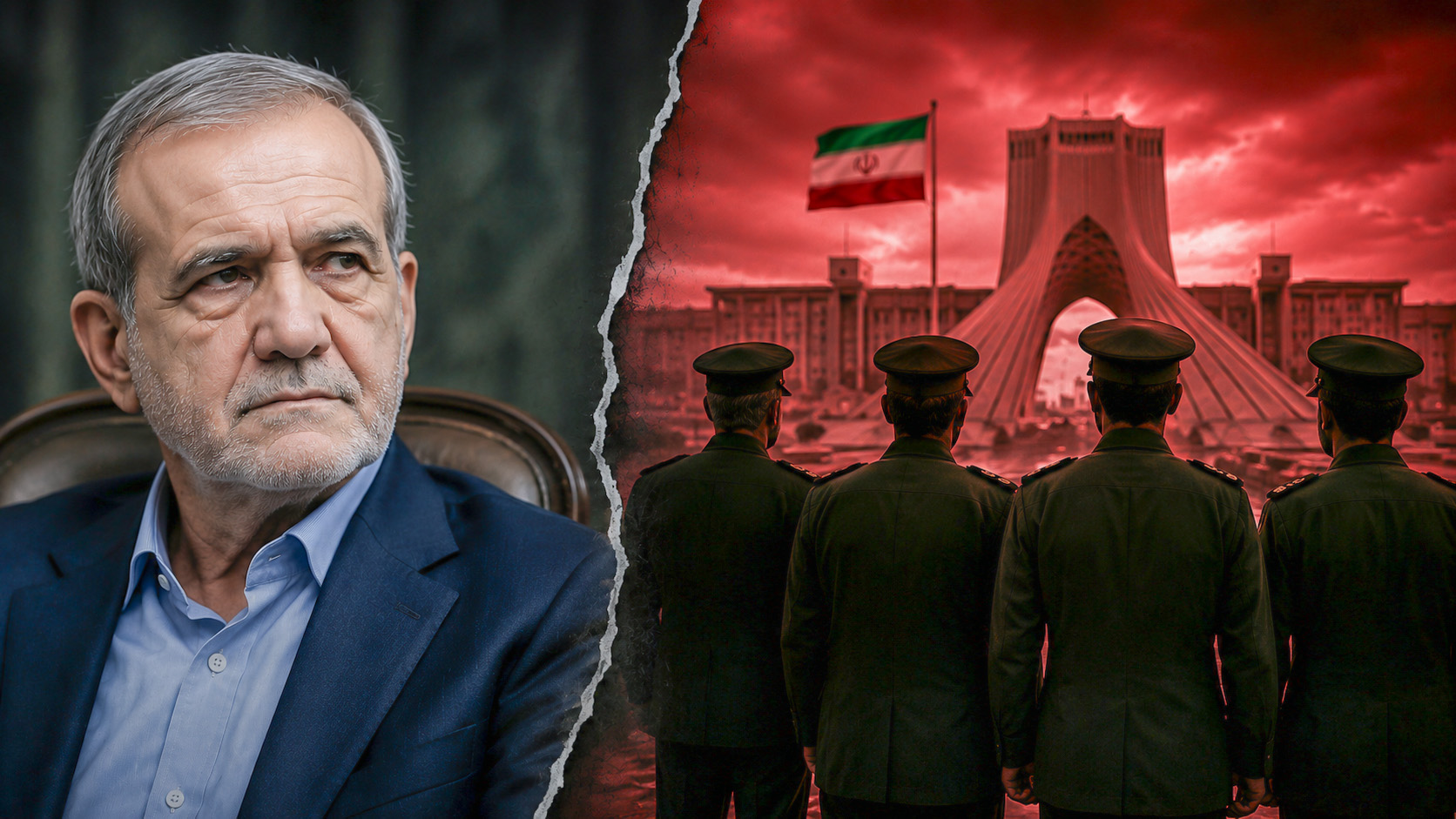
The Iran leadership crisis has entered a potentially significant new phase after reports emerged that Iranian President Masoud Pezeshkian submitted a resignation letter to the Office of the Supreme Leader, arguing that his administration has been sidelined from major state decisions while hardline elements within the Islamic Revolutionary Guard Corps (IRGC) have assumed growing influence over key government affairs. The reported move, disclosed on Sunday by Iran International and echoed by other international media outlets, highlights what analysts describe as one of the most serious internal power struggles in Iran’s political establishment in recent years.
If confirmed, the resignation request would represent far more than a dispute between a president and political rivals. It would point to a broader contest over who truly exercises authority in Iran during a period marked by economic pressure, diplomatic uncertainty, regional tensions, and heightened international scrutiny.
While Iranian authorities have not publicly confirmed the contents of the reported letter, the allegations have sparked fresh debate about the balance of power between elected institutions and the country’s powerful military-security establishment.
A Resignation That Signals More Than Personal Frustration
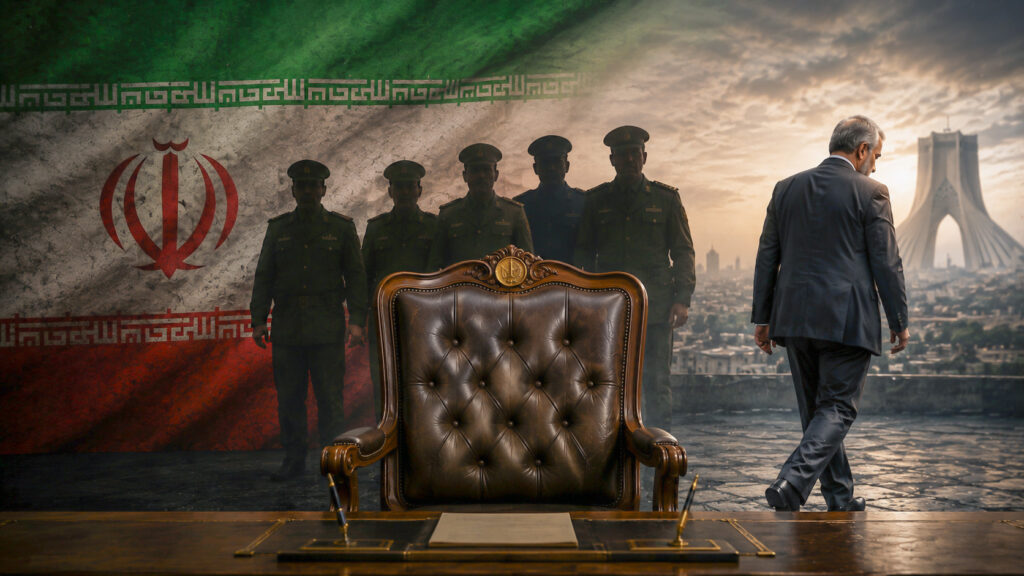
According to reports cited by Iran International, Pezeshkian informed the Office of the Supreme Leader that both he and his government had effectively been excluded from critical decision-making processes. The reported letter claimed that the resulting vacuum enabled hardline factions within the IRGC to expand their influence over state affairs.
The president reportedly argued that under such conditions, he could no longer fulfil his constitutional responsibilities or effectively manage the government. As a result, he requested permission to step down immediately.
The significance of the development lies not simply in the resignation itself but in the reasoning behind it.
Political resignations occur in many countries, but it is relatively rare for an Iranian president to reportedly cite institutional paralysis and military encroachment as the central justification for leaving office.
The allegations, if accurate, suggest a growing disconnect between Iran’s elected executive branch and the powerful institutions that shape national security and strategic policy.
Understanding the Iran Leadership Crisis
The current Iran leadership crisis cannot be understood without examining the structure of the Iranian political system.
Iran operates under a hybrid model that combines elected institutions with powerful unelected bodies. While the president oversees many government functions, ultimate authority rests with the Supreme Leader, who exercises broad influence over security, foreign policy, intelligence, and military affairs.
The IRGC occupies a unique position within this structure.
Created after the 1979 Islamic Revolution, the Revolutionary Guard was originally established to protect the revolutionary system. Over time, however, it evolved into one of the most influential institutions in Iran.
Today, the IRGC’s influence extends beyond military operations. The organisation maintains significant involvement in economic projects, infrastructure development, strategic industries, intelligence operations, and foreign policy initiatives.
This extensive reach has long fueled debates over the balance between civilian governance and military influence inside the country.
Why the IRGC Influence Matters
The central claim in the reported resignation letter concerns IRGC influence over government decision-making.
According to sources cited in the reports, Pezeshkian believed major decisions were increasingly being made outside the traditional civilian framework. The reports further suggested that restrictions on presidential authority had gradually expanded over recent months.
This allegation strikes at the heart of governance questions inside Iran.
Critics of expanding military influence argue that elected institutions lose effectiveness when executive authority becomes constrained by competing centers of power. Supporters of the security establishment, however, often argue that national security challenges require centralised and decisive leadership.
The debate has become increasingly relevant amid regional conflicts, sanctions pressure, economic challenges, and diplomatic tensions involving Iran and major world powers.
Iran Power Struggle Comes Into Public View
One of the most notable aspects of this episode is that the alleged disagreements have moved into public view.
Reports cited anonymous sources who claimed that differences between Pezeshkian and influential figures within the IRGC centred partly on how recent conflicts were managed and the economic consequences that followed.
Although such claims could not be independently verified, they reflect broader concerns about decision-making during periods of national crisis.
The reported dispute appears to involve competing visions regarding governance priorities, economic management, and foreign policy direction.
For international observers, the controversy offers a rare glimpse into tensions that are often discussed behind closed doors rather than in public.
Economic Pressures Add to Political Tensions
The Iran leadership crisis is unfolding against a difficult economic backdrop.
Iran continues to face inflationary pressures, currency challenges, investment constraints, and the lingering effects of international sanctions.
Economic difficulties frequently increase political pressure on governments because citizens often expect elected leaders to improve living standards.
When political institutions become divided, implementing economic reforms becomes more difficult.
The reports suggest that Pezeshkian believed political deadlock was obstructing both governance and policy implementation. Sources cited by Iran International claimed that the administration had become trapped in an executive stalemate, hindering negotiations and cabinet restructuring efforts.
Such conditions can create uncertainty for businesses, investors, and international partners seeking clarity about future policy direction.
Implications for Foreign Policy
The reported resignation also carries potential foreign policy implications.
Iran remains a central player in Middle Eastern geopolitics. Its decisions affect regional security dynamics, energy markets, diplomatic negotiations, and broader international relations.
Political uncertainty at the top of government could complicate diplomatic initiatives involving Iran and foreign governments.
Recent reports have highlighted ongoing discussions concerning security arrangements, sanctions issues, and broader regional stability.
If policymakers within Iran are divided over strategic priorities, international negotiations may become more complex.
Foreign governments are therefore likely to monitor developments closely to determine whether the reported tensions represent a temporary dispute or a deeper structural shift in governance.
Questions Surrounding Supreme Leader Authority
Another notable dimension of the story involves Supreme Leader Mojtaba Khamenei.
According to reports, it remains unclear whether the resignation request will be accepted.
The decision carries considerable political significance.
Acceptance could trigger a new phase of political uncertainty, while rejection could require a compromise to restore institutional stability.
Reports cited by international media have also highlighted claims from U.S. officials regarding the Supreme Leader’s highly restricted location and communication arrangements, though those reports remain separate from the resignation issue itself.
Regardless of the outcome, attention is likely to remain focused on how leadership decisions are made amid heightened domestic and regional pressures.
What This Means for the Middle East
The consequences of an escalating Iran power struggle could extend beyond Iran’s borders.
Iran’s strategic position means developments inside the country often influence broader regional calculations.
Governments across the Middle East closely monitor changes in Iranian leadership dynamics because these shifts can affect security partnerships, diplomatic engagement, and regional competition.
Energy markets may also react to signs of political instability within major regional powers.
Although no immediate disruption has been reported, investors generally pay close attention to leadership uncertainty in countries that play important roles in global energy supply chains.
Why Africa and Nigeria Should Pay Attention
For African countries, including Nigeria, developments inside Iran matter for several reasons.
First, geopolitical instability in major oil-producing regions can influence global energy markets. Changes in energy prices can affect government revenues, transportation costs, inflation trends, and consumer spending patterns across Africa.
Second, political developments in Iran often influence broader international relations among the United States, China, Russia, and European powers.
Many African nations maintain economic or diplomatic relationships with these countries, meaning broader geopolitical shifts can indirectly affect African policy choices.
Third, international investors frequently evaluate political risk across multiple regions simultaneously. Significant instability in one strategic region can influence global investment sentiment.
For Nigeria specifically, policymakers and analysts often monitor developments in the Middle East because of their potential impact on oil prices and global economic conditions.
What Happens Next?
Several scenarios are possible.
The first is that the resignation request is rejected, leading to ongoing behind-the-scenes negotiations.
The second is that the resignation is accepted, opening a new chapter in Iran’s political landscape.
A third possibility is that the controversy prompts institutional adjustments to reduce tensions between civilian authorities and security institutions.
At present, however, many critical questions remain unanswered.
Iranian authorities have not publicly confirmed the details reported by Iran International. As a result, several aspects of the story remain based on claims attributed to anonymous sources and cannot be independently verified.
What is clear is that the reported resignation has intensified scrutiny of the relationship between Iran’s elected government and the institutions that wield significant influence behind the scenes.
A Defining Moment for Iran’s Political System
Whether Masoud Pezeshkian ultimately leaves office or not, the episode has already drawn attention to deeper questions surrounding governance in Iran.
The reported allegations suggest that the current Iran leadership crisis may be less about one individual and more about the evolving distribution of power within the Islamic Republic.
As regional tensions, economic pressures, and diplomatic challenges continue to test the country, the balance between elected authority and security institutions is likely to remain a central issue.
The coming days may determine not only the future of Pezeshkian’s presidency but also how power is exercised within one of the Middle East’s most influential states.
Recommended Coverage
Mojtaba Khamenei Injuries Raise Leadership Questions
Explores growing speculation surrounding Iran’s leadership structure and succession dynamics.
Middle East Firestorm: What It Means for Africa
Examines how regional conflicts and geopolitical tensions could affect African economies and security.
Jerusalem and the Roots of Middle East Conflict
Provides historical context for understanding recurring tensions across the region.
US-Iran-Pakistan Talks Face Uncertainty
Looks at diplomatic challenges involving key regional and global actors.
About the Author