Court Ruling Sparks Wider Debate Over Nigeria Press Freedom Ahead Of 2027 Elections
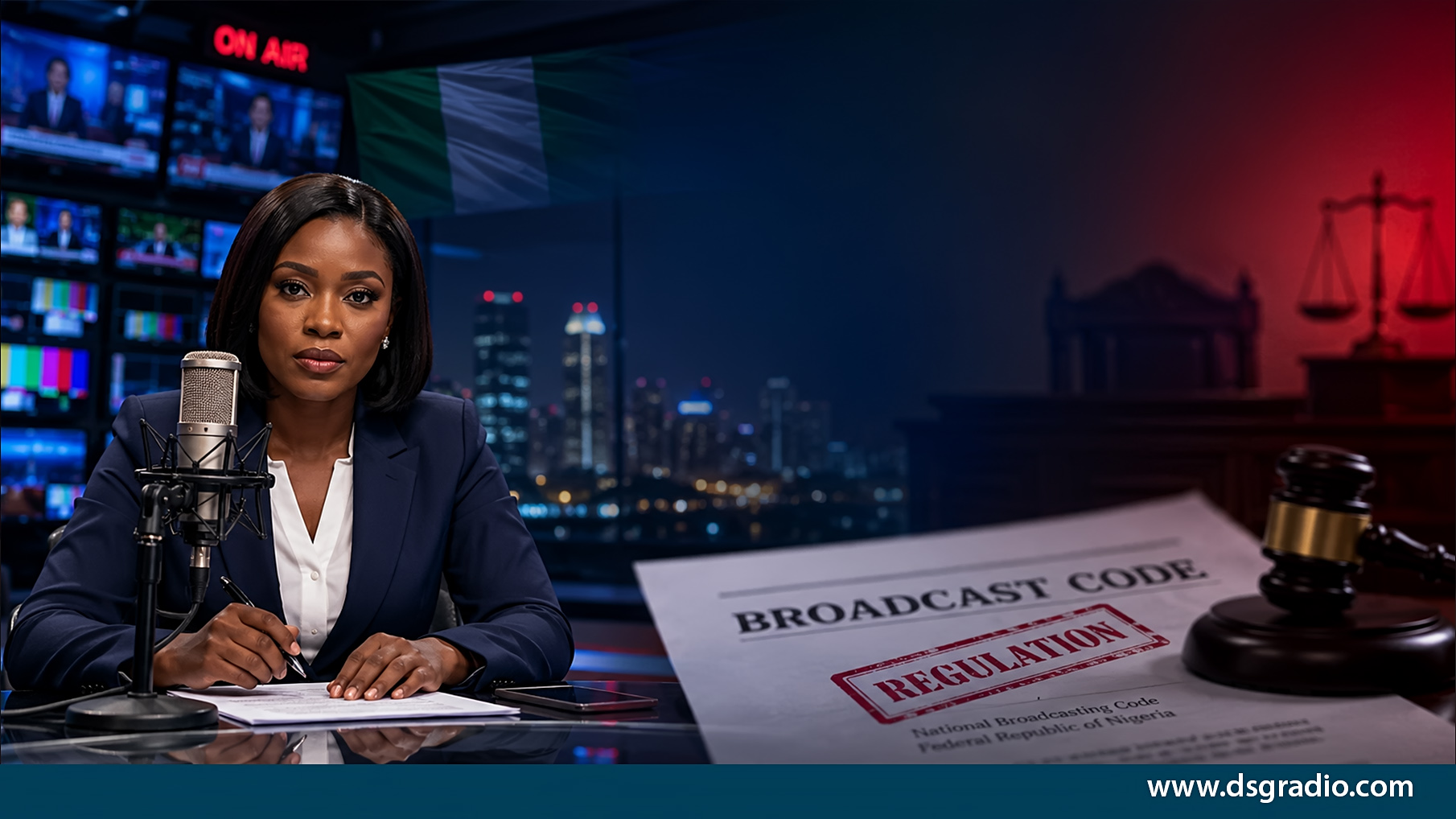
The Federal High Court in Lagos has restrained the National Broadcasting Commission (NBC) from sanctioning broadcast stations and presenters over opinions expressed on air, in a ruling that has intensified debates about press freedom, constitutional rights, and media regulation ahead of Nigeria’s 2027 general elections.
Justice Daniel Osiagor granted the interim injunction following an ex parte application filed by the Socio-Economic Rights and Accountability Project (SERAP) and the Nigerian Guild of Editors (NGE), who challenged what they described as the arbitrary enforcement of controversial provisions within the Nigerian Broadcasting Code.
The court ordered NBC to refrain from threatening, punishing, or sanctioning broadcasters for allegedly expressing personal opinions as facts, intimidating guests, or failing to maintain neutrality until the substantive suit is heard and determined.
The ruling has rapidly become one of Nigeria’s most closely watched legal confrontations involving media regulation, constitutional freedoms, and the future of public discourse in the country.
Why The SERAP NBC Case Matters
The lawsuit filed by SERAP and NGE questions whether sections of the Nigeria Broadcasting Code violate Section 39 of Nigeria’s 1999 Constitution, which guarantees freedom of expression and the right to receive and disseminate information without interference.
According to the applicants, the NBC’s interpretation of “neutrality,” “professionalism,” and “bullying” grants regulators excessive discretion that could suppress dissenting opinions and discourage open political debate.
The organisations argued that journalism inherently includes analysis, commentary, and opinion, especially during politically sensitive periods.
The legal challenge also comes at a critical period as Nigeria moves closer to the 2027 elections, where media narratives are expected to shape public opinion, political accountability, and voter engagement.
In their submission before the court, SERAP and NGE maintained that vague broadcasting regulations could create a climate of fear among television and radio presenters.
The groups warned that broadcasters might begin self-censoring to avoid fines, suspensions, or regulatory sanctions.
NBC Media Sanctions And The Battle Over Regulation
The dispute centres on controversial provisions in the 6th Edition of the Nigerian Broadcasting Code.
The NBC had previously issued formal notices warning broadcasters against:
- expressing personal opinions as facts,
- intimidating interview guests,
- and failing to maintain neutrality during programmes.
Critics argued that such provisions lacked precise legal definitions and could be selectively enforced.
Media advocates believe the regulations could weaken investigative journalism and reduce broadcasters’ ability to hold political leaders accountable.
The court’s interim injunction now temporarily blocks NBC from enforcing those contested provisions pending full judicial review.
The case has been adjourned until June 1, 2026, for the hearing of the motion on notice.
Nigeria Press Freedom Under Growing Scrutiny
The court ruling has renewed national and international attention on Nigeria’s press freedom climate.
Media stakeholders have repeatedly accused regulators and public institutions of using administrative tools to pressure journalists and broadcasters.
Recent controversies involving media restrictions, journalist arrests, and online speech regulation have intensified fears over shrinking civic space.
The latest ruling is already being viewed by many legal analysts as a constitutional test case that could shape the future relationship between regulators and the Nigerian media industry.
The dispute also mirrors broader global debates over balancing responsible broadcasting with freedom of expression.
Several democratic countries continue to grapple with questions surrounding misinformation, editorial independence, and state regulation of broadcast platforms.
In Nigeria, however, critics argue that unclear enforcement standards could become politically weaponised during election periods.
This concern is particularly significant because television and radio remain among the country’s most influential sources of political information.
As previously reported in DSG HERALD’s analysis of the NBC broadcasting code controversy involving editors and political criticism, tensions between regulators and media professionals have steadily escalated in recent years.
Constitutional Questions Raised By The Broadcast Code Dispute
Legal experts following the SERAP NBC Case say the core constitutional issue revolves around proportionality and legal certainty.
Under Nigerian constitutional law and international human rights principles, restrictions on speech must be:
- clearly defined,
- necessary,
- proportionate,
- and legally justified.
SERAP and NGE argued that the NBC provisions fail to meet these standards.
The groups also referenced Nigeria’s obligations under:
- Article 9 of the African Charter on Human and Peoples’ Rights,
- and Article 19 of the International Covenant on Civil and Political Rights.
Both treaties guarantee freedom of expression and access to information.
According to court filings, the applicants warned that a broad interpretation of “neutrality” could undermine democratic accountability and weaken public debate.
The organisations insisted that public-interest journalism often requires challenging political figures, interrogating government narratives, and presenting strong editorial analysis.
They argued that such functions should not automatically attract sanctions.
Implications For Nigeria’s 2027 Elections
Analysts say the timing of the legal confrontation is politically significant.
As Nigeria approaches another major electoral cycle, the role of broadcasters is expected to become increasingly central in:
- campaign coverage,
- political debates,
- voter education,
- and fact-checking operations.
Observers believe the court’s intervention could temporarily reassure broadcasters concerned about regulatory pressure during election reporting.
However, the final outcome of the substantive suit may ultimately define the legal boundaries of political commentary in Nigeria’s broadcast space.
Political communication experts warn that excessive regulation during election periods can reduce transparency and limit citizens’ access to competing viewpoints.
Others argue that broadcasters must still maintain professional standards to prevent disinformation and inflammatory speech.
The balance between regulation and free expression remains one of the central democratic questions raised by the ongoing Broadcast Code Dispute.
The debate also aligns with broader conversations around democratic accountability, judicial oversight, and institutional independence in Nigeria.
DSG HERALD previously examined related constitutional concerns in its report on how the free speech debate expanded following high-profile legal proceedings involving public criticism and government accountability.
SERAP And Editors Welcome Court Decision
Following the ruling, SERAP and NGE described the injunction as a victory for democracy, constitutionalism, and media independence.
The organisations stated that regulatory bodies must operate within constitutional limits and avoid transforming oversight into indirect censorship.
They further urged the NBC to immediately comply with the court order and review its regulations to align with constitutional guarantees and international human rights standards.
The groups also called on Nigerian authorities to create an environment where journalists can operate without intimidation or fear of reprisals.
According to the applicants, freedom of expression is a constitutional right and not a privilege to be granted or withdrawn by regulators.
As reported by the Independent Newspaper, the court ruled that NBC and its agents must refrain from imposing sanctions pending the determination of the substantive case.
What Happens Next
The substantive legal battle is expected to continue in the coming months as both parties prepare arguments on constitutional interpretation and regulatory authority.
If the court eventually strikes down the disputed provisions, the ruling could significantly reshape Nigeria’s broadcasting landscape and redefine how regulators interact with media organisations.
If the provisions are upheld, broadcasters may face renewed scrutiny regarding political commentary and editorial content.
For now, the interim injunction represents a temporary legal shield for broadcasters and presenters navigating an increasingly tense political and media environment.
The final judgment may become one of the most consequential media freedom decisions in Nigeria’s recent democratic history.
Recommended Coverage:
- Nigeria Senate Rules Spark Debate Over Legislative Power
This report examines growing constitutional and governance concerns within Nigeria’s political institutions. - SERAP Defamation Case Expands Free Speech Debate
The article explores how legal disputes involving public criticism continue to shape Nigeria’s free expression landscape. - Boko Haram Attack In Chad Raises Regional Security Questions
This analysis highlights how governance and institutional responses affect public confidence across West Africa. - Nigeria Coup Plot Trial Deepens Political Accountability Debate
The report reviews ongoing judicial proceedings and their implications for democratic stability in Nigeria.
About the Author