Yahaya Bello Trial Faces New Legal Questions Over School Fees Refund
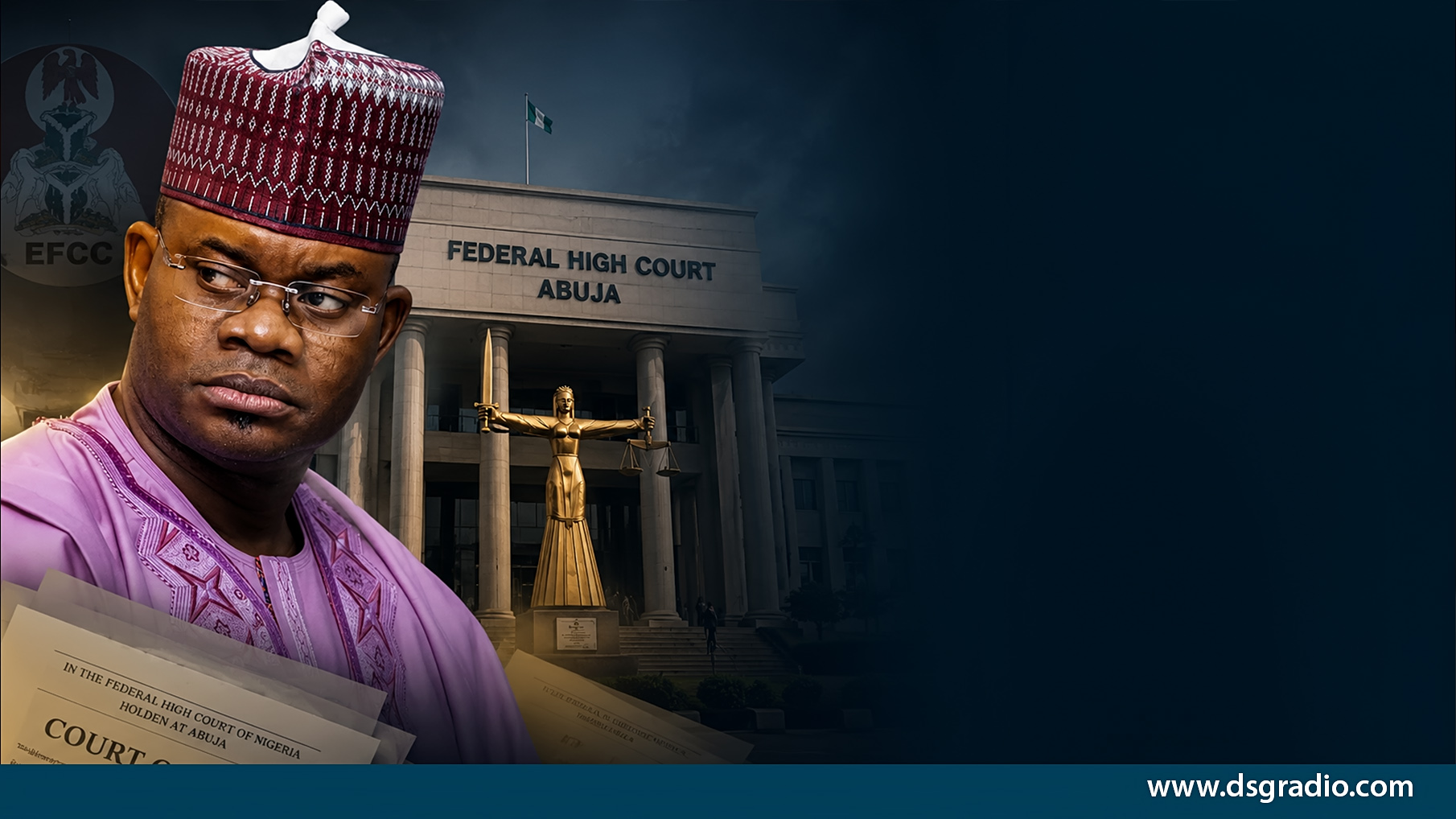
Fresh controversy surrounding a disputed $760,910 school fees refund has introduced a new layer of legal tension in the ongoing Yahaya Bello trial at the Federal High Court, Abuja, as witness testimony and procedural disputes continue to shape one of Nigeria’s most closely watched corruption cases.
The Economic and Financial Crimes Commission (EFCC) is prosecuting former Kogi State Governor Yahaya Bello for fraud, money laundering, and criminal breach of trust totalling ₦ 110.4 billion. However, recent court proceedings have shifted public attention toward the handling of prepaid school fees linked to the Bello family and whether the anti-graft agency acted within legal boundaries.
During proceedings in May 2026, prosecution witness Nicholas Ojehomon, an internal auditor at the American International School Abuja (AISA), testified that the institution mistakenly refunded school fees to the EFCC without first obtaining a court order. The revelation has since become one of the most debated aspects of the Yahaya Bello trial.
School Fees Refund Controversy Takes Centre Stage
At the heart of the dispute is a $760,910.84 payment, reportedly linked to prepaid tuition arrangements involving members of the Bello family.
According to testimony presented before the court, AISA refunded the money to the EFCC despite an earlier contractual arrangement with the family. A Certified True Copy of a previous judgment in Suit No. FCT/HC/CV/2574/2023 between Ali Bello and the school was admitted into evidence as Exhibit AO.
The judgment reportedly established that the school had a binding agreement with the Bello family and should not have processed the refund without a valid court order.
Legal observers say the issue has become significant because it raises procedural questions about how evidence and recovered funds are handled during financial crime investigations.
While the EFCC has maintained its prosecution against Bello, the testimony from the school’s auditor has fueled debate over whether administrative errors could complicate aspects of the case.
The anti-graft agency has continued to position the matter as part of a broader investigation into alleged illicit financial transactions connected to the former governor. More information about the agency’s operations and ongoing anti-corruption efforts can be found on the Economic and Financial Crimes Commission website.
What the Witness Told the Court
Nicholas Ojehomon, identified in court as Prosecution Witness 14 (PW14), told the court that the refund process was conducted in error.
Under cross-examination, he reportedly acknowledged that Yahaya Bello was not a signatory to the prepaid school fees agreement and that the payments did not originate directly from the former governor.
That testimony has become central to the defence’s effort to distance Bello from direct financial responsibility for the transactions being examined.
Legal analysts note that while the testimony does not automatically invalidate the prosecution’s broader allegations, it may influence how the court interprets specific financial links.
The witness statement has also intensified public discussion around the distinction between:
- direct ownership of funds,
- beneficiary relationships,
- contractual obligations,
- and criminal liability.
Defence Pushes Jurisdiction Challenge
Another major issue emerging from the Yahaya Bello trial is the defence’s challenge to the court’s jurisdiction.
Defence lawyers are reportedly questioning whether the Federal High Court, Abuja, has the legal authority to continue hearing aspects of the case under the current framework.
Jurisdictional disputes are often critical in high-profile corruption trials because a successful challenge could delay proceedings, alter prosecutors’ legal strategy, or potentially force parts of a case into a different judicial process.
The court adjourned proceedings to May 8, 2026, for further hearing and consideration of pending matters.
Legal experts say the outcome of the jurisdiction argument may significantly affect the pace and direction of the EFCC money laundering case in the coming months.
Background to the EFCC Money Laundering Case
The EFCC accuses Yahaya Bello of involvement in alleged financial crimes totalling approximately ₦110.4 billion.
The allegations include:
- money laundering,
- criminal breach of trust,
- and alleged diversion of public funds.
Bello has denied wrongdoing.
The case has attracted national attention partly because of Bello’s political profile as a former governor of Kogi State and a prominent figure within Nigeria’s ruling political landscape.
Previous proceedings in the case included:
- a public summons issued for Bello’s appearance,
- controversy surrounding his absence from court,
- and the granting of ₦500 million bail after subsequent appearances.
The case has also generated broader conversations about anti-corruption enforcement in Nigeria and the legal standards required in politically sensitive prosecutions.
Recent political and legal developments involving high-profile prosecutions have also raised debate about transparency and accountability within Nigeria’s justice system, similar to issues examined in DSG Herald’s earlier report on the prosecution of political figures facing treason-related allegations.
Parallel Trial Involving Ali Bello
In a related development, Ali Bello, identified as Yahaya Bello’s nephew, is separately facing trial on an alleged ₦3 billion money-laundering charge.
Although the cases are distinct, the overlap in names, financial records, and institutional references has increased public interest in both proceedings.
Analysts say the parallel cases may continue to shape public perception regarding:
- anti-corruption enforcement,
- political accountability,
- and the effectiveness of Nigeria’s financial crime prosecution system.
Details regarding the extent of evidentiary overlap between the two cases remain unclear.
Why the School Fees Issue Matters
The controversy surrounding the school fees refund has emerged as more than just a procedural issue.
Legal analysts say it matters because:
- It touches on due process,
- raises questions about evidentiary procedure,
- and could influence public confidence in the handling of financial crime investigations.
If a court eventually determines that the refund process violated existing contractual protections or legal procedures, defence lawyers could attempt to use that argument to challenge parts of the prosecution’s evidence structure.
However, analysts caution that such procedural disputes do not automatically erase broader allegations in corruption cases.
Instead, the controversy may become one component within a much larger legal battle involving financial records, institutional testimony, and prosecutorial interpretation.
Growing Public Interest in the Trial
The Yahaya Bello trial continues to generate widespread public attention across Nigeria because it sits at the intersection of politics, law, and anti-corruption enforcement.
The proceedings have become a major test case for how Nigerian institutions manage politically exposed corruption allegations in a highly scrutinised environment.
Public interest has also grown due to:
- the large monetary figures involved,
- The role of educational institutions in the dispute,
- and the legal arguments surrounding jurisdiction and evidence.
With proceedings scheduled to continue on May 8, legal observers say the court’s handling of the jurisdiction challenge and evidentiary disputes may determine the next phase of the case.
For now, the school fees refund controversy has added a new legal dimension to an already complex prosecution at the Federal High Court, Abuja.
Recommended Coverage:
- Police Accountability Debate Grows After Mene Ogidi Killing
The report examines institutional accountability and public trust issues within Nigeria’s justice and security systems. - FG Pursues Treason Charges Against Sylva and Others
This analysis explores another high-profile legal case drawing national political attention. - Tinubu Seeks Senate Approval for $516 Million Loan
The story highlights ongoing debates over governance, financial management, and federal accountability in Nigeria.
About the Author