Justice Crack Arraignment Fuels Debate on Free Speech and Military Accountability in Nigeria
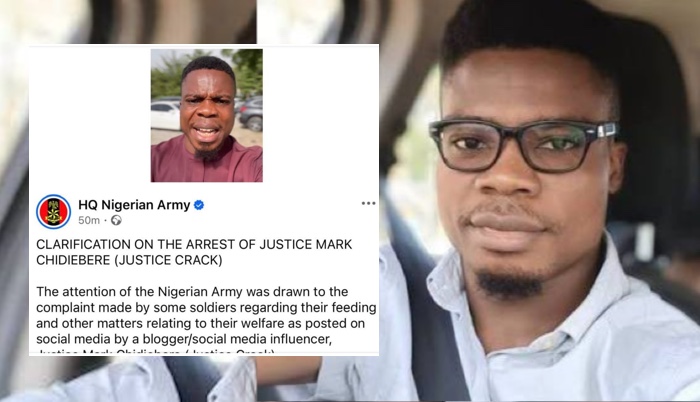
The Justice Crack arraignment of Nigerian blogger and activist Justice Mark Chidiebere in Abuja has triggered a broader national debate over free speech, national security, and the limits of military criticism in Nigeria. The Department of State Services (DSS) brought the activist before the Federal High Court on allegations of incitement, following his controversial detention by the Nigerian Army and subsequent transfer to the secret police.
What We Know About the Justice Crack Arraignment
Justice Mark Chidiebere, widely known as Justice Crack, was arraigned on Monday before the Federal High Court in Abuja on allegations of inciting discontent within the Nigerian military.
Key developments include:
- The DSS formally charged the activist with incitement
- He was returned to DSS custody immediately after the court session
- Journalists were reportedly denied access to the courtroom
- Security presence around the court was described as heavy
- Civil society groups staged protests demanding his release
According to a report by Sahara Reporters, the proceedings took place under tight security, with observers noting restricted media access.
Details regarding the specific charges filed in court were not fully disclosed in the original report.
Timeline: From Arrest to Arraignment
The Justice Crack arraignment follows a sequence of events that has intensified public scrutiny:
- Initial Arrest:
The activist was detained after publicly criticising the Nigerian military over alleged extrajudicial actions and poor welfare conditions. - Alleged Torture in Military Custody:
Family members claim he was chained to a tree and exposed to harsh conditions for over 72 hours. - Transfer to DSS:
The Nigerian Army handed him over to the DSS amid growing public outrage. - Court Arraignment:
He was formally charged in Abuja and returned to DSS custody after the hearing.
Some of these allegations, particularly claims of torture, could not be independently verified.
Allegations of Torture Raise Human Rights Concerns
The case has drawn strong reactions from activists and rights groups, especially over allegations of abuse during military detention.
A relative of the activist described his ordeal in emotional terms, stating that he was subjected to harsh treatment for speaking out against injustice.
Human rights advocate Omoyele Sowore criticised the process, alleging that authorities were attempting to legitimise what he described as unlawful detention rather than releasing the activist.
These concerns echo broader debates captured in DSG Herald’s earlier analysis of press freedom and broadcasting regulation in Nigeria, which raised questions about state control and expression.
Nigerian Army’s Position on the DSS Blogger Case
The Nigerian Army has defended its actions, rejecting allegations of abuse and framing the case within national security concerns.
In an official statement signed by spokesperson Colonel Appolonia Anele, the Army alleged:
- The activist engaged in discussions that could incite dissatisfaction among soldiers
- His actions had potential implications for discipline and operational stability
- The situation raised concerns about internal cohesion within the military
The Army maintains that the Nigerian incitement charges are justified based on national security risks.
Legal Questions Around Incitement and Free Speech
The Justice Crack arraignment has reignited debate over how Nigerian law interprets incitement, particularly in relation to online speech.
Key legal questions include:
- Does criticism of the military constitute incitement?
- Where is the line between activism and national security threats?
- Are due process and constitutional rights being upheld?
Under Nigeria’s Constitution, citizens are guaranteed freedom of expression, although this right is subject to limitations in the interest of national security and public order.
Legal experts note that cases like this often hinge on interpretation, especially when speech intersects with sensitive institutions like the military.
Public Reaction and Civil Society Response
Outside the courtroom, members of the Take It Back Movement and other activists staged protests demanding the immediate release of Justice Crack.
Protesters chanted slogans asserting his innocence and condemning his detention.
The situation reflects a pattern seen in previous cases involving activists and journalists, where public demonstrations accompany legal proceedings.
A similar dynamic was observed in DSG Herald’s coverage of court restrictions on journalists in a Nigeria coup trial, highlighting ongoing tensions between transparency and security.
Wider Context: A Pattern of Arrests and Restrictions
The DSS blogger case is not occurring in isolation.
Nigeria has witnessed several high-profile cases involving:
- Activists detained over online comments
- Journalists facing restricted access to court proceedings
- Increased scrutiny of digital platforms
Globally, similar tensions have emerged, including political pressure on journalists, as seen in international cases such as threats against journalists over national security leaks.
This suggests a broader global trend where governments grapple with balancing security and freedom of expression.
What This Means for Nigeria’s Democracy
The Justice Crack arraignment could have far-reaching implications for Nigeria’s democratic landscape.
Key implications include:
- Digital Activism:
The case may influence how online criticism is interpreted under Nigerian law. - Military Accountability:
It raises questions about transparency and oversight of security institutions. - Judicial Transparency:
Restricted media access could affect public trust in legal processes. - Human Rights Protections:
Allegations of abuse highlight concerns about detainee treatment.
What Happens Next
Details about the next court date or legal proceedings were not specified in the original report.
However, observers expect:
- Continued legal battles over the incitement charges
- Ongoing protests from civil society groups
- Increased scrutiny from human rights organisations
The outcome of the case may set a precedent for how Nigeria handles similar situations involving military criticism Nigeria and digital expression.
About the Author