Infantino Re-Election 2027: Power, Politics and the Future of Global Football
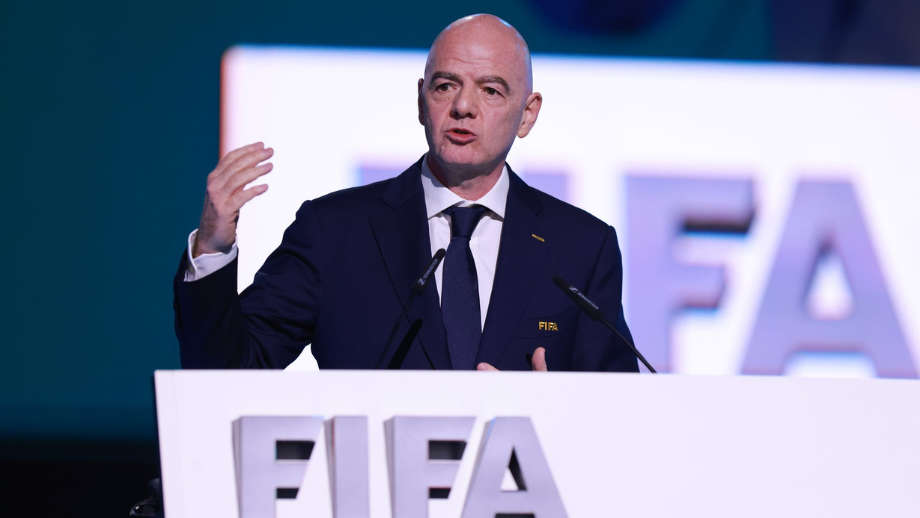
Gianni Infantino’s planned Infantino re-election 2027 bid is emerging as a defining moment for global football governance, with far-reaching implications for funding, political influence, and the future direction of FIFA. Speaking at the 76th FIFA Congress 2026 in Vancouver, Canada, the FIFA president confirmed his intention to seek another term, while outlining a vision built on financial expansion, global inclusion, and institutional influence.
His announcement comes at a time when FIFA’s economic power, development programs, and global reach are expanding at unprecedented levels—raising critical questions about governance, equity, and control within world football.
Why Infantino Wants Another Term
At the Congress, Infantino thanked FIFA’s 211 Member Associations for their support over the past decade and formally declared his intention to contest the next presidential election scheduled for 2027.
He emphasised continuity, citing progress made since his first election in 2016, including governance reforms and expanded development initiatives.
Key points from his address:
- FIFA now positions itself as a “trusted global organisation”
- Equal status is maintained among all 211 Member Associations
- Revenues generated from competitions are reinvested in football development
Infantino framed his leadership as transformative, arguing that FIFA has evolved into a more influential global institution engaging with governments, businesses, and international organisations.
FIFA’s Financial Expansion Explained
A central pillar of Infantino’s re-election 2027 narrative is FIFA’s financial growth.
According to Congress disclosures:
- FIFA has invested $5 billion into football development over the last decade
- The upcoming FIFA Forward Programme (2027–2031) will rise to $2.7 billion
- Development funding for Member Associations is now eight times higher than pre-2016 levels
- FIFA projects $14 billion in revenue for the 2027–2030 cycle
Rather than simply expanding revenue, FIFA has increasingly positioned itself as a redistributor of global football wealth.
Additional initiatives include:
- FIFA Talent Development Scheme
- Football for Schools Programme
- FIFA Arena project targeting 1,000 mini-pitches in underserved communities by 2031
Infantino also highlighted the FIFA Clearing House, which has distributed over $500 million to smaller clubs through transfer-related solidarity payments.
This financial architecture is central to FIFA’s global strategy—but also raises questions about how influence is tied to funding.
What This Means for Africa and Developing Nations
For African countries, Infantino’s re-election bid in 2027 carries significant implications.
FIFA funding remains a major source of football development across the continent, particularly in:
- Infrastructure development
- Youth programs
- Grassroots football expansion
Infantino’s commitment to equality among Member Associations suggests continued financial support. However, the reality on the ground varies widely.
Nigeria/Africa Insight Box
- FIFA Forward funding has increased significantly since 2016
- Many African federations depend heavily on FIFA grants
- Infrastructure gaps persist in grassroots football
- Accountability and transparency remain ongoing concerns
For Nigeria, one of Africa’s largest football markets, the challenge lies in converting funding into sustainable systems—an issue that extends beyond FIFA into domestic governance.
Anti-Racism Campaign: Progress or Policy Signal?
Another key theme at the FIFA Congress 2026 was FIFA’s anti-racism agenda.
Measures introduced include:
- Amendments to FIFA’s Disciplinary Code
- The “No Racism Gesture” was implemented during matches
- Social media protection services covering over 12,000 individuals
Infantino described football as a unifying force capable of bridging global divides, while figures such as George Weah called for deeper community-level engagement.
However, questions remain:
- Are these measures effectively enforced across all regions?
- Is FIFA’s anti-racism push translating into structural change?
These uncertainties place the initiative at the intersection of policy and perception.
World Cup 2026: A Commercial Turning Point
The upcoming FIFA World Cup, to be jointly hosted by the United States, Canada, and Mexico, represents a major milestone in FIFA’s expansion strategy.
Key figures include:
- 48 teams participating
- 104 matches scheduled
- 16 host cities across three countries
- An estimated 7 million stadium attendees
- Projected 6 billion global viewers
Vancouver alone is set to host seven matches.
The expanded format aligns with FIFA’s broader commercial ambitions and is expected to significantly boost global revenues—further strengthening the organisation’s financial base ahead of the Infantino re-election in 2027.
For deeper insight into tournament format changes, see DSG Herald’s analysis of the yellow card rule impact on the 2026 World Cup.
Geopolitics and Football: A Quiet Undercurrent
The Congress also featured statements from both the Palestine Football Association and the Israel Football Association.
Infantino stressed football’s role in fostering dialogue and equality, reinforcing FIFA’s position as a platform for global engagement beyond sport.
This reflects a broader trend:
- Football increasingly intersects with geopolitics
- FIFA operates within complex international dynamics
- Governance decisions carry diplomatic implications
The Bigger Question: Is FIFA Too Powerful?
As FIFA expands its financial and institutional influence, the Infantino’s re-election in 2027 raises a critical question:
Is FIFA becoming too centralised?
Supporters argue:
- Increased funding benefits smaller nations
- Global programs expand football access
- Commercial growth strengthens sustainability
Critics point to:
- Concentration of decision-making power
- Limited transparency in some processes
- Dependence of smaller federations on FIFA funding
The balance between global leadership and centralised control remains one of the defining issues facing FIFA’s future.
SOURCE CONTEXT & VERIFICATION
According to a report by Leadership.ng, the Congress also approved FIFA’s Annual Report 2025 and confirmed record financial projections for the next cycle.
Additional details were drawn from FIFA’s official communication.
Recommended Coverage
You may also want to read:
- 48-Team World Cup Expansion Explained
A breakdown of how FIFA’s expanded format reshapes global competition dynamics. - Inside FIFA’s Bold Expansion Strategy
Explores the strategic thinking behind FIFA’s 48-team World Cup decision. - World Cup 2026 Ticket Prices Surge
Examines the economic implications of rising ticket costs for global fans.
About the Author