UK Prime Minister Keir Starmer Faces Pressure as ‘Ignorance’ Defence Raises Leadership Questions
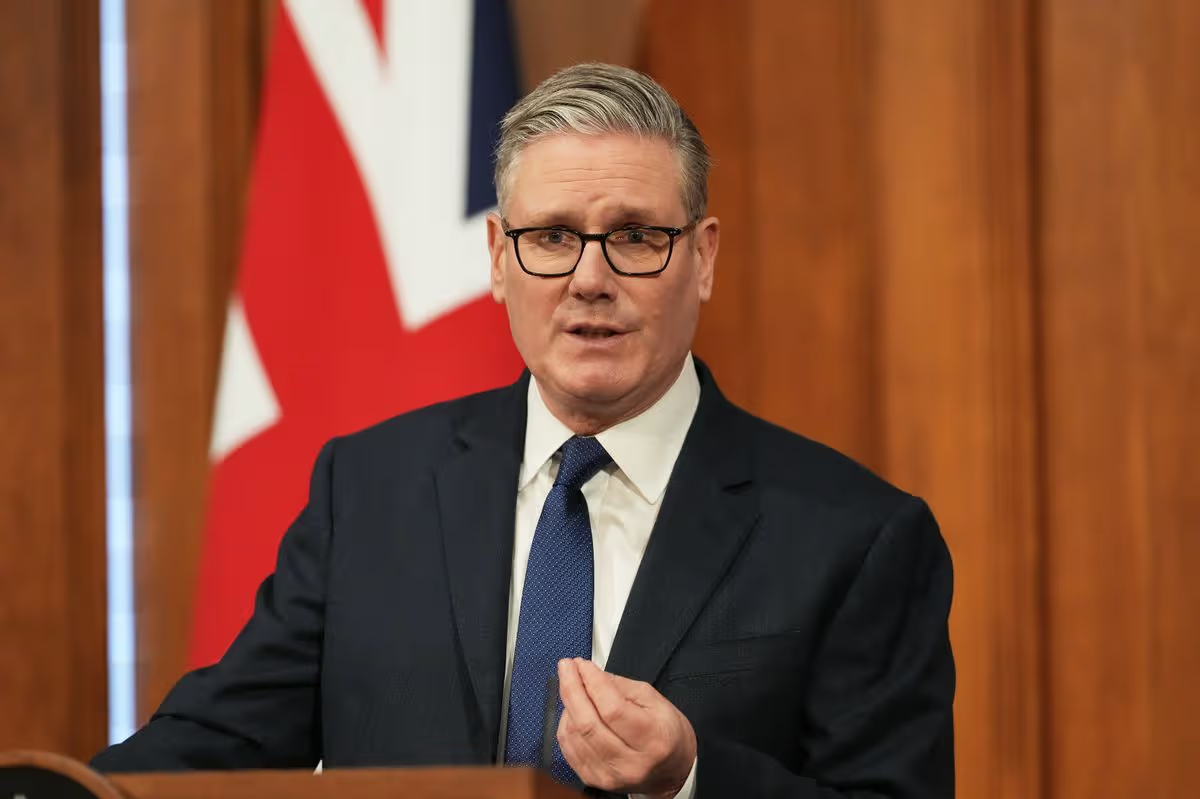
UK Prime Minister Keir Starmer is facing mounting political pressure after stating that he was unaware of issues linked to senior political figure Peter Mandelson, a response that has triggered debate over leadership accountability and transparency.
The situation has quickly gained attention across political and media circles, with critics questioning whether a prime minister can credibly claim a lack of awareness in matters involving influential figures within government and party structures.
Starmer’s Response Sparks Accountability Debate
UK Prime Minister Keir Starmer said he had no prior knowledge of the concerns involving Peter Mandelson. While such responses are not uncommon in political crises, analysts say the implications in this case could be significant.
Observers note that when a leader at the highest level of government claims ignorance, it raises two critical possibilities. It may suggest a gap in oversight and internal communication, or raise concerns about transparency.
In either case, the issue has shifted beyond the initial controversy to a broader question about leadership standards.
Pressure Builds on UK Prime Minister Keir Starmer
Following his statement, UK Prime Minister Keir Starmer has come under increasing scrutiny from opposition figures and political commentators. Critics are calling for greater clarity on what was known and when, while some voices have raised the possibility of political consequences, including calls for resignation.
Although no formal resignation process has been initiated, the pressure surrounding UK Prime Minister Keir Starmer continues to grow as the issue remains in public and political focus.
Peter Mandelson’s Influence Adds Weight to Controversy
Peter Mandelson is widely regarded as one of the most influential figures in British politics, with longstanding experience and connections within the Labour Party and government.
His involvement in any controversy carries significant political weight. As a result, questions about awareness and accountability become more pronounced when senior leadership is directly or indirectly linked to such figures.
For UK Prime Minister Keir Starmer, the situation underscores the complexity of managing relationships within established political networks.
Leadership or Liability?
The central issue now facing UK Prime Minister Keir Starmer is whether a claim of ignorance strengthens or weakens his leadership position.
Analysts describe the situation as a leadership dilemma:
- If UK Prime Minister Keir Starmer genuinely did not know, critics argue it could indicate a lack of oversight at the highest level of government.
- If he did know, the issue shifts toward concerns about transparency and public trust.
Either scenario presents challenges, underscoring the importance of how leadership is defined in modern governance.
A Familiar Political Defence
The use of “not knowing” as a response to controversy has been seen in various political systems. Leaders have, at times, used similar statements to distance themselves from unfolding issues involving associates or subordinates.
However, outcomes have varied. In some cases, such defences have limited political damage. In others, they have intensified scrutiny by raising doubts about competence or control.
For UK Prime Minister Keir Starmer, the effectiveness of this response is likely to depend on public perception and how the situation develops.
Keir Starmer: Trust and Credibility in Focus
The controversy comes at a time when public trust in political leadership remains a key concern in many democracies. Issues of transparency and accountability often shape how such situations are perceived.
For UK Prime Minister Keir Starmer, maintaining credibility may depend on how clearly the situation is addressed and whether additional information emerges.
Political analysts note that even without immediate consequences, such controversies can have longer-term effects on public confidence and leadership standing.
Keir Starmer ‘Ignorance’ Defence: Internal and Political Implications
Within the Labour Party, reactions to the situation could play an important role in shaping its outcome. Party unity often becomes critical during periods of political pressure, while any signs of internal division can amplify external criticism.
At the same time, opposition responses and continued media attention are expected to influence how the issue evolves in the coming days.
What Happens Next
Several factors are expected to determine how the situation develops:
- Further clarification regarding the issues linked to Peter Mandelson
- Continued political and media scrutiny of UK Prime Minister Keir Starmer
- Reactions from party members and opposition figures
- Public response and perception
While UK Prime Minister Keir Starmer remains in office, the situation is expected to be closely monitored as events unfold.
The controversy surrounding UK Prime Minister Keir Starmer highlights a broader question about leadership, accountability, and public trust.
While the immediate issue centres on his claim of ignorance regarding Peter Mandelson, the wider implications extend to how leadership is judged in modern politics.
As the situation continues to develop, the key issue remains whether such a defence is seen as acceptable — or as a potential liability at the highest level of government.
About the Author