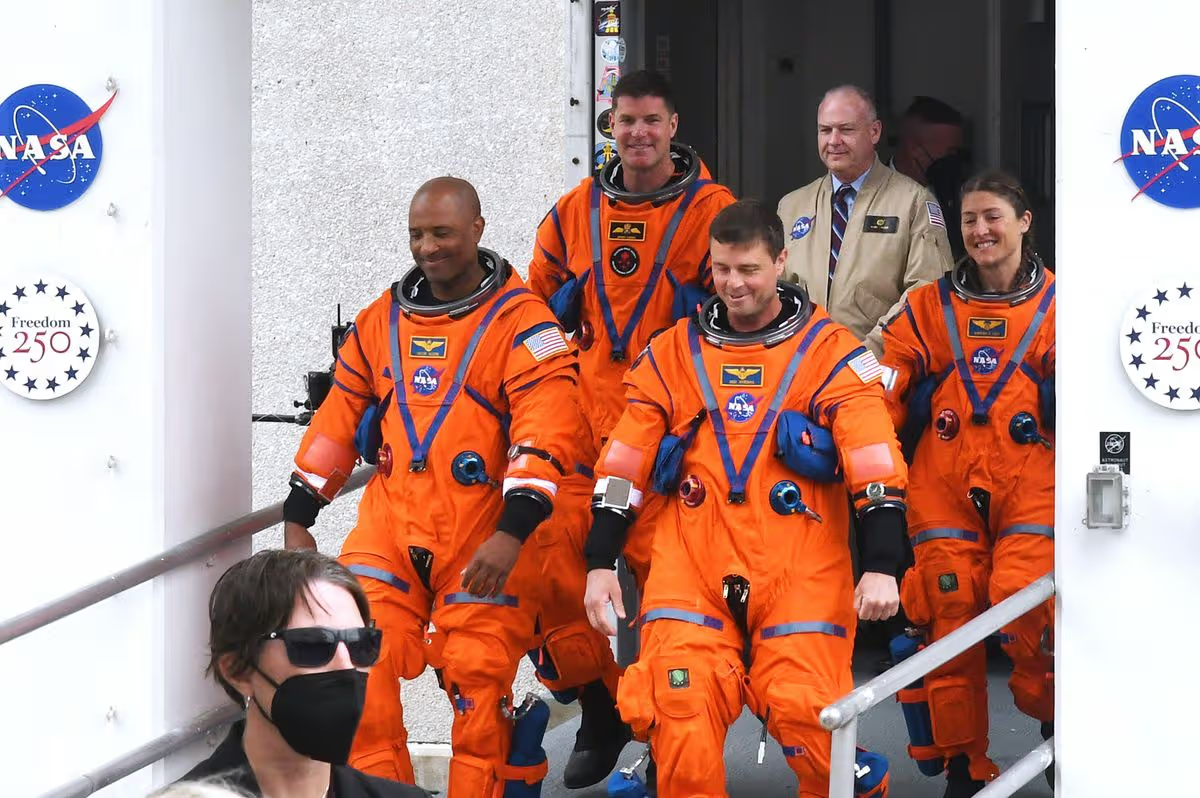
Artemis II Astronauts’ Moon Mission Enters Irreversible Phase After Successful Engine Burn
The Artemis II astronauts’ moon mission reached a historic milestone on Thursday evening as NASA confirmed that a successful translunar injection burn placed the spacecraft on an irreversible trajectory toward the moon. The mission involves four astronauts — Reid Wiseman, Christina Koch, Victor Glover (NASA), and Jeremy Hansen (Canadian Space Agency) — who launched earlier this week aboard NASA’s Orion spacecraft. The journey marks humanity’s first crewed mission toward the moon in over 50 years.
According to the report , the critical engine burn lasted just under six minutes and boosted the spacecraft out of Earth’s orbit, setting it on course to loop around the moon and return to Earth as part of a 10-day mission.
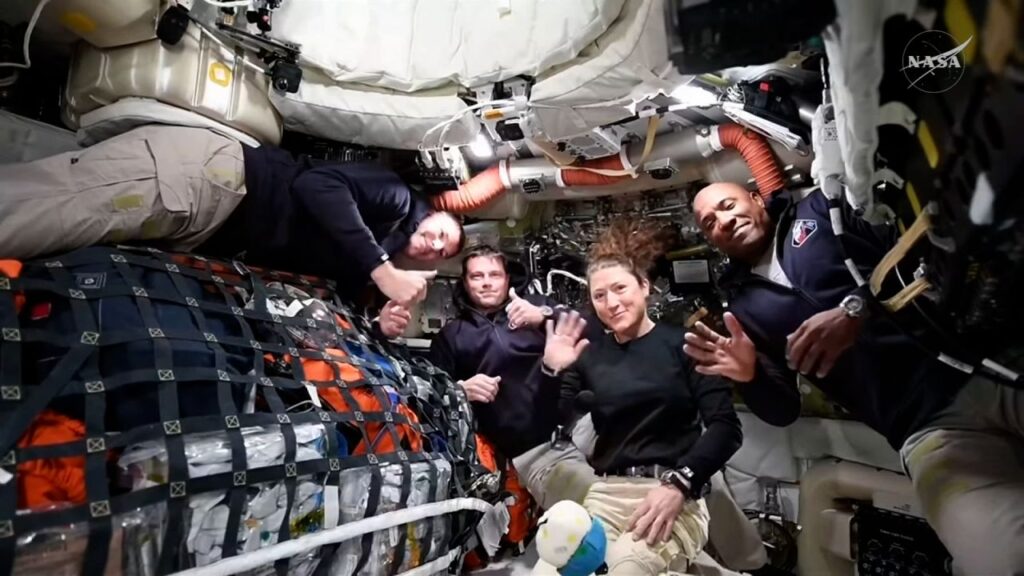
What Happened During the Mission
The Artemis II moon mission did not begin without challenges. Within the first 24 hours after launch, the crew encountered multiple technical issues:
- Communication Loss:
Shortly after reaching orbit, the crew experienced a temporary loss of communications with Mission Control.- NASA could not receive data from the spacecraft
- Astronauts could still hear ground control.
- The issue was resolved quickly.
- Toilet System Malfunction:
The Orion spacecraft’s Universal Waste Management System developed a blinking fault light during testing.- Engineers worked overnight with the crew.
- The issue was successfully fixed.
- Backup contingency plans included urine collection bags.
- Software/Email Glitch:
Commander Reid Wiseman reported issues with onboard systems, specifically Microsoft Outlook.- Mission Control remotely accessed the computers
- The issue was resolved after troubleshooting.
Despite these early setbacks, NASA officials confirmed that no major system failures affected the spacecraft’s safety or trajectory.
Key Milestone: Translunar Injection Burn
The defining moment of the Artemis II astronauts’ moon mission came with the translunar injection burn, a manoeuvre that:
- Fired Orion’s main engine
- Increased spacecraft velocity
- Sent the crew beyond Earth’s gravitational orbit
Mission Control confirmed that the spacecraft is now:
“On trajectory to fly around the moon for the first time in 50 years.”
NASA officials emphasised that this burn is irreversible, meaning:
- The spacecraft is now committed to the lunar path.
- The mission will rely on gravitational forces from Earth and the moon.
- No further major propulsion manoeuvres of this scale are expected.
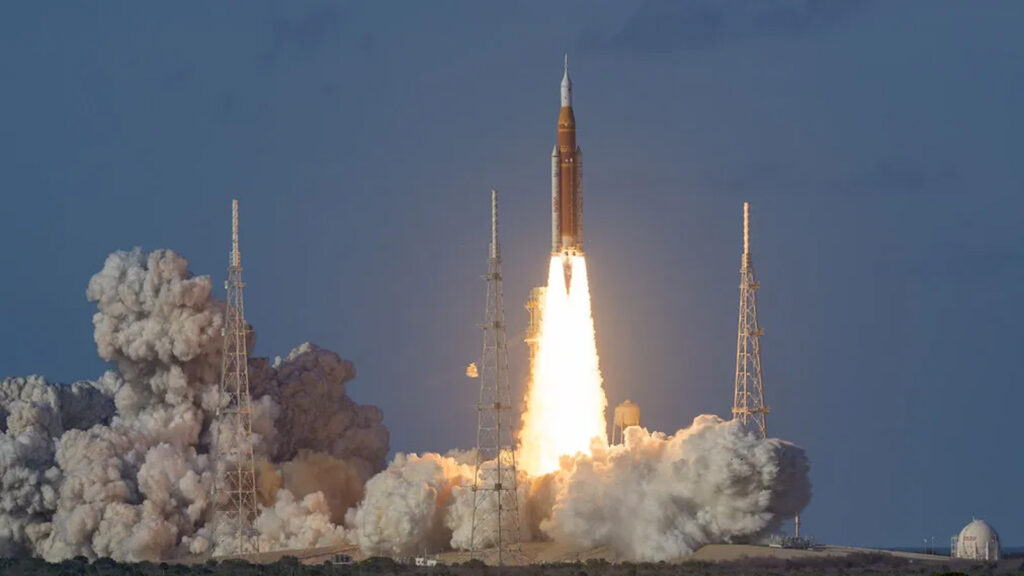
Crew and Mission Details
Astronauts on Board
- Reid Wiseman – Commander (NASA)
- Christina Koch – Mission Specialist (NASA)
- Victor Glover – Pilot (NASA)
- Jeremy Hansen – Mission Specialist (Canadian Space Agency)
Mission Timeline
- Launch: Wednesday ([Exact date not specified in original report])
- Duration: 10 days
- Wake-up call: 2:35 p.m. ET Thursday
- Engine burn: Thursday evening
Location
- Launch Site: [Not specified in the original report]
- Mission Control: Houston, Texas, USA
- Orbit: Transitioning from Earth orbit to lunar trajectory
NASA’s Official Response
NASA Administrator Jared Isaacman confirmed that, despite early technical issues:
- “There were no issues with the vehicle itself”
- Communications were restored quickly.
- Ground teams are actively investigating minor glitches.
Mission managers in Houston conducted a final review before approving the engine burn, ensuring all systems were stable before committing to the lunar trajectory.
Background: Why Artemis II Matters
The Artemis II moon mission is part of NASA’s broader Artemis Program, which aims to:
- Return humans to the moon.
- Establish a sustainable lunar presence.
- Prepare for future missions to Mars.
This mission is particularly significant because:
- It is the first crewed lunar mission since Apollo 17 (1972)
- It tests critical systems for future landings.
- It includes the first woman (Christina Koch) and the first Black astronaut (Victor Glover) on a lunar mission.
Global and Scientific Implications
The success of the Artemis II astronauts’ moon mission has far-reaching implications:
Technological Impact
- Validates Orion spacecraft systems
- Demonstrates deep-space communication resilience
- Tests life-support systems under real conditions
Geopolitical Impact
- Reinforces U.S. leadership in space exploration
- Strengthens international partnerships (Canada’s involvement)
- Signals renewed global competition in lunar exploration.
Future Missions
- Artemis III aims to land humans on the moon.
- The long-term goal includes lunar bases.
- Supports eventual Mars missions
What Happens Next
With the translunar injection burn complete:
- The spacecraft will travel toward the moon.
- It will loop around the lunar surface.
- The crew will conduct system tests and observations.
- The mission will conclude with re-entry and splashdown on Earth.
NASA confirmed that the remainder of the mission will rely heavily on natural gravitational forces, reducing the need for major propulsion burns.
Conclusion
The Artemis II astronauts’ moon mission has successfully transitioned from Earth orbit to deep space, marking a historic return to crewed lunar exploration. Despite early technical glitches, NASA’s rapid response ensured mission continuity. The successful engine burn now places humanity on a renewed path toward the moon — and beyond.
OTHER RELATED STORIES
Artemis Crew Expected to Lose Contact With Earth
Artemis II Mission Moon: Crew Captures Earth, Nears Lunar Flyby
Artemis II Astronauts’ Moon Mission Begins Successfully
Artemis II Mission Launch Sends Crew Around Moon
Artemis II Mission Marks NASA’s Return to The Moon
About the Author