Families Protest Detained Military Officers Nigeria: Calls for Justice Intensify
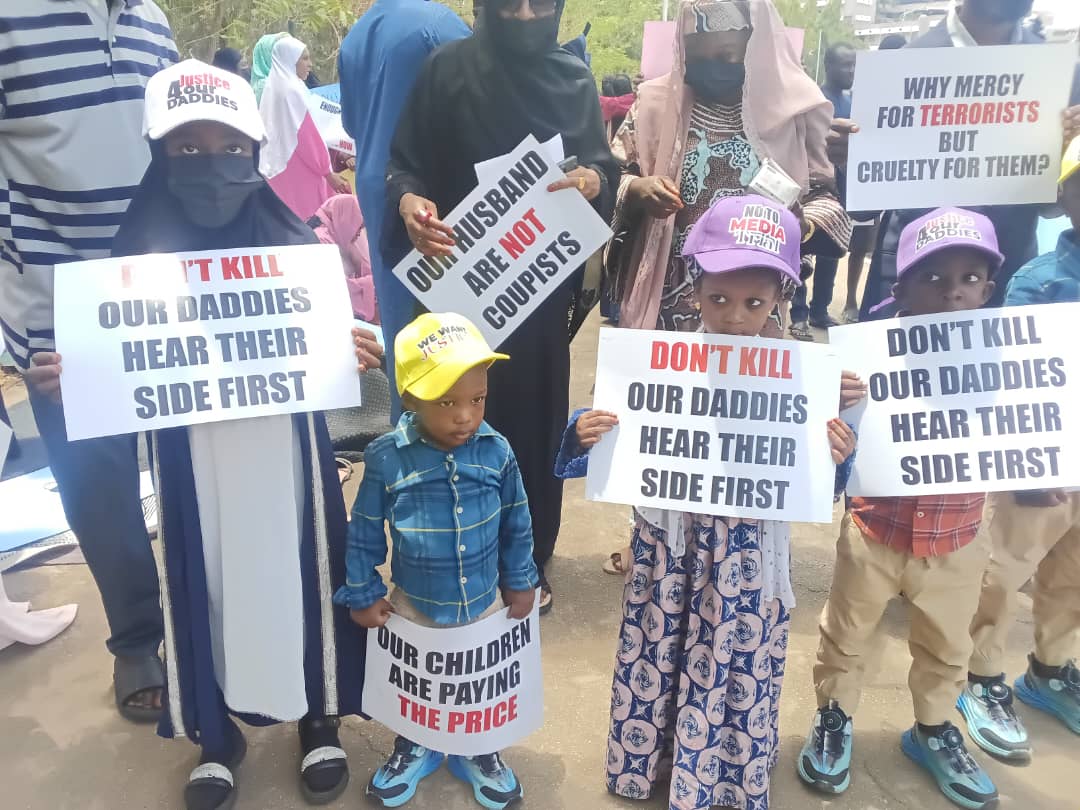
Families protest detained military officers in Nigeria as relatives of serving officers gathered at the National Assembly in Abuja to demand transparency, fair trial, and accountability over alleged coup plot accusations. The protest, which took place earlier this week, drew attention to growing concerns about prolonged detention without clear evidence within Nigeria’s military justice system.
The demonstrators, comprising the wives, children, and extended family members of the detained officers, called on lawmakers and military authorities to intervene. They argued that the continued detention of their loved ones without formal charges or open trial undermines both justice and the rule of law.
Protest at National Assembly: What Happened
Families protest detained military officers in Nigeria in a peaceful demonstration outside the National Assembly complex in Abuja, Nigeria’s capital. Protesters carried placards with messages such as “Justice for Our Soldiers,” “Fair Trial Now,” and “Stop Secret Detentions.”
Eyewitnesses reported that the protest remained orderly, with security personnel closely monitoring the situation. The families submitted a petition to lawmakers, urging immediate action.
Key demands from the protesters included:
- Immediate disclosure of evidence against detained officers
- Speedy and transparent court-martial proceedings
- Access to legal representation and family visits
- Respect for the constitutional rights of the accused
The protesters emphasised that their call was not to interfere with national security but to ensure fairness and due process.
Alleged Coup Plot: Background to the Case
Families protest detained military officers in Nigeria amid allegations that some officers were involved in a coup plot against the Nigerian government. While authorities have not publicly released detailed evidence, the case has been described as highly sensitive due to its implications for national security.
Security analysts note that coup-related allegations in Nigeria carry serious consequences, given the country’s history of military rule. However, they also stress the importance of transparency in handling such cases to avoid eroding public trust.
So far, military authorities have remained largely silent on specifics, citing ongoing investigations. This lack of information has fueled speculation and concern among families and civil society groups.
Concerns Over Prolonged Detention
Families protest detained military officers in Nigeria primarily over what they describe as unjustified, prolonged detention. Some relatives claim that the officers have been held for months without formal charges or access to independent legal counsel.
Human rights advocates argue that such practices raise serious legal and ethical questions. According to Nigeria’s constitution, detainees are entitled to a fair hearing within a reasonable time.
Legal experts highlight the risks of extended detention without trial:
- Violation of fundamental human rights
- Weakening of institutional accountability
- Potential abuse of military authority
- Damage to morale within the armed forces
The families insist that even in cases involving national security, due process must not be compromised.
Military Justice and Civil Rights Debate
Families protest detained military officers Nigeria has reignited a debate about the balance between military discipline and civil rights. Nigeria’s armed forces operate under a distinct legal framework, including court-martial proceedings, which differ from civilian courts.
However, critics argue that secrecy within military justice systems can lead to abuses if not properly monitored. Civil society organisations have called for greater oversight and transparency.
A security analyst based in Abuja noted:
“National security is important, but justice must be seen to be done. Lack of transparency creates suspicion and weakens public confidence.”
The situation highlights broader concerns about accountability within Nigeria’s security institutions.
Government and Military Response
Families protest detention of military officers. Nigeria has yet to receive an official, detailed response from the Nigerian military or federal government. However, sources within the defence establishment indicate that investigations are ongoing and that due process will be followed.
Officials have reportedly urged patience, emphasising the sensitivity of the case. They argue that premature disclosure of details could compromise national security operations.
Despite these assurances, families remain unconvinced. They continue to demand clear timelines and open proceedings to ensure fairness.
Implications for National Stability
Families protest the detention of military officers. Nigeria’s implications for national stability and civil-military relations are significant. Allegations of coup plotting within the armed forces are inherently destabilising, even if unproven.
Experts warn that:
- Lack of transparency could fuel distrust within the ranks of the military.
- Public perception of injustice may trigger wider civil unrest.
- Prolonged silence from authorities may encourage misinformation.
At the same time, a fair and transparent resolution could strengthen confidence in Nigeria’s democratic institutions.
Voices from the Protest
Families protest detained military officers in Nigeria, including emotional testimonies from relatives who described the personal toll of the situation.
One protester, who identified herself as the wife of a detained officer, said:
“We are not saying they should not be investigated. We are only asking for justice. Let them be tried openly.”
Another family member added:
“We have not seen our loved ones for months. We deserve answers.”
These accounts underscore the human dimension of the case, beyond its political and security implications.
The Way Forward
Families protest detained military officers Nigeria is likely to continue drawing attention as calls for transparency grow louder. Observers suggest that authorities must strike a balance between protecting national security and upholding the rule of law.
Recommended steps include:
- Public clarification of charges and legal procedures
- Independent oversight of military trials
- Timely communication with affected families
- Adherence to constitutional safeguards
As Nigeria navigates this sensitive issue, the outcome could set a precedent for how similar cases are handled in the future.
Conclusion
Families protest detained military officers Nigeria reflects deeper concerns about justice, accountability, and transparency within Nigeria’s military system. While the allegations of a coup plot are serious, the demand for fair trial and due process remains equally critical.
The coming weeks will be crucial in determining whether authorities can address these concerns while maintaining national security. For now, the voices of protesting families continue to echo in Abuja, calling for justice and clarity.
About the Author