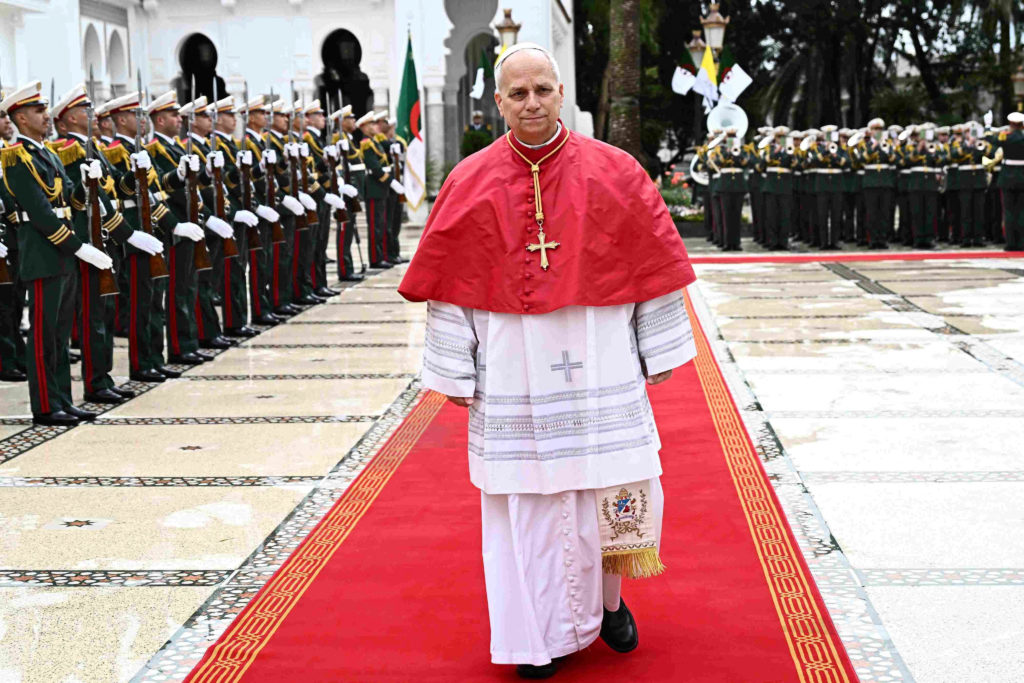
Pope Leo XIV arrives for the courtesy visit to the President of the Republic of Algeria, Abdelmadjid Tebboune, at the Presidential Palace, Algiers, Algeria, April 13, 2026. Pope Leo XIV is on apostolic journey to Algeria. LUCA ZENNARO/Pool via REUTERS REFILE - QUALITY REPEAT
A Visit That Signals a Global Shift
Pope Leo’s Africa tour is not just another papal visit—it is a powerful signal of a changing global reality. As the Catholic Church faces declining participation in Europe and parts of North America, Africa has emerged as the fastest-growing centre of Catholicism.
This visit, therefore, goes beyond symbolic gestures. It reflects the Vatican’s strategic recognition that Africa is no longer a peripheral region in global Christianity but a central pillar of its future.
From packed churches to rising vocations and growing youth participation, Africa represents both the present and future of the Catholic faith. Pope Leo’s presence on the continent underscores that shift—and positions Africa at the heart of global religious, political, and cultural conversations.
Africa’s Rising Importance in Global Catholicism
Over the past few decades, Africa has witnessed an extraordinary growth in the Catholic population. While church attendance in Europe continues to decline, African congregations are expanding rapidly, driven by high birth rates, strong community structures, and deeply rooted religious traditions.
Countries such as Nigeria, the Democratic Republic of Congo, Uganda, and Kenya now rank among the most vibrant Catholic communities in the world. Seminaries across the continent are also experiencing increasing enrollment, producing a new generation of priests and religious leaders.
This demographic shift has profound implications. It means that the future leadership, theology, and direction of the Catholic Church will increasingly be shaped by African voices. Pope Leo’s visit is, therefore, both a recognition of this reality and an investment in strengthening ties with a region that is redefining global Christianity.
Key Highlights of Pope Leo’s Africa Tour
While the full schedule of the visit may vary, papal tours typically include a combination of religious, diplomatic, and social engagements.
Pope Leo is expected to hold large public Mass gatherings, which often attract tens or even hundreds of thousands of worshippers. These events serve not only as spiritual gatherings but also as powerful demonstrations of unity and faith.
In addition, the Pope is likely to meet with African political leaders, religious figures, and civil society groups. Such meetings are critical in reinforcing the Vatican’s role as a moral voice in global affairs.
Youth engagements are also expected to feature prominently. Given Africa’s young population, the Catholic Church sees the continent’s youth as vital to its future growth and sustainability.
The Religious Significance of the Visit
At its core, the visit is deeply spiritual. For millions of African Catholics, a papal visit is a moment of profound religious significance—an opportunity to connect directly with the leader of the global Church.
Beyond symbolism, the visit reaffirms the Church’s commitment to African communities. It strengthens faith, encourages participation, and validates the role of local churches in shaping global Catholic identity.
Africa’s style of worship—often vibrant, communal, and deeply expressive—has also begun to influence global Catholic practices. Pope Leo’s visit offers an opportunity to celebrate this cultural richness while reinforcing unity within the Church.
Vatican Diplomacy and Africa’s Political Landscape
The Vatican is not only a religious institution; it is also a global diplomatic actor. Pope Leo’s Africa tour highlights the strategic importance of the continent in international relations.
Across Africa, the Catholic Church plays a significant role in peacebuilding, conflict resolution, and governance. In countries affected by political instability, the Church often acts as a mediator, advocating for dialogue and reconciliation.
Papal visits frequently include meetings with heads of state, during which issues such as democracy, human rights, and social justice are discussed. While the Vatican maintains neutrality, its moral authority gives it influence in shaping political discourse.
In this context, Pope Leo’s visit can be seen as part of a broader diplomatic effort to strengthen relationships with African nations and support stability across the continent.
Economic and Development Contributions of the Church
The Catholic Church is one of the largest providers of social services in Africa. Through its extensive network of schools, hospitals, and charitable organisations, the Church plays a critical role in supporting development.
In many rural and underserved communities, Catholic institutions are often the primary providers of education and healthcare. This makes the Church not just a spiritual authority, but also a key development partner.
Pope Leo’s visit is expected to highlight these contributions and encourage further collaboration between the Church, governments, and international organisations.
By drawing global attention to Africa’s needs and opportunities, the visit could also help attract support for development initiatives across the continent.
A Shift in Global Religious Power
One of the most significant aspects of Pope Leo’s Africa tour is what it represents: a shift in the centre of global Christianity.
For centuries, Europe was the heart of the Catholic Church. Today, that centre is gradually moving southward, with Africa playing an increasingly dominant role.
This shift is not just demographic—it is also cultural and ideological. African Catholics bring unique perspectives, shaped by their social realities, traditions, and experiences.
As these voices grow louder within the global Church, they are likely to influence key decisions on doctrine, leadership, and priorities. Pope Leo’s visit acknowledges this transformation and signals a willingness to embrace it.
Youth, Culture, and the Future of the Church
Africa’s population is one of the youngest in the world, and this demographic reality has significant implications for the Catholic Church.
Young people in Africa are not only active participants in religious life—they are also shaping its future. From music and worship styles to community engagement, youth are redefining how faith is expressed.
Pope Leo’s engagement with young Africans is expected to focus on issues such as education, employment, and moral leadership. By addressing these concerns, the Church aims to remain relevant in a rapidly changing world.
The energy and creativity of African youth offer a powerful opportunity for renewal within the global Church.
Challenges and Expectations
Despite its growth, the Catholic Church in Africa faces several challenges. These include poverty, political instability, and, in some regions, religious conflict.
There are also internal challenges, such as balancing tradition with modernisation and addressing governance and accountability issues within the Church.
Pope Leo’s visit raises expectations that these issues will be acknowledged and addressed. While the Pope may not provide immediate solutions, his messages can influence public discourse and inspire action.
A Defining Moment for Africa and the Vatican
Pope Leo Africa tour is more than a ceremonial journey—it is a defining moment in the Vatican’s relationship with the continent.
It reflects a recognition of Africa’s growing importance in global Catholicism and underscores the continent’s rising influence in religious and geopolitical affairs.
As the world watches, this visit has the potential to reshape perceptions, strengthen partnerships, and chart a new course for the Church’s future.
In many ways, the message is clear: Africa is no longer on the margins of global Christianity—it is at its very centre.
About the Author