Supreme Court PDP Ruling Deepens Party Crisis
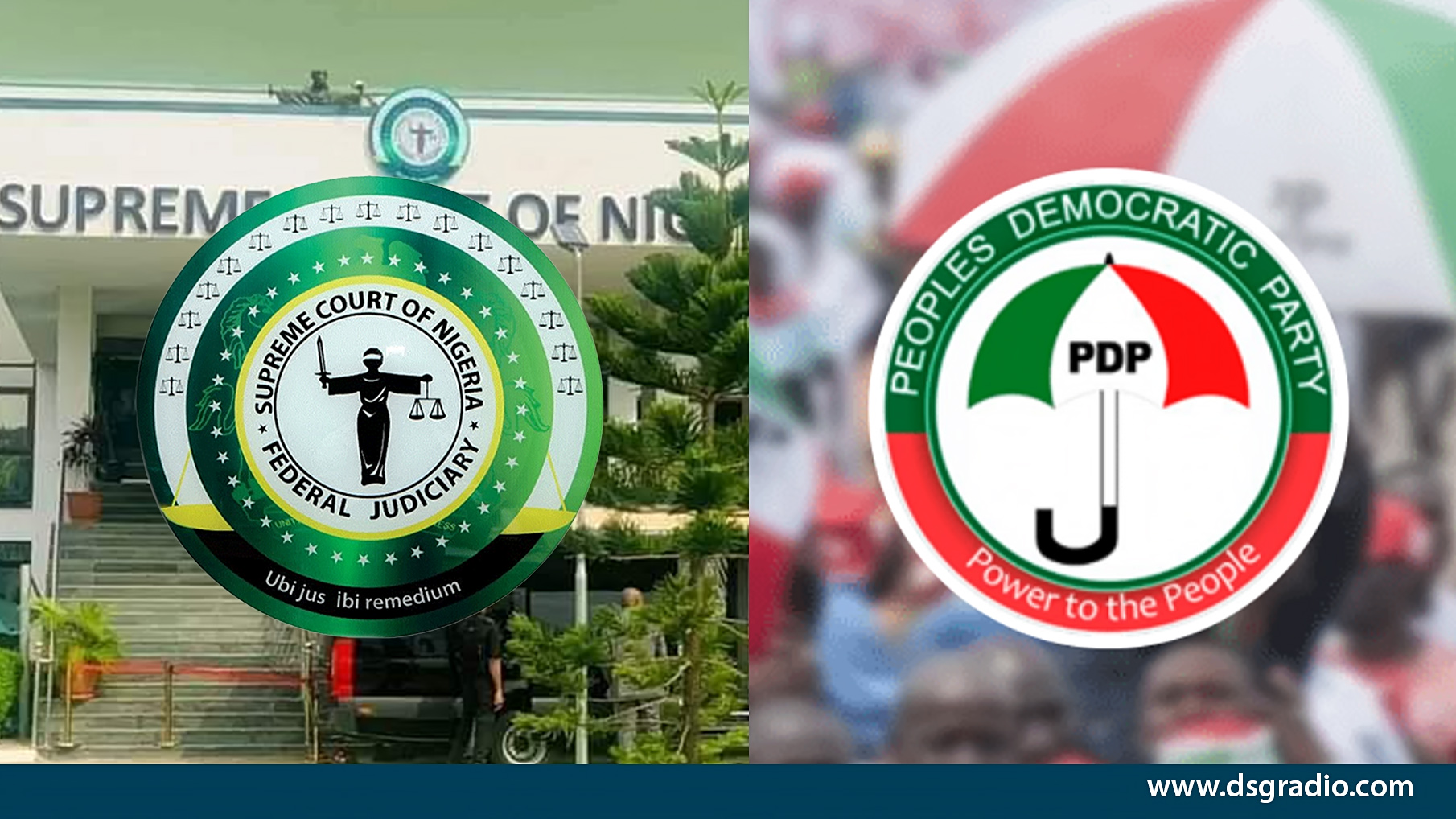
Nigeria’s opposition politics faces renewed uncertainty after the Supreme Court ruled that the Peoples Democratic Party (PDP) national convention held in Ibadan, Oyo State, was null and void and dismissed an appeal filed by a faction led by Taminu Turaki. The decision, delivered on Thursday, reinforces political parties’ obligation to obey court orders and could reshape internal party dynamics ahead of the 2027 elections.
Why the Supreme Court Nullified the PDP Convention
The apex court held that the PDP convention conducted on November 15 and 16 last year violated an existing judgment of the Federal High Court delivered by Justice James Omotosho.
Delivering the majority judgment, Justice Stephen Adah ruled that:
- The convention was conducted in defiance of a valid court order
- The Turaki-led faction improperly sought relief from a court of coordinate jurisdiction
- The action constituted an abuse of court process
The court dismissed the appeal for lack of merit and declared the convention null and void.
According to the ruling:
“The conduct of the national convention of November 15, 2025, is null and void and is hereby nulled.”
The court further emphasised that litigants who abuse judicial processes do so at their own risk and will not receive judicial support.
As reported, the decision affirms earlier judgments by both the Federal High Court and the Court of Appeal.
PDP Leadership Crisis Explained
The Supreme Court PDP ruling has significantly intensified the party’s internal divisions, which have persisted for months.
At the centre of the dispute are:
- The Taminu Turaki-led National Working Committee
- A rival faction aligned with FCT Minister Nyesom Wike
- Key political figures, including Sule Lamido, former Jigawa State Governor
Lamido had earlier secured a Federal High Court injunction preventing the PDP from holding the convention until he was allowed to contest for national chairman.
Despite this order:
- The PDP proceeded with the convention
- The action was later ruled unlawful by lower courts
- The appellate court rejected the argument that the issue was purely an internal party affair
The Supreme Court has now upheld those findings.
This deepens the PDP leadership crisis, raising questions about:
- Who currently controls the party structure
- Whether a new convention will be required
- The legitimacy of decisions made after the nullified convention
Court vs Internal Party Affairs Debate
A key legal issue in the case was whether the dispute fell within the scope of internal party affairs, which courts traditionally avoid interfering in.
The majority judgment rejected this argument, stating that:
- The matter involved disobedience of a valid court order
- It therefore transcended internal party governance
However, dissenting opinions emerged.
Justice Haruna Samani, in a minority judgment, maintained that:
- Party leadership issues remain internal
- Lower courts lacked jurisdiction
Justice Abubakar Umar supported this position, citing earlier Supreme Court precedent that:
- Matters unrelated to party primaries are not pre-election disputes
- Such matters are generally not justiciable
Despite their disagreement on jurisdiction, both justices stressed that:
- Disobedience to court orders cannot be justified
Rule of Law and Political Parties
The Supreme Court PDP ruling reinforces a broader constitutional principle: political parties must obey court orders.
The court stated that:
- Political parties are vehicles for public office
- They must operate within the rule of law
- Knowledge of a court order imposes an obligation to comply
This principle has implications beyond the PDP.
It signals to all Nigerian political parties, including:
- The ruling APC
- Emerging parties such as ADC and the Labour Party
That failure to comply with court orders could invalidate internal processes and decisions.
How the Ruling Affects 2027 Elections
The timing of the ruling adds a significant political dimension.
With the 2027 elections approaching, the PDP leadership crisis may:
- Weaken the party’s ability to function as a unified opposition
- Affect candidate selection processes
- Trigger further factional alignments or defections
The nullification of the convention creates uncertainty around:
- Leadership legitimacy
- Strategic planning
- Internal cohesion
Political observers note that a fragmented opposition could benefit the ruling party.
For a broader context on how internal party disputes are shaping electoral dynamics, see this analysis on the Supreme Court ADC and PDP crisis testing 2027 politics.
Timeline of the PDP Dispute
The crisis has unfolded over several stages:
- Pre-convention: Sule Lamido obtains a court injunction
- November 2025: PDP conducts the Ibadan convention despite the order
- Federal High Court: Declares convention unlawful
- Court of Appeal: Upholds the ruling and nullifies the convention
- Supreme Court: Dismisses appeal and affirms nullification
Each stage has reinforced the legal position that court orders must be obeyed.
What Happens Next?
The Supreme Court PDP ruling leaves several issues unresolved:
- Whether the PDP will organise a fresh convention
- How leadership disputes will be settled
- The extent of reconciliation between factions
Details on the party’s next steps remain unclear.
However, the ruling establishes a binding legal framework that will guide future actions.
Broader Political and Legal Implications
The case contributes to ongoing debates about:
- Judicial intervention in party politics
- The limits of internal party autonomy
- The enforcement of court orders in political disputes
It also aligns with wider electoral concerns, including funding and litigation ahead of 2027, as highlighted in reports on Nigeria’s election litigation budget.
The Supreme Court PDP ruling marks a critical moment in Nigeria’s political and legal landscape. By nullifying the Ibadan convention and dismissing the Turaki-led appeal, the court has reinforced the supremacy of the rule of law over party processes.
While the decision settles the legal dispute, it opens a new phase of political uncertainty for the PDP, with significant implications for opposition politics and the 2027 elections.
🔗 Recommended Coverage:
- INEC, ADC Dispute Signals 2027 Election Tensions
Explores how electoral disputes involving smaller parties are shaping Nigeria’s political landscape ahead of 2027. - FG Budgets N135bn for Election Lawsuits
Highlights the scale of anticipated legal battles that could define the next election cycle.
About the Author