2026 World Cup: Mexico Reach Knockout Stage as Canada Makes History
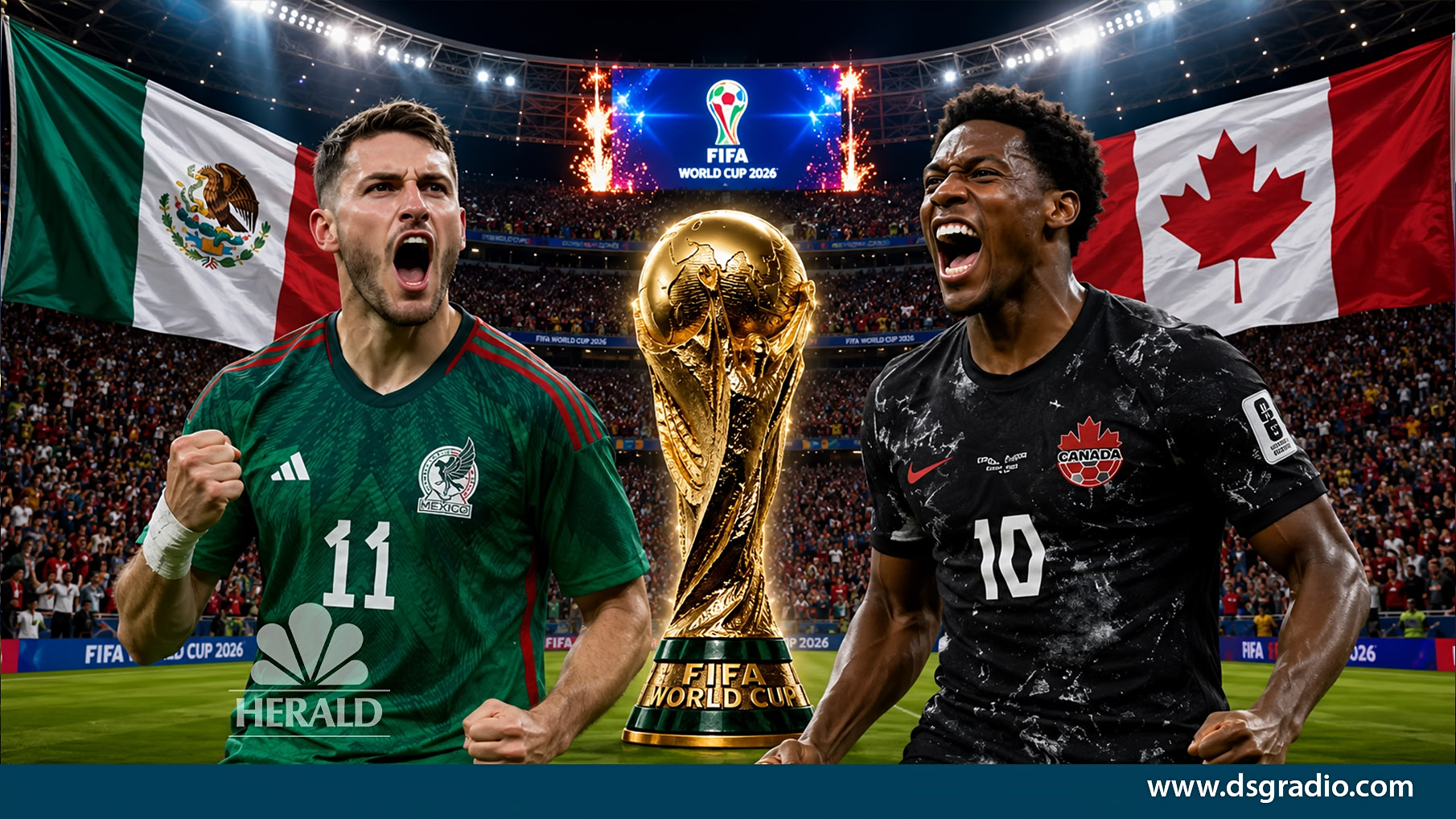
The 2026 World Cup entered a pivotal phase on Thursday as co-hosts Mexico became the first nation to secure qualification for the knockout stage, while Canada celebrated a landmark victory and FIFA announced a record-breaking attendance milestone, underscoring the tournament’s growing global appeal.
Mexico’s narrow 1-0 win over South Korea ensured their progression from Group A and highlighted the strength of the tournament hosts. At the same time, Canada produced one of the standout performances of the competition with a dominant 6-0 victory over Qatar, recording the country’s first-ever men’s World Cup match win.
The latest round of matches also featured managerial upheaval, injury concerns, and growing evidence that the expanded tournament format is generating unprecedented fan interest across North America.
2026 World Cup: Mexico Become First Team Through
Mexico’s qualification marks a significant moment for the tournament and for the country’s football programme.
Luis Romano’s second-half strike against South Korea proved enough to secure a hard-fought victory and guarantee Mexico’s place in the Round of 32. The result gives the co-host nation six points from two matches and places them firmly at the top of Group A.
For Mexico, the achievement carries added significance because of the pressure that often accompanies hosting major tournaments. Expectations have been high since FIFA awarded the competition jointly to Mexico, the United States and Canada.
The victory also strengthens confidence among Mexican supporters who hope the national team can produce its deepest World Cup run in decades.
Group A remains competitive behind Mexico, with South Korea, the Czech Republic and South Africa still battling for qualification positions.
Canada Writes New Chapter in 2026 World Cup History
While Mexico celebrated qualification, Canada produced arguably the most emphatic performance of the tournament so far.
A remarkable 6-0 demolition of Qatar delivered Canada’s first-ever men’s World Cup match victory and instantly became one of the defining stories of the competition. Jonathan David led the attack with a brilliant hat-trick as the Canadians overwhelmed a Qatar side reduced to nine players.
The result reinforces Canada’s growing status within international football. Over the past decade, the country’s investment in player development and domestic football infrastructure has transformed the national team into a competitive force.
Canada’s rise comes during a tournament already producing memorable storylines and historic performances. Football fans can also explore how Messi, Mbappé and other global stars are rewriting World Cup history</a> as the competition unfolds.
However, the celebrations were tempered by concern over midfielder Ismaël Koné, who suffered a serious leg injury during the match. The full extent of the injury remains unclear, but the incident cast a shadow over an otherwise historic evening for Canadian football.
For a nation co-hosting the tournament, the victory provides a major boost to public enthusiasm and could help drive further support for football development programmes.
FIFA Confirms Record-Breaking Attendance
One of the biggest stories emerging from the tournament has been the scale of fan engagement.
FIFA confirmed that the 2026 World Cup has already set a new record for the highest attendance on a single day in World Cup history. A combined crowd of 281,223 spectators attended four matches on Tuesday, surpassing the previous record established during the 1994 World Cup.
The attendance figures are being viewed as evidence of the tournament’s commercial and cultural success.
The 2026 edition is the first World Cup to feature an expanded format, increasing the number of participating nations and matches. While the format attracted debate before the tournament, strong attendance figures suggest supporters have embraced the changes.
For FIFA, the record represents a major validation of its strategy to grow football’s global footprint through larger competitions and broader participation.
Managerial Changes Add to Tournament Drama
The tournament’s early stages have already triggered significant changes on the sidelines.
Tunisia dismissed head coach Sabri Lamouchi following a heavy 5-1 defeat to Sweden in their opening match. The North African side moved quickly to appoint former Saudi Arabia manager Herve Renard in an effort to revive their campaign.
The decision reflects the intense pressure facing teams during major international competitions, where poor results can rapidly alter coaching futures.
Meanwhile, reports indicate that Portugal manager Roberto Martinez is expected to leave his position after the tournament concludes. The reported departure would mark the end of a notable chapter for Portuguese football regardless of the team’s final performance.
For African football observers, Tunisia’s situation highlights the challenges facing continental representatives competing against elite global opposition.
England Begin Campaign with Statement Victory
England also made an impressive start by defeating Croatia 4-2 in a high-scoring encounter.
Harry Kane scored twice as England secured three points and moved to the top of Group L. The victory provides momentum ahead of tougher tests later in the competition and reinforces expectations that England could be among the tournament contenders.
However, England manager Thomas Tuchel attracted attention after the match for reasons beyond the scoreline.
Tuchel formally requested that FIFA review photographer positioning before matches, arguing that media personnel blocked his view of players singing the national anthem. The issue has sparked discussion about balancing tournament coverage with team rituals and pre-match traditions.
Other Key Results Shape Qualification Race
Several other fixtures helped define the evolving group-stage picture.
Switzerland strengthened its position with a convincing 4-1 victory over Bosnia and Herzegovina, aided by a brace from Johan Manzambi.
Ghana secured a dramatic 1-0 win against Panama thanks to a stoppage-time goal from Caleb Yirenkyi, providing a major boost for the African nation’s qualification hopes.
The Czech Republic and South Africa played out a 1-1 draw, leaving qualification scenarios open heading into the next round of matches.
Why the 2026 World Cup Matters for Africa and Nigeria
The tournament’s developments carry broader significance beyond North America.
African nations continue to monitor opportunities created by the expanded competition format, which has increased the number of places available to teams from the continent.
Ghana’s victory and Tunisia’s managerial change illustrate both the opportunities and pressures facing African representatives on football’s biggest stage.
For Nigerian football supporters, the tournament serves as a reminder of the growing competitiveness of global football and the importance of long-term investment in youth development, coaching structures and domestic leagues.
The success of countries such as Canada also demonstrates how strategic planning can transform footballing fortunes over time.
Football analysts believe lessons from emerging football nations could prove valuable as African countries seek stronger performances at future World Cups.
What Comes Next
Attention now turns to Friday’s fixtures, where several teams could join Mexico in securing progression to the knockout rounds.
The United States face Australia in a crucial Group D clash, while Scotland have an opportunity to make history against Morocco. Brazil meet Haiti in another eagerly anticipated fixture, and Türkiye take on Paraguay in a match that could significantly influence qualification outcomes.
With records already falling, managerial changes unfolding, and qualification battles intensifying, the 2026 World Cup continues to deliver the drama, unpredictability and global attention that define football’s premier tournament.
Fans across the world will now watch closely to see which nations follow Mexico into the knockout stage and whether the tournament can sustain the momentum that has already produced historic achievements on and off the pitch.
Related DSG HERALD Coverage
2026 FIFA World Cup Stars Rewriting Football History
A deeper look at how football’s biggest stars are shaping the legacy of the tournament.
2026 FIFA World Cup Delivers Records and Drama
Analysis of the key moments, records and turning points from the competition.
Recommended Coverage
2025 African Minifootball Cup Set for Libya
Examines preparations for one of Africa’s emerging football competitions and its impact on regional development.
Halle Berry Opens Up About Perimenopause Challenges
A health-focused feature exploring awareness and education surrounding women’s health issues.
UK Launches Bid for 2035 FIFA Women’s World Cup
Explores the growing competition among nations seeking to host future FIFA tournaments.
About the Author