Nigeria Security Crisis Threatens West Africa Stability
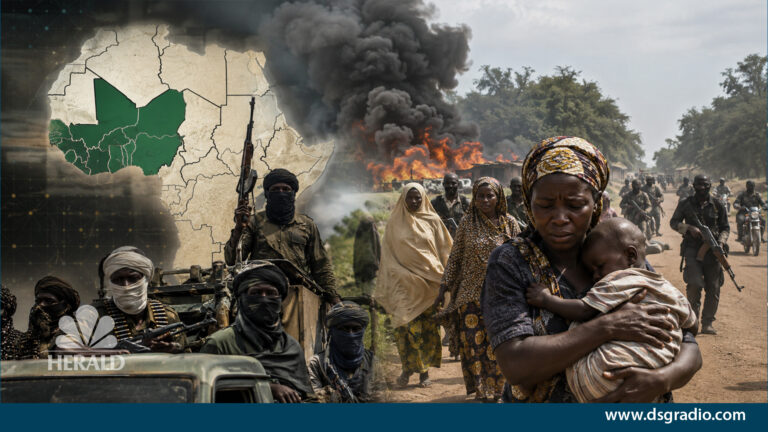
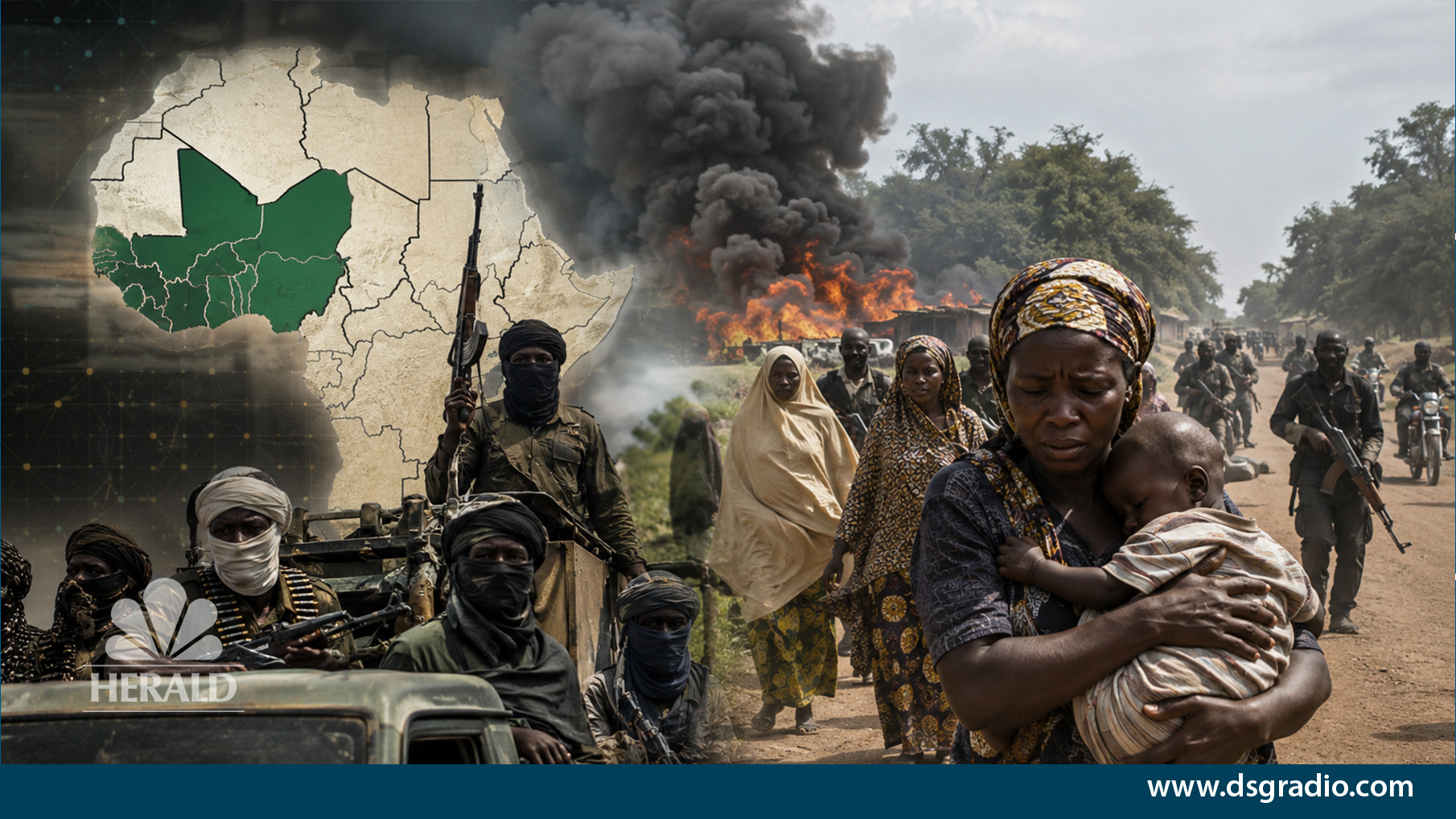
Nigeria’s Security Crisis is no longer solely a domestic challenge. New conflict data showing 842 deaths and 279 kidnappings across the country in May 2026 has renewed concerns that escalating violence in Africa’s most populous nation could have consequences far beyond its borders. Analysts warn that continued insecurity threatens regional trade, economic growth, peacebuilding efforts and stability across West Africa, making the crisis one of the continent’s most pressing security concerns.
According to figures from Nextier’s Nigeria Violent Conflicts Database, 156 violent incidents were recorded across Nigeria during May 2026. The report indicates a sharp increase in attacks compared to the same period in 2025, highlighting a deteriorating security environment despite years of government interventions and significant public spending on security operations.
While insecurity has been a recurring challenge in Nigeria for more than a decade, the latest figures suggest that the country may be entering a more dangerous phase in which overlapping security threats are becoming increasingly difficult to contain.
Nigeria Security Crisis Reaches a Critical Stage
The latest conflict data paints a troubling picture.
Compared with May 2025:
• Violent incidents increased by 51.5 percent.
• Fatalities surged by 90.1 percent.
• Kidnappings rose by 19.7 percent.
The figures reflect the growing complexity of Nigeria’s security landscape, where multiple armed groups operate simultaneously across different regions.
Unlike previous periods when violence was largely concentrated around a single insurgency or conflict zone, current security challenges involve a combination of banditry, extremist violence, communal clashes, criminal networks and organized kidnapping syndicates.
This convergence of threats has stretched security resources and complicated response efforts.
For ordinary Nigerians, the consequences are visible in daily life.
Farmers face attacks while cultivating crops. Travelers increasingly encounter security risks along major highways. Rural communities remain vulnerable to raids, while businesses struggle with rising operational costs linked to insecurity.
The result is a climate of uncertainty that affects both economic activity and public confidence.
Understanding the Drivers of Violence
The violence recorded in May 2026 did not emerge in isolation.
Security experts have long argued that insecurity in Nigeria is driven by a combination of structural and immediate factors.
Among the most significant are:
• Weak governance in remote rural areas.
• High youth unemployment.
• Competition over land and natural resources.
• Illegal arms trafficking.
• Organized criminal enterprises.
• Longstanding communal tensions.
• Insufficient law enforcement capacity.
The North West and North Central regions continue to experience some of the most severe security pressures.
Large geographical areas, difficult terrain and limited state presence have created environments where armed groups can operate with relative freedom.
In many cases, these groups exploit local grievances, economic hardship and governance gaps to establish influence.
The growing sophistication of criminal networks has further complicated matters.
Kidnapping, once viewed as an isolated criminal activity, has evolved into a significant underground economy.
Ransom payments provide funding for weapons acquisition, recruitment and territorial expansion, enabling criminal groups to sustain operations over extended periods.
This transformation has elevated kidnapping from a public safety issue to a broader national security concern.
Why West Africa Should Be Paying Attention
Nigeria’s strategic importance means that its internal security challenges rarely remain confined within its borders.
The country is home to more than 200 million people and represents one of Africa’s largest economies. It is also a major political and diplomatic actor within the Economic Community of West African States (ECOWAS).
When instability affects Nigeria, neighboring countries often feel the consequences.
One major concern is population displacement.
Communities affected by violence frequently relocate in search of safety. Large-scale displacement can place pressure on surrounding regions, humanitarian systems and border communities.
Another concern involves the movement of weapons.
Security analysts have repeatedly warned about the circulation of illicit arms across the Sahel and West Africa. Increased violence in one country can contribute to broader regional security challenges when weapons, fighters and criminal networks cross national boundaries.
Trade is also at risk.
Nigeria serves as a major market and transportation hub for the region. Persistent insecurity can disrupt supply chains, increase transportation costs and reduce investment confidence.
For countries seeking deeper regional economic integration, prolonged instability presents a serious obstacle.
As a result, the Nigeria Security Crisis increasingly carries implications not only for Nigerians but also for neighboring economies and governments.
Economic Consequences Beyond Security
Although security discussions often focus on casualties and criminal activity, the economic impact may be equally significant.
Agriculture remains one of the sectors most affected by insecurity.
Many of the areas experiencing violence are important agricultural zones. Attacks on farming communities can reduce production, limit access to farmlands and disrupt food supply chains.
This contributes to food inflation and broader economic pressures.
Businesses operating in affected regions also face additional costs.
Companies may need to invest more in private security, transportation protection and insurance. Some businesses delay expansion plans, while others reduce operations altogether.
Foreign investors closely monitor security conditions when making investment decisions.
Persistent insecurity can weaken investor confidence and reduce capital inflows, particularly in sectors requiring long-term commitments.
The implications extend to public finances as well.
Governments facing rising security challenges often allocate increasing resources to defense and emergency responses.
While security spending is necessary, it can reduce the funds available for education, healthcare, infrastructure and social development.
This creates a difficult balancing act for policymakers.
Security Spending and Questions of Accountability
One of the most significant concerns emerging from recent discussions is the issue of accountability in security and peacebuilding efforts.
Security experts Jamilu Musa and Dr. Chukwuma Okoli have highlighted concerns regarding the gap between investment and measurable outcomes.
Their observations raise a broader question: how should governments evaluate the effectiveness of security interventions?
Over the years, substantial resources have been directed toward addressing insecurity through military operations, peacebuilding initiatives and community-based interventions.
Yet violence continues to evolve.
According to these experts, one challenge is the absence of strong frameworks capable of assessing which approaches are delivering meaningful results.
Without effective monitoring and evaluation systems, policymakers may struggle to distinguish successful interventions from ineffective ones.
This creates the risk of repeating strategies that fail to produce lasting improvements.
In a rapidly changing security environment, adaptability and evidence-based policymaking are increasingly important.
Concerns Over Security Budget Implementation
Additional concerns have emerged regarding funding levels and implementation.
The Minority Caucus of the House of Representatives recently expressed concerns about the execution of the national budget, particularly regarding security allocations.
According to the concerns raised, actual spending on defense and critical security agencies remains below 30 percent of allocated levels.
If accurate, such gaps could affect operational readiness and limit the ability of security agencies to respond proactively to emerging threats.
Modern security operations require significant investments in:
• Personnel training.
• Intelligence gathering.
• Surveillance systems.
• Communication infrastructure.
• Logistics and mobility.
• Technology integration.
• Border security.
Insufficient implementation of budgeted resources may hinder these capabilities.
At the same time, observers note that funding alone does not guarantee success.
Effective management, transparency and strategic deployment remain equally important.
The challenge for policymakers is therefore twofold: ensuring adequate resources while maximizing efficiency and accountability.
Lessons From Other Regions
Nigeria is not the first country to face complex and overlapping security threats.
Several nations around the world have confronted similar challenges and provide useful lessons.
In parts of Latin America, organized criminal networks have demonstrated how illicit economies can undermine state authority.
In the Sahel, extremist violence has shown how governance gaps can create opportunities for armed groups.
Meanwhile, some Asian countries have invested heavily in intelligence-led policing, technology integration and community engagement to reduce security risks.
While no model can be copied directly, comparative experiences suggest that successful security strategies often combine military measures with governance reforms, economic development and local community participation.
The lesson is clear: security responses are most effective when they address both immediate threats and underlying causes.
The Human Cost Behind the Numbers
Statistics often dominate discussions about insecurity, but the human impact remains the most important dimension of the crisis.
Behind every fatality figure is a family affected by loss.
Behind every kidnapping statistic is an individual experiencing trauma and uncertainty.
Communities affected by repeated violence frequently face long-term consequences, including displacement, disrupted education and reduced economic opportunities.
Children growing up in conflict-affected environments may experience interrupted schooling and diminished prospects.
Healthcare access can also become more difficult in insecure areas.
The cumulative effect extends far beyond the immediate incidents recorded in monthly reports.
This human dimension underscores why the Nigeria Security Crisis should not be viewed solely through a security lens.
It is also a development challenge, a governance challenge and a humanitarian challenge.
What Must Change?
The latest data reinforces the urgency of finding more effective solutions.
Analysts broadly agree that no single intervention will resolve the crisis.
Instead, progress is likely to depend on a combination of measures, including:
• Strengthening intelligence capabilities.
• Improving coordination among security agencies.
• Enhancing border management.
• Expanding community-based conflict prevention.
• Increasing accountability in security spending.
• Addressing economic vulnerabilities.
• Investing in education and job creation.
• Strengthening local governance structures.
Many experts also emphasize the importance of early warning systems capable of identifying emerging threats before they escalate into major crises.
Technology may play an increasingly important role in this effort through data analytics, surveillance tools and improved information sharing.
However, technological solutions alone cannot replace effective governance and public trust.
A Defining Challenge for Nigeria and the Region
The latest conflict figures serve as a reminder that Nigeria’s security challenges remain deeply entrenched.
The reported 842 deaths and 279 kidnappings recorded during May 2026 highlight the scale of the problem, but the broader significance lies in what those numbers represent.
They point to persistent governance challenges, evolving criminal networks, pressure on public institutions and growing concerns about regional stability.
As Africa’s largest economy and one of its most influential countries, Nigeria occupies a unique position on the continent.
Its successes can drive regional growth and integration.
Its challenges can reverberate across borders.
For that reason, the Nigeria Security Crisis is increasingly viewed not only as a national emergency but also as a regional concern with implications for West Africa’s future stability, economic development and security architecture.
The coming months will likely test the effectiveness of existing strategies and the willingness of policymakers to pursue reforms capable of producing measurable results.
For millions of Nigerians and for neighboring countries watching closely, the stakes could hardly be higher.
Source Attribution
The casualty and kidnapping figures referenced in this report were drawn from findings reported by Punch Newspapers and The Guardian Nigeria, based on data from Nextier’s Nigeria Violent Conflicts Database.
About the Author